Monday, November 4, 2019

The Best Free Web Hosting

You’re likely here because you don’t want to pay more than you need to for web hosting. Why pay more, right? The other question I’m sure you’re asking is: Free web hosting — what’s the catch?

We’ve all heard the saying there’s no such thing as free lunch, but is there such a thing as free hosting? Yes, and no. Free hosting exists, but it’s not great. You may even pay in the long run: in lost sales, man hours, frustrations, etc.

To be brutally honest, even the best free web hosting only makes sense for a very narrow scope of websites. If you are going to run a small business or build an online presence you want to grow, I recommend paying for hosting. Some of the best web hosting services start for as little as $4/month. For the price, you’ll get increased functionality, more reliability, and better customer support. For $50 a year, it’s an investment I think is worth it for just about every site. I also have a guide on the best cheap hosting plans, which is much better than many of the free options.

In this guide, I’ll walk you through the best free web hosts, their pros and cons, explain “the catch,” and point out a few other free options you should consider.

The Top 5 Free Web Hosts Compared

  • Awardspace — The free hosting plan includes one gig of storage, a drag-and-drop site builder, and WordPress installer.
  • Atspace — A lot like Awardspace, but with unlimited bandwidth and 24/7 customer support.
  • Freehostia — Fast speeds and customer service in under an hour, but super small storage limits (250 MB disk space, 10MB database storage).
  • Agilityhoster — A runner up. More limited storage and bandwidth, and no drag-and-drop builder.
  • Byethost — Skip it. Promises of unlimited storage, bandwidth, and sites plus 5 email accounts, but so unprofessional I’d pass.

Educators and nonprofits often qualify for free (or deeply discounted) hosting by some truly excellent providers. Jump here to read more.

Pro Tip: Two Free Website Builders Offer Free Hosting

  • Ucraft — If you just need one page, Ucraft’s one-page site builder will get you online and looking professional for free with a custom domain.
  • Google Sites — Google is free site builder that can host a custom domain and is a good choice for something simple like a wiki.

Hands-down the easiest way for most people to get a website up and running is a website builder, where you can drag-and-drop content blocks and tinker around with customizable templates. Most website builders are only free if you use a subdomain (for example, our URL on a Wix subdomain would look like: quicksprout.wix.com), which is a dealbreaker for anyone who wants to run a professional-looking site. I don’t like it one bit. I talk more about free hosting using a subdomain here.

What’s a custom domain? A custom domain is what switches your url from www.MyBrand.WebHost.com to www.MyBrand.com. If you’re serious about your business, you need to use a custom domain — free subdomains just scream, “I didn’t pay for this,” which is like putting up a flashing sign that says BUYER BEWARE.

I have great news, though. There are two builders that host websites for free and connect to a custom domain. They are super simple and have limited functionality — but since super simple, limited websites are the only ones I recommend hosting for free, that’s not really a problem. The two that meet this criteria are Ucraft and Google Sites.

If all you need is a super simple page — AKA the only kind of site that should run on a free host anyway — I recommend you try a free website builder that hosts custom domains, like Ucraft or Google Sites.

The Cons of Free Hosting

Like I mentioned above, I’m not going to dance around the fact that there are plenty of downsides to free web hosting. To make my recommendations for the best free host, which is definitely a title that’s relative to the niche, I took the following six criteria into consideration.

Ads

Some free web hosts stay afloat by selling ad space. We wanted to avoid those providers — no one wants random ads appearing in the middle of their content — and opted for hosts that support their free tier from sales of their paid hosting plans.

Email hosting

My recommendations offer at least one custom email address and free email hosting since that is one of the glaring things lacking from a free website builder. (Ucraft doesn’t offer email hosting at all and Google Sites only offers a custom email address if you pay $5/month for GSuite.) An email that’s attached to your website and domain name is great to have for one-off correspondences (plus looks pro on a business card), and a free web host provider’s email hosting is perfect for that.But be warned, your legit emails may be flagged as spam. Why? Free hosting is a hotbed for less-than-savory online activity, and your site might get lumped into a server of bad actors. In other words: spam filter activated. If you’re going to use your email a lot or for anything important — say for sending out a newsletter or for marketing promotions — we recommend upgrading to email hosting through a service like GSuite or even a domain registrar like Namecheap, which sells email hosting starting at $10/year.

Storage and bandwidth

Free web hosting has famously low limits for both disk space and bandwidth. If you go over your limit, your site may get suspended or you may be automatically upgraded to a paid service. Even when providers like Byethost offer unlimited bandwidth and storage, it’s not infinite. Just like with a paid service, unlimited storage and bandwidth only last until you start negatively impacting the other sites on your server — and all hosts are extremely vague about how much traffic or storage is too much traffic or storage. Have a negative impact and your site may still be suspended or auto-upgraded.

PHP and MySQL

PHP is one of the most popular programming languages. It’s what apps like WordPress, Joomla, and Drupal run on, and therefore what a lot of websites use. MySQL are databases those apps store information on. Your web host needs to support up-to-date versions of both. The problem: Most hosts don’t disclose the exact version of the PHP or MySQL they run. And even if these apps do work, there is a high likelihood that with any free host they are going to load slowly — a PHP application requires a lot more lift from what is probably an extremely burdened server. If you’re worried at all about page load time (and you should be — Google takes it into account), we recommend limiting anything you build on a free host to a simple static HTML/CSS site.

Another thing to keep in mind is database limitations. Every piece of software you want to use on your site requires a database to store its information. If you are running WordPress, it needs a database. If you’re running another app, it’s going to need its own database. Most free hosts impose a limit on the number of databases your site can access, and the amount of storage available in that database.

SSL certificate

Secure Sockets Layer encryption is what confirms a website is secure enough to receive sensitive data like credit card data and passwords. SSL certificates are the only way a site can do any sort of ecommerce at all, but Google also considers it a factor for where any site, ecomm or not, shows up in search rankings. Most free web hosts don’t offer a free SSL certificate; the ones that do tend to offer a “self-signed” SSL. Self-signed SSLs are issued by servers, not by a certificate authority (Comodo, Digicert, Let’s Encrypt, etc). They offer the same level of encryption, but it’s not the standard version, so web browsers will still flag your site and issue a security warning to visitors.
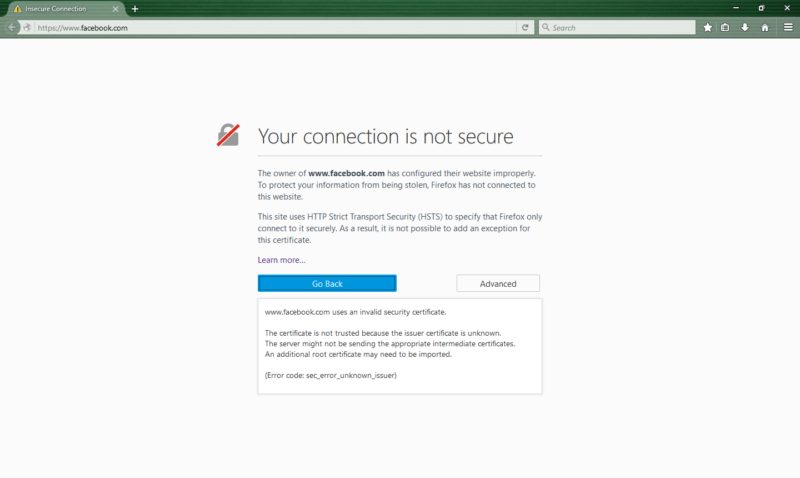
An unsecure connection warning from Mozilla

Customer support

With any free host customer support is going to be limited, slow to respond, and not all that helpful. That’s just the way it is.

A note on custom domain names and domain privacy: You can host a site with a custom domain for free, but you’re still going to have to purchase the domain name through a domain registrar. Lots of hosting providers have a domain registration arm of their business, but you can also purchase a domain anywhere and connect it to your free web host. No matter what, we recommend also springing for domain privacy, which keeps your personal information (including your phone number and physical address) from being listed on the WHOIS public database. Opt-out, you’ll be spammed like crazy — at least for now. (Since the EU’s General Data Protection Regulation (GDPR) went into effect in May 2018, domain registrars are “refraining from publishing this information” to avoid liability. Others are retracting information to avoid accusations of selling information to spammers.)

The 5 Best Free Web Hosts

Awardspace

  • 1 site, 1GB storage, 5GB bandwidth
  • No ads
  • Domain registration
  • Limited customer support ticketing, live chat, online documentation

Awardspace is a big player in the free hosting space and has been around for more than a decade. It stands out for offering a full gig of storage, more than many others, and, according to a friendly sales rep we chatted with, up-to-date versions of PHP and MySQL. It also offers the Zacky drag-and-drop website builder, plus an easy-to-use WordPress and Joomla installer. Note: If your site receives no traffic for 12 months, it will automatically be set to inactive; after two more weeks of notices, it will be deleted.

More Awardspace specs

PHP 7.2, MySQL 5.7, 30MB database storage, 1 email account, no SSL

Atspace

  • 1 site, 1GB storage, unlimited bandwidth
  • No ads
  • Domain registration
  • Limited 24/7/365 customer support, live chat, limited ticketing, online documentation

Atspace has nearly identical stats to Awardspace, with the exception of unlimited bandwidth (as opposed to Awardspace’s 5GB) and a claim of 24/7/365 support. (Digging deeper, though, Atspace lists that support as “limited 24/7/365 support” so take that with a big fat grain of salt.) Atspace also uses the Zacky website builder and app installer for apps like WordPress and Joomla.

More Atspace specs

PHP 7.2, MySQL 5.7, 30MB database storage, 1 email account, no SSL

Freehostia

  • 5 sites, 250MB storage, 6MB bandwidth
  • No ads
  • Domain registration
  • 24/7 customer support with 1-hour ticket response and online documentation

Freehostia offers free cloud hosting on its Chocolate plan (your guess is as good as ours). That means it should be fast, but the Chocolate plan is also very small: only 250MB of disk space and 10MB of database storage. That said, it does include a free self-signed SSL certificate, a site builder with free templates, and the promise of a response to help tickets in under one hour — pretty much unheard of. If you have a small enough site, the customer service promise alone makes Freehostia a compelling pick.

More Freehostia specs

PHP 4 / 5 / 7, MySQL 5, 10MB database storage, 3 email accounts, self-signed SSL

Agilityhoster

  • 1 site, 1000MB storage, 5GB bandwidth
  • No ads
  • Domain registration
  • Limited ticketing, live chat, online documentation (24/7 customer support for system malfunctions only)

Agilityhoster’s free tier is slightly smaller than what’s offered from Awardspace and Atspace: only 1000MB of storage and one 20MB MySQL database. It also lacks any sort of website builder, although it does have a simple WordPress and Joomla installer to get you up and running quickly. A sales rep confirmed that it runs up-to-date PHP and MySQL.

More Agilityhoster specs

PHP 7.2, MySQL 5.7, 20MB database storage, 1 email account, no SSL

Byethost

  • Unlimited sites, storage, and bandwidth
  • No ads
  • Domain registration
  • 24/7 customer support and knowledge base

Byethost is by far the most generous free web host with unlimited sites, unlimited storage, unlimited bandwidth, and five email accounts. It also provides an automatic SSL on all domains, and includes a free site builder with templates. That said, Byethost is one of the least professional-looking hosts I looked at, with a poorly written website and enough vagueness that I wonder how unlimited its unlimited offerings actually are. Unless you think you need a lot of database space, I recommend going with a different free host.

More Byethost specs

PHP 5.4, 5.5, 5.6, 7.0; unlimited database storage; 5 email accounts; self-signed SSL

Free Hosting for Ecommerce Sites

Selling products through a website that’s hosted for free isn’t easy. I wouldn’t be able to sleep at night if I didn’t say this: if you’re serious about starting a business online, you need to run your ecommerce with Shopify. It’s the only contender in this space, and the subscription cost is well worth it.

Most free sites don’t support ecommerce, and when they do, the experience is pretty limited.

Strikingly

  • Sell 1 product on the free plan
  • Custom domain costs additonal $24.95/year

I was actually pretty surprised to find Strikingly, a website builder that also offers built-in ecommerce on its free plan.

The catch here is pretty big: You’ll be limited to selling one single product, and you’ll be limited to using a Strikingly.com subdomain. So, it’s ecommerce but it’s definitely no place to build an ecommerce business. If that’s what you’re doing, you should head over to our guides How to Create an Ecommerce Website in 9 Easy Steps and How to Start an Online Store That Drives Sales in 2019. You won’t regret it.
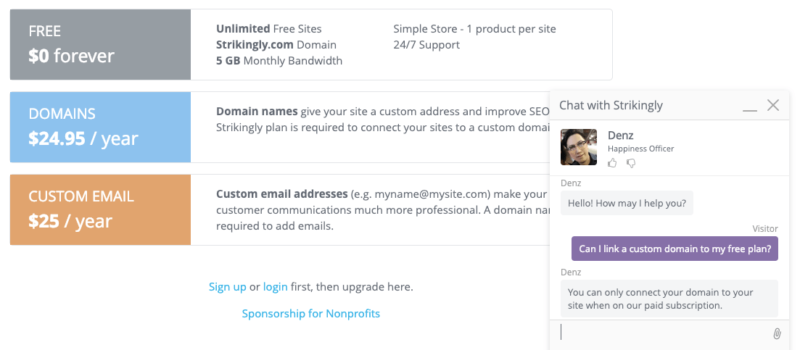
Strikingly free ecommerce support confirms you have to use a subdomain
I confirmed with Strikingly support that if you want a custom domain, you’ll be paying for a subscription.

Though selling only one product on a subdomain is super limiting, it’s very rare to find a free option that’ll let you sell anything at all. That’s why I included it at all. But, you already know how I feel about subdomains. (They are instant trust breakers for people who aren’t already convinced to buy from you.)

Free online stores are a little easier to come by. The difference? Online stores are just the stores, without the bells and whistles of a full-fledged website. That means no blog, no additional content — just products.

Square

  • Drag-and-drop editor, plus four customizable themes
  • Supports custom domain name
  • Transaction fee: 2.9% + $0.30

Square is a powerhouse business that was originally best known for its point-of-sell credit card swipers found at every farmers market and craft fair. Its free online store hosts unlimited products and has decent functionality.
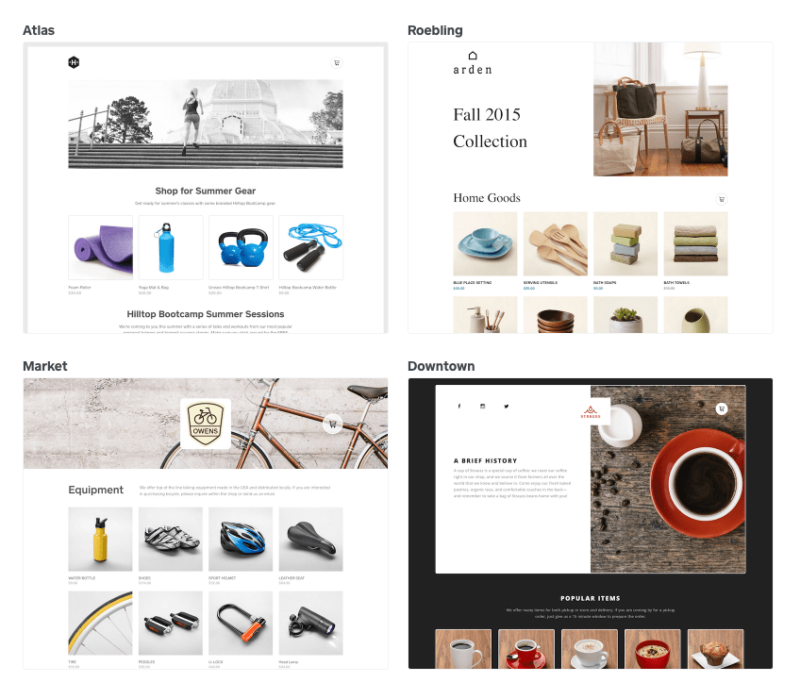
Square's free online store templates
Square offers four customizable templates for its free online stores.

Ecwid

  • 10 product limit
  • Start Site supports custom domain name
  • Transaction fee: Depends on payment provider (Ecwid supports 40 gateways)

Ecwid is a really interesting option. While it offers a free online store like Square (Ecwid calls it a “Starter Site”), Ecwid also offers a free online store widget with code you can insert into pretty much any platform your site is on from Wix to WordPress to Tumblr just like you’d insert a YouTube video. That widget also means you sell simultaneously on multiple sites.
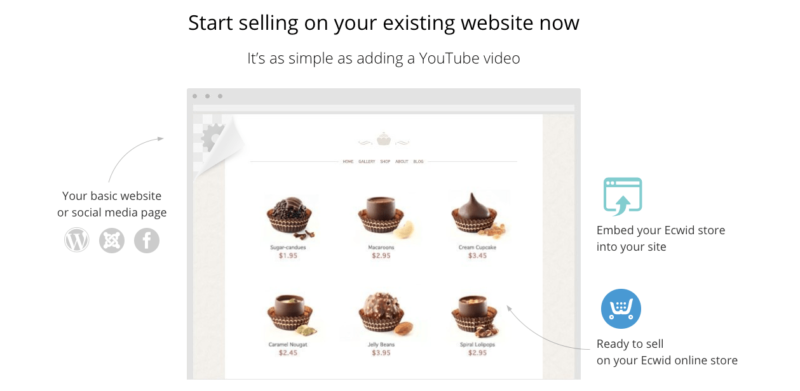
Image showing how you can embed an free Ecwid online store to any site.
You can add an Ecwid online store to any website for free.

The 2 Free Website Builders with Free Hosting

Design limitations are probably the biggest downside to using a free website builder. If the templates available on Ucraft and Google Sites aren’t what you’ve envisioned for your site, the next easiest free option is to find a free template you like and pair it with a free web host. I may be beating a dead horse, but the best web hosting services aren’t that expensive. We’re talking around $4/month for the initial contract. I think the price more than pays for itself in customer service, security, and speed.

Ucraft Review

  • Drag-and-drop builder, plus customizable templates (although you can’t update fonts)
  • Single page
  • Supports custom domain
  • Ucraft ad floats in bottom-right corner
  • Upgrade for unlimited pages, more customization, and no ads for $6/month
  • Ecommerce functionality starts at $14/month

Ucraft has a free plan for a single-page website that’s built with what it calls “elements.” An element is any individual piece of content: a title, a text block, a video, an image, an image gallery, a button. Ucraft’s free tier supports up to 50 basic elements, so that single-page website can hold a decent amount of content — just nothing too snazzy.

Some of the customizable templates available from Ucraft website builder.
Six of Ucraft’s 21 free templates, including a blank page for a completely customized site.

Ucraft's floating footer ad
A “Powered by UCRAFT” ad hovers in the bottom right corner of all free Ucraft websites.

Google Sites Review

  • Drag-and-drop builder, plus limited customizable themes
  • Unlimited storage
  • Supports custom domain
  • Google Sites ad in footer
  • Integrates with GMail
  • There are no upgrade options — this is everything

Google Sites is your other option for a super simple free site. And when I say “super simple,” I mean it. There are only six versions of the same template to choose from, and a limited number of layouts to work in. It’s super basic. In fact, lots of Google Sites are used for basic things like internal wikis.
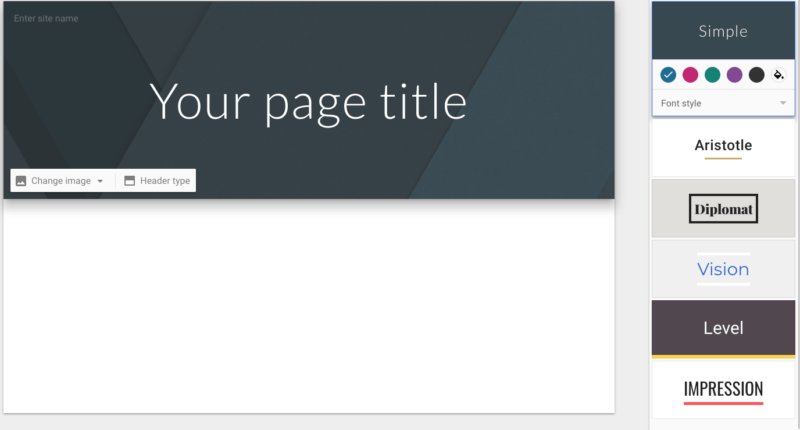
The six themes available on Google Sites

Google Sites offers one basic template in six simple themes.

That said, Google Sites hosts as many pages as you want at no cost. It connects to your custom domain. It integrates with every other Google service, like Docs, Forms, and Slides. And it’s absurdly simple to use, especially if you’re used to working in Google products. If you already have a Google account, or are paying for GSuite for email hosting (which I wholeheartedly recommend), it’s a no-brainer.

Free Web Hosting Alternatives for Subdomain Sites

If you’re okay with a subdomain (as opposed to a custom domain) your options for free hosting increase. That’s because lots of great website builders offer freemium versions of their platforms when you use a subdomain — for example, our URL would be quicksprout.wordpress.com or quicksprout.wix.com.

Obviously, a subdomain lacks the professionalism of a custom domain, and free versions of any website builder product or platform tend to be pretty stripped down. But if you’re interested in launching content quickly, subdomains offer a really low barrier of entry. Most can launch in just a few minutes. Even better, if you envision a more robust web presence in the future, starting for free on the platform you ultimately want to use means you’ll have everything already built. You’ll just need to upgrade.

At the free level, these 3 are pretty comparable. They’ve all got an assortment of free templates or themes, an easy-to-use editor, limited storage, and ads for their service floating near the footer or in a bottom corner of the site. If you may eventually upgrade to a paid plan, check out our review of website builders. I go into a lot more detail than I do here.

Weebly

  • Drag-and-drop builder, plus templates
  • 500MB storage
  • Weebly.com subdomain (yoursite.weebly.com)
  • Displays Weebly ads
  • Upgrade for custom domain, no ads, and ecommerce functionality: starts at $8/month

The free version of Weebly includes ads and a Weebly subdomain. You’ll be limited to 500MB of storage, but will have the full drag-and-drop builder plus templates. You can always start with the free version and upgrade later, though Weebly’s ads are pretty obvious.

Wix

  • Drag-and-drop builder, plus templates
  • 500MB storage
  • 500MB bandwidth
  • Wix subdomain (username.wixsite.com/siteaddress)
  • Displays Wix ads
  • Upgrade for custom domain, no ads, and ecommerce functionality: starts at $11/month

Wix’s free plan is a lot like Weebly’s — you’ll get 500MB of storage and a drag-and-drop builder with templates. But you’ll subsidize your free plan with ads and one of the most eggregious subdomains out there, username.wixsite.com/siteaddress. You have the option to start for free and upgrade at a later time.

WordPress.com

  • Choose from free themes
  • 3GB storage
  • Unlimited bandwidth
  • WordPress.com subdomain (yoursite.wordpress.com)
  • Displays WordPress ads
  • Upgrade for custom domain and no ads: starts at $4/month

I love WordPress, but typically recommend people go with WordPress.org, the self-hosted version. The fully hosted version does have a free subdomain plan with free themes, but you’ll be using a subdomain and displaying WordPress ads. To get rid of those elements, it’ll be $4 a month, or about the price of some of the best web hosts. I think it’s better to go the self-hosted route at that point.

Best Free Web Hosting for Nonprofits and Educators

There are excellent — and extremely robust — free hosting options available for nonprofits and educators. These typically aren’t stripped-down versions, but full-blown shared hosting plans that are available for free, including custom domains, full technical functionality, and attentive customer support.

For nonprofits, I recommend DreamHost.

DreamHost offers one free Unlimited shared hosting plan (which includes email hosting) for 501(c)(3) organizations, plus a 35% discount on its suped-up DreamPress managed WordPress hosting. Both are killer deals.

DreamHost is a really big name in web hosting. It’s one of our top picks for best web hosts for small businesses and is one of three recommended hosts by WordPress itself. Most of the other free web hosts for nonprofits don’t have nearly as strong of reputations, nor offer as robust free plans. This plan has unlimited bandwidth, unlimited storage, and you can host an unlimited number of sites. Read more about the company in my Dreamhost web hosting review.

5 Other Free Web Hosts for Nonprofits to Consider

A Small Orange

Free month-to-month “Small Shared Plan” for businesses that pass A Small Orange’s “criteria.” You’ll get 50GB bandwidth, 5GB storage, and can host an unlimited number of sites.

InterServer.net

Free “Standard” web hosting for 501(c)(3) organizations, which includes unlimited bandwidth, unlimited storage, and unlimited sites.

Kualo

Free “Startup” shared hosting plan (plus free LiteSpeed caching add-on) for US-based charities that meet Kualo’s criteria. The plan comes with unlimited bandwidth, 30GB storage, and unlimited websites.

MightWeb

Free “Starter” shared hosting package to nonprofits in the US. This plan has unlimited bandwidth, but only 5GB storage and just 2 websites.

Weberser Web Hosting

This free non-profit hosting plan only includes 100GB bandwidth, 5GB storage, and 1 website.

Best Free Web Hosting for Educators

Some of our favorite web hosts provide free or deeply discounted services for teachers and university administrators.

SiteGround Hosting for Educators

  • 1 website
  • 10GB storage and unmetered bandwidth
  • SiteGround subdomain: yoursite.sgedu.sit

SiteGround, our pick for best web host, has some of the most robust shared hosting technology available — and arguably the best reputation in an industry of hundreds. SiteGround offers all the features and functionality of its StartUp Plan (including 24/7 support on chat, phone and ticket) to teachers for free with a SiteGround subdomain. SiteGround also discounts its hosting for students. Learn more about SiteGround plans and features in my SiteGround hosting review.

InMotion Hosting for Educators

  • 6 websites
  • Unlimited storage and bandwidth

InMotion Hosting, our pick for best web host for beginners and another standout in the world of shared hosting, gives its mid-tier Power plan to educators for free. Check out my InMotion hosting review for more info on the hosting company.

Weebly for Educators

  • Drag-and-drop editor, plus templates
  • Unlimited bandwidth and storage
  • Includes 40 student accounts

Weebly has a eductor-focused arm of its website builder business. It works just like Weebly for any small business or personal website, but is geared for educators. The edu-version of Weebly gives the option of publishing content to a custom domain, not a Weebly subdomain. It also skips all Weebly advertising.

If you like the sound of Weebly and a website builder, check out WordPress’s version, Edublogs. Similarly, it offers an ad-free environment with class and student management functionality, edu-focused plugins, and an Edublog subdomain.

Recap On Free Web Hosting

If you’re after free web hosting, you might really want the simplicity and ease of a free website builder. I’m impressed with both Ucraft and Google Sites which provide easy to use drag-and-drop templates and support custom domains. Yes, you’ll be limited in design and there will be some sort of “Powered by” ad in the footer on both. If those are deal-breakers, you probably do want web hosting.

Any free host will have similar drawbacks: limited storage and bandwidth, potential for spam-flagging email, and limited customer support. Go with Awardspace for more storage (1GB), Atspace for 24/7/365 help, or Freehostia if your site is really small (under 250MB).

If you’re an educator or nonprofit, you have a lot more — and better — options. SiteGround and InMotion Hosting, two of our very favorite web hosts, have excellent free plans for educators. So does website builder Weebly. And Dreamhost, another of our favorite web hosts, doesn’t charge nonprofits for one free Unlimited shared hosting plan.


from Quick Sprout https://ift.tt/2PLkK16

Shopify vs Etsy: Which Platform is Better for Your Online Business?

Shopify vs Etsy Featured Image

So, you want to make money online selling products, and you’ve narrowed down your ecommerce options to Shopify vs Etsy. The question now is, which platform would be the better choice for your business? Fortunately, you’re in the right place!…

The post Shopify vs Etsy: Which Platform is Better for Your Online Business? appeared first on Niche Pursuits.


from Niche Pursuits https://ift.tt/2Ce1Oiw

Canva Review: An Intuitive Design Tool for Non-Designers

Canva Review Featured Image

Because of blogging and social media  sites like Instagram and Pinterest, images are more important than ever! That’s where Canva comes in. If you’ve done ANY kind of marketing in the last few years, you’ve probably heard of this powerful…

The post Canva Review: An Intuitive Design Tool for Non-Designers appeared first on Niche Pursuits.


from Niche Pursuits https://ift.tt/2raPxsN

Content Pit Review: Is it Possible to Find Fast, Inexpensive, and High Quality Content?

content pit home page

There’s an old joke among freelancer writers: Fast, high quality, and inexpensive. You can pick two. Content creation is one of the most difficult parts of building out a website. In this Content Pit review, we’re going to look at…

The post Content Pit Review: Is it Possible to Find Fast, Inexpensive, and High Quality Content? appeared first on Niche Pursuits.


from Niche Pursuits https://ift.tt/2NEy5Vl

The Different Types of Web Hosting Options

Every website in existence is hosted on the Internet. But not every website is hosted the same way.

If you’re starting a new website for the first time, it’s normal to have some questions about what web hosting is and how it works. You definitely want to learn about the different types of web hosting so you can figure out which option is the best for your website.

Don’t rush through this process. Choosing the wrong web hosting type can cause big problems for your site down the road.

Some of you might be unhappy with your current web hosting situation, so you’re looking to switch to another type. That’s what brought you to this page.

Regardless of your situation, this guide will explain everything you need to know about your web hosting options. Once you figure out the type of web hosting you want, then you can review the best web hosting providers and select a plan to meet your needs.

What is Web Hosting?

Before we go any further, I want to start with the basics to make sure you have a full understanding of what web hosting is and how web hosting works.

Websites are hosted on servers, which are powerful pieces of hardware that house websites and data related to those sites. Every component of your website is stored on a server and accessed through your web host. This includes elements like files, text, images, videos — everything.

Servers are physically located in data centers, which are typically run and managed by different web hosting companies.

Web hosts provide the technology and server space required for your website to be accessed on the Internet. This allows users to search for your site and view your web pages online.

Different Types of Web Hosting

All servers are not the same, which is why different web hosting options exist. Some servers are shared by multiple websites, while other servers are dedicated to just one website.

There are four main types of web hosting:

Reseller hosting and WordPress hosting are also specific types of hosting that fall within these categories. We’ll cover all six types of web hosting as we continue.

How do you know which hosting option is best for your website?

Lots of factors will determine this answer. The type of server you choose will impact elements like performance, security, scalability, and management level of your website.

The type of website you have and the amount of traffic you’re getting will also impact your decision on choosing a web hosting option. For example, a small personal blog with 5,000 monthly visitors will have different hosting needs than a large ecommerce site with 250,000 visits per month.

It’s also worth noting that different hosting options and plans are offered at varying price points. So it’s important that you find an option that falls within your budget as well.

I’ve outlined and explained the six different web hosting options below. You can use this information to figure out which hosting type is the best choice for your website.

Shared Hosting

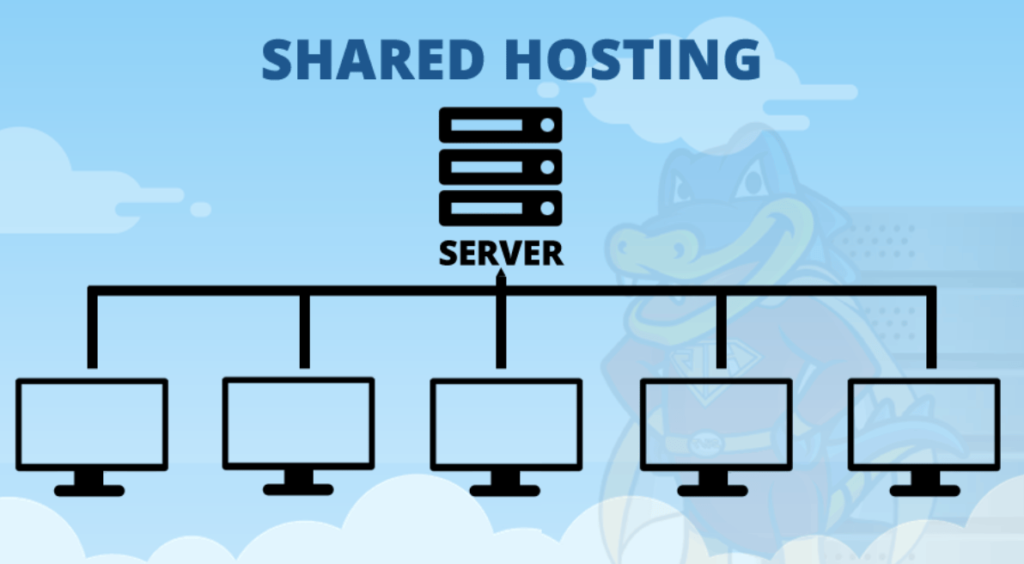
Shared hosting is the most basic type of web hosting. It’s cost-effective and the best choice for small or entry-level websites. As the name implies, websites using shared hosting will be sharing resources with other websites on a singular server.

Shared Hosting

That’s one of the reasons why shared hosting is so cheap compared to other types of web hosting.

Each website on the server will have a limited amount of resources as defined by their specific hosting plan.

Shared web hosting can be compared to renting a room in a house with other people. You have your own bedroom, but you and your roommates will share resources like water, electricity, and common spaces throughout the house.

The nature of sharing a server with other websites has its drawbacks. If another website on your server has a traffic spike, it can potentially cause performance issues with your site. These situations are out of your control.

So while shared hosting is a great option if you want to save some money, it definitely won’t deliver the most high-quality web hosting experience for you or your website visitors.

Who is Shared Hosting For?

Shared hosting is a great choice for beginners and smaller websites. It’s cost-effective and doesn’t require lots of technical knowledge to get started.

I’d recommend shared web hosting to websites that are on a tight budget. Bloggers and small business owners who have simple websites are great candidates for shared hosting. Any website that doesn’t require too much on-site interaction or lots of resources will be fine with this hosting type.

If you’re not expecting more than 10,000 or 20,000 monthly visits to your website, you can save some money by selecting a shared web hosting plan.

Shared web hosting pros:

  • Most cost-effective type of web hosting.
  • Easy to set up.
  • No technical knowledge required.
  • Great for beginners and small websites.

Shared web hosting cons:

  • Sharing server resources with other websites.
  • Performance issues are out of your control.
  • Slower loading times and lower uptime rates.
  • Not scalable.

Best Shared Web Hosting Provider — Bluehost

Bluehost

Our recommendation for shared hosting is Bluehost. So if it sounds like shared hosting is the best option for your website, this is the most logical place to start your search.

This provider has an outstanding reputation in the industry. More than 2 million websites across the globe trust Bluehost for web hosting.

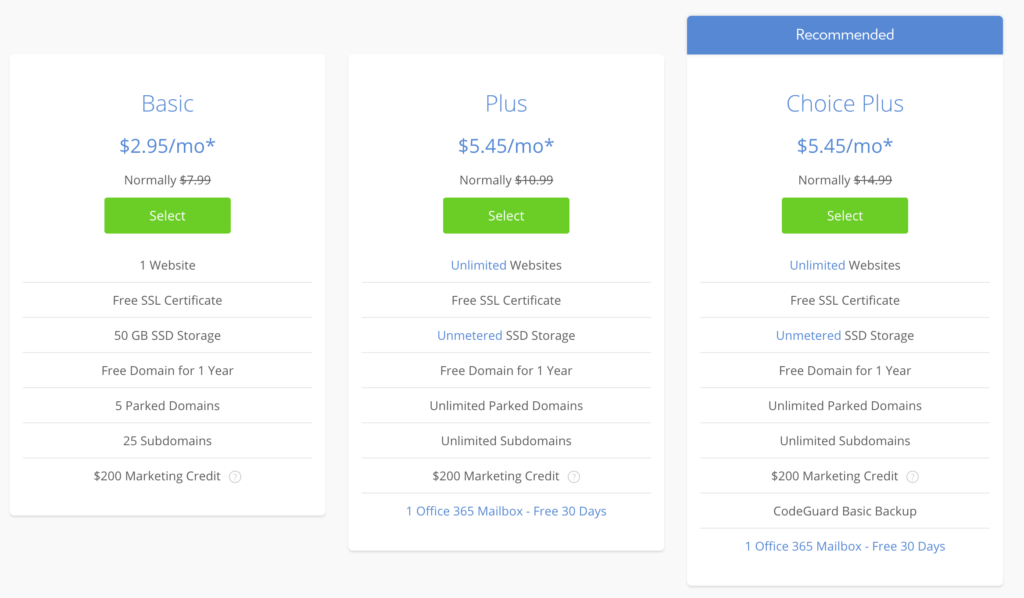
Bluehost offers shared hosting plans starting as low as $2.95 per month.

All plans come with a free domain, free SSL certificate, and free marketing credits for Google Ads and Microsoft Advertising.

If you have questions, problems, or need any assistance, you can contact Bluehost support 24/7 via phone or live chat.

VPS Hosting

VPS stands for “virtual private server.” This hosting type is a step above shared web hosting. When a website outgrows their shared plan, it’s common for owners to upgrade to a VPS.

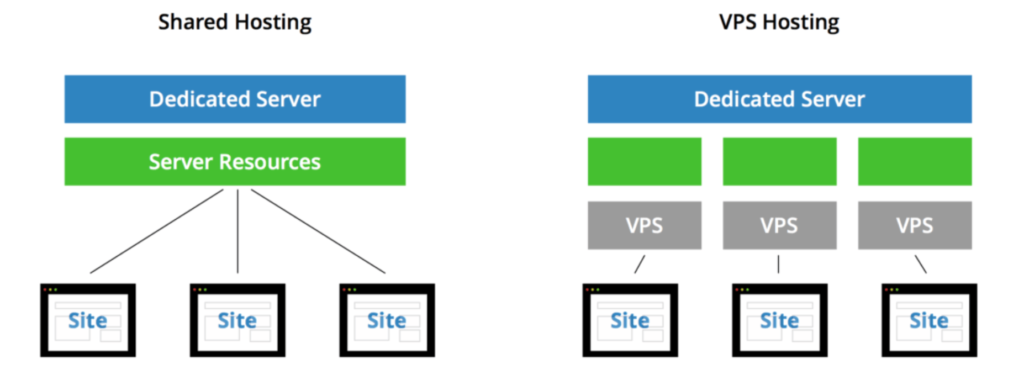
With a virtual private server, your website will still be sharing a single server with other websites. However, the number of websites you’ll be sharing it with is significantly lower.

The main server is split into multiple virtual servers—hence the name. These virtual servers can be customized by individual websites.

Even though the main server is shared with other sites, your website will have dedicated resources with a VPS.

VPS Hosting

For those of you who want to run custom configurations to your server, you can get optional root access with your VPS hosting plan.

Since you won’t be sharing resources with other websites, your site will perform better than it would with a shared hosting plan. This means you’ll benefit from faster loading times and higher uptime rates. You won’t have to worry about another website causing your site to crash.

Most websites do not need a dedicated server (we’ll get to that next). But a VPS gives you some of the benefits of dedicated hosting at a fraction of the price.

A virtual private server is like renting an apartment on your own. You won’t be sharing a kitchen, bathroom, living room, or other common spaces with any roommates. This gives you much more freedom and flexibility to do what you want with the space.

However, you’ll be sharing some resources with the other units in the building. So there will still be some limitations.

Who is VPS Hosting For?

VPS hosting is best for small or medium-sized businesses that can’t afford to have unexpected downtime on their website. It’s a great option for website owners who have outgrown the resources of a shared hosting plan.

A virtual private server can benefit website owners who are tech-savvy and want to make custom changes to their server configuration.

Websites with large files like videos and images should consider a VPS. Interactive websites with complex files will perform better on a VPS as opposed to a shared server.

VPS hosting pros:

  • Dedicated server resources.
  • Ability to make custom configurations to your server.
  • Higher uptime rates and faster loading speeds.
  • More cost-effective than a dedicated server.

VPS hosting cons:

  • Sharing the main server with other websites.
  • Not as easy to set up as a shared server.
  • Still has limitations in terms of what you can control.

Best VPS Hosting Provider — InMotion

InMotion

Lots of hosting providers offer VPS plans, but InMotion is our top recommendation for this type of web hosting.

The VPS plans offered by InMotion come with root access, which gives you the ability to make custom changes to your virtual server. This is a great option for those of you who are more technically advanced.

InMotion offers free cPanel and WHM, making it easy for anyone to view and manage their VPS.

You’ll also have the option to choose your data center for maximum speed. InMotion has VPS plans that are optimized for ecommerce shops as well.

All VPS plans from InMotion come with a 90-day money-back promise, which is one of the best satisfaction guarantees that you’ll find in the industry.

Dedicated Hosting

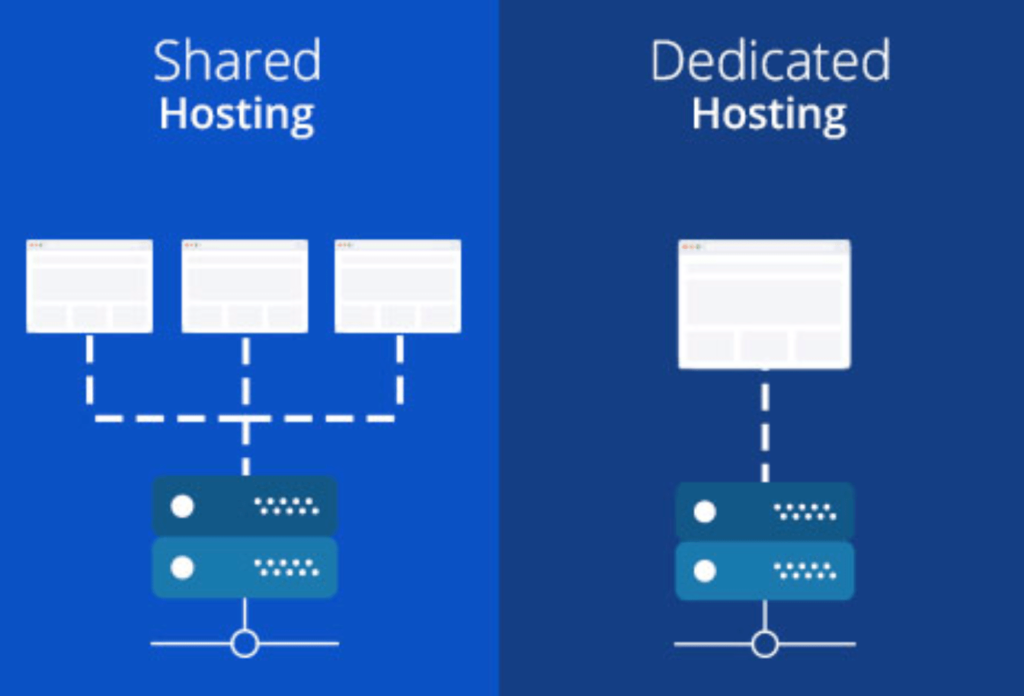
Dedicated servers are the top of the line in web hosting. As the name implies, you’ll have a dedicated server that belongs to you, and you alone. This is the most expensive type of web hosting, but it comes with added benefits.

Since you won’t be sharing resources or anything else with other websites, your site will operate at peak performance.

Websites being hosted on a dedicated server have complete technical control over the server settings. You choose the software, configurations, and anything else you need.

If you get a dedicated server, you should expect extremely high uptime rates and lightning fast loading speeds. You won’t have to worry about traffic from other websites impacting your performance.

Dedicated Hosting

A dedicated server is like owning a house. If you want to build a fence, plant a tree in the yard, build a patio, or renovate the kitchen, everything is completely up to you.

Who is Dedicated Hosting For?

Dedicated hosting plans are typically reserved for enterprise-level websites. These servers are intended for websites that have high volumes of traffic.

I wouldn’t consider a dedicated server unless your site was getting upwards of 100,000 monthly visits.

Large ecommerce sites and enterprises should consider a dedicated hosting plan because they can have complete control over the functions of their server. Sites that require the highest levels of security, such as websites that store financial data or medical information would benefit from a dedicated server.

Dedicated servers come with varying management levels. You can look for a hosting provider that will manage your server for you, or you can manage it on your own. The downside of managing the server on your own is that you’ll be responsible for installing updates and monitoring everything for glitches or errors.

Only consider a dedicated server if you can afford it. In most cases, a dedicated hosting plan will be out of your price range, especially if you are starting a new website. These servers can cost up to $2,000 per month.

Dedicated hosting pros:

  • Complete control over the server.
  • Not sharing resources with any other websites.
  • High security.
  • Fast load times, high uptimes, and optimal performance.

Dedicated hosting cons:

  • Most expensive type of web hosting.
  • Requires technical knowledge.
  • You are responsible for everything.

Best Dedicated Hosting Provider — HostGator

HostGator

HostGator is my top recommendation for dedicated server plans. While dedicated hosting definitely isn’t cheap, the plans offered by HostGator are actually pretty affordable.

Introductory pricing specials for their dedicated servers start at $118.99 per month.

One of the reasons why I like HostGator is because they offer fully managed plans. If you want, their team of technicians can handle system monitoring, software patching, updates, offsite backups, data migrations, and more.

You’ll have access to 24/7/365 priority customer support as well.

So if you think your website needs a dedicated server, check out the plans and options offered by SiteGround.

Cloud Hosting

Cloud hosting is a newer type of web hosting. It can best be described as a hybrid version of a VPS, but more cost-effective.

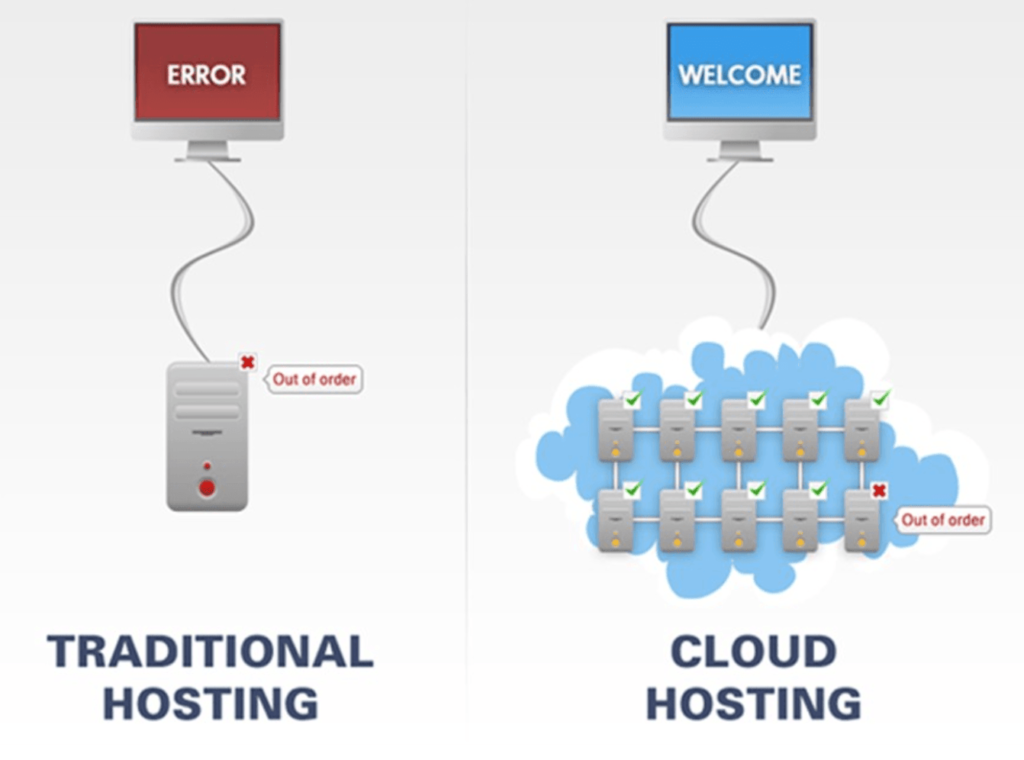
Cloud hosting plans come with multiple remote servers. Each server has different responsibilities. If one of the servers is compromised or has a problem, the other servers on the network will take over those responsibilities and pick up the slack.

Cloud Hosting

That’s what makes cloud web hosting such an appealing alternative to traditional web hosting.

With cloud servers, your website will have higher uptime rates and won’t have as much unexpected downtime due to server errors. Your site will remain fluid and perform at a high level.

The best part about cloud web hosting is scalability.

With traditional hosting, there is always a constant dilemma between server resources and price. You don’t want to overpay for a plan with resources that you’ll never use, but at the same time, you don’t want to exceed the resources of a lesser plan and negatively affect the performance of your website.

Unless you know exactly how many page views your site will get per month, then this is nearly impossible to predict.

But website traffic is never an exact science. At times, you’ll experience spikes or surges to your site—which is great news. You just need to make sure your plan can accommodate that traffic.

That’s why cloud hosting is the ultimate solution to this dilemma. The best cloud hosting plans allow you to scale your resources on-demand.

You pay for what you use, and you can always adjust these resources within your admin dashboard.

Who is Cloud Hosting For?

Cloud hosting is the best option for medium and large business websites that are growing at a rapid rate.

If your website traffic is unpredictable and you’re planning on it scaling at a steady rate in the coming months or years, then you should consider a cloud hosting plan.

Any website with more than 50,000 monthly page visits could consider a cloud plan. Websites that have outgrown their shared plan and need to upgrade could seek cloud hosting as an alternative option to a VPS.

Cloud hosting pros:

  • High security.
  • Scale resources on demand.
  • Less unexpected downtime.

Cloud hosting cons:

  • Pricing isn’t always fixed.
  • Unpredictable traffic can increase costs.
  • Limited customization.

Best Cloud Hosting Provider — SiteGround

SiteGround

If you’re interested in cloud hosting, look no further than SiteGround. Siteground has always been an industry leader in web hosting. Their cloud plans are suitable for a wide range of businesses and website sizes.

Their entry-level cloud plans come with 2 CPU cores, 4 GB of memory, and 40 GB of SSD space. But you can fully customize a cloud with up to 32 CPU cores, 128 GB of memory, and 1 TB of SSD space. Although most of you won’t need all of that, it’s nice to know you have those customizable options to deliver exactly what your website requires.

SiteGround’s cloud plans are fully managed. Their IT team will take care of all of the technical aspects of your hosting experience. This allows you to focus on everything else.

All cloud plans come with a free SSL, free CDN, private DNS, and daily backups. You’ll also benefit from SiteGround’s advanced priority support if you ever need assistance.

Reseller Hosting

Reseller hosting is definitely not for everyone. If you’re building a small website from scratch or just looking to host a website on your own, then this will not be the best option for you.

But if you want to sell web hosting to other sites, then you should look into reseller hosting plans.

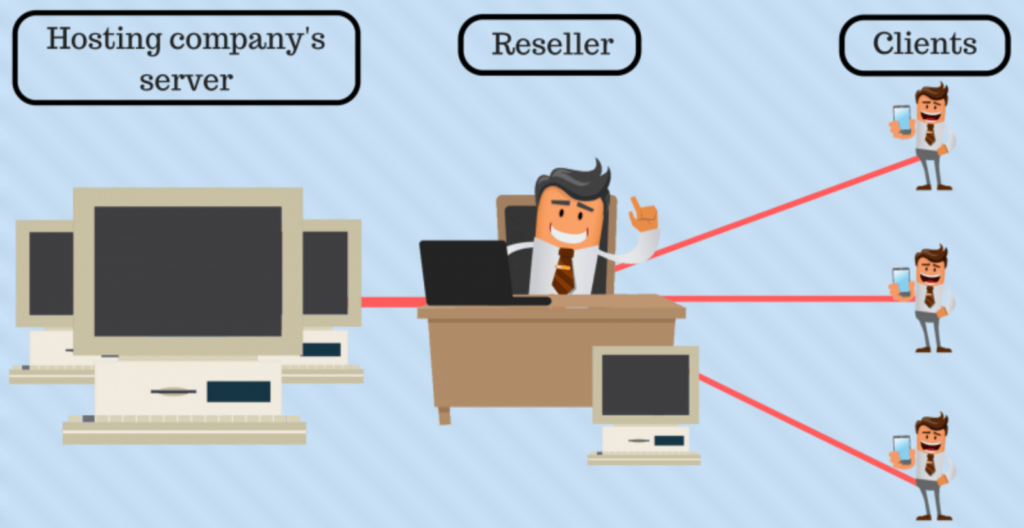
Reseller hosting is basically white label web hosting. You buy hosting from a provider and then resell those services to your clients.

Reseller Hosting

As the reseller, you get to choose the pricing options for your clients. Since you’ll be paying wholesale rates to the provider, then you have the opportunity to make substantial profit margins.

Who is Reseller Hosting For?

For the most part, reseller hosting is for agencies, web designers, and web developers. These are people who already have clients in this space, so they can just add web hosting to the services that they currently offer.

You can make it easy on your clients by allowing them to get all of their website needs in one place, as opposed to finding a web hosting plan on their own.

One of the best parts about being a reseller is sustainability. If you design a website for someone, they won’t necessarily need your services forever. But if you can get those clients to buy web hosting services from you, then you’ll benefit from a steady monthly income for the lifetime of that website.

I wouldn’t consider reseller hosting unless you’re planning to manage at least 10 different websites. Otherwise, it probably won’t be worth it for you.

Reseller hosting pros:

  • Set uncapped prices to your clients.
  • Get recurring and sustainable income.
  • Improve your existing services.

Reseller hosting cons:

  • Need lots of clients to make it worth your time and effort.
  • If something goes wrong, your clients will turn to you.

Best Reseller Hosting Provider — A2 Hosting

A2 Hosting

A2 Hosting is known for speed, which is one of the reasons why it’s my top recommendation for reseller hosting.

When you white label hosting to your clients, you want to make sure that you deliver high performance. Even though the hosting technically isn’t coming from you, any problems will be a poor reflection of your personal brand. But with A2 Hosting, your clients will still get high uptime rates and fast loading speeds on a shared server.

Another top benefit of A2 Hosting is that WHMCS comes free with all reseller plans. You’ll definitely need this to effectively manage all of your clients and their resources. Other hosting providers charge extra for this.

Overall, client management with A2 Hosting is the best I’ve seen in the industry. You can even set up simple hosting support as well.

A2 Hosting also offers a 99.9% uptime commitment to you. So you can pass that along to your customers.

WordPress Hosting

WordPress hosting is another very specific type of web hosting. As you can probably imagine from the name, it’s intended for websites using WordPress as a CMS.

In the simplest terms, WordPress hosting is basically web hosting that’s been optimized for WordPress.

The best WordPress hosting plans come with one-click WordPress installations as well.

WordPress hosting usually has added security that’s specifically designed for websites that are running on WordPress. Since WordPress is the most commonly used CMS across the globe, those websites are a higher risk for cyber crime. So that added security is definitely a great benefit.

You’ll normally see two different types of WordPress hosting offered by providers.

  • Shared WordPress hosting
  • Managed WordPress hosting

Shared WordPress hosting works the same way as regular shared hosting, except WordPress might be pre-installed.

Managed WordPress hosting provides added benefits like enhanced security, server caching, staging, and faster loading speeds.

Who is WordPress Hosting For?

This isn’t rocket science. WordPress hosting is for WordPress users. If you want your hosting to be optimized for your WordPress site, then you should look into this type of web hosting.

WordPress hosting pros:

  • Optimized for WordPress.
  • WordPress pre-installed or one-click installations.
  • Enhanced security for WordPress sites.

WordPress hosting cons:

  • Less control and flexibility.
  • Updates aren’t always smooth.
  • Sharing resources with other WordPress sites.

Best WordPress Hosting Provider — WP Engine

WP Engine

I should start by saying I’m a little biased here. We use WP Engine here at Quick Sprout, so naturally, this is my top pick for the category.

It’s not necessarily the best choice for beginners. But for those of you who have some experience with web hosting and plan to build a blog or business website with high-traffic, WP Engine is your best bet.

WP Engine has WordPress hosting plans starting at $35 per month. This is another reason why I don’t think it’s the best choice for a beginner. There are other WordPress hosting plans out there starting for less than $5 or $10 per month.

The speed and security is the best part of WP Engine. They offer managed WordPress hosting services, so everything is handled at the server level.

This means that you won’t have to install lots of extra plugins that can weigh your site down.

Another reason why I recommend WP Engine is because they have excellent customer support. All plans come with 24/7 live chat, and some of the higher-tier plans even come with 24/7 phone support.

I’ve been impressed with the quality and level of service whenever I’ve needed to contact them.

What is the Best Hosting Type For Your Website?

This answer will be different for everyone. It all depends on factors like the type of website you have, the resources you need, your budget, and traffic.

To figure out what category you fall in, here’s a quick recap of the different hosting types and who they are for:

  • Shared Hosting — Most cost-effective plans for entry-level websites. – Recommended Shared Host = BlueHost
  • VPS Hosting — For websites that have outgrown shared hosting. – Recommended VPS Host = InMotion
  • Dedicated Hosting — Enterprise-level servers for large websites. – Recommended Dedicated Host = HostGator
  • Cloud Hosting — Best for websites that are growing rapidly. – Recommended Cloud Host = Siteground
  • Reseller Hosting — For agencies, web developers, and web designers. – Recommended Reseller Host = A2 Hosting
  • WordPress Hosting — Hosting optimized for WordPress sites. – Recommended WordPress Host = WP Engine

Once you figure out what type of web hosting is the best option for your website, then you need to pick a hosting provider and plan. I gave my top recommendation for each category in this guide, so that’s the best place for you to start your search.


from Quick Sprout https://ift.tt/2NjdV4l

Friday, November 1, 2019

The Best Web Hosting for WordPress

So you’ve decided to build your site with WordPress?

Great choice!

But what hosting is best for your new WordPress site?

We’ve gone through all the hosts, many of which we’ve used ourselves, and ranked the best options for you.

The 6 best WordPress web hosts ranked

#1 – Bluehost — Best value per dollar for WordPress sites

Price starts at $2.95/mo
Great uptime
24/7 phone and chat support
WordPress recommended host

Bluehost is one of the most popular and trusted web hosts. They’re also one of the three hosts that WordPress officially recommends.

They’re a perfect choice for WordPress sites. Once you sign up, you’ll be able to install WordPress super easily. You’ll have your site live within 15 minutes from now.

Bluehost also has some of the lowest pricing around, plans can get as a low as $2.95/month. That’s crazy low.

Bluehost Pricing

Yes, you will be on shared hosting. So if you or someone else on your server gets a huge spike of traffic, your site could go down. But honestly, this almost never happens. I’ve had websites on shared hosting for over a decade and never had a site go down.

The value per dollar that you get from Bluehost on a WordPress site can’t be beat. And it’s more than powerful enough for the vast majority of websites. They’re also widely recommended throughout the industry and have the official recommendation from WordPress. For the vast majority of folks, Bluehost is the best option.

#2 – SiteGround — Good all-around option

Price starts at $3.95/mo
Autoupdate and daily backups
24/7 support
A WordPress recommended host

SiteGround is one of the other WordPress recommended web hosts. You also get some advanced features for WordPress like automatic updates and enhanced security on all the Siteground plans.

Just remember, the quality of these features won’t be as good as a full managed WordPress host like WordPress. There’s only so much customization that can be done on normal hosting. It’s still a great option for most folks though.

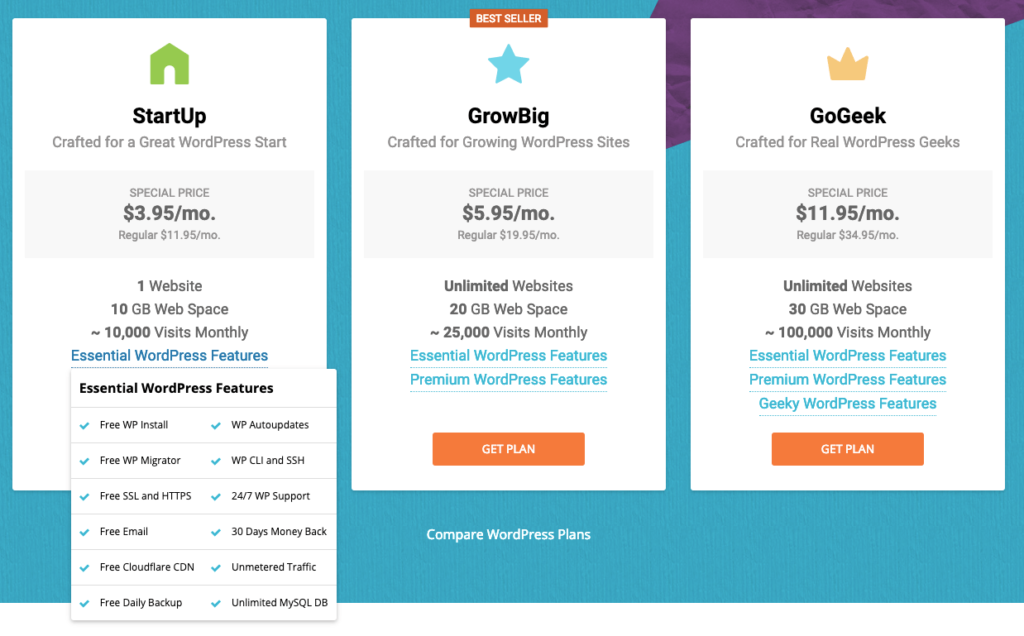
SiteGround Managed WordPress Hosting Plan Pricing List

I recommend the “StartUp” plan, you’ll get up to 10GB of space and up to 10,000 visitors for 1 site. The intro plan is $4/mo. for the length of your first contract, then will bump up to $12/mo.

The three features I love best are the WordPress autoupdates, 24/7 WordPress-knowledgeable support, and free daily backups. This covers most of the problems you could run into, freeing up more of your time to focus on your business or project. Read more about their services in my complete SiteGround hosting review.

#3 – WP Engine — Best for pro users

Starts at $35/month
Biggest name in WP hosting
A premium product with a premium price
Easily the all-around best

For pros, I recommend WP Engine. It’s definitely the best option for managed WordPress hosting. If you’re trying to get serious and build a high-traffic blog or business, use WP Engine. It’s, by far, the most widely known and respected company for managed WordPress hosting.

Full disclosure: We use WP Engine at Quick Sprout.

I don’t recommend it for anyone who’s just starting out since it’s much more expensive. We’re talking $35–100/month versus $4–15. Most WordPress sites would do much better with Bluehost or Siteground. Not only will you save a bunch of money, you won’t need the serious features that come with WP Engine.

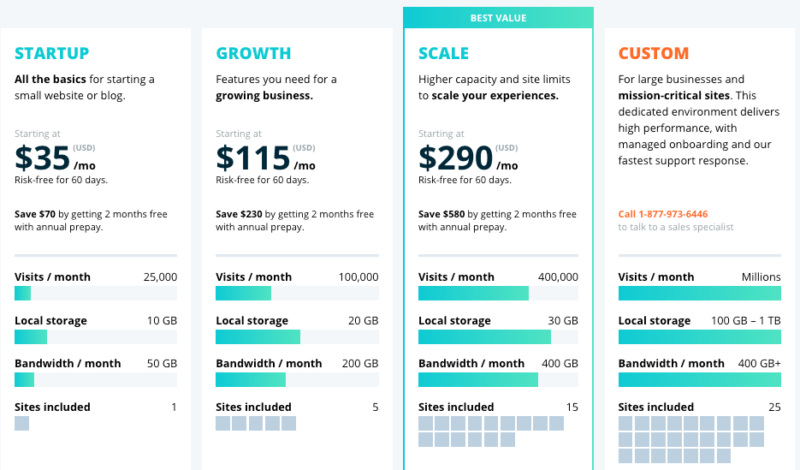
For $35/month, you can host one 10GB site with a limit of 25,000 monthly visitors. The next tier of service is a hefty $115/month for five sites and 100,000 monthly visitors. If you get a spike in traffic and go over these traffic limits, you’ll get hit with overage fees.

Pricing structure of WP Engine plans
WP Engine’s plans are more expensive than a shared hosting provider — but the quality of service is worth it.

Service is where WP Engine shines. As a managed host, it maintains speed and security at the server level — meaning you don’t have to do anything at the site level. You don’t have to research and rely on plug-ins to shave seconds off your load time, or become an expert on the best practices for building a lean site. You don’t have to carve out time to update your install and plugins, or run backups, or implement security features to ward off brute force attacks. WP Engine takes care of it all behind the scenes.

Customer service is also excellent, with 24/7 chat support for all tiers of service, and 24/7 phone support starting at the second tier. Its ticketing system is trackable, and its knowledge base is one of the best. And because support is an expert at one thing only — WordPress — the answers you get from human interactions tend to be nuanced and comprehensive.

Every time I’ve had to reach out to their customer support, I’ve always been impressed. The speed, thoroughness, and expertise is world-class.

#4 – Flywheel — Best for freelancers and agencies

Price starts at $14/month
Geared toward freelancers and agencies
Easily build and transfer sites to clients
User-friendly interface

Flywheel is a managed WordPress host for freelancers and agencies. If you build sites for clients, you should seriously consider Flywheel.

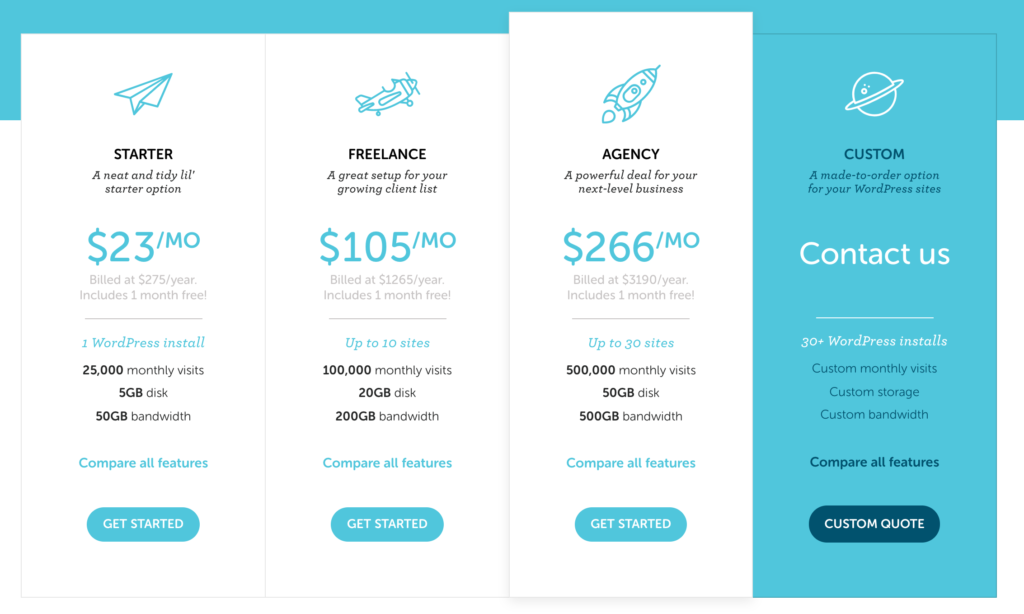
Compared to WP Engine, Flywheel has a significantly lower price for entry. Flywheel’s plans are divvied up by number of sites — three plans for a single sites, and another three plans for multiple sites (with a customizable enterprise option thrown in) — which gives even little starter sites a chance to get in on the fully managed WordPress game without having to pay for more than they need. Flywheel offers a single site plan with 5,000 monthly visitors and 5GB of disk space for $14/month. That’s half of WP Engine’s lowest tier.

Flywheel Pricing

As a freelancer or agency, you’ll get great features like like “blueprints” for the themes and plugins you use over and over again. And 14 days on a free, password-protected demo site to show your work before having to pay. You can also easily transfer billing on any of your sites to a client.

Most businesses won’t need features like these. I don’t for example. But I really wish Flywheel was around when I was building websites for clients back in the day. It would of saved me a ton of time and made me look like a true pro with how seamless everything is.

If you build sites for clients, start using Flywheel.

#5 – Kinsta — Alternative managed WordPress hosting

Price starts at $30/month
Premium managed WordPress hosting
All features included across all plans
Built for scalability

If, for some reason, you don’t want to use WP Engine as a premium WordPress host, go with Kinsta.

Kinsta is also a full managed WordPress host with similar prices. So it makes a great alternative if WP Engine isn’t an option for you.

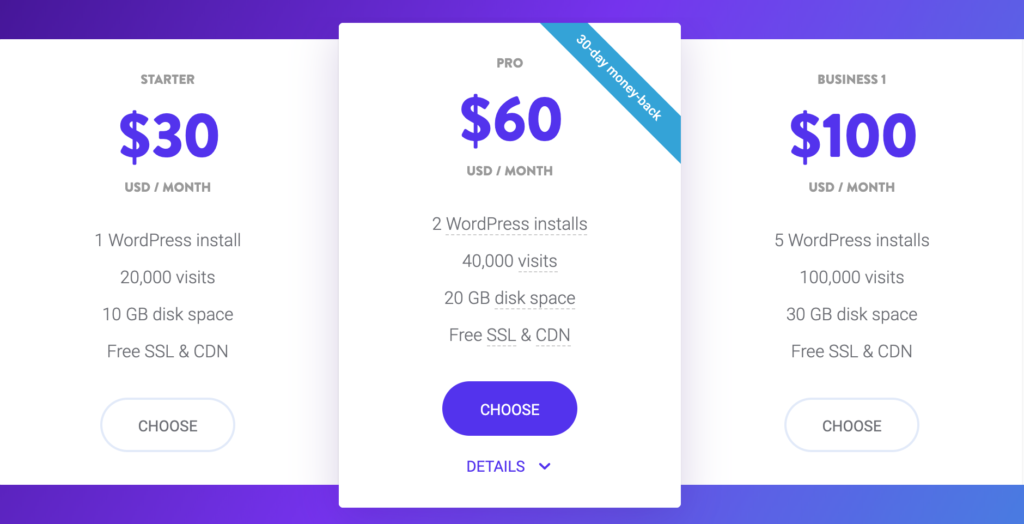
A popular, robust managed WordPress host that emphasizes scalability. Pricing starts at $30/month for 20,000 monthly visitors and scales up from there:

Kinsta Pricing

The plans keep going too, Kinsta can handle any volume of traffic that you need. You won’t have to worry about switching from outgrowing them.

One especially nice thing about Kinsta is that you get access to the same features across every plan, as opposed to upgrading to a higher-priced plan to unlock something. It also makes Kinsta’s pricing super simple. Pick the plan based on your traffic and you’re good to go.

#6 – Liquid Web — For power users

Price starts at $29/month
Designed for advanced users
Extreme customization available
Server-level access

Liquid Web is the most expensive host on our list. It’s a powerhouse designed to service other powerhouses — its cheapest plan is $99/month for 10 sites. But if you’re an enterprise customer, or are charged with manning multiple WordPress sites, little will go wrong when you use Liquid Web. It automatically updates WordPress and your plugins.

Let’s say that you need more control than any of the other hosts on this list. But doing everything yourself through AWS isn’t appealing. Then Liquid Web is for you. You won’t have to do nearly as much setup and upkeep as AWS while still having a lot more control than other hosts give you.

You’ll get all-level access to MySQL, SFTP, and SSH. You also get Git version control. Security, speed, and customer support are virtually unparalleled. Liquid Web is obviously not right for everyone. Small businesses should choose one of the other options, Liquid Web would be way too much. For power users, Liquid Web could is the WordPress hosting that you’ve been looking for.

What is managed WordPress web hosting?

First, let’s go through normal WordPress hosting. You’ll get a regular web host and that host usually gives you an easy way to install WordPress. You have a host, WordPress is installed, and that’s it.

Most “WordPress hosting” works like this. The installation can be a “1-click” install but nothing special happens after that. You get the basic version of WordPress, the same version that you’d get if you installed WordPress on a server that you owned.

Managed WordPress hosting steps things up a notch, you get a bunch of extra stuff.

Instead of a basic host with WordPress installed, everything is built from the ground up with WordPress in mind. The hosting infrastructure is tailored to WordPress and the hosting company usually customizes WordPress itself to make it better. Your site will be a lot faster, will be more secure, and you’ll have much better support since the hosting team specializes in WordPress.

The downside is that managed WordPress hosting is more expensive. This makes sense, you’re getting more value so the price is higher.

Here’s what to expect with managed WordPress hosting:

  • Managed WordPress web hosting is faster. More server- and application-level optimization provided by the host = better speeds. Caching is done at the server level, versus with front-end plugins. MySQL and PHP is configured to the best version for WordPress.
  • It’s more secure — and therefore more stable. The behind-the-scenes teams are only looking to stop WordPress-focused attacks and can enforce WordPress-specific policies on its users (e.g. banned plugins). This automatically correlates to more uptime.
  • Customer support is better. The help desk and support staff of a managed WordPress site are WordPress experts. They understand your site and the plugins you’re using. They are essentially optimized to help you — not a normal host with customers running all sorts of applications. On top of that, managed hosts have built their business model on providing service, unlike cheaper hosts that may have not invested in customer support or who may even purposely provide “unbearable tech support.”
  • More maintenance is done for you. Automatic WordPress updates aren’t hard to come by, managed WordPress hosts all automatically install security updates. The backup process is faster and more reliable, and daily and restores are typically free. WordPress is automatically (and correctly) installed. You also usually get a staging environment to try new things with no risk to your current site.

These types of services alone can justify the increased price tag of managed WordPress hosting. As one WP Engine user explained, simply running WordPress updates and doing QA can take about 30 minutes a month. If you or your dev’s time is worth $50/hour or more, you’ve essentially paid off an entry level WP Engine plan right there.

Recap: The best WordPress web host

Most folks should go with Bluehost or Siteground for their WordPress hosting. Once you set up your account, you can easily install WordPress with just a few clicks. From there, you have a fully functioning WordPress site at a low hosting cost.

You do have the option to go with managed WordPress hosting which gives you premium features, speed, and security. It’s worth considering for folks building high-traffic websites. We use managed WordPress hosting for Quick Sprout. WP Engine is the best option here.


from Quick Sprout https://ift.tt/2r4hAKy