Friday, May 1, 2020

The Best ERP Software

Enterprise resource planning (ERP) software was initially created for large organizations to manage their entire operation within a single system. It includes features like CRM, human resources, accounting, supply chain management, and more.

But today, with the deployment of cloud-based software and SaaS, ERP solutions can be used by businesses of all different shapes and sizes.

While the majority of ERP software is adopted by larger enterprises, SMEs and even some smaller businesses have begun using enterprise resource planning software over the last few years.

The purpose of ERP software is to simplify your operations. Rather than having a different piece of software for every department and component of your business, ERP software is an all-in-one solution.

The Top 6 Best ERP Software For Your Business

After conducting extensive research, I’ve been able to narrow down the top six solutions in this category. Continue reading below for an in-depth review of each ERP software on our list.

#1 – Oracle Netsuite — Best Overall ERP Software
• Trusted by 20,000+ businesses
• Fully customizable
• Designed to support growth
• Perfect for any industry
Request free product tour

Oracle Netsuite is our top recommendation for ERP software. Compared to other options on the market today, Oracle Netsuite edges out the competition in nearly every category.

From startups to large-scale enterprises, more than 20,000 businesses across the globe trust this solution for enterprise resource planning.

Oracle Netsuite is fully customizable and designed to support growth. It’s easy to add functionality and resources as your business scales.
This cloud-based ERP can accommodate the needs of all different business types. Here are just a handful of industries that use Oracle Netsuite:

  • Marketing and advertising
  • Agriculture
  • Government
  • Professional services
  • Restaurant and hospitality
  • Construction
  • Ecommerce
  • Engineering
  • Distribution
  • Biotech and pharmaceuticals

The list goes on and on. You get the idea; no matter what type of business you have, Oracle Netsuite can accommodate your needs.

Some of the top ERP features of this solution include order management, financial planning, financial management, and production management. The software can even accommodate supply chain management as well as warehouse and fulfillment needs.

You’ll be able to manage your end-to-end inventory and all of your logistics in real-time. The software helps maximize the efficiency of these processes.

Oracle Netsuite has built-in business intelligence. So you’ll be able to access visual analytics from all of your data. These reports allow you to make actionable business decisions.

Due to the customizability of this software, the pricing is not available online. This is common in the ERP software category. You’ll need to talk to the Oracle Netsuite sales team to discuss your needs and get a quote. Request a free product tour for more information.

#2 – SAP Business One — Best For Small Business
• Made for small businesses
• Mobile access
• 500+ add-ons
• Industry-specific solutions
Get a free estimate

As I said before, ERP software has historically been used by enterprises (hence the name). But today, even small businesses can take advantage of enterprise resource planning software.

SAP Business One is designed specifically for smaller businesses.

If your company has outgrown your exiting tools or needs to consolidate your software to a single platform, SAP Business One has exactly what you’re looking for. This software includes resources for sales, inventory management, CRM, financials, analytics, reporting, and more.

SAP Business One offers industry-specific solutions as well. Choose from 500+ add-ons to customize your software based on your business type or industry needs.
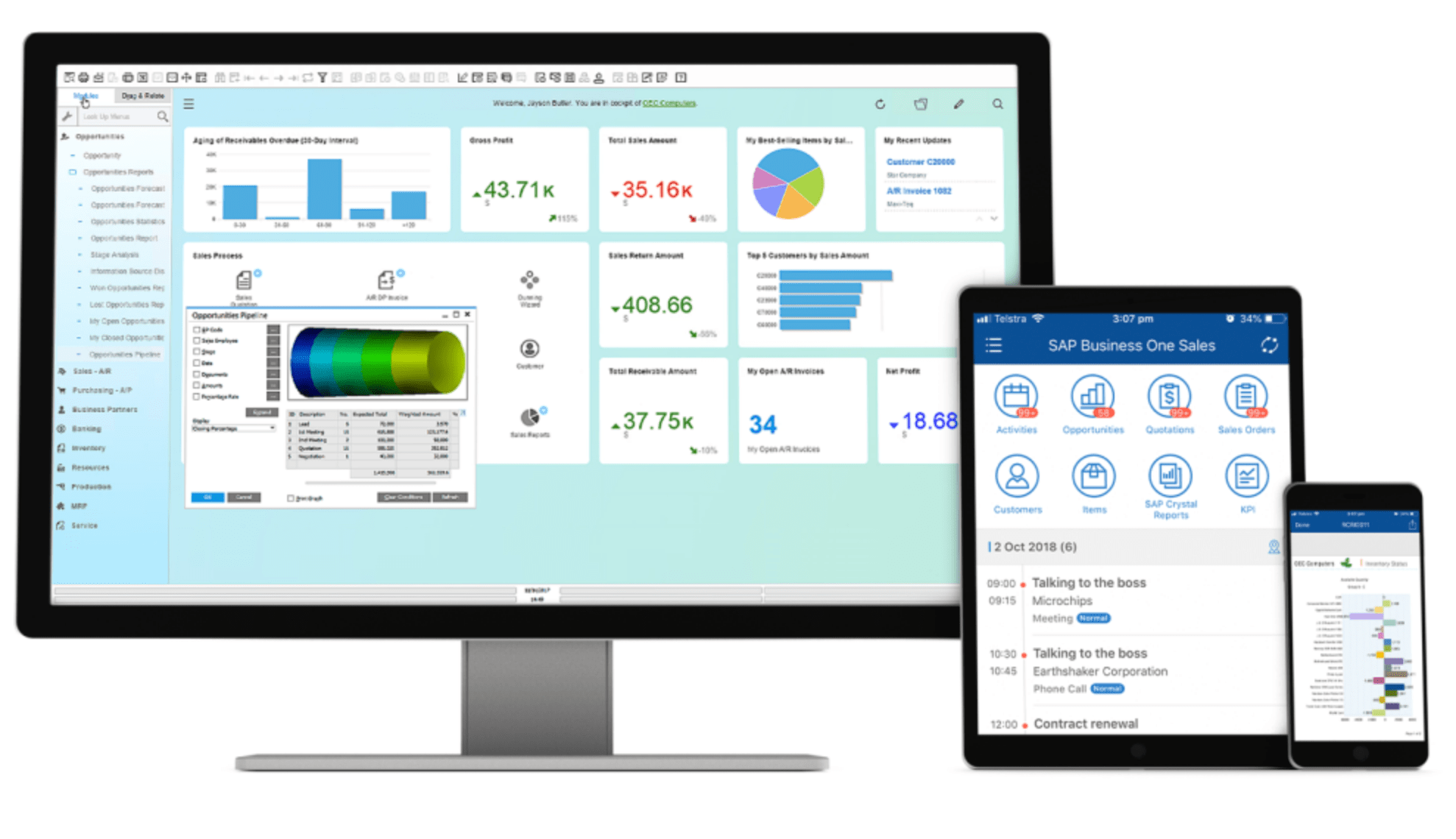
Another top benefit of SAP Business One is its intuitive mobile access. You and your team can access the software from anywhere using the iOS and Android mobile apps.

No matter where you are, you’ll always be able to check inventory, manage service tickets, and view real-time reports on the go. You can even set up alerts and complete approvals directly from your mobile device.

Like most ERP software, pricing for SAP Business One is not available online.

The initial setup is a bit of a hassle as well, which is the biggest drawback of this solution. After answering a somewhat extensive questionnaire, you’ll be contacted within 24 hours to discuss your company’s requirements in greater depth before getting an estimate. In many cases, you won’t be able to purchase the software directly from SAP; you’ll have to go through one of their partners or resellers.

At the end of the day, this is still a top choice for small businesses. Larger corporations might run into some limitations at scale.

#3 – Sage 300 — Best For Medium Sized Businesses
• Cloud-based ERP software
• Great for international ecommerce
• Supports multiple currencies
• Automate vendor processes
Get a free demo

Sage 300 is one of three different ERP software solutions offered by Sage. This solution is designed for mid-market companies.

From managing finances to operations and inventory, Sage 300 has it all. This cloud-based software is designed to help improve the total visibility of your company while maximizing ROI.

Sage 300 simplifies your financials. It’s a great choice for businesses that are managing multiple currencies. You can even use it for multiple businesses if you have subsidiary companies or franchises.

Getting Sage 300 for ERP means that you’ll also have access to a wide range of features in Sage’s extensive product suite. You’ll benefit from features like Sage CRM, Sage Inventory Advisor, and Sage Payment Solutions.
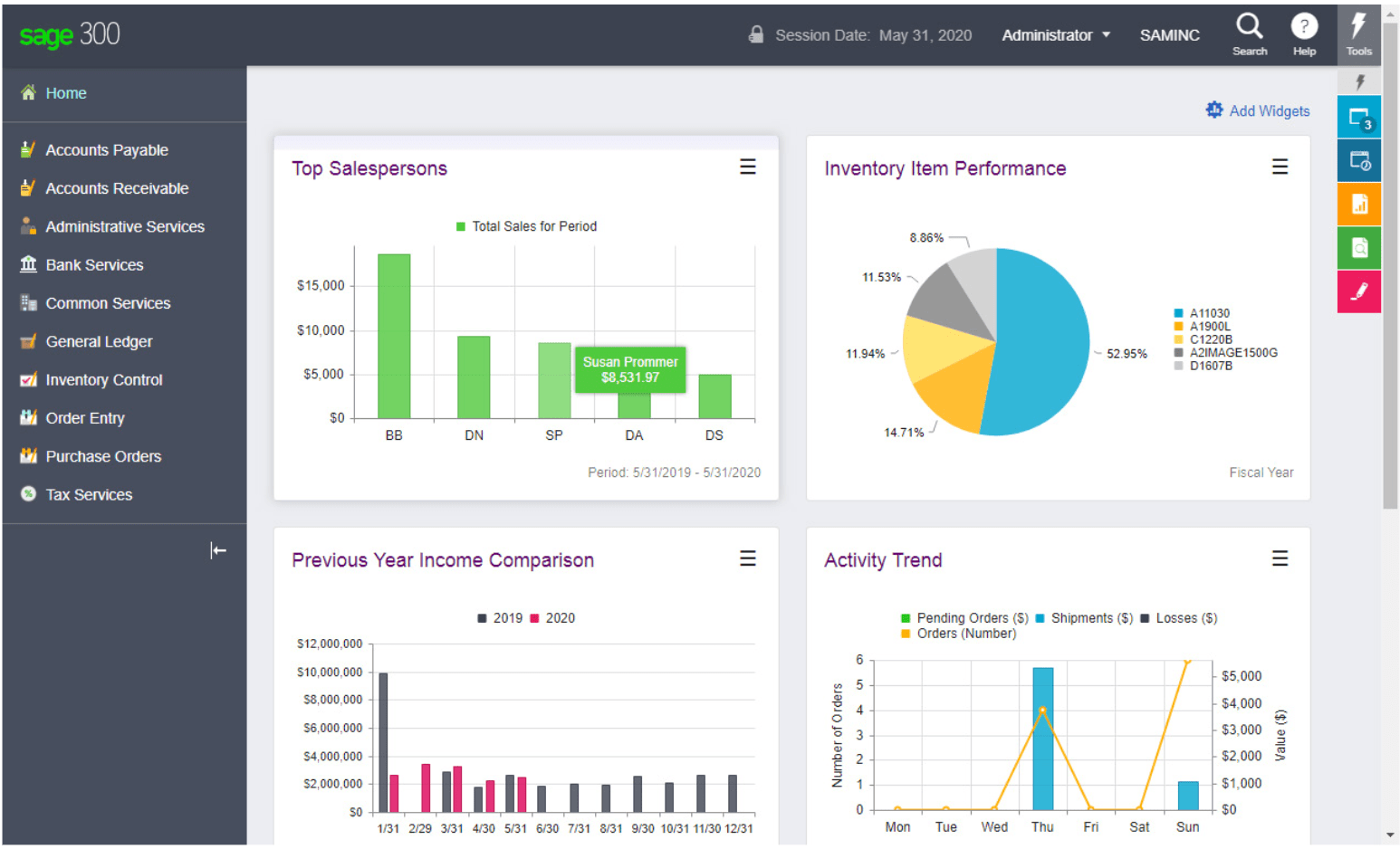
Sage 300 offers intelligent enterprise resource planning for international ecommerce operations. You’ll get real-time analytics as well as the ability to track and process orders from anywhere.

Another top feature of Sage 300 is the ability to manage vendor relationships. You can automate your purchasing process, orders, invoices, receipts, and returns. This will save you lots of time and resources whenever you’re ordering inventory or other materials.

If Sage 300 is too advanced and feature-rich for you, consider Sage 100 as an alternative. It’s still a good ERP software, but not made for international operations or multiple businesses. Sage 100 is more like an advanced accounting software with CRM and other ERP features.

For those of you who want more than the features available in Sage 300, you can upgrade to Sage Business Cloud X3. This is the top of the line ERP solution from Sage. It has a greater focus on supply chain management and sales, designed for larger enterprises.

While Sage Business Cloud X3 is great, it’s probably overkill for medium-sized businesses. But it’s nice knowing you can upgrade at a later time if your company grows.

The majority of you will benefit the most from Sage 300. Contact sales to request a free demo.

#4 – Syspro — Best For Manufacturers and Distributors
• Award winning ERP software
• Industry specific solutions
• 40+ years of experience
• Trusted by 15,000+ businesses
Get a free demo

Syspro has ERP solutions for small businesses, mid-sized organizations, and enterprises. But with that said, Syspro is not for everyone. This ERP software is designed specifically for manufacturing and distribution.

With more than 40 years of experience in this industry, Syspro knows what it takes to have success in these spaces.
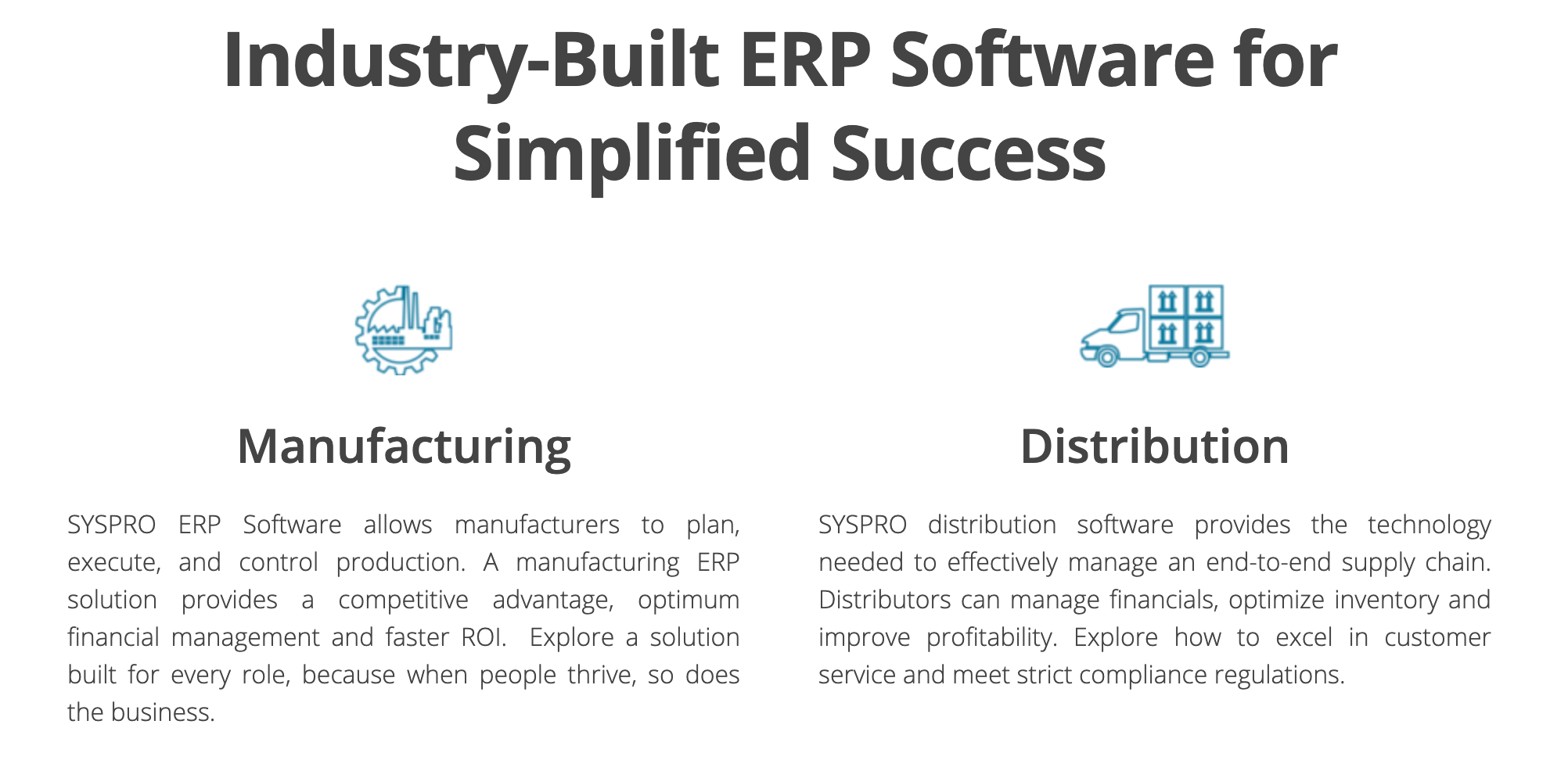
Syspro ERP is built with industry-specific functionality based on the business requirements for manufacturers and distributors. Common industries within these two categories using Syspro include:

  • Auto parts and accessories
  • Food and beverage
  • Rubber and plastics
  • Industrial equipment and machinery
  • Packaging
  • Fabricated metals
  • Electronics

This award-winning ERP software is used by more than 15,000 businesses throughout 60+ countries.

Syspro ERP will improve your supply chain management and operational inefficiencies. You’ll benefit from actionable insights and reporting to make better business decisions.

In addition to customizing your software, Syspro will also let you fully customize your workspace based on roles and needs. So you and your team won’t feel overwhelmed or bombarded with irrelevant information or screens that you’re not using on a daily basis.

As your business grows, Syspro has the flexibility and power to scale with you.

If your company is involved with manufacturing or distribution, Syspro ERP will be your best option. Unfortunately, this software won’t support other business types. For example, if you’re in retail, professional services, or ecommerce, you’ll need to look elsewhere.

Contact Syspro to request a free demo.

#5 – Acumatica — Best ERP Software For SMEs
• Award winning ERP software
• Industry specific solutions
• Add users for free
• Supports growing businesses
Get a free custom demo

Acumatica was founded in 2008, which makes this company newer compared to some of the other options on our list. Acumatica is small, but it’s growing rapidly. To date, they have 6,000+ customers and six offices across the globe.

I like Acumatica because they offer industry-specific ERP solutions. So no matter what type of business you have, you know that you’re not getting a cookie-cutter cutter software.

Here’s a quick list of the ERP software editions provided by Acumatica:

  • General Business Edition
  • Distribution Edition
  • Manufacturing Edition
  • Construction Edition
  • Commerce Edition
  • Field Service Edition

If you have a small to mid-sized enterprise in one of these categories, Acumatica will be a top choice for you to consider.
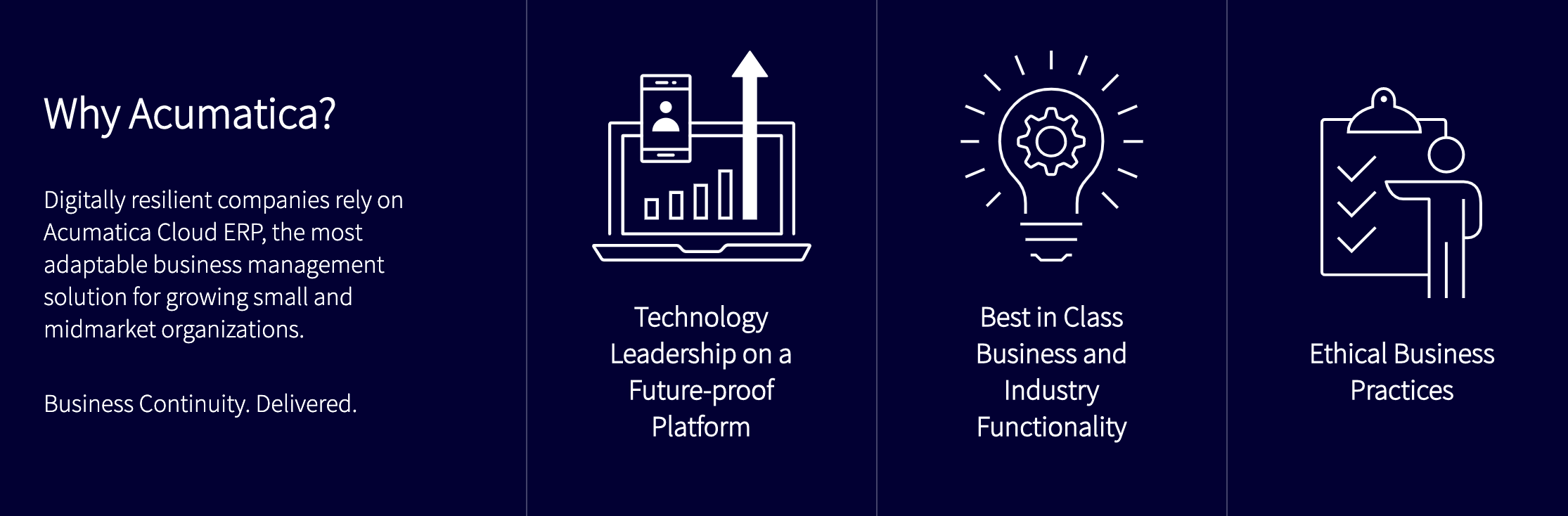
Acumatica ERP is extremely versatile. No matter what type of needs your business has, you can get an all-in-one solution from this service provider.

This award-winning cloud-based ERP software supports growth as well. You can easily add functionality and capabilities as your business scales. Acumatica also lets you add extra users without having to pay for additional licenses.

Acumatica has a free product tour available on its website. If you’re interested in learning more, you can request a custom demonstration and free demo with no obligation.

#6 – Microsoft Dynamics 365 — Best For Bundle Licenses
• Transparent pricing
• Discounts for additional licenses
• Apps for specific categories
• Flexible use cases
Get up to 6 months free

Like most Microsoft products, Microsoft Dynamics 365 is powerful, flexible, and trustworthy. It’s used by some of the world’s biggest companies, like HP, Coca Cola, Lowe’s, Delta, BMW, Adobe, UPS, and more.

But with that said, Microsoft Dynamics 365 is an ideal ERP solution for smaller businesses as well.

It’s a bit different compared to some of the other options on our list. Dynamics 365 is not really a single product. Microsoft offers multiple product bundles based on your needs. The categories include:

  • Marketing
  • Sales
  • Customer Service
  • Operations
  • Field Service
  • Finance
  • Commerce
  • Human Resources

Each one comes with different apps as a product suite. For example, Operations comes with apps for supply chain management, project service automation, and business central.

Unlike other ERP solutions, Microsoft is fully transparent about its prices and lists all of the prices on their website. It’s a little complicated since each category has multiple prices and individual prices for each app within that category. You’ll get discounted rates if you already have qualifying Dynamics 365 apps.

For example, here’s a look at the Microsoft Dynamics 365 Field Service pricing, so you can see what I’m referring to.
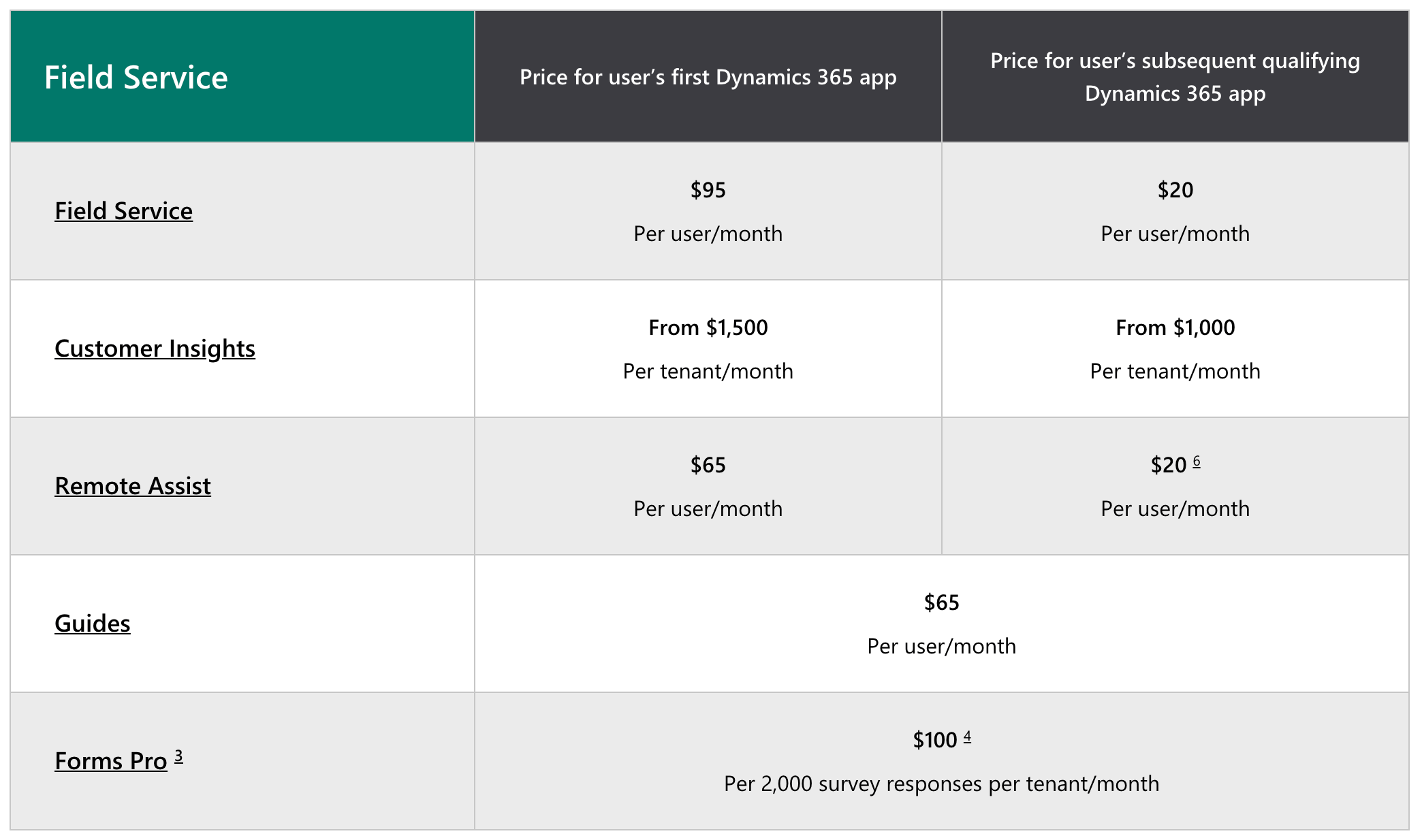
As you can see, there is a significant difference in pricing for your first Dynamics 365 app compared to subsequent apps.

With that said, there are some contingencies that you need to keep an eye on. Most packages require a minimum number of licenses to purchase, which is usually 10 or 20.

While the licensing guide and requirements are bit complex to navigate and understand, this option is the best solution for businesses that want to buy in bulk. You’ll also have the ability to pick and choose which specific products you’re looking for while benefiting from discounts on additional licenses.

For a limited time, get up to six months of Dynamics 365 for free.

How to Find the Best ERP Software For Your Business

With so many different ERP solutions on the market, how can you know which one is the best for your business?

I’ll explain the methodology that I used to pick the winners on our list. In most cases, there is no “best for everyone” ERP software. When you’re evaluating different software, you can determine what’s best for you based on the following factors:

Business Size

The size of your business will be the first way to narrow down your options. While the name “ERP” implies enterprise, not every solution is made for large enterprises.

For example, SAP Business One is designed specifically for small businesses. Sage 300 is a top choice for growing mid-market companies, and Acumatica is geared toward SMEs.

So if you have a large-scale enterprise, you wouldn’t consider any of those options. You’d be better off with something like Oracle Netsuite or Microsoft Dynamics 365.

Industry

In addition to the size of your business, some ERP software is made for specific industries.

Syspro is a perfect example of this. It’s made for manufacturers and distributors; that’s it. You can even get a more specialized solution based on your industry within those two categories, like industrial equipment or electronics.

Sage 300 is a great option for international ecommerce businesses. Oracle Netsuite (our top overall recommendation) supports the widest range of business types and industries.

Features

The purpose of ERP software is to be an all-in-one solution for your business needs. But with that said, not all of the feature sets from software to software will be identical.

It’s important to understand what your company needs the most and target an ERP solution that offers those features out of the box.

Common ERP software features include sales tools, CRM, accounting tools, and human resources. But some of you might need features for things like supply chain management, operational management, and end-to-end inventory logistics.

Most ERP software is customized to meet your needs. So it’s easy for the service provider to add what you’re looking for—assuming they have those features to offer.

Setup

Nearly every ERP software requires you to get a custom quote before you get started. This adds an extra step to the setup process. You’ll likely want to get a quote and demo from multiple providers on your shortlist, just to see what options you have.

But once you decide on a solution, you want to make sure that the initial deployment is as easy as possible. Some software must be purchased from a third-party partner, which can be a pain. With that said, those partners usually do a better job of guiding you through the setup process.

Since most ERP software today is cloud-based, you won’t have to worry about installing anything locally on your servers, computers, or other devices. But that’s not the case with every option.

Conclusion

ERP software can simplify your operational efficiencies by providing an all-in-one resource for all of your business processes.

Oracle Netsuite is our top overall recommendation in this category.

But with that said, it’s not for everyone. Small businesses should lean toward SAP Business One. Mid-market companies and SMEs would be better off Sage 300 or Acumatica. Syspro is the best ERP software for manufacturing and distribution. For product bundles and discounts on bulk licenses, turn to Microsoft Dynamics 365.

Regardless of your business size, industry, or enterprise resource planning needs, you can find the best ERP software for your business using this guide.


from Quick Sprout https://ift.tt/2YqT4SC

How to Make Money Writing a Book: More Than Just Sales!

Best copywriting books

The dream of writing a book is often much more glamorous than the actual reality. This is especially true when looking on the money side of the equation. While most people think of names like Stephen King or J.K. Rowling,…

from Niche Pursuits https://ift.tt/2WdL2cN

Thursday, April 30, 2020

Best Marketing Automation Software

Marketing automation software helps businesses streamline marketing processes.

By automating marketing tasks, it’s much easier to generate leads, build customer relationships, and drive conversions at scale. As your business grows, it’s impossible to manage every single lead and customer manually. But marketing automation software moves customers through your sales funnel with ease.

Marketing automation software provides leads with a consistent experience across multiple digital marketing channels.

By leveraging marketing automation software, you can personalize the customer experience by providing the most accurate information and promotions to customers with different needs.

While the terms are often used interchangeably, it’s important to understand that marketing automation software is not the same as email marketing software or CRM software.

Marketing automation is a component of customer relationship management, and email can be a component of marketing automation—but the three are not one in the same.

The Top 6 Best Marketing Automation Software

After conducting extensive research, I’ve narrowed down the top marketing automation solutions on the market today. Here’s an in-depth review of each one on our list:

#1 – HubSpot — Best Overall Marketing Automation Software

• Visual automations editor
• Starts at $50 per month
• $800 for full automation features
• Up to 90% off for startups
Request a free demo

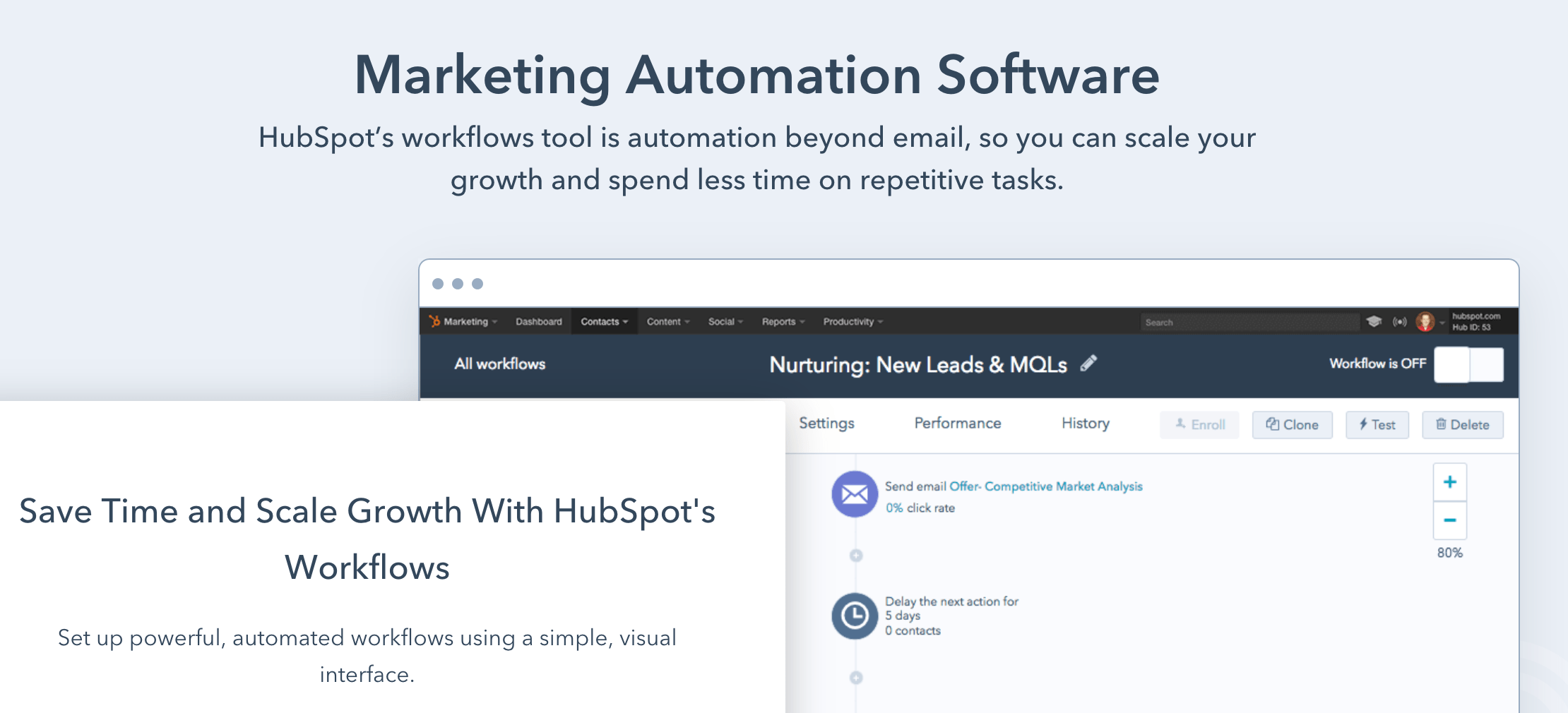
HubSpot is one of the most well-known names in the marketing world. This inbound marketing software has everything you need to automate dozens of tasks at scale.

With HubSpot, you’re able to customize sophisticated and highly targeted workflows using a visual editor. You can use this tool for simple follow-up messages or even complex campaigns with multiple touch-points throughout the customer journey.

HubSpot makes it easy for you to automate your emails with drip campaigns. Just choose from dozens of pre-set triggers, conditions, or customer actions.

The HubSpot Marketing Hub starts at $50 per month. However, that package doesn’t give you the full automation benefits.

Pricing for marketing automation features from HubSpot starts at $800 per month, billed annually.

It’s a bit pricey, especially for smaller businesses with lower budgets. But when you buy a product from HubSpot, you’re getting more than just software. You’ll also benefit from HubSpot’s exceptional customer support team.

If you’re a startup, you might be eligible for up to 90% off through the HubSpot for Startups Program. Contact the HubSpot sales team to request a free demo.

#2 – ActiveCampaign — Best For Small Business

• Starts at $49 per month
• Trusted by 90,000+ businesses
• Easy to use
• 14 day free trial
Start for free

More than 90,000 businesses trust ActiveCampaign for marketing automation. It’s arguably the best visual automation builder with drag-and-drop functionality on the market today.

ActiveCampaign makes it easy for anyone, regardless of technical skill level, to set up both simple and complex marketing automations.

From site tracking to event tracking, attribution, split actions, and automation goals, ActiveCampaign has it all.

ActiveCampaign takes a complex subject and simplifies it with an easy to use dashboard and management tools, which is why it’s our top pick for small businesses.

Pricing for ActiveCampaign Plus with CRM and sales automation starts at $49 per month. The price is based on the number of contacts in your list.

This subscription comes with email marketing, lead scoring, ecommerce integrations, and more.

If you want advanced features such as customer attribution, path to purchase, split automations, and machine learning capabilities like predictive sending, predictive content, and win probably, you’ll need to upgrade to ActiveCampaign Professional. This package starts at $129 per month.

At both of these price points, ActiveCampaign is an affordable option for small businesses. Try it free for 14 days.

#3 – GetResponse — Best Features For Marketing Automation

• Starts at $15 per month
• $49 for advanced automations
• Lots of features
• 30 day free trial
Get started for free

GetResponse is a powerful and affordable marketing automation solution that’s used by small businesses and large organizations alike. Over 350,000 businesses across the globe use this software to automate marketing processes.

From capturing new leads to generating sales, recovering abandoned carts, and driving engagement from your site traffic, GetResponse has tools to meet your needs.

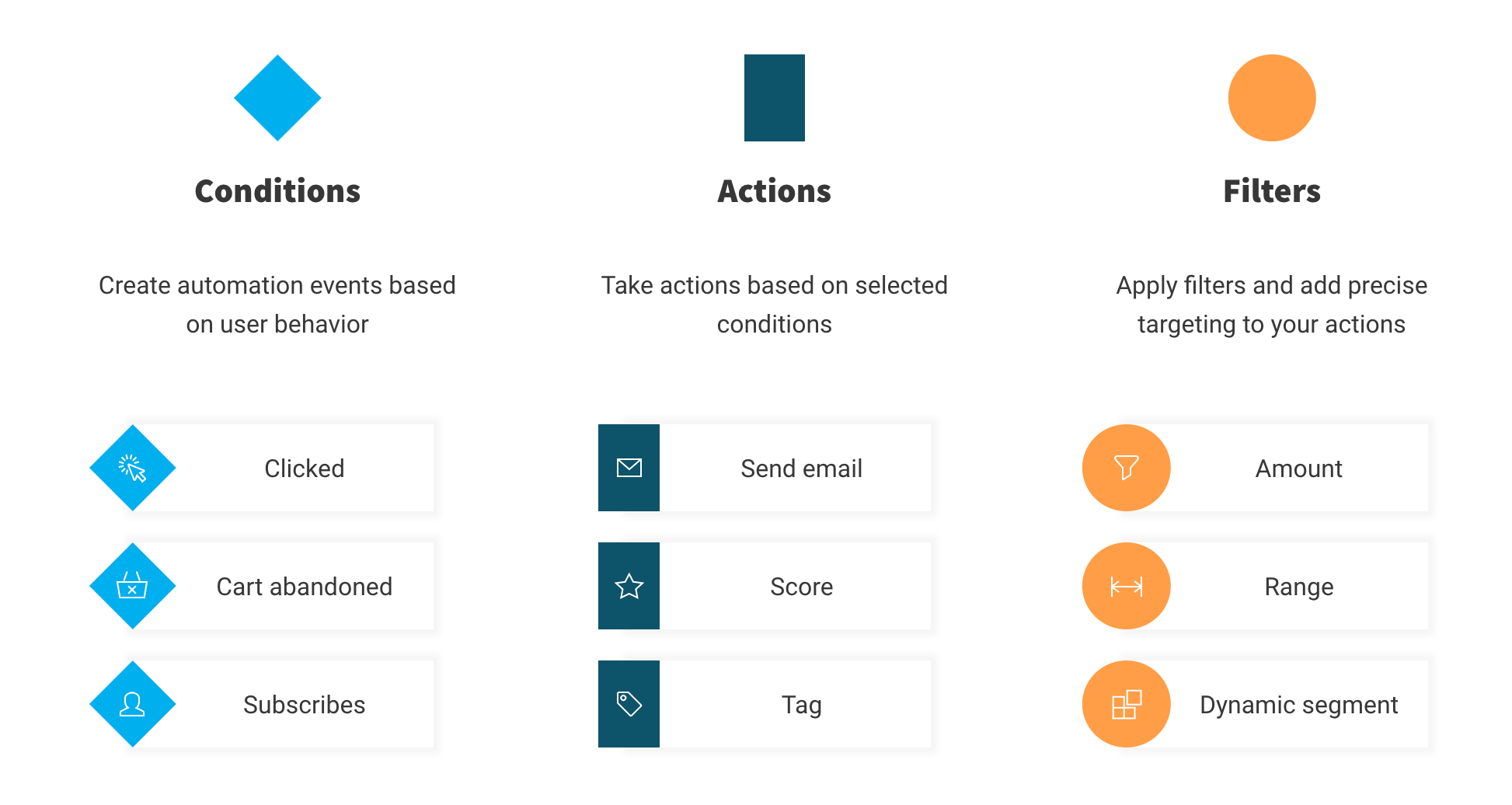
It’s easy to set up an automated customer journey by applying conditions, actions, and filters that will automatically trigger users through a pre-defined journey based on their behavior.

You’ll benefit from advanced segmentation and lead scoring, which will ultimately improve the effectiveness of your campaigns.

GetResponse is a top choice for ecommerce sites. It helps you understand your customers’ buying habits, browsing behavior, targets abandoned shopping carts and automatically recommends relevant products.

Pricing for GetResponse starts at $15 per month. This comes with basic automation features like welcome emails, drip campaigns, click and open followups, and contact tagging.

To get the most out of GetResponse marketing automation, you’ll need to sign up for the Plus package, starting at $49 per month. The upgrade gives you custom workflows, the automation builder tool, lead scoring, abandoned cart recovery, site tracking, event tracking, and automated segmentation. However, you’ll be limited to just five custom workflows at this rate.

For those of you who need more than five workflows, you’ll have to upgrade to GetResponse Professional, which starts at $99 per month.

It’s worth noting that the feature-rich automation software from GetResponse can be a bit difficult to navigate through. For anyone who is just looking for simple automation tools, you might find GetResponse to be a little overwhelming.

But if you’re looking for as many automation features as possible at an affordable price point, look no further than GetResponse. Try it free for 30 days.

#4 – OptinMonster — Best For Landing Page Lead Generation

• Starts at $9 per month
• Best for lead generation
• Automated landing page campaigns
• 14 day money back guarantee
Try it risk-free

OptinMonster is a bit different compared to some of the other options on our list. This software is not really a full-service or all-inclusive marketing automation solution.

It’s a lead generation and customer acquisition tool for your website that leverages marketing automation to grow your email list, reduce cart abandonment, and increase sales. More than one million websites use OptinMonster, making it one of the most popular solutions on the market today.

OptinMonster has tools to help you design high-converting landing pages, popups, and website campaigns designed to generate leads.

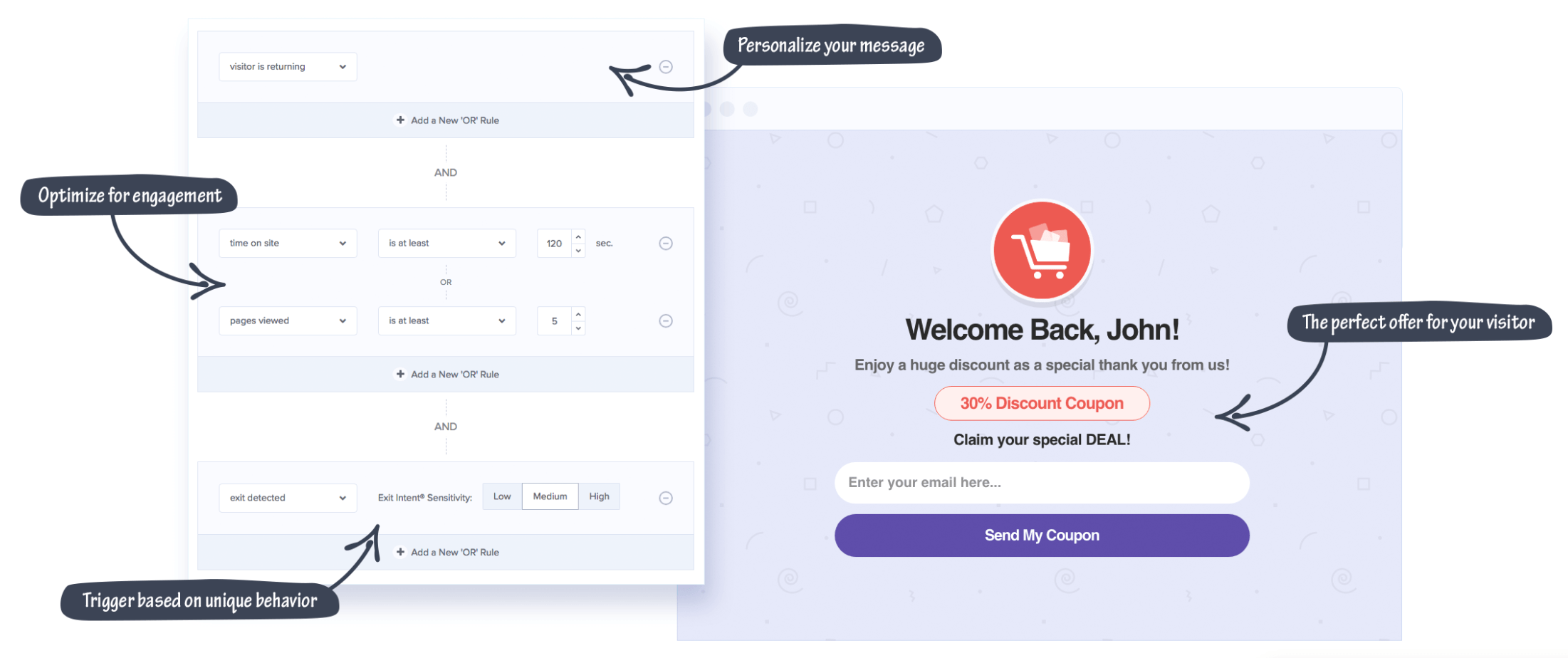
Then you can create automated and campaigns for website visitors based on their behavior and actions.

For example, you can create campaigns for new vs. returning visitors. Trigger a popup or offer based on the amount of time that visitor has spent on the site or the number of pages they’ve viewed.

You’ll also be able to automatically trigger landing page campaigns based on user behavior, such as exit intent.

OptinMonster is undoubtedly one of the best lead generation tools on the web. But it lacks in other areas of marketing automation. You’ll need to integrate OptinMonster with your email or CRM software—it does not offer these features.

But with prices starting as low as $9 per month, it’s a cheap add-on to your existing solution.

Try OptinMonster risk-free 14 days. If you’re unhappy for any reason, you’ll get a 100% refund; no questions asked.

#5 – Salesforce Pardot — Best For B2B Marketing

• Starts at $1,250 per month
• Best for B2Bs
• ROI reporting
• Advanced automations
Request a free demo

Salesforce is one of the most reputable and well known CRM solutions on the market today. So it’s no surprise to see Salesforce Pardot rank so high on our list of the best marketing automation software.

With that said, Salesforce Pardot is not for everyone. This software is made specifically for B2B organizations.

Top features include streamlined lead management, smart lead generation, email marketing, and sales integration. Salesforce Pardot leverages the power of AI to improve your marketing efforts and sales strategy. You’ll also benefit from insightful ROI reporting to determine what campaigns are working and which ones need improvement.

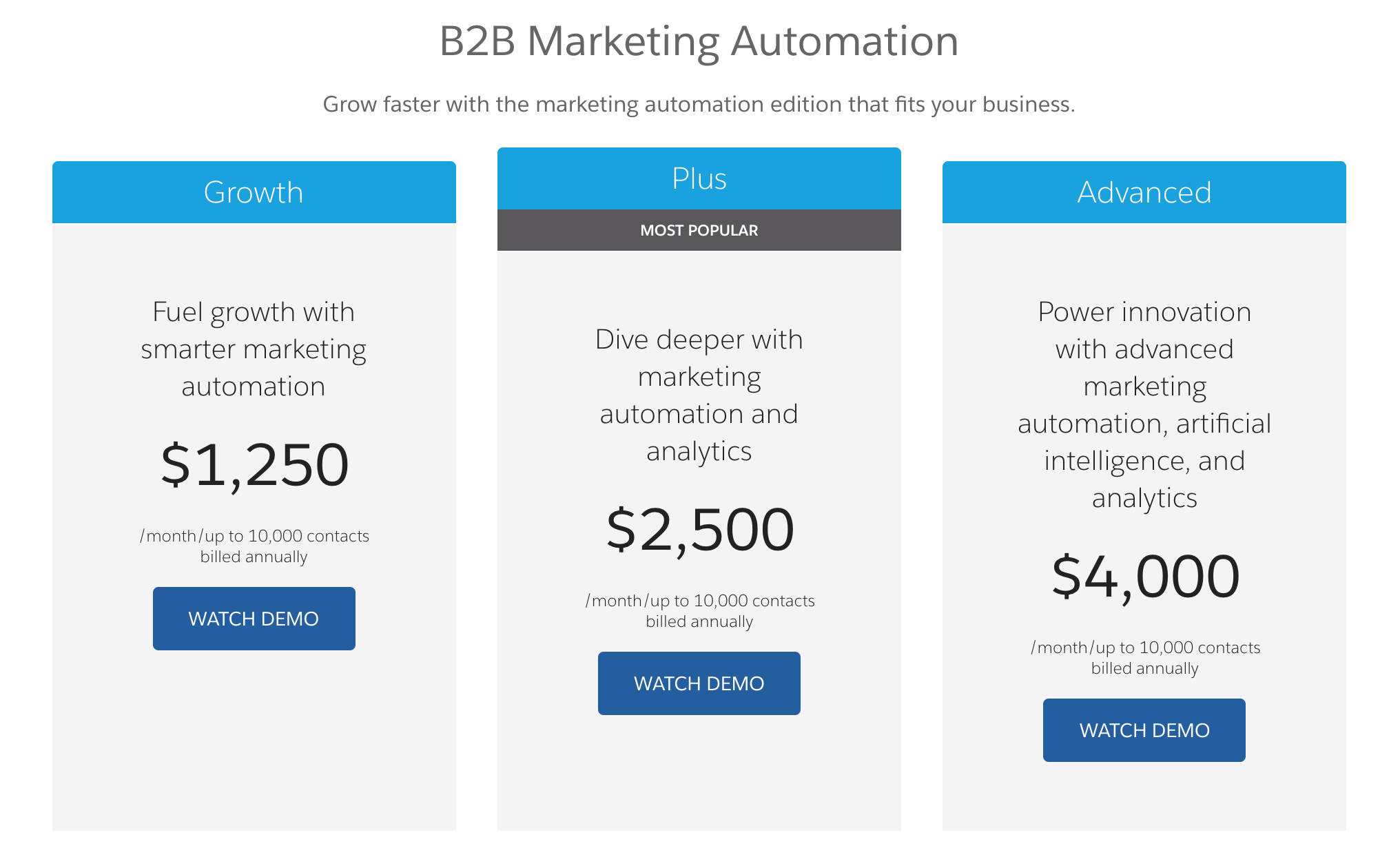
Here’s a quick look at the Salesforce Pardot pricing options:

With plans starting at $1,250 per month, this software obviously isn’t the cheapest option on our list. But with that said, this type of pricing is expected for a B2B solution of this caliber.

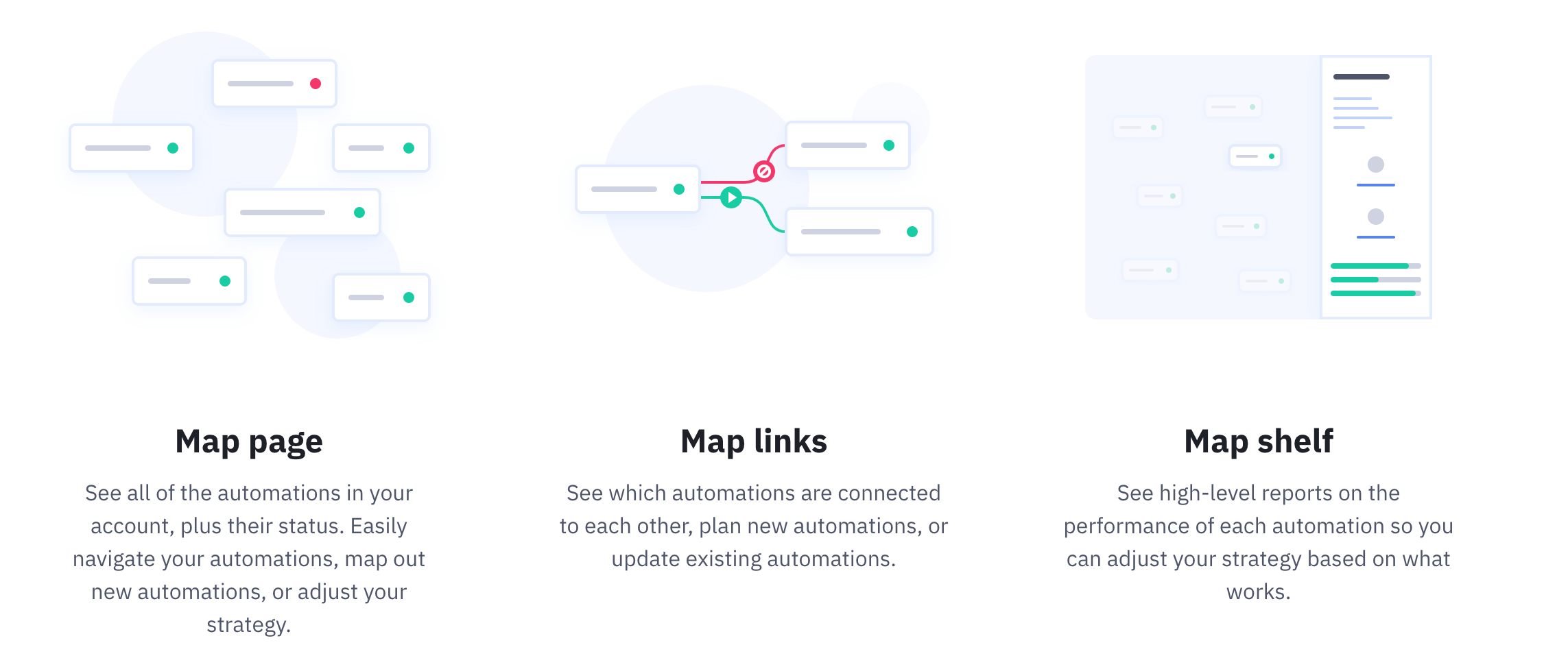
Pardot makes it easy for you to create data-driven campaigns with a powerful and flexible visual builder. Simply map out each touchpoint in your funnel to improve the customer experience and identify gaps in the process.

Salesforce Pardot gives you detailed reports and analytics so you can improve automation campaigns based on real results as opposed to guesswork.

For B2B organizations seeking marketing automation software, Salesforce Pardot is second to none. The biggest drawback is the price, especially considering that you need to commit to a one-year contract. But you won’t have to worry about performance. Salesforce Pardot has everything you could possibly need and more in terms of software in this category.

Contact the Salesforce Pardot sales team to request a free demo.

#6 – ConvertKit — Best Marketing Automation Software For Beginners

• Starts at $29 per month
• Simple visual editor
• Pre-built automation templates
• 14 day free trial
Start for free

ConvertKit is one of the simplest marketing automation solutions that you’ll find. For those of you who are new to using marketing automation tools, this choice should be toward the top of your list.

ConvertKit is branded as an email marketing software, but its marketing automation features are much more advanced than just basic email functionality.

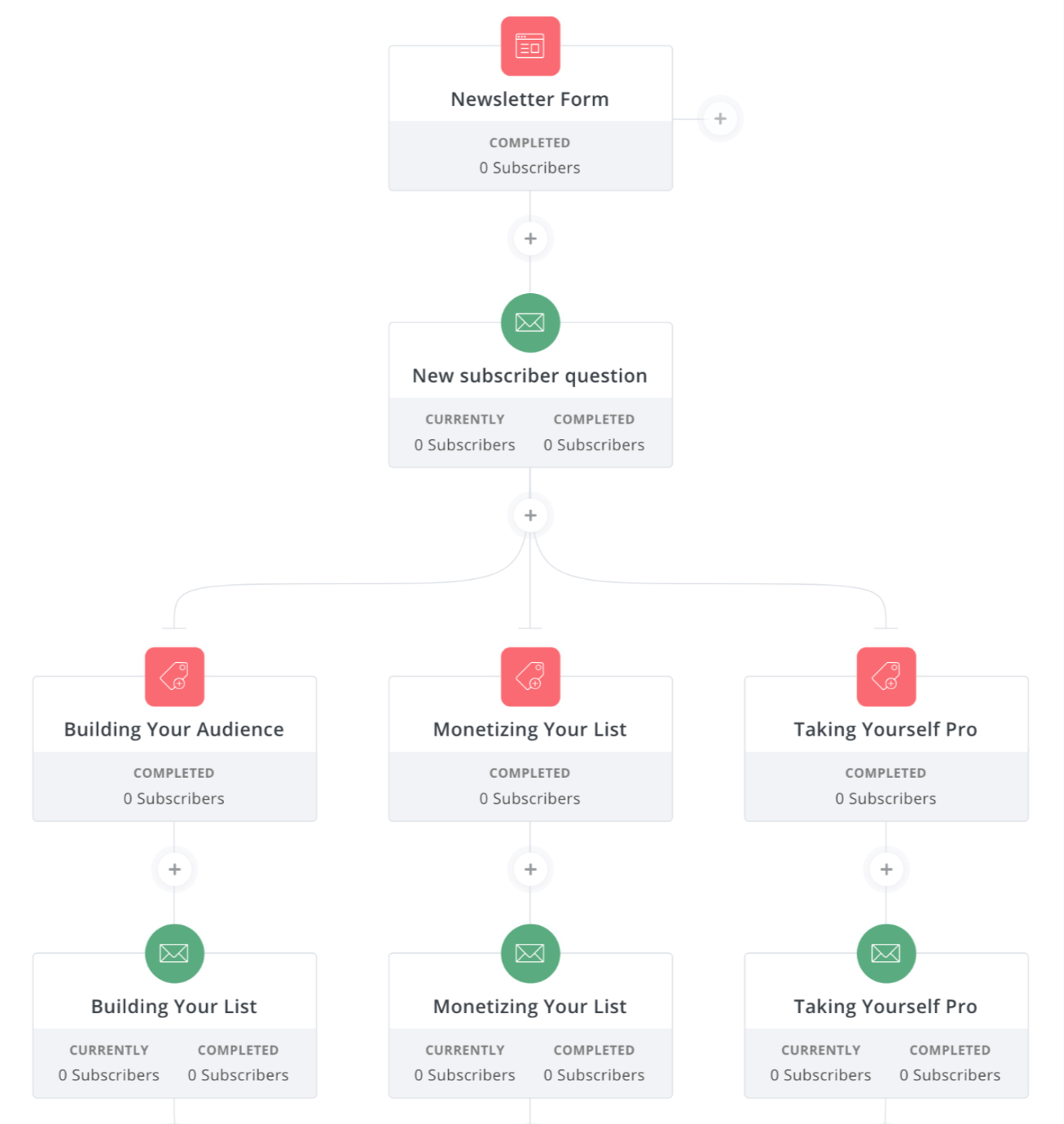
This tool makes it easy for you to create powerful automation funnels based on a subscriber’s action. It ensures that you send targeted content to the right audience at the perfect time.

Unlike other marketing automation tools on our list, ConvertKit is simple. You can set up basic automation rules that trigger a specific campaign, without having to go through complex workflows and settings. The visual editor is easy for anyone to use, even if you have zero experience with marketing automation.

Whether you’re running a content site, ecommerce business, or selling SaaS, ConvertKit has the marketing automation tools that you need to succeed.

One of the best parts about ConvertKit is the pre-built automations, so you don’t have to start from scratch. For example, they have automations for hosting a webinar, launching a new product, and surveying your subscribers.

For new businesses, ConvertKit does a free forever plan for up to 500 subscribers. But that doesn’t come with any of the visual automation funnels.

To access all of the features and benefits of ConvertKit, paid plans start at just $29 per month. You can get two months for free if you sign up for an annual contract. Try it free for 14 days.

How to Find the Best Marketing Automation Software For Your Business

For the most part, there is no “best for everyone” solution. The best marketing automation software for you will depend on your specific needs.

Finding the right marketing automation software for your business can be challenging if you don’t know where to look. Here’s an overview of the methodology I used to pick the options on our list. Take these factors into consideration when evaluating the needs of your business.

Business Size and Type

Most marketing automation software is geared toward specific businesses. SMBs and enterprises will have very different needs.

Smaller businesses and beginners should lean toward ActiveCampaign or ConvertKit, whereas a solution like HubSpot is better for mid to large-sized organizations.

If you’re in the B2B space, Salesforce Pardot is the best option for your situation.

For those of you who are running an ecommerce business, make sure that the solution you’re considering has ecommerce features and automations for sales built-in. The tool should also integrate with whatever ecommerce platform you’re using to power your website.

Automation Setup

Your marketing campaigns will only be as good as the initial setup.

Regardless of the platform you’re using, you’ll have to create rules that will trigger a specific campaign or sequence. These are based on user actions, such as opening an email, subscribing on a certain landing page, returning to your website, or abandoning their shopping cart.

The best marketing automation tools allow you to set up advanced automations for multiple actions throughout the customer journey. Visual automation editors make this easy for you to set up.

But with that said, some of those editors are definitely easier to use than others. The best way to figure out how easy it is to set up an automation sequence is by starting a free trial or requesting a free demo.

CRM and Email

Not every marketing automation software is an all-inclusive marketing solution. You need to determine if the tool you’re considering is a one-stop-shop for your needs.

Lots of the options on our list as double CRM software and email marketing software. So you can handle everything from a single dashboard. However, other solutions won’t be as advanced.

For example, OptinMonster is perfect for generating leads on landing pages using marketing automation. But you can’t use that platform to send emails or manage subscribers. You’ll need to integrate it with your existing email marketing software or CRM software.

Features

Choose email automation software based on features that align with your goals.

Exactly what are you trying to accomplish? Is it lead generation? Sales? Conversions? Is the software advanced enough to scale with you as your needs change?

The best marketing automation solutions have advanced features for things like lead scoring, event tracking, sales integration, and more.

It’s worth noting that lots of solutions will advertise lots of features, but don’t actually offer all of those features with every plan. So look carefully at the plan you’re interested in. Don’t assume that it comes with every feature advertised on the software’s homepage.

If you’re looking for something simple, sometimes too many features can be overwhelming. It’s not worth paying extra for advanced features that you’ll never use.

Price

In most cases, the price for marketing automation software is based on the number of customers, subscribers, or leads in your contact list.

But with that said, there is a wide range of price points in this space.

Basic entry-level plans typically start around $30-$100+ per month. Prices on the lower end of that range might not come with all of the advanced marketing automation features that you’re looking for.

Top of the line marketing automation software for mid to large-sized businesses and B2B organizations starts around $800-$1,200+ per month.

In some instances, you can save money by committing to an annual contract. In other cases, an annual contract will be your only option. Month-to-month pricing isn’t available for every solution.

Conclusion

Marketing automation software can dramatically improve your marketing processes as your business scales.

What’s the best marketing automation software for your company? It depends on what you’re looking for.

We ranked HubSpot as the best overall because of its powerful features and benefits. But its high price point is definitely aimed at mid to large-sized organizations and businesses with substantial marketing budgets. However, startups can get up to 90% a HubSpot plan.

Smaller businesses and beginners should lean towards options like ActiveCampaign, GetResponse, or ConvertKit. Salesforce Pardot is the best choice for B2B companies. Any business can consider using OptinMonster as an add-on for landing page lead generation.

Regardless of your business size, type, or needs, you can use this guide to find the best marketing automation software.


from Quick Sprout https://ift.tt/2WcXWrD

Monday, April 27, 2020

The Best Project Management Software For Your Business

Project management software helps teams stay organized and productive when collaborating on different projects. These tools are especially useful when multiple projects are in progress simultaneously.

A project management solution ensures that projects are completed on time while holding individual team members responsible for specific tasks.

These real-time workspace tools are much more effective than long email chains, writing things down manually, or having to rely on human memory.

While it may sound redundant, it’s important to understand that project management software is made for projects—not ongoing work. Projects have start dates, end dates, and deliverables along the way. For example, creating a website is a project. But maintaining a website post-launch doesn’t have a clear start date or end date.

Not every project management tool is the same. Some solutions are intended for large teams with complex projects, others are ideal for small teams and simple projects, and the rest fall somewhere in between.

No matter what type of projects you’re managing, this guide will help you find the best project management software for your needs.

The Top 7 Best Project Management Software

After some first-hand experience using these tools and hours of extensive research, I’ve narrowed down the top seven options in this category. Here’s an in-depth review of each one:

#1 – Zoho Projects — Best Overall Project Management Software

• Starts at $3 per month
• Free forever plan available
• Great for simple and complex projects
• 10-day free trial
Start for free!

Zoho has a full suite of various productivity tools and SaaS for businesses. So not surprising to see its project management software, Zoho Projects, ranked first overall on our list.

Zoho Projects is a cloud-based project management solution that accommodates the needs for a wide range of businesses, projects, and use cases.

From simple to complex projects, this tool has everything you need to manage various workflows. You can even automate some routine tasks to save time. Use the drag-and-drop interface as a visual way to set up new automations and deploy projects. Collaborate on the go using the Zoho Projects mobile app.

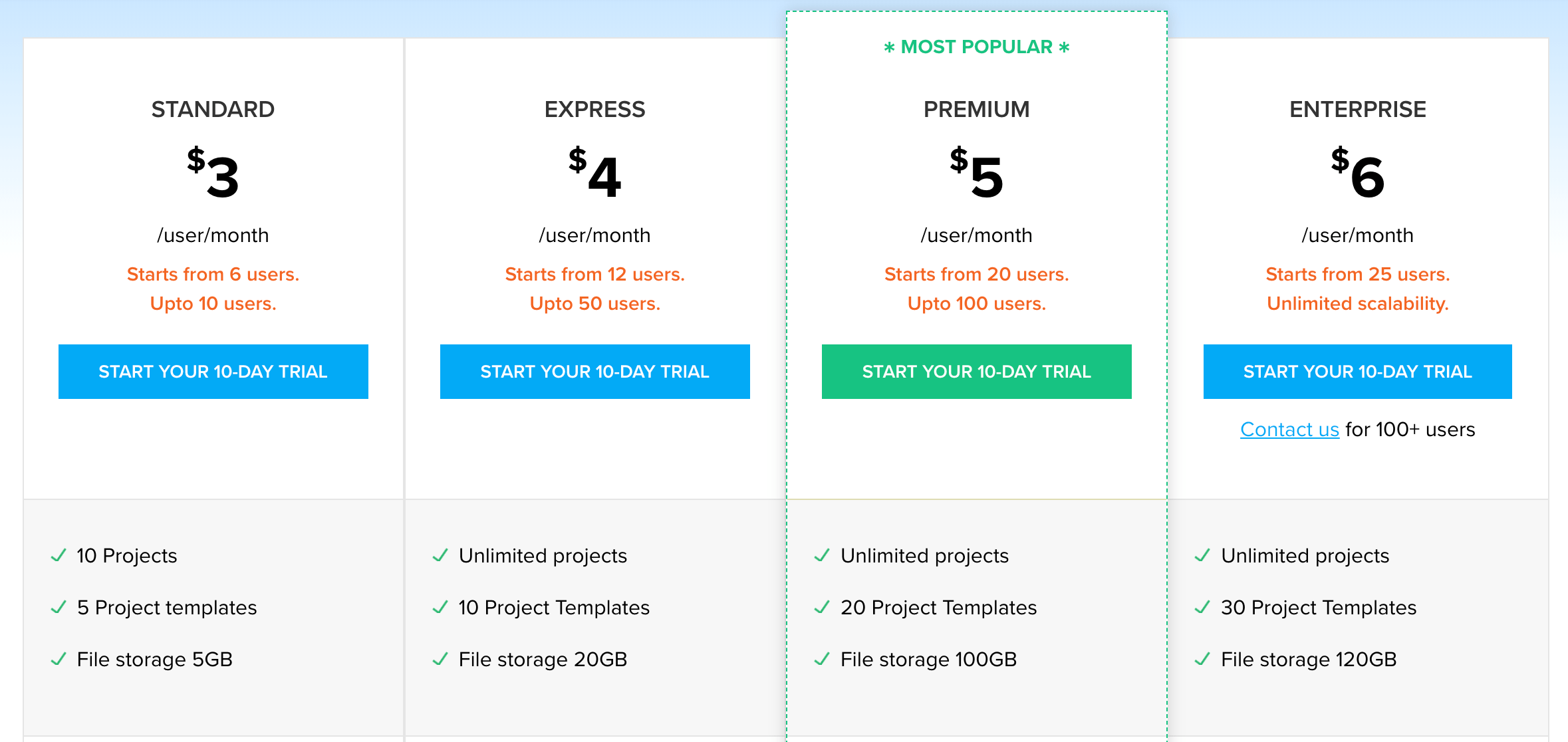
Zoho Projects is affordable, with pricing based on the number of people on your team.

As you can see, your plan will also affect things like storage and project templates. You’ll be limited to just ten projects per month with the entry-level Standard plan; the rest are unlimited.

Zoho Projects does offer a free forever plan for up three users and two projects, which is fine for individual use or a one-off task.

Another reason to like Zoho Projects is its timesheet module. You can easily track both billable and non-billable hours for tasks. Zoho Projects also integrates with popular apps you’re already using like Slack, Zapier, G Suite, Dropbox, and other apps in the Zoho suite.

Sign up for Zoho Projects and get a 10-day free trial; no credit card required.

#2 – Trello — Best Free Project Management Software

• Free for unlimited users
• Paid plans start at $9.99
• Trusted by millions
• Best for simple projects
Start for free!

Millions of users trust Trello to manage various projects. For small teams and simple projects, the free project management software from Trello will be perfect for accommodating your needs.

People use Trello for work, side projects, and even for managing individual projects, like organizing a family vacation.

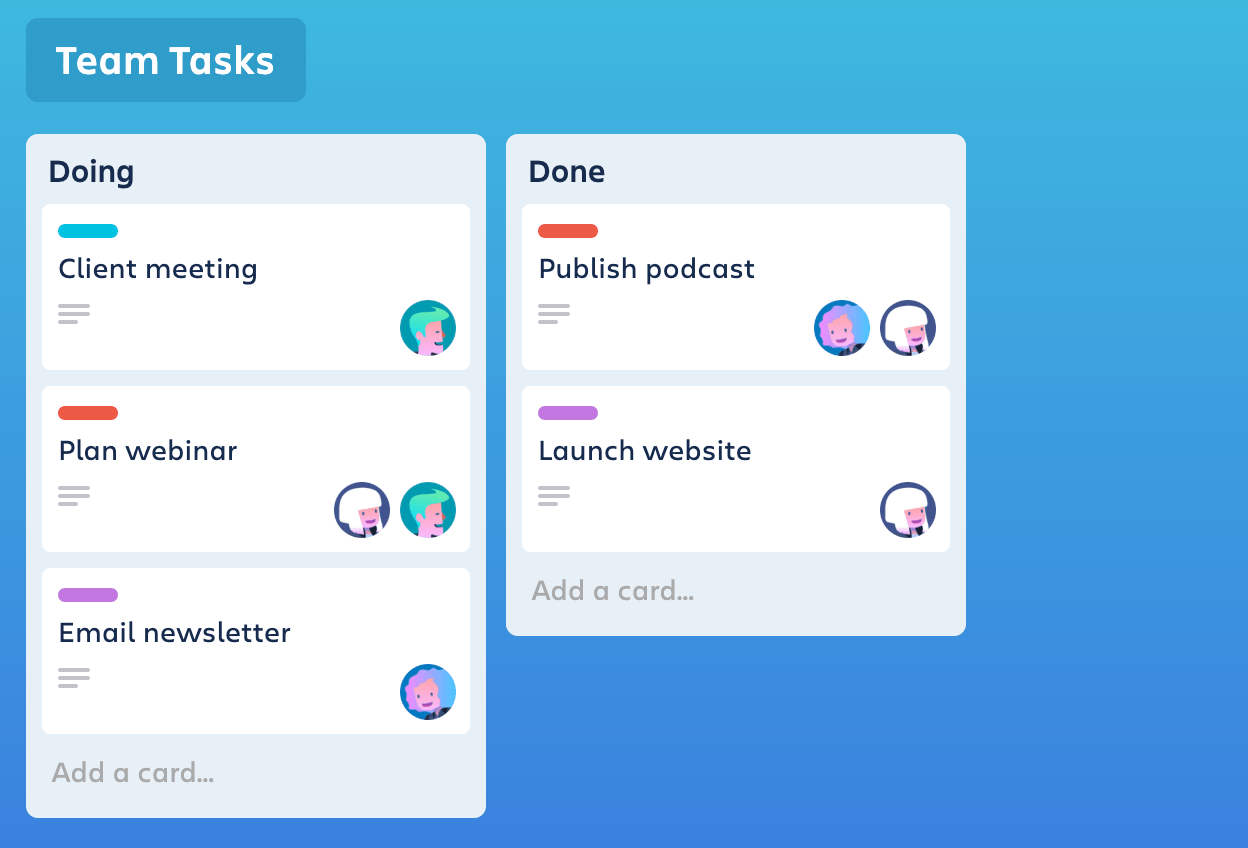
Trello shines in terms of simplicity, which is one of the reasons why I use it to manage team tasks on my websites. Everything is organized with boards, cards, and lists.

Each card represents a task or small project. Those tasks can be assigned to specific team members for collaboration. Cards have subtasks that can be managed and completed in real-time to show progress towards completion. Assigning due dates, uploading files, and adding comments on a Trello card is about as simple as it gets.

You can move cards to different lists such as “in progress” or “complete” so everyone can see the status of a task at a glance. Trello has an exceptional mobile app for project management as well.

In most instances, Trello is better for simple projects. If you’re managing complex projects with large teams, you’ll run into some restrictions with this platform.

The best part of Trello? It’s free. Every user gets unlimited boards, cards, and lists at no cost.

Paid plans start at $9.99 per month per user. This gives you access to advanced features like app integrations, calendar view, map view, advanced users, automations, and more.

#3 – Wrike — Best For Marketing and Creative Teams

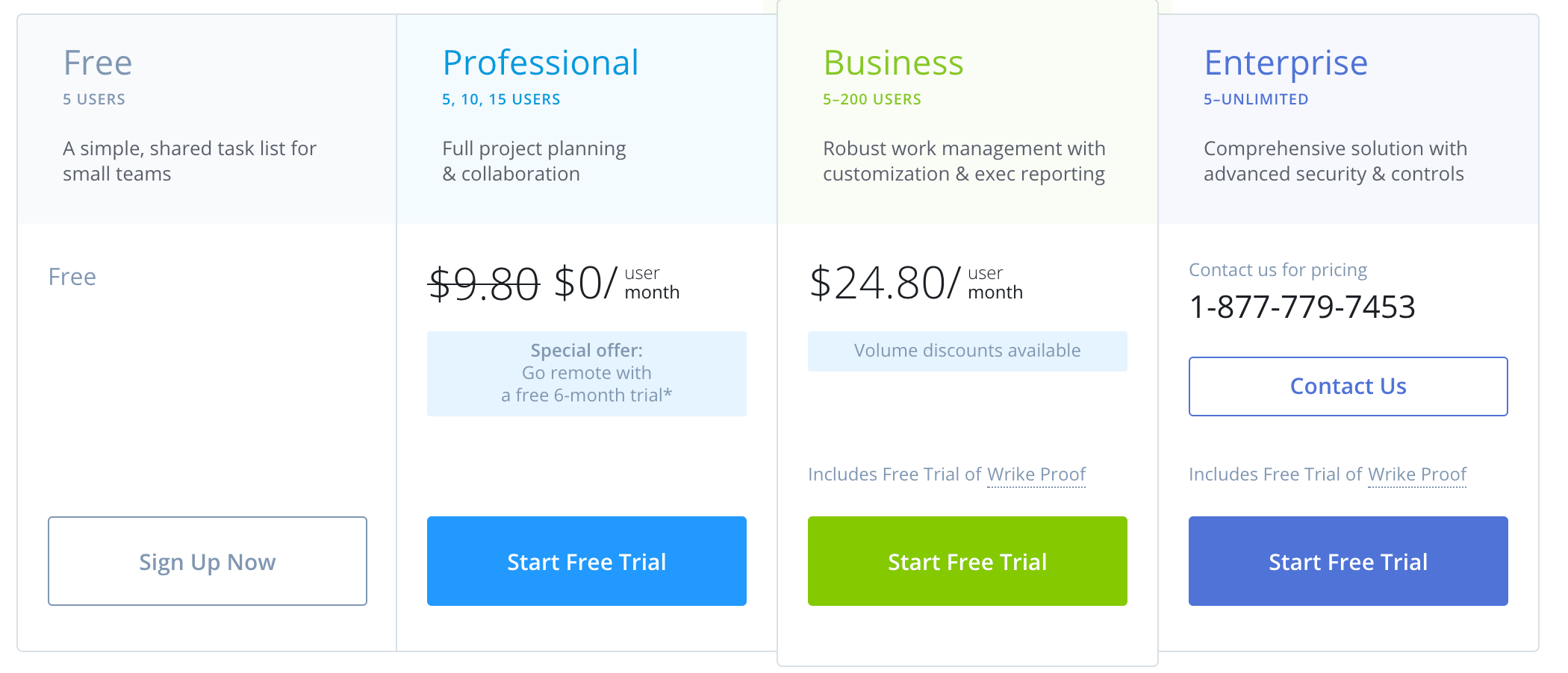
• Starting at $9.80 per month
• Free for up to 5 users
• Perfect for marketing teams
• 6 month free trial
Get started for free!

More than 20,000 businesses use Wrike for project management. It’s trusted by large organizations like Verizon and Airbnb.

Wrike makes it easy for you to view real-time reports and statuses for all of your team projects. You can enable and centralize your communication hub for everyone collaborating on a project.

This software is perfect for marketers and creative teams. Wrike has specific project management tools for campaign management where teams can collaborate on tasks, track progress, and review the results of each campaign.

Wrike also has project management templates designed for content creation. This pre-set workflow process includes everything from a creative brief to final delivery and reporting.

Wrike has a free forever plan for simple projects. But most of you will benefit from the Professional or Business plans, starting at $9.90 and $24.80 per user per month, respectively.

Once you select your base plan, you can add-on premium features depending on what types of projects you’ll be using Wrike to manage. It’s kind of a bummer that not every feature is all-inclusive. But it’s nice that you can pick and choose whatever you need.

Wrike offers product bundles for marketing and creative teams. For example, Wrike for Marketers comes with Wrike Proof and Wrike Publish add-ons. It also comes with a Wrike extension for Adobe Creative Cloud.

Contact the Wrike sales team for a quote on a project management plan for your marketing team.

For a limited time, you can get a 6-month trial of Write Professional. You can try the other plans free for 14 days.

#4 – LiquidPlanner — Best For Complex Projects

• Best for complex projects
• Used by 20,000+ businesses
• iOS and Android mobile app
• 14-day free trial
Start for free!

LiquidPlanner is a top solution for engineering teams, software teams, IT teams, and professional services. It’s made for managing complex projects at scale with lots of contributors.

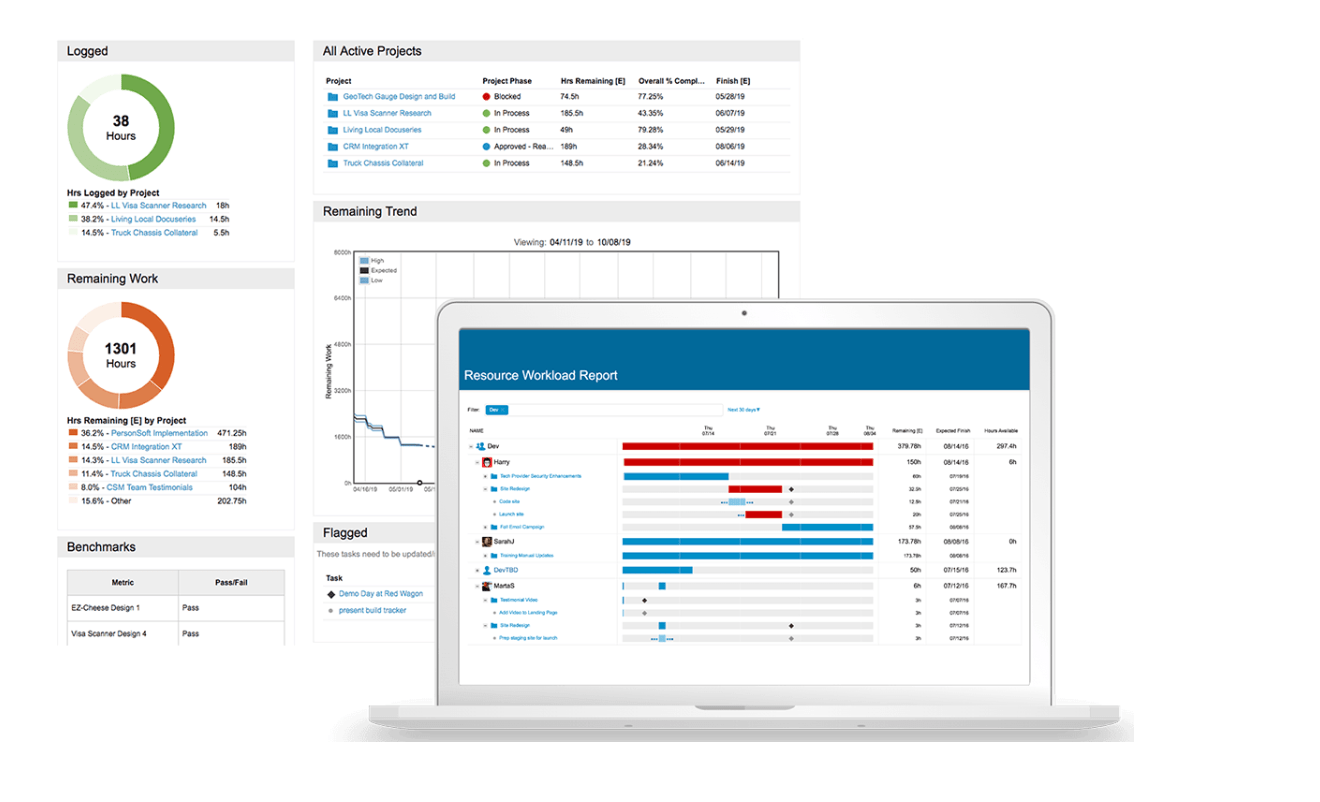
This project management tool helps you manage uncertainty with best-case and worst-case scenarios for the outcome. LiquidPlanner automatically adapts to change during a project, which is inevitable for projects with a high level of complexity.

LiquidPlanner gives you quick insight into the tasks, progress, risks, and budgets for every project that’s in progress. You’ll even be able to share the most relevant information with whoever needs to stay informed.

LiquidPlanner offers an iOS and Android mobile app, time tracking, advanced analytics, API access, unlimited internal dashboards, and integrations with cloud storage services.

You need at least five team members to be eligible for a LiquidPlanner subscription.

Unfortunately, pricing is unavailable online. You’ll need to contact their sales team to request a quote, regardless of your company size. LiquidPlanner has plans that can accommodate the needs of smaller businesses and enterprises with multiple departments managing hundreds of projects.

If you’re looking for a project management solution for something simple, like managing website content, LiquidPlanner is not for you.

But for those of you with complex needs, you can try LiquidPlanner at no cost with a 14-day free trial; no credit card required.

#5 – Teamwork — Best For Remote Teams and Agencies

• Starts at $9 per month
• Free forever plan available
• Great for remote teams
• 30-day free trial
Try it for free!

More than 20,000 businesses use Teamwork for project management. It’s trusted by big brands like Spotify, Disney, Panasonic, PayPal, and Netflix.

Teamwork makes it easy for businesses with remote workers to collaborate on projects. It’s easy for everyone to communicate, stay connected, and have clear visibility over the progress of a project, no matter where people are located.

This software management tool has built-in chat, simple project boards, and custom templates. Teamwork allows you to balance your team’s workloads by viewing everyone’s real-time capacity at a glance.

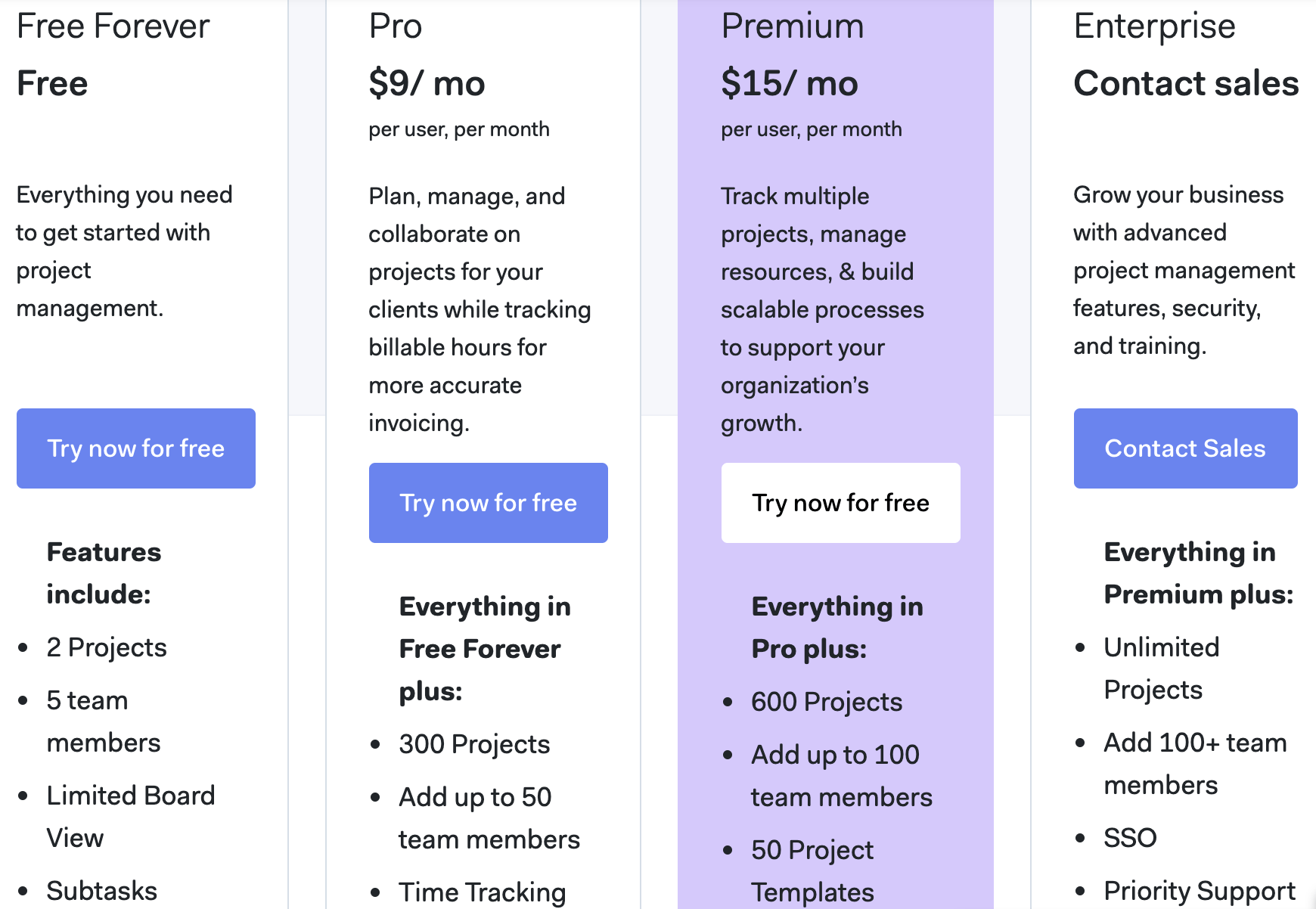
Here’s a quick overview of the plans and pricing for Teamwork project management software:

With a free forever plan for small teams and paid plans starting at just $9 per month, Teamwork is an affordable solution.

Teamwork also has specific team management software for marketing agencies. This tool makes it easy for your team to manage their own projects in addition to client work. You can even add clients and third-party collaborators to your boards for improved visibility and communication. Take advantage of built-in time tracking tools to manage invoices and billable hours as well.

Pricing for agency software is not available online. You’ll need to contact the Teamwork sales team for a quote.

In addition to the free forever plan, you can try any Teamwork paid solution free for 30 days.

#6 – Celoxis — Best For Enterprises and Large Businesses

• Starts at $25 per month
• Enterprise-grade software
• Fully customizable
• 30-day free trial
Get started for free!

Celoxis is another top option for managing complex projects. But this software is not for everyone. Celoxis is an all-in-one project management software geared towards enterprises and large organizations.

It’s used by companies like Adobe, LG, Tesla, Lufthansa, and Rolex.

Celoxis helps you manage your teams based on skills, availability, and demand. You’ll benefit from automated cost and revenue estimates for every project in real-time.

This software also makes it easy for you to share files and collaborate with both team members and clients. It even has a fully customizable client portal that you can take advantage of.

Celoxis is a bit more expensive than some of the other options on our list, but it’s actually more affordable than other enterprise-grade software solutions on the market today.

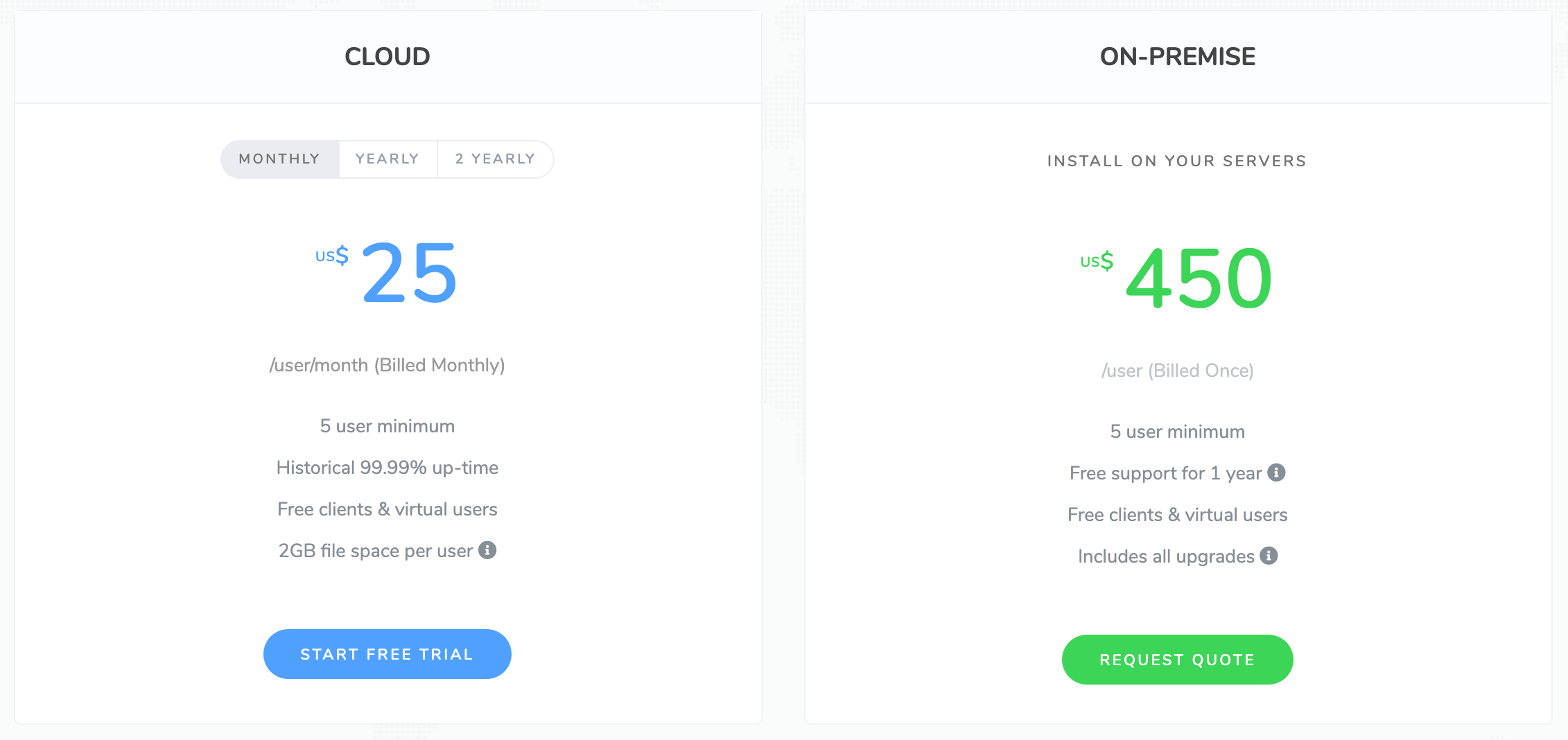
The cloud-based solution starts at $25 per month per user (with a five-user minimum). You can save some money if you commit to an annual or two-year contract.

Alternatively, you can install Celoxis directly on your servers for $450 per user. This option is also a five-user minimum, but it’s just a one-time charge as opposed to an ongoing subscription.

Celoxis really stands out in terms of the reports and data that it provides. You can easily send visual reports to your CEO or other decision-makers for specific projects.

Try Celoxis free for 30 days by taking advantage of a free trial.

#7 – TeamGantt — Best For Beginners

• Free forever plan available
• Starts at $24.95
• Discounts based on team size
• 14-day free trial
Start for free!

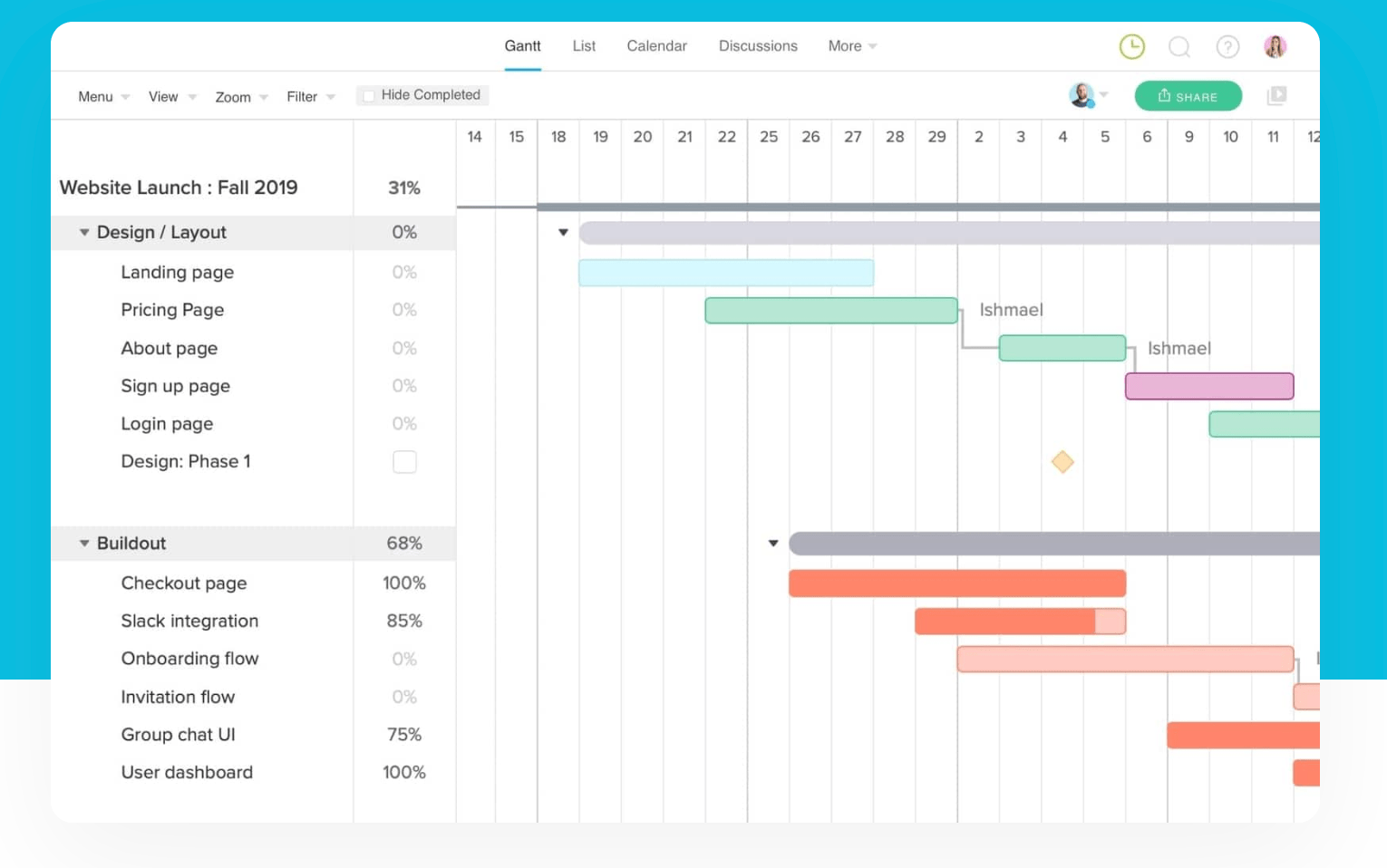
Gantt charts are more than one hundred years old. At the time, these revolutionary charts changed the way that tasks were performed. They are the foundation for many project management solutions.

As the name implies, TeamGantt is a project management software that leverages Gantt charts.

So for those of you who are just getting started and learning about project management, TeamGantt is a top option to consider.

More than one million users across the world trust TeamGantt for project management.

TeamGantt has a free forever plan for up to three users managing a single project. Paid plans start at $24.95 per month for one user.

That’s a bit pricey, especially for simple software. However, you’ll get a better rate per user with a larger team. For example, a team of ten starts at $114.50 per month, which is less than half of the per-user rate of a single person. That number drops all the way to $91 per month with an annual contract.

So while the initial price might look steep at first, it’s really not that bad upon further inspection.

For those of you looking for basic Gantt charts, I’d definitely recommend TeamGantt. If you have a complex project, TeamGantt will have restrictions. They do have an advanced plan with time tracking and hourly estimates, but it doesn’t go much deeper than that.

Try a paid TeamGantt plan for free with a 14-day trial.

How to Find the Best Project Management Software For Your Business

With so many project management solutions on the market today, it can be tough to choose the best option for your business.

This is the methodology that I used to pick the winners in this guide. Generally speaking, there is no “best for everyone” project management software. It all depends on your specific situation. I’ll break down the evaluation factors that you should be looking for in greater detail below.

Project Complexity

The first thing you need to figure out is what you’ll be using your project management software for. Basic project management tools won’t always have the features required to manage complex projects at scale.

On the flip side, if you’re just doing something simple like managing website content or need a tool for a one-off project, you won’t need software with tons of advanced features.

Trello and TeamGantt are both excellent choices for simple projects and smaller teams. If you need advanced features for complex projects, LiquidPlanner and Celoxis would be better for you. Zoho Projects (as our top overall pick) meets that middle ground between simple and complicated projects.

Team Size

The next thing you’ll need to look at is the size of your team. Is everyone on your team going to be working on the same project? Or will everyone be working on multiple projects simultaneously?

If you’re working on a simple project with just a few people, you might even be able to use a free project management solution. Lots of options on our list offer a free forever plan for two or three users.

Managing larger teams is obviously a greater challenge. The best project management software shows the real-time capacity of each team member at a glance. This feature allows you to properly allocate tasks, responsibilities, and resources, without overwhelming people who have a full workload.

Some project management software requires a minimum for the number of team members associated with a subscription. This usually starts around five users but varies from one platform to another.

Ease of Use

Simplicity is key when it comes to project management software.

From the initial setup to onboarding team members and managing tasks on an ongoing basis, you want to make sure that your solution actually makes your life easier. The only real way to determine how easy it is to use project management software is by trying it out.

Every option on our list offers some type of free forever plan or free trial. I strongly advise trying those out so you can get a feel for what works best for your purposes.

Features

Some project management software will offer more advanced features and tools than others. But depending on your situation, you may not need anything too fancy.

Common features that you’ll see for various project management software include storage limits, mobile apps, third-party integrations, built-in communication tools, advanced reporting, and user permissions. You’ll find some solutions with agency features, time-tracking tools, automation, and tools for managing your budget.

It’s important to figure out what tools you’ll actually need as you’re evaluating potential project management solutions.

Price

Pricing for project managing software is usually based on how many users you have on your team. Some solutions require you to pay for a minimum number of users to get started.

Plans are typically billed per month or on an annual basis.

The actual cost varies drastically, depending on your needs. Most tools have a free plan for basic needs and a handful of users. Paid plans start somewhere in the $3 to $25 per month per user range.

Some solutions, like Wrike, charge you extra for add-ons as you essentially start with a basic plan and customize it based on your needs. Advanced solutions, like Celoxis, charge a one-time fee of $450 per user to install the software on your servers.

With such a wide range of prices to consider, it’s important for you to choose something that fits within your budget. Project management software doesn’t need to cost a fortune.

Conclusion

Zoho Projects is the best overall project management software on the market today. It’s affordable and checks off all of the boxes that we look for when evaluating prospective options.

But with that said, this software isn’t for everyone.

If you have complex projects or large teams, you’ll be much better off with LiquidPlanner or Celoxis. Smaller teams, beginners, and simple projects would benefit from Trello or TeamGantt.

There are even use case-specific solutions, like Wrike for creative teams or Teamwork for remote teams and agencies.

Regardless of your team size, project complexity, and business type, you can find the perfect project management software to meet your needs using this guide.


from Quick Sprout https://ift.tt/2W1inI4