Thursday, March 28, 2019

8 Tactics to Increase Sales with Video Content

All businesses can benefit from more sales.

Whether your company is thriving or struggling to get by, a sales surge can help you get more cash in the bank.

If your current marketing strategies aren’t working or growing stale, I’ve got a solution for you.

Produce more video content.

Regardless of your industry, videos can do wonders for your company.

Don’t believe me?

Well, more than half of marketing experts across the globe say that videos yield the highest ROI compared to other types of content.

Furthermore, 43% of consumers want marketers to produce more video content.

You need to give the people what they want.

I’ve seen too many businesses avoid video marketing tactics because they don’t know where to start.

They are afraid of doing something wrong. I’ve even heard some business owners say they don’t use video content because they don’t have the right equipment.

You don’t need any fancy or expensive video equipment.

All of the tactics I’m going to show you can be accomplished with a smartphone or basic camera.

That’s it.

Here’s something else to consider.

Think about the other marketing tactics you’re currently using.

Can more than one person view them at the same time?

I doubt it.

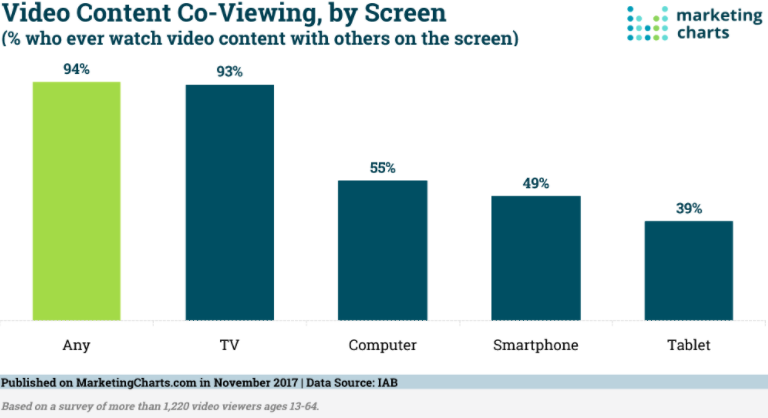
But look at how video content gets consumed in groups:

image1 12

It’s unlikely two or more people will sit side by side and read your email newsletter together.

However, if you send a video, it’s more likely people will watch it together.

Plus, look at all the device options people use to consume video content.

Videos can help you:

  • increase your website traffic
  • enhance interactions with your customers
  • grow your email list
  • get more followers on social media
  • expose your brand to a wider audience
  • promote new products or services

All these benefits lead to more sales.

This is how you do it.

1. Create a YouTube channel

If you’re not currently using any videos to promote your company, creating a YouTube channel is the first step.

Here’s why.

Once you add videos to YouTube, it’s easy to share them on other platforms.

Whether you’re embedding the video into your website or just sending a link, the YouTube platform makes it simple to accomplish this.

As you’ll see shortly, you’re going to distribute your videos across lots of different platforms.

Uploading all your content to YouTube first will help save you time because you won’t need to make the same video more than once.

Let’s look at an example so you can see what I’m talking about.

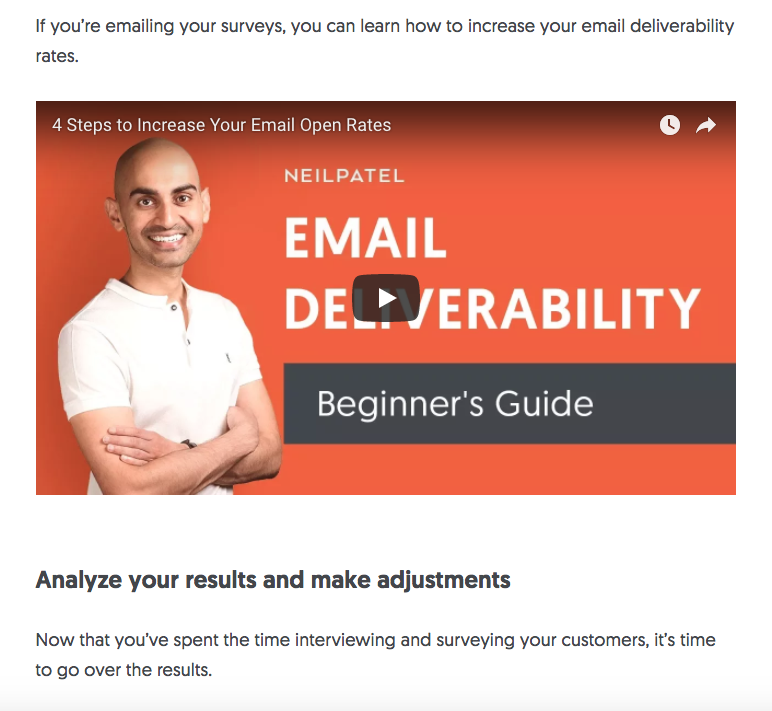
Here’s a video I included in a blog post;

image7 12

Guess where it came from?

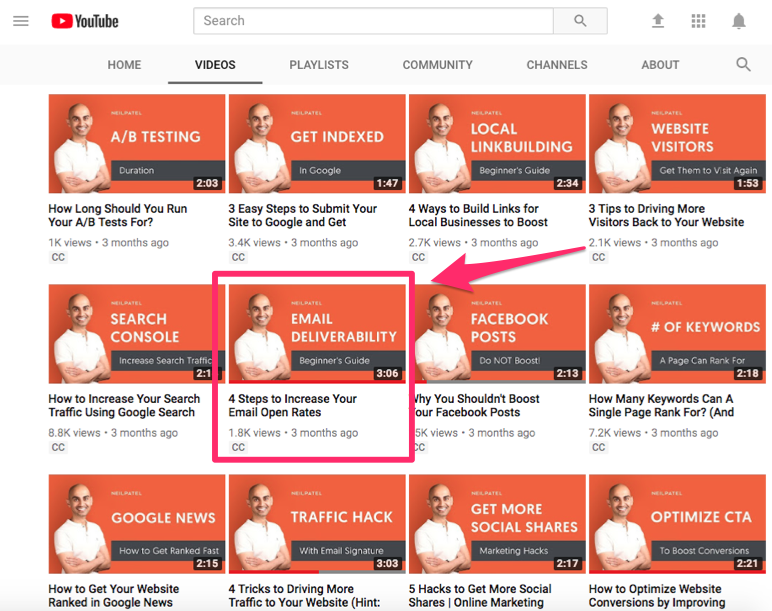
I took it directly from my YouTube channel.

image9 11

Making the video again would have been a waste of time.

That’s why this should be the first place where you start.

Don’t be intimidated.

You won’t have hundreds of videos overnight.

Just focus on one at a time.

It took me years to get over 25,000 subscribers on my YouTube channel.

But now, I have videos with over 22,000 views.

Plus, users, in addition to viewing YouTube content on other platforms, will view it directly on that site as well.

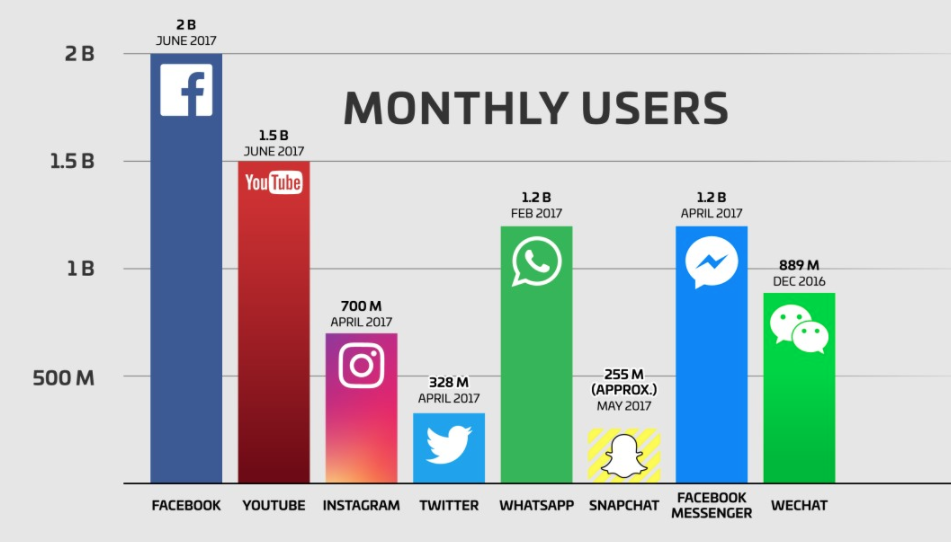
YouTube is only second to Facebook when it comes to the number of active monthly users.

image8 12

All the content on their platform is strictly videos, and it is still extremely successful.

That alone should show you how powerful video content is in terms of what users want to consume.

2. Post videos on social media

Even if you’re not currently using videos, I’ll assume you have active social media profiles.

Use them to their full potential.

You should be posting on social media every day.

This will keep your brand fresh in the minds of your followers.

The reason why so many companies don’t always post on social media is because they don’t know what to share.

Well, if you’re adding new videos to your YouTube channel, social media is the perfect platform to share your new content.

Most social media platforms have their own software to create and publish video content, but we’ll get to that shortly.

For now, just try to focus on getting all your YouTube videos onto your Facebook and Twitter profiles.

That’s a great place to start.

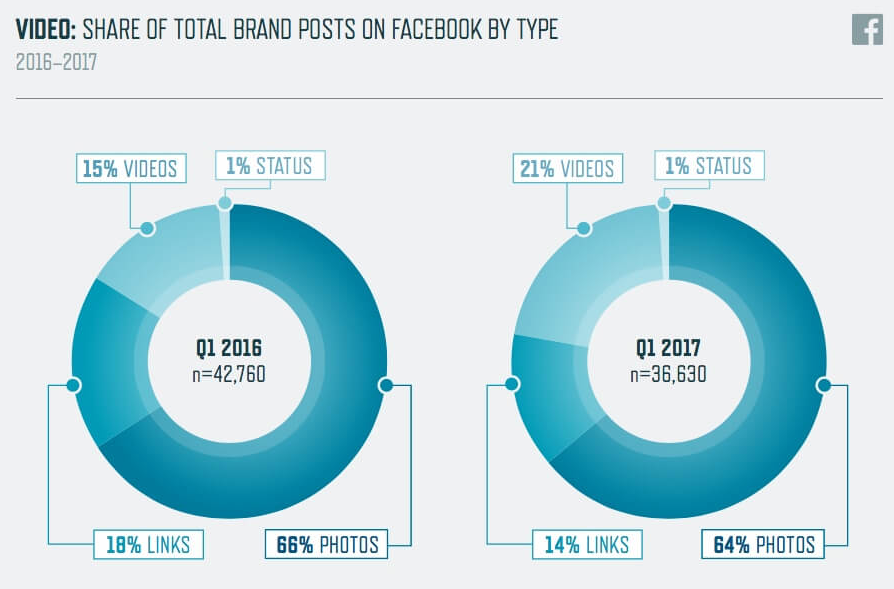
Take a look at how videos have been trending on Facebook for the last two years:

image5 12

We saw a 6% jump in video posts by businesses from 2016 to 2017.

I expect that number to continue rising each year for the foreseeable future.

3. Add more videos to your website

What’s the first thing people see when they visit your website?

Too many words on the page can be confusing and unappealing.

You shouldn’t have lots of long paragraphs explaining how your company operates.

Nobody wants to read that.

Instead, simplify the design and color schemes.

Replace all of it with a video message.

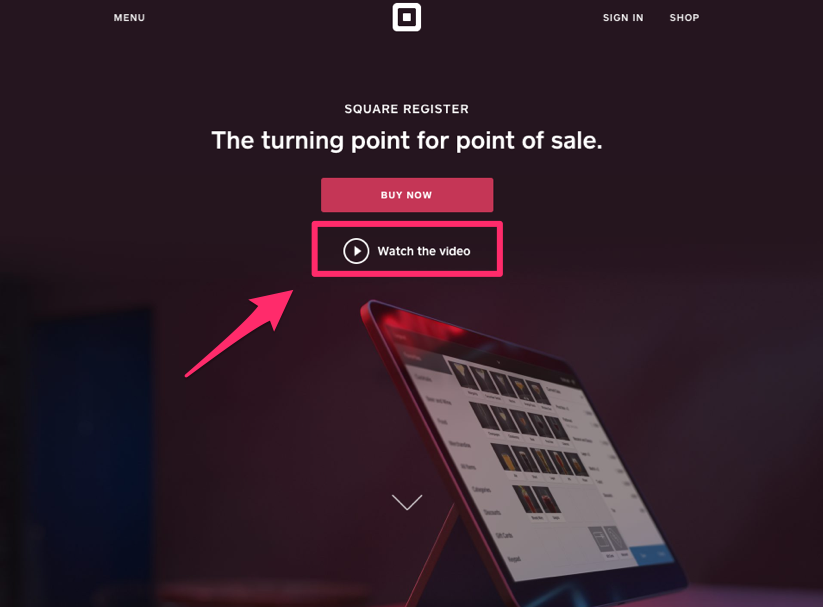
Square uses this tactic to explain how their products work:

image3 12

Do you see how little text they included on this page?

This won’t confuse anyone.

Instead, the viewer’s attention gets drawn to the video.

When you click the link, it plays a video from Square’s YouTube channel.

It’s much more effective than trying to explain how your products work in long and messy paragraphs.

4. Go live on Facebook

I love it when businesses use Facebook live as a promotional method.

It’s one of the best ways you can engage with your Facebook followers in real time.

But there’s science behind it.

You don’t want to just go live randomly for no rhyme or reason.

Instead, you should schedule your live streams to run at a set time every week.

That way, you can continue building a regular audience.

Think about your favorite TV shows.

They are on at the same day and time every week.

If they just came on sporadically, it’s unlikely you’d be able to catch every episode.

That’s the kind of following you’re trying to create here with your live video streams.

Just like your website, Facebook live is a great chance for you to promote your products or do a demonstration.

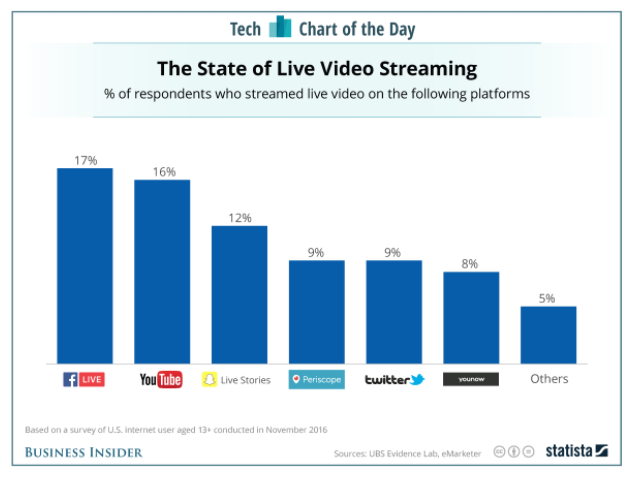
Facebook is the most popular live video streaming platform:

image2 12

The user interaction is my favorite part of Facebook live.

Viewers have a chance to comment on your live stream.

It’s absolutely imperative that you respond to those comments.

This interaction will help you build a stronger bond with your customers.

The acknowledgement will show them how much you care.

Call them out by name while you’re live.

Thank them for watching.

Give the viewer a reason to tune in next week.

Go live for a long time.

Facebook allows you to have a stream that lasts for up to four hours.

You don’t need to use all four, but I’d say go for at least two or three.

The longer you’re live, the greater the chance you’ll have of getting more people to watch.

Long live videos mean you need to come prepared.

Don’t just wing it.

Have some notes or references for topics, products, and services you’re planning to discuss.

5. Use Instagram stories

You can post pictures and videos to your Instagram story.

For today’s topic, we’ll focus on the video portion of this.

Instagram stories expire after 24 hours.

Feel free to post several each day to keep your brand fresh in the minds of your followers.

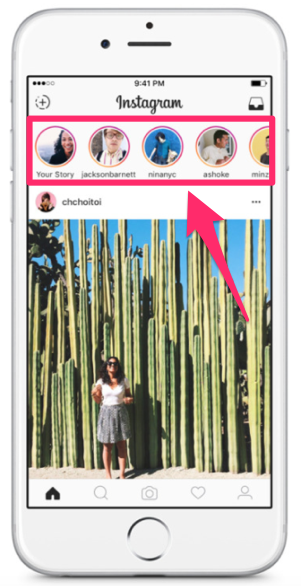
These stories appear at the top of everyone’s homepage.

image6 12

Anyone who follows you will see you have a story posted that day.

To view it, all they need to do is click on your photo, and the video will play through.

Popular stories will also show up on the search page for users who don’t follow you.

It’s a great way to increase brand exposure.

Instagram also has a live video feature that’s incorporated into their stories.

You don’t need to approach this the same way you do Facebook live videos.

Instead, use your live Instagram stream when you’re somewhere cool.

You can give your followers a tour around your production facility or introduce them to your staff.

This helps create an exclusive feeling for anyone watching.

Now they have access to something that would normally be kept behind closed doors.

Plus it’s so easy to do.

Just pull your phone out of your pocket and start recording.

But like on Facebook live videos, you’ll definitely want to respond to the live user comments.

6. Encourage customers to make their own videos

Not all your video content needs to be produced by you.

Try to get your customers involved.

You’ll accomplish a few things with this method.

  • You’ll get videos free, and it won’t take any of your time
  • It’ll enhance the customer experience
  • You’ll get more brand exposure if your customers share their videos

Look at how GoPro encourages their customers to create video content:

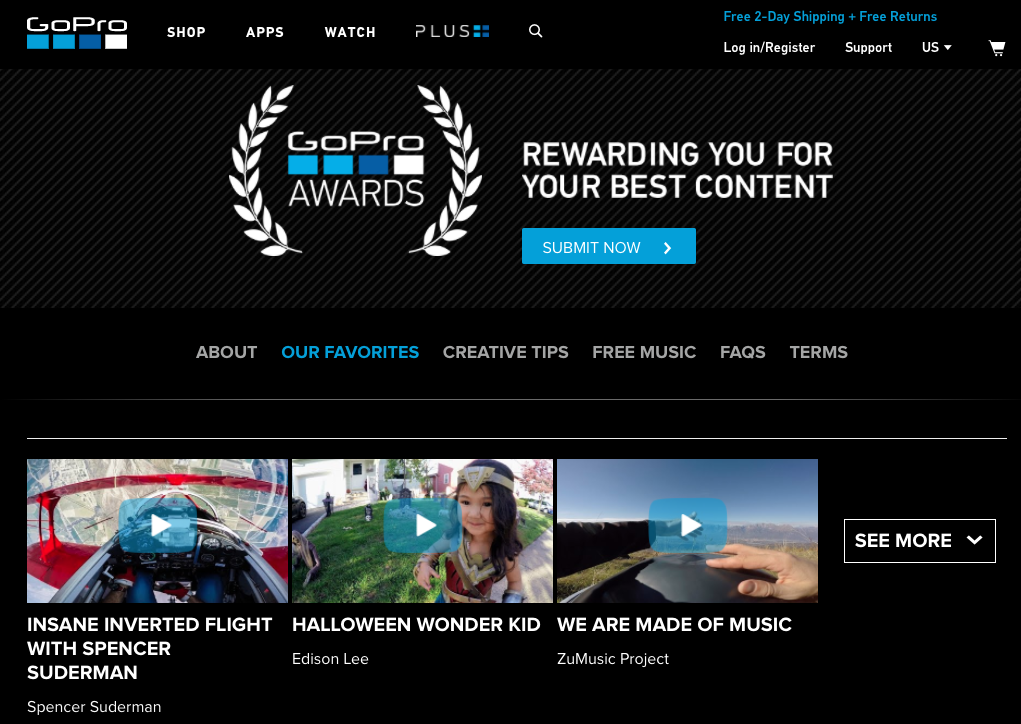
image10 9

They post the best videos on their website and even give out awards to the creators of their favorite submissions.

Giving the customer recognition for their work is a great way to get people on board.

Plus, people are really creative.

You may find out their content is even better than yours.

Run a contest or some other promotion that gets your customers to break out their cameras and start filming.

7. Email videos to your subscribers

Remember earlier I said we could use the videos from your YouTube channel on multiple platforms?

Well, here’s another chance to share those videos with your customers.

Look to your email subscription list.

Those people may or not be following you on social media, so it’s not a guarantee they’ll see your live streams or other shared videos.

But you have direct access to their inboxes.

Use it.

Embed YouTube videos into your email marketing campaigns.

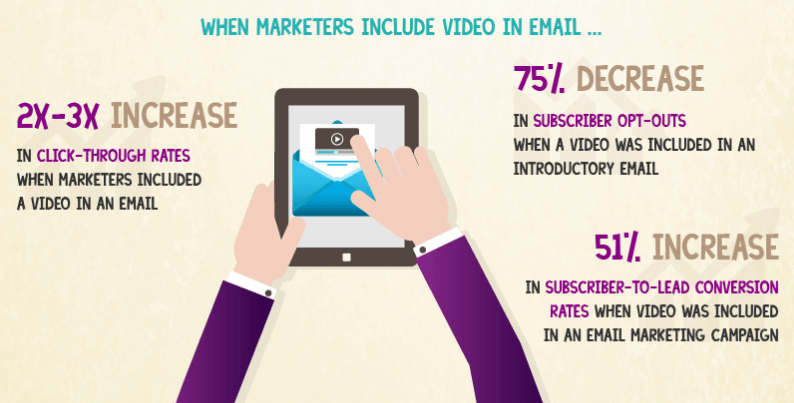
image11 5

Given the statistics above, you can see that emails with video content:

  • improve your CTR
  • increase leads
  • increase conversion rates
  • minimize unsubscribes

So it’s a no-brainer to employ this strategy, especially since you don’t have to come up with brand new videos for each email.

Just use the existing ones from your YouTube channel.

8. Make sure all your videos are mobile friendly

One constant you need to maintain with all your videos is the compatibility with mobile devices.

That’s why I’ve been recommending you use platforms like YouTube, Facebook, and Instagram to share your content.

That way, the videos automatically get optimized.

Take a look at how videos are being consumed on mobile devices:

image4 12

Mobile videos are trending upward.

Just make sure any videos included on your website and emails are on mobile friendly templates.

If your videos aren’t loading and can’t be viewed on phones or tablets, you’ll defeat the purpose of posting them in the first place.

Conclusion

Those of you looking for an easy and inexpensive way to get more sales for your business need to start creating more video content.

Create a YouTube channel, and add videos to it.

You’ll be able to share those same videos on other platforms like social media pages, your website, and even in email campaigns.

In addition to sharing pre-recorded videos, take advantage of live video streams.

Use Facebook and Instagram for this.

It’s a better way to engage with your viewers since you can respond to their comments in real time.

Another way to produce more video content is by getting other people to do it for you.

Come up with creative ways to get your customers to submit videos.

You can share those videos on your website as well.

No matter what kind of videos you’re making, just make sure they are optimized for mobile devices.

The increased brand exposure combined with an easy way for you to explain your products and services will ultimately boost your sales.


from Quick Sprout https://ift.tt/2V22teG

Create a Waterfall of Downloads for Your Ebook

Writing your first ebook is exciting. But once it’s finally written, you’ve got to find a way to get it in the hands of your audience.

After all that hard work, long nights, and endless research, it would be a shame if your book went unread.

Those of you who have recently written an ebook, are in the process of writing one, or planning to write one in the near future need to start thinking about your distribution methods.

You could be the best writer on the planet, but if you don’t know how to market yourself, nobody will know about you and your writing.

That’s how you need to approach your ebook distribution strategy. Think like a marketer. Not everyone with great writing skills is a marketing expert.

If you need some guidance on getting tons of downloads for your newest ebook, you’re in luck.

I’ll walk you through everything you need to know to create a waterfall of downloads. Here’s how you do it.

Start taking pre-orders

Don’t wait until you’re done writing the ebook to promote it. Taking pre-orders in the early stages is a great way to build hype for your ebook and brand.

If people know they can get the ebook in advance, it may seem even more appealing.

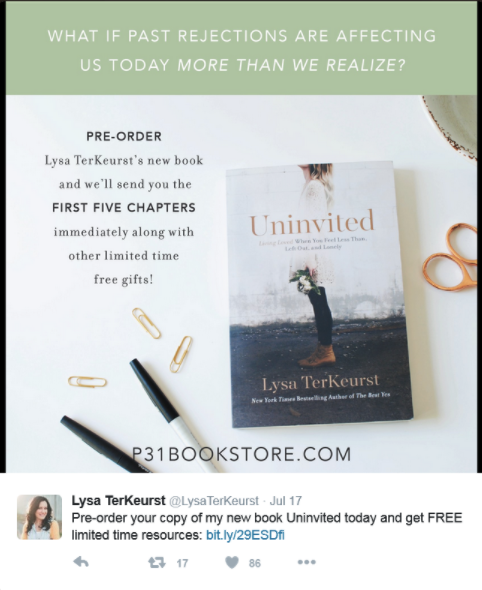
Lysa TerKeurst used this strategy to promote her ebook, Uninvited:

image6 4

This approach is great because it gives people a reason to pre-order the book. Anyone who pre-ordered this copy was able to download the first five chapters right away.

They’re also promoting some limited gifts, which were undisclosed. Both of these promotions can pique the interest of potential readers.

Getting to download chapters in advance gives people a feeling of exclusivity. They have something that not everyone has access too.

Plus, if they enjoy the first chapters, they could even start promoting the book themselves.

Come up with other ways to give people an incentive to pre-order your ebook before it gets released. If you’re charging for downloads, you can offer a discounted rate for anyone who pre-orders it.

Even if people don’t order it in advance, putting it out there creates a buzz around your ebook before its release, exposing it to your potential readers.

Record an audio version

Not everyone prefers reading ebooks. Recording an audio version can make your book more appealing to a wider audience.

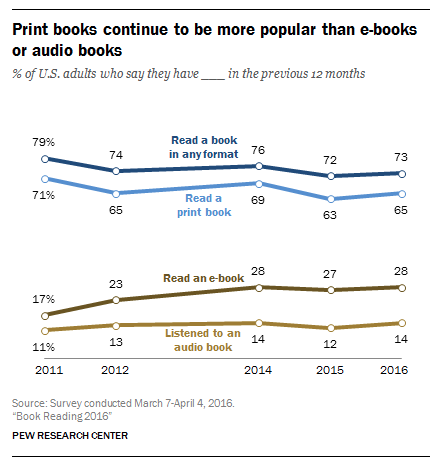
According to the Pew Research Center, print books are still more popular than ebooks and audio books:

image1 4

Ebooks are more popular than audio books, but as you can see from the data, there are still people who prefer listening to audio books.

But how does releasing an audio book increase downloads for your ebook?

Pair the two together. Say your ebook download comes with a free audio version as well. Pitch this any way you want.

Or you could charge for the audio book and offer the ebook as a free download.

If you continue to release different formats of your ebook, it will appeal to a wider audience and increase the number of downloads you can get.

Create blog posts out of each chapter

If you have an active blog, you need to take advantage of that channel as a marketing resource.

You’ve already got an audience familiar with your voice and visiting your website to read your blog. Those are the people you need to target first.

It’ll be much easier to get downloads from your blog audience than from people who don’t know who you are and have never heard of you before.

Rather than just blogging about your ebook once or twice, you can generate lots of blog content by writing a post about each chapter. There are many benefits to this marketing strategy.

First of all, it gives you a way to add fresh content to your website. This is great for SEO purposes and improving your Google ranking, which can drive traffic to your website.

But blogging is also great because it gives you an excuse to promote your new content on your other marketing channels.

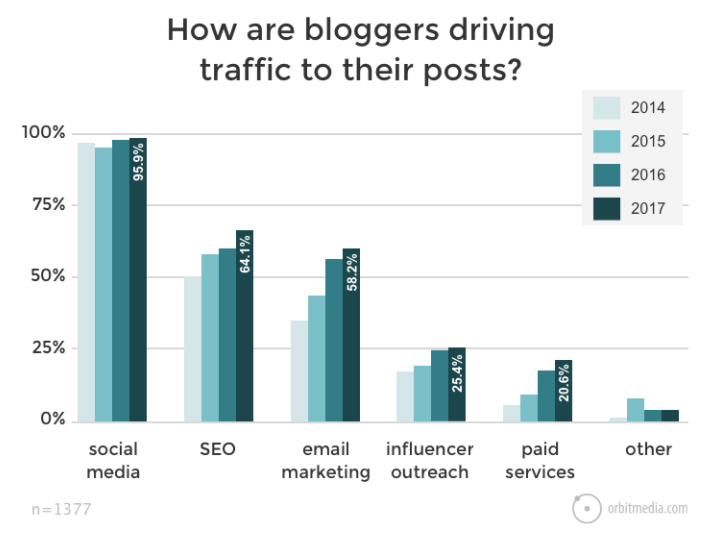
For the past four years, bloggers have been using social media as the primary method of driving traffic to their posts:

image2 4

Each time you blog about a new chapter, you have an excuse to post on your social media accounts.

Another reason why you should employ this strategy is because these posts will be super easy for you to write. You’ve already done all the heavy lifting with your ebook.

These blogs will be summaries of the chapters, which you already know like the back of your hand. It won’t take you lots of time and effort to write this content.

If you can keep your readers engaged with these blog posts, you’ll get ebook downloads. Just make sure you don’t give it all away in the blog. Otherwise, your readers won’t have a reason to download the ebook.

Tease your audience just enough to keep them interested, but make them download the ebook to get all the information.

Place a download link all over your website

Obviously, you need to promote your ebook on your website. But don’t restrict that promotion to just one landing page.

Put the download link all over your website. Just make sure it is not overwhelming or doesn’t appear as spam. Websites with simple designs have higher conversion rates.

For example, put a CTA button on your home page, side bar, and slider menu. If someone navigates to another page on your website, have a pop-up window appear with a download link.

Doing this will make it obvious that your ebook is available for download.

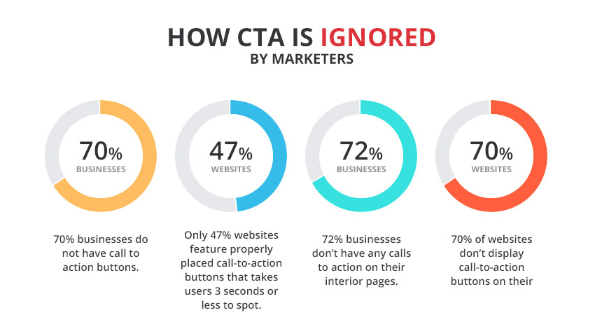
Right now, marketing experts are not properly utilizing CTA buttons:

image4 4

Fewer than half of websites have a CTA button that can be spotted in less than three seconds. That’s far too long. More than 70% of businesses don’t have their CTAs on the interior pages of their websites.

Don’t make this mistake.

You should also start A/B testing your CTA button’s placement, size, wording, and color. These tests will help you improve your site’s efficiency so you can get maximum exposure.

Try to get downloads from your email subscribers

As I said earlier when discussing blogging, you need to try to get as many downloads as possible from people already familiar with your brand.

Targeting your email subscribers is perfect for this. These people are interested enough in your brand and voice to sign up to hear from you on a regular basis.

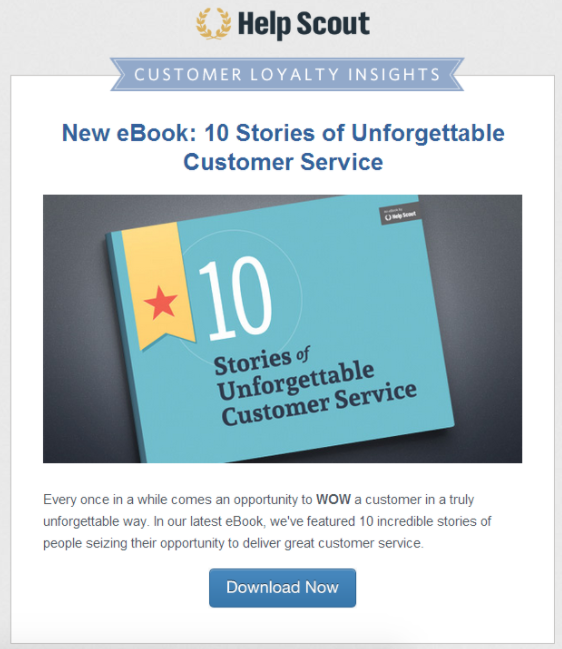
It’s much easier to target your existing audience than trying to find readers elsewhere. Check out how Help Scout uses this technique in their email newsletter:

image8 2

It’s direct and straight to the point. They aren’t trying to promote anything else except for this new ebook.

The message ends with a clear call-to-action button that’s serves as a link for their subscribers to download the ebook.

Those of you charging people for an ebook download can try to entice your email subscribers to buy it by offering them a discounted rate.

Publish infographics with research from your ebook

People love visuals.

Infographics are great because they help drive more traffic to your website. Here’s why.

If you start publishing high quality infographics, other websites will use your visuals to improve their own content. As a result, you’ll get a referral link.

This will increase the chances of your book getting exposed to a wider audience.

You can even add a logo or some other identifying mark to all your infographics with the title of your book. The headline of each infographic could include the title of the chapter you were referencing.

If you have never made an infographic before, don’t be intimidated. It’s quite easy.

There are plenty of free online tools and resources available that let you create customized infographics. Check out Canva to start.

Don’t turn down guest-posting opportunities

Remember I said earlier that blogging on your own website can benefit downloads? Well, you can also get more ebook downloads by writing guest posts.

Guest posts expose your ebook to a new audience. People who read other blogs may not be familiar with your brand and voice. But you can get their attention with your guest post.

Just like with infographics, you’ll be able to get referral links for your guest posts. You can even have these referrals go straight to the download link.

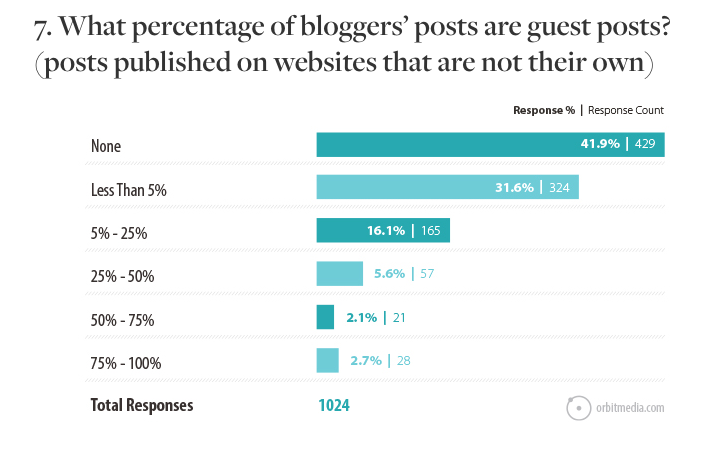
I see way too many people turn down guest-posting opportunities. In fact, more than 40% of bloggers don’t write guest posts at all.

image7 4

This is a complete missed opportunity. Anytime someone offers you a guest post, you should jump on it. Just make sure their website has the same core values as your brand.

You don’t want to be associated with anyone who is not in line with your morals. If nobody is offering you guest-posting opportunities, find them on your own.

Websites will be thrilled to offer guest-posting because they get to publish new content without having to do any of the work. This is a win-win scenario for everyone.

Read sections on a live video broadcast

Live videos made the list of my top marketing trends to look for in 2018. This is a great opportunity for you to reach and engage with your audience on social media platforms.

Start with platforms such as:

  • Facebook Live
  • YouTube Live
  • Instagram Live.

Use whichever platform has the largest social media following. If you’ve got lots of followers on all of these networks, that’s great. Host live video broadcasts on all of them.

Just make sure your live stream isn’t boring. You’d want to read some passages to give people an idea of what they can expect from your book, but that’s not all you should do.

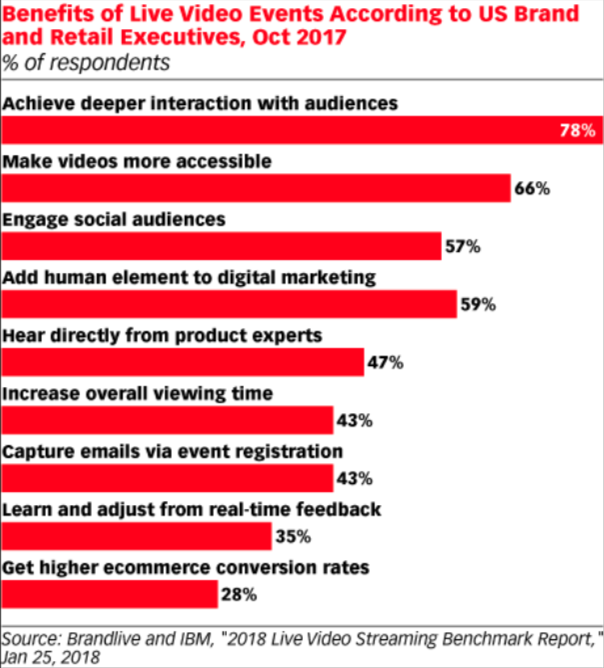
Marketing experts say live video is a great way to deepen your engagement with your followers:

image5 4

Answer questions in real time about your writing process, research, and inspiration for writing the ebook.

You could even give away some copies to people watching the live stream.

Leverage social media platforms

You want to make sure you exhaust all your marketing distribution channels to promote your ebook. I’ve already discussed your website, blog, and email subscription list.

In addition to using social media to broadcast live videos, you’ll also want to take advantage of the other features on these platforms.

Post pictures and videos to get the word out to your followers.

Encourage shares on Facebook and retweets on Twitter. Add a download link to your Instagram bio.

Think about all the followers you have on these platforms. Target them before the release. Promote the release date hard. Even after the book is written, keep up your social media marketing strategy to get more downloads.

You can try to work with social media influencers on these platforms as well.

Promote your personal brand

Why should anyone read your ebook?

You need to start promoting your personal brand. Position yourself as an expert on the subject.

If you have a degree in a specific field or any personal success stories relevant to the content of your book, let people know about that.

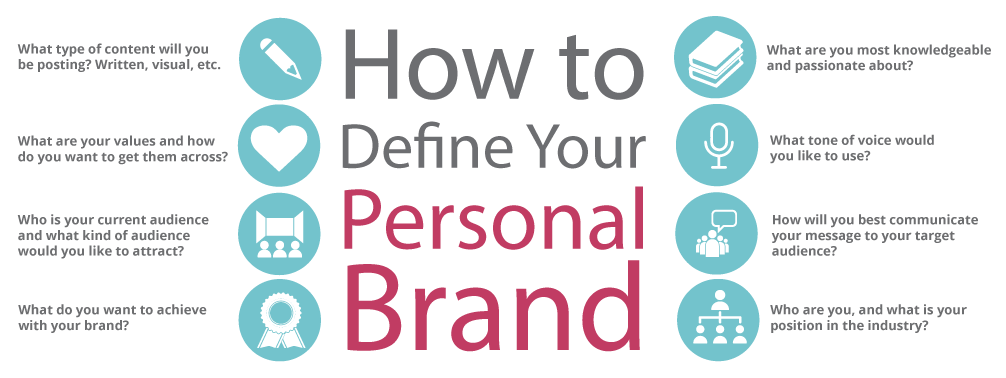
Answer these questions to help you define your personal brand:

image3 4

What makes you qualified to write an ebook?

If you brand yourself properly, it will add credibility to your book. As a result, more people will be interested in hearing what you have to say.

This will lead to more downloads.

Conclusion

Writing an ebook isn’t enough to get downloads.

You need to take proper steps to make sure people download your ebook.

Start taking pre-orders to build hype and gain exposure before the book is released. Record an audio version to make the book more appealing to people who prefer listening to books.

Blog about it. Use each chapter of your ebook as an inspiration for a blog post. You can even take advantage of guest-posting opportunities.

Create infographics to drive more traffic to your website. Make sure your site has a clear CTA on every page with a download link.

Target people who already know who you are. Use social media as a distribution channel, and stream live videos to create an authentic interaction with your audience.

Always promote your personal brand so people know you’re an expert on the topic and qualified to write this book.

If you follow these tips, you won’t have a problem getting tons of downloads for your latest ebook.


from Quick Sprout https://ift.tt/2CFu2n2

A Data-Driven Method for Finding Out Whether Your Content Sucks

Sometimes, you have to show some tough love. You’ve got to be brutally honest.

Because I value you (yes, you!) as a reader, I don’t want to lie to you or sugarcoat things for you. You deserve better.

I want to give you the best advice possible so you can go out there and succeed.

If I’m being brutally honest: Your content might suck.

It’s not your fault—my content was downright awful for years. It took me a long, long time to get really good at blogging.

Blogging is hard. Coming up with awesome content is hard.

You might know your content isn’t as good as it could be, but you probably don’t know where you’re going wrong.

And if you don’t know where you’re going wrong, you’ll never improve.

That’s why I’ve put together this data-driven method of finding out whether your content sucks. There’s no guesswork here. I’ve laid out everything for you here, step by step.

I wish someone would have given me a guide like this when I started blogging. It would have eliminated years of mistakes, and I’m not exaggerating.

Let’s get started.

Get into the right mindset

When I started blogging, I didn’t really know how to make my content better.

For a while, I thought I was just an awful blogger.

If you feel that way, let me reassure you: You’re not a bad blogger.

Writing is a skill anyone can develop, and don’t let anyone tell you otherwise. I wasn’t born with the ability to write. I had to hone my writing for years.

I know from experience that it can be difficult to see exactly why your content sucks.

Thankfully, there are several tried-and-true methods I’ve learned during my career that will help you identify and fix problems in your content.

Before we get into the nitty-gritty, I want to point out two things.

First, you need to be your own worst critic. Don’t be too harsh on yourself, but try to detach yourself from your writing.

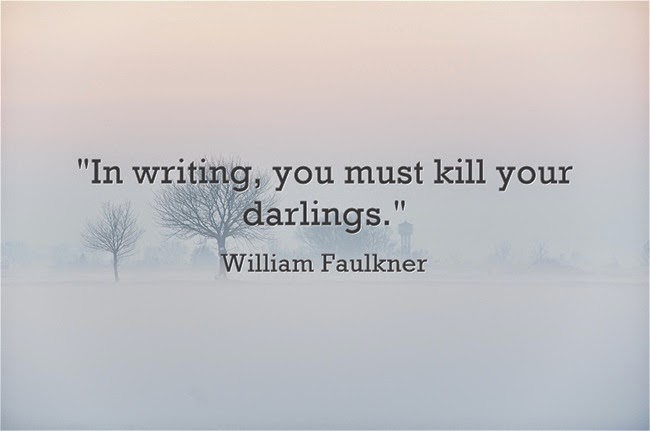
There’s a famous quote in writing that applies here:

image04

When you’re writing, don’t get too attached to anything. You’ll need to be honest with yourself during the editing process, so try to look at your own writing as if it’s someone else’s.

Second, don’t be afraid to ask for help. Even today, I work with editors all the time. My writing still isn’t perfect, and I’ve been blogging for over ten years.

If you get stuck along the way, there’s no shame in finding a writer or editor to help you out.

Better yet, email a blogger you really admire, and ask for their help. It sounds crazy, but most bloggers (yes, even the big names) are more than happy to help up-and-coming bloggers.

Now that you’re prepped, let’s make your content shine.

Specifically, let’s talk about diagnosing bad content.

Often, if your content is bad, you’ll just know. Other times, it’s more difficult.

Here are some of the most common flaws of bad content.

Problem #1: Keyword stuffing

If you can use up both hands to count the number of keywords in a paragraph, you’re witnessing keyword stuffing.

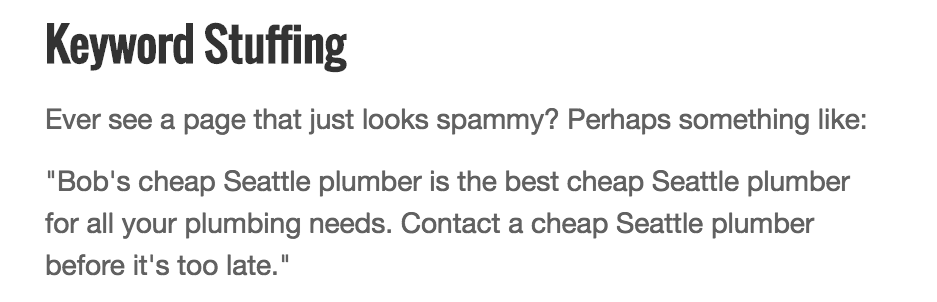
Keyword stuffing happens when someone uses a keyword several times within a short amount of space.

Moz made up a great example:

image00

Keyword stuffing has been around for years, and people still use it today in an attempt to enhance their SEO.

But keyword stuffing is really only good at one thing: annoying your readers.

Keyword optimization can be a powerful tool, but stuffing ruins it. Plus, Google doesn’t like it. If you have keyword stuffing, you need to fix it pronto.

How to fix it: Fixing keyword stuffing is a two-step process.

First, let go of your keyword obsession. Remember, you’re creating content for human beings—not for search engines.

Try writing an entire post without thinking about keywords at all. You don’t have to use the final product, but I do recommend this exercise to get you out of the keyword stuffing habit.

Second, get up to date with keyword research. It’s still a vital part of SEO and online marketing, but you need to do it right.

I recommend spending a lot of time investigating insanely specific long-tail keywords for your niche.

Then, learn how to seamlessly integrate your long-tail keywords into your posts. It might take a while, but it will reward you many times over.

Problem #2: Reader unawareness syndrome

I’ve said it countless times before, and I’ll say it again: Blogging is all about creating awesome content for your readers.

That means you have to know who your readers are.

I’ve read lots of blog posts that were well-written with excellent research and examples. The only problem? The content wasn’t aimed at the blog’s demographic.

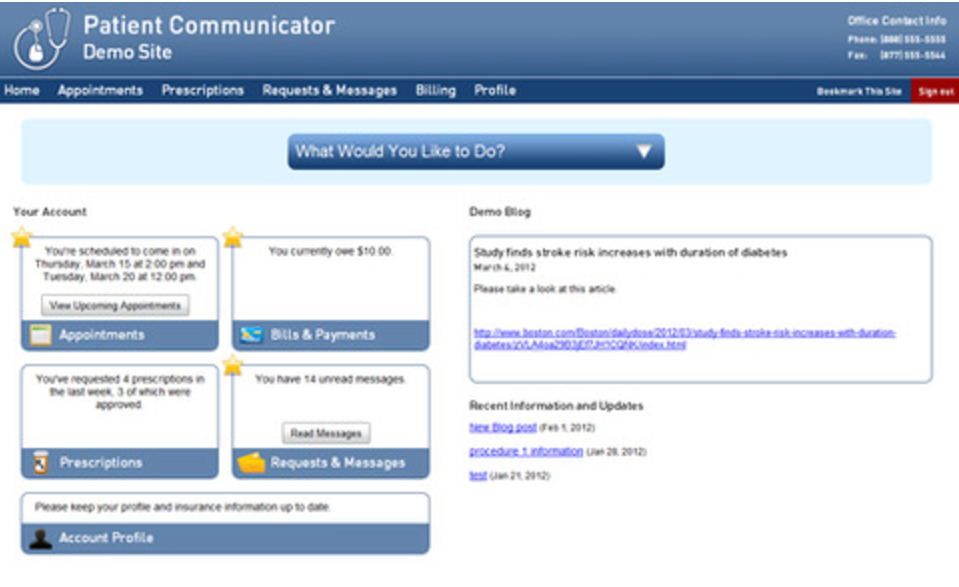
Let me tell you the story of a failed startup called Patient Communicator.

image05

Patient Communicator’s goal was to provide a CRM for doctors and patients. But, as founder Jeff Novich realized,

We had no customers because no one was really interested in the model we were pitching.

Many product ideas fail because the company doesn’t understand what their audience wants. It’s the same for blogs.

If you don’t understand what your readers want and deliver that type of content, your blog will be quickly forgotten.

How to fix it: To relieve reader unawareness syndrome, you’ll need to do some thorough research to find out who exactly your audience is.

This is a great opportunity to look into both demographics and psychographics of your readership to understand who your readers are and why they read your content.

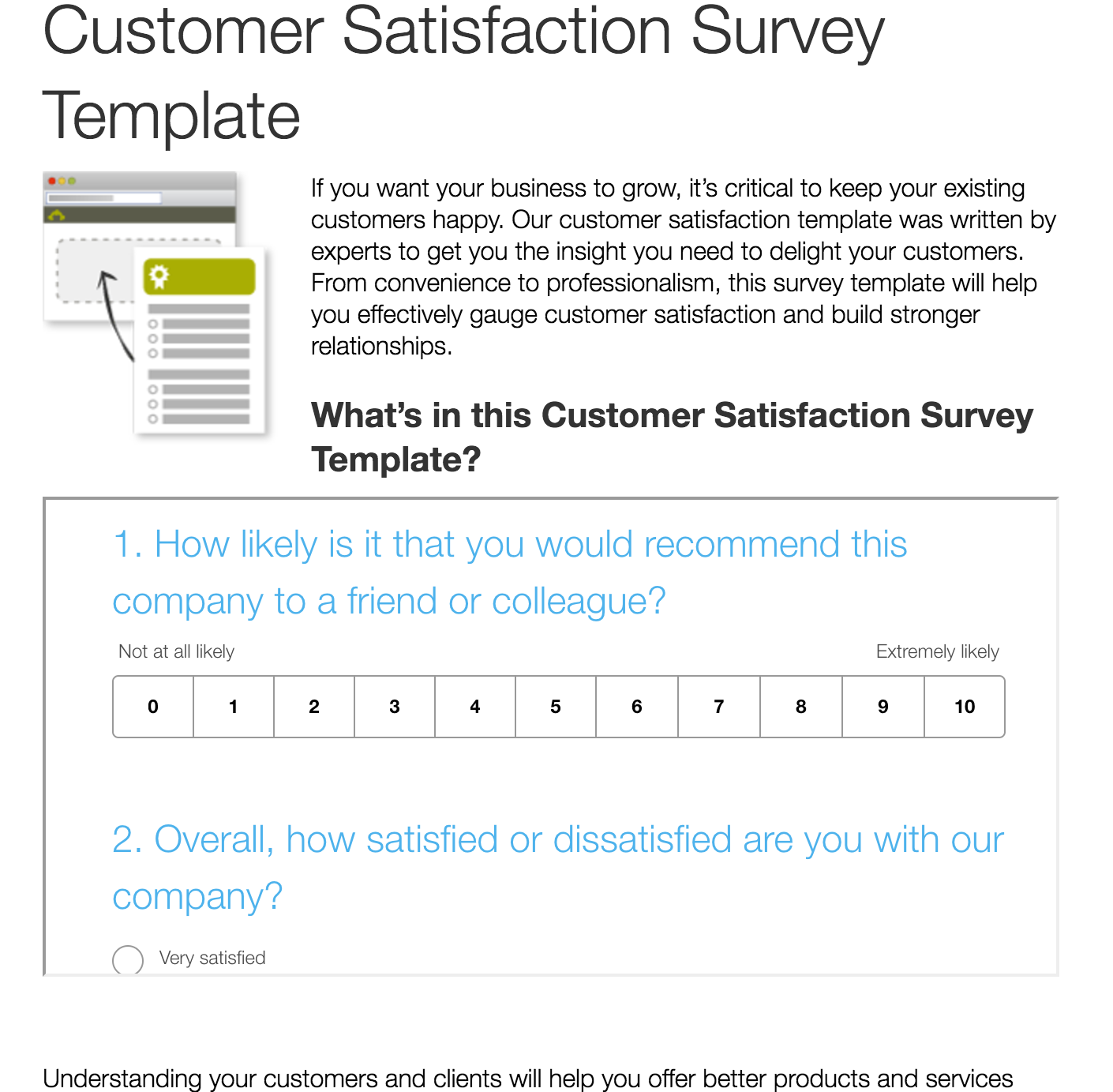
A good method of obtaining both demographics and psychographics is to survey your readers. SurveyMonkey is a great tool for this.

image01

You’ll get direct feedback from the people you’re writing for, and you can’t get much better than that when it comes to marketing.

Problem #3: Bad writing

When I first started blogging, I was a bad writer, to put it lightly.

Over the years, I’ve learned a ton about copywriting, but for a long time, my content suffered.

There’s no denying that well-written content can take you from 0 to 60. If you can write well, you’ll command your readers’ full attention.

More importantly, excellent writing sets you up as an authority. Being able to communicate your ideas clearly is an invaluable skill to have, no matter what industry you’re in.

Likewise, bad writing can harm you. People won’t see you as an authority, and they might even doubt your credibility.

You could have the best content in the world, but if it’s not written well, it will flop. That’s why it’s a great use of your time to study writing.

If you struggle with writing, don’t worry—it’s easier to improve than you might think.

How to fix it: In short, study copywriting from authoritative resources. Here are a few to get you started:

Next, become a regular reader of the most popular blogs in your niche. For example, in marketing, Hubspot, Inbound, and Inc are three popular blogs.

A simple way to find the top blogs in your niche is to run a Google search.

If you’re in finance, for example, search “finance blogs.” Find 5-10 popular blogs, and read them religiously.

Finally, put what you’ve learned into practice. Compare your content to that of the blogs you read. Do you see similarities? If you struggle, where is the problem?

This 3-step process will help you become a better writer, but it won’t happen overnight. You have to be dedicated and keep it up every single day.

Keep practicing, and, like I said earlier, don’t be afraid to ask for help.

Problem #4: Lack of value

People love value.

Jay Baer from Convince and Convert surveyed 25 popular blog posts and found that people love tips and tools. Many of those 25 posts featured actionable advice that readers could use almost instantly.

Sadly, many blogs withhold value from their readers. Many bloggers are afraid to give too much away.

What those bloggers don’t understand is that people read content in order to get something valuable.

Think of it as a transaction. The reader is spending time and energy to check out your content, and they’re looking for something in return.

It seems counterintuitive, but giving away a ton of value will make your readers more devoted to your brand. I know it sounds crazy, but it’s true.

That’s why I write super-long articles that are packed with advice. It’s a tried-and-true method that’s never let me down.

If you’re worried about giving away value, don’t be. It’s worked for me and countless others, and it’ll work for you too.

How to fix it: Start creating content with the sole goal of providing value. Don’t worry about doing SEO or writing clickbait headlines. Just focus on value.

Strive to provide at least one helpful takeaway in every piece of content you write. (Longer content should have more takeaways.)

These takeaways should be pieces of actionable advice that readers can use in their lives. Ideally, they should be able to implement the advice immediately.

Make sure to let your readers know what value they’re getting. Start with the title.

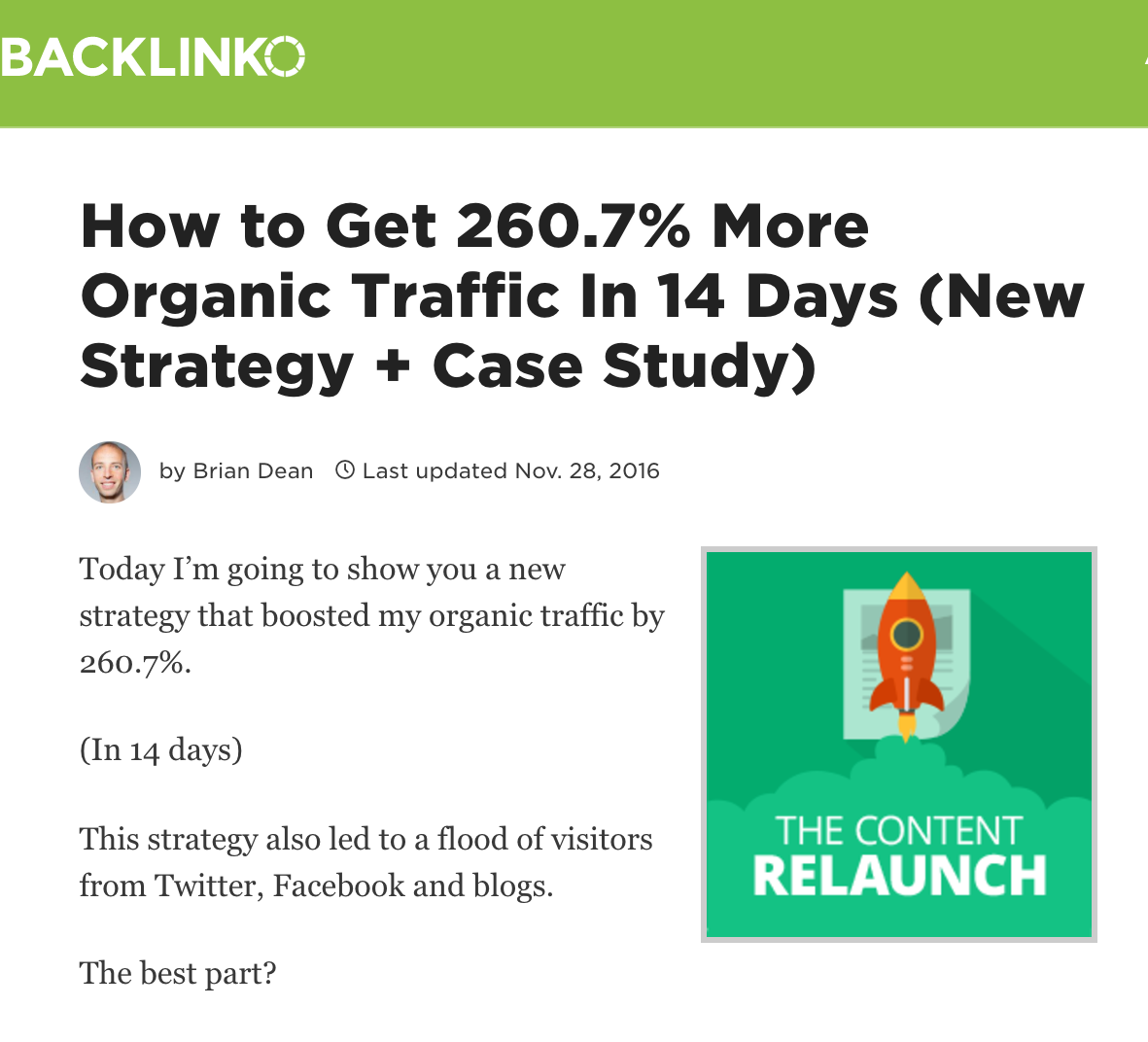
Here’s an example of a great title from Brian Dean at Backlinko:

image02

You can tell right away what you’ll get if you read the article. That’s what you want to accomplish.

You can also create infographics like this one we published on Crazy Egg:

image03

Whatever media you use, pack it full of value. You won’t regret it.

Conclusion

Let me reiterate this: If your content sucks, it’s not because you suck.

Writing awesome content is hard. It’s taken me years of practice to get where I am today, and guess what? I’m still learning.

But it’s important to recognize when your content does suck.

There’s a huge chance that your content will make a lot of first impressions. People who have never heard of your brand before could stumble upon one of your blog posts, and they’ll judge your brand based on your content.

And if your content is bad, you’ll lose potential customers. But if your content is amazing, you’ll win people over.


from Quick Sprout https://ift.tt/2V3dWui

7 Tips to Take Your Content From “Meh” to Amazing

One of the greatest struggles content marketers face right now is creating engaging content. More than 70% of marketers have made it a top priority this year to address that and make stronger connections with their audiences.

I think a primary cause for that struggle is that we’re only just a few years past search engine updates that changed, rather quickly, the way content is produced. The days of short, shallow content for the sake of building links are gone.

But change sometimes comes slowly. If you want to stand out, you have to produce better content. That’s all there is to it.

Your customers won’t settle for something boring, shallow, and uninteresting. They have problems, and they want answers to help them address those problems.

Here’s how you can transform your “meh” content into something amazing that your audience has been longing for.

1. Hook them in the opening

The introduction to your content should be the most impactful, hooking your audience when they first read it. You need a compelling intro that isn’t very long but provides an effective tease about what’s to come.

A smart move is to make an emotional impact on the audience within the first few sentences. If you’ve done your audience research, you can use your intro to create a sense of empathy around the main point of the article.

The next segment of the intro can set up the need or desire for a solution, followed by a promise of information to come. Other strong introductions could include:

  • Engaging use of storytelling
  • Facts and statistics, especially those that might be surprising
  • A position or belief contrary to the norm

2. Add visual engagement

Even the driest textbooks I had in school had pictures and visual aids to help break up the blocks of text in each section. Few things will make someone bounce from your content faster than being greeted by a wall of text.

Images and other visual elements don’t just break up the content to make skimming easier; they create a more immersive experience that helps the reader remember your content. It also makes them more likely to read it.

Adding relevant images increases people’s willingness to read by as much as 80%.

Visuals are so effective at promoting engagement that 55% of marketers say creating visual content is among their top priorities for 2016.

Just don’t rely on stock photos.

Find or create images that are highly relevant and fit the context of the cotent. Use PixabayFlickr, and Google’s Advanced Image search to find creative commons images, or try using Canva to create your own.

3. The right headline matters

Whenever you’re creating an article or post, create headlines that match these criteria:

  • Short – keep it under 20 words
  • Impactful – capture their attention and generate interest
  • Relevant – no clickbait; match audience intent to the content.

Even the most value-packed content will be ignored if you don’t have a great title that connects with your readers.

Keep in mind that only about 80% of people will read your headline, and of those 80% only about 20% will actually read your content.

When I’m producing content, I can sometimes get lucky and come up with a great headline quickly. More often than not, I spend as much time coming up with a headline as I do writing content.

4. Find the angle

If you come up with a topic for your audience, there’s a good chance that someone has already covered it. That doesn’t mean you can’t write about it or shouldn’t. You just need to have a unique approach and make sure you’re providing original value.

Every piece of content you write has 3 aspects:

  •         Topic – the overarching subject for your article
  •         Point – The key idea you’re trying to get across
  •         Angle – Your specific position on the topic and point

Go after common topics or even trending, heavily-covered topics. Just make sure you have a good angle. When readers are digging into a topic, it will be refreshing for them to find content with a different perspective.

5. Give your content a voice

One of the purposes of producing content is to build trust with your audience to establish authority. You’ll never achieve that if your content reads like a textbook or technical piece. That content has no voice or personality to it.

If you’re promoting your own brand, write in your own voice. Think about your statements using your voice before you write them. Does it sound like you?

For your brand, develop a voice that matches the personality you’ve already created. Content created by a brand with a lighthearted style, like Taco Bell, has a very different voice from the voice of a more serious, driven brand, like Nike, for example.

When you write with a consistent voice, you make a stronger connection with your audience. Content feels more like a dialogue and less like a learning experience.

6. Chase the one thing

As mentioned, your content has a point or key idea you’re trying to get across.

That’s singular: one point.

Every word and sentence in your content should lead toward that point and support it.

Anything that doesn’t engage the reader and help them reach an understanding of that point is only taking up space. Cut it.

7. Match depth and length

I still stumble across the occasional article that dates back to pre-Google updates.

While researching topics and ideas, I see that one 300- or 400-word post that pops up. No images or subheadings, just a little garden wall of text.

They were short, punchy, and often without much value to them. That’s expected, given the length.

What really surprises me is the posts in excess of 1,500 words that have virtually no substance and could be reduced to 400 words without losing anything. They are as vast as an ocean, but as deep as a puddle.

The length of the content isn’t really important; it’s the depth that you have to be mindful of.

Seth Godin is well known for his short, pithy blog posts. They work for him.

Buffer, on the other hand, is known for long-form posts packed with insight and takeaways.

No matter how long of a post you write, make sure the depth matches the length.

Conclusion

A lot of content marketers I talk to say the same thing: “I’m having a hard time making our content really amazing.”

I get that. It’s not easy.

To make the struggle even tougher, more companies than ever are doing content marketing!

Today, to do better, you have to outdo hundreds of other competitors.

Easy? No. But doable? Yes.

What I’ve found to be effective is sticking with it and going back to the basics like the depth of content and the engagement of the headline.

You don’t necessarily need more skill or talent. By taking the right steps in the right area, you’ll be able to level up and improve your content game.


from Quick Sprout https://ift.tt/2CLAwk9

How to Make Your Content Marketing Impossible for Competitors to Copy

How to Make Your Content Marketing Impossible for Competitors to CopyThe more advancements in digital marketing we make and the more information on how to spy on competitors we share, the more those things are being adopted in various industries around the world.

That means you’re more likely to be the target of a spying competitor.

It’s all fun and games until they start using the same tactics to replicate the work you’ve been doing.

Sometimes, competitors will piggyback on your hard work to steal market share and customers.

When you’ve got a direct competitor shadowing your content marketing strategy, social engagement, and audience outreach, it’s enough to inspire vengeance and make you lose focus!

I speak from experience. This has happened to me several times.

It makes you question whether it’s something that should be promoted. Where’s the line between spying to replicate a competitor and just monitoring for awareness?

It’s enough to make you question the ethics of competitive intelligence.

What drives the competition to shadow you?

I’m reluctant to put any kind of blame on influencers and marketers, but we should share some of it.

As an industry, we’re constantly creating content, teaching business owners:

  • how to analyze the social activities of competitors
  • how to steal their social followers
  • when it’s okay to swipe content from competitors and copy them
  • how to steal backlinks from competitors
  • how to swipe rankings and spy on the competition

Of course, none of that would be an issue if there weren’t people who wanted those shortcuts and resources in the first place.

The main issue is the individual who is your competitor. They are in business for the same reasons you are—to make money. They want to gain market share; they want the audience’s attention; and they’re willing to do whatever it takes to get it.

The problem is that many of them don’t have the resources to do what you’re doing.

When you create 10x content or find something that’s worth curating to provide value to your audience, your competitor grabs that same resource and shares it.

Then, they take your blog topics and spin them, maybe adding just a little more value to try to make them better than yours.

In my situation, many competitors have simply copied/pasted my articles onto their own blogs!

Why do people do this? It’s probably because they lack in one or more areas:

  • time
  • skill
  • resources
  • creativity

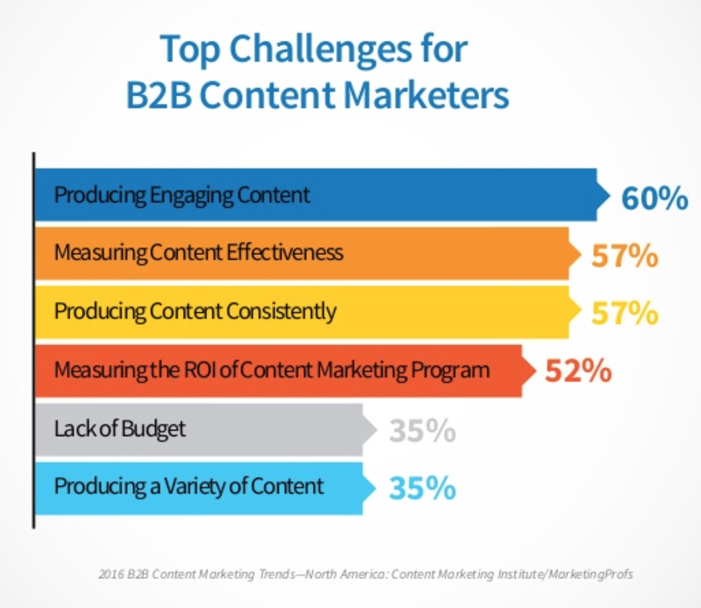
That’s likely one of the reasons why over 60% of marketers have trouble creating engaging content.

image00

Some of them are playing “follow the leader” rather than generating anything unique for their audiences.

They may not have the skill to understand who their audience really is or the creativity to come up with something original. Perhaps they feel that they don’t have the time to source their own materials, so they ride your coattails.

Here’s how you can shake them off and stop it from happening.

1. Produce the best content

Creating original content is not an easy task, especially packing in a lot of value. A long-form post can take hours to research and write. Some articles may even take days to produce. That’s a significant investment.

To prevent a competitor from spinning your hard work into a “new” piece by sprinkling in some extra value, make your content as comprehensive as possible.

This is the approach that helped Peep Laja build such a tremendous following when he first launched ConversionXL.

Rather than adding to the noise in the industry with shorter posts, he created comprehensive articles of great length around a specific industry gap, loaded with value for the reader.

Every data point, fact, and statement was backed by authoritative research and case studies. Peep’s posts were, and still are, exhaustive in nature.

If you take the same approach, you’ll make it virtually impossible for a competitor to spin your content into something with more value.

And because of the exhaustive nature of the content, they would need to commit considerable time to come up with a different angle—which is almost the same as researching and producing original content.

That’s something you know they’re not willing to do.

Competition aside, the biggest benefit is the value you’re providing to your audience. When you step up the quality of your content, your followers notice.

You will see not only stronger relationships develop with your brand but also a lot more shares and engagement around your content.

2. Don’t just curate. Cooperate

Finding great content to curate is like gold. It’s content you didn’t have to spend time producing, but your audience will still enjoy it and appreciate the information.

That’s why it’s all the more frustrating when your competitor keeps sharing the same things you post.

If you’ve got an influencer from whom you regularly curate content, make a connection with them.

Rather than simply sharing the content they produce, find some way to cooperate with them.

This could include:

  • Interviews
  • Guest posts on their site
  • Co-authoring great content
  • Working together on infographics or other visual content

If you co-produce something with them or guest-post, you can share that like curated content when it goes live. It’s branded to the influencer, so your audience will pay closer attention.

It looks like curated content but also carries your brand with it.

Do this on a regular basis with influencers and other businesses that share audience interests with you, and you’ll make it next to impossible for a competitor to swipe the content you’re “curating.”

That’s unless they want to share something that talks about your brand. If they’re not paying attention, that just might happen.

3. Diversify your content

If it becomes a recurring problem, remember that it’s relatively easy to take written content and spin it into something else.

The web is full of derivative content, with business owners and marketers echoing each other nonstop.

Diversification in your content can make it a lot harder for this to happen. Creating derivative content from a blog is easy, but it’s not as easy when things have a little more production value.

Put your greatest effort into creating other types of content that are far more difficult to swipe. That would include:

  • Branded explainer videos, how-tos, and tutorials to educate and entertain your fans
  • Shorter videos and branded images on Instagram
  • Detail-packed infographics
  • Comprehensive slide decks
  • Interactive content that boosts engagement

Any kind of content that requires more resources and skill to convert into a derivative will stop competitors in their tracks.

Likewise, by diversifying your content, you’ll be distributing it through different channels, which improves your overall reach and visibility with new audience segments.

Conclusion

If you’ve had enough with competitors gaining from your hard work, sweat just a little harder and create something that makes it impossible for them to capitalize on unless they work just as hard.

From that point forward, no measure of spying or chasing will earn them the market share you’ll be conquering as a result of your efforts.


from Quick Sprout https://ift.tt/2V0BvnP

Should You Outsource Content Marketing? 11 Questions to Consider

content marketing

It’s something that everyone needs to consider at some point as they become more successful.

Do you continue to do certain work yourself?

Do you hire someone to help you out?

Or do you outsource it?

There are many areas like this in any business, but one in particular is content marketing.

Creating and promoting content, especially for a new site, is essentially a full-time job.

If you have a small team, you can’t always dedicate a full-time person to content marketing efforts.

What ends up happening is that it is ignored or it’s done on a limited basis.

Without consistency, you’re much less likely to see the full results of great content.

Regardless of your specific situation, there will come a time when you will lack the time or manpower to execute content marketing properly.

So, what do you do then?

In most cases, you will have to decide whether you want to outsource your content marketing.

This is not an easy decision.

To help you make it—and make the correct one—I’ve compiled a list of 11 questions you should consider and answer.

Some of these questions are meant for potential hires, and some are meant for yourself.

I highly recommend opening up a blank spreadsheet and at least jotting down your answers to each question. 

1. Does anyone on your team have the skills you need?

Content marketing can be incredibly effective.

I’ve driven millions of visits and tens of thousands of customers using it for my various websites/businesses.

That being said,

it’s not easy.

In order to be successful in content marketing, you need to have a wide variety of skills. And you can’t just be average either; otherwise, you’ll get lost in the crowd.

If you really want to break it down, you could highlight 12+ skills that a great content marketing team needs:
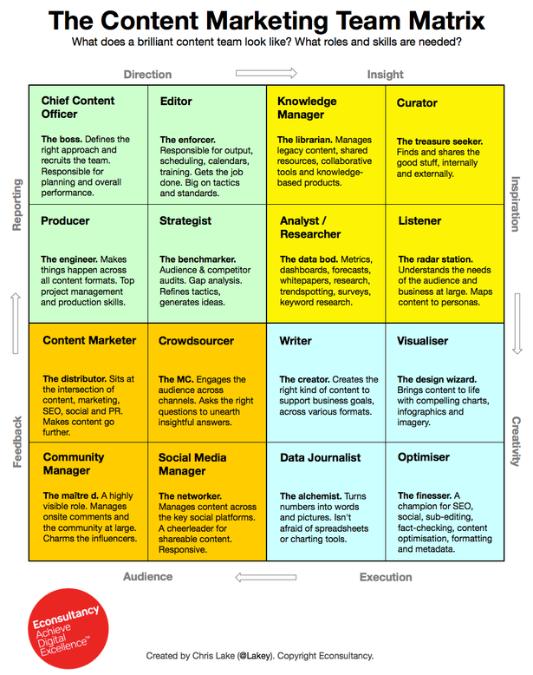
image02

Obviously, one person can have more than one skill from this list.

The best content marketers have all, or nearly all, of these skills.

I think that you can simplify it even further. Content marketers need to be highly skilled in three areas:

  • Writing
  • Domain expertise – are you an expert in the subject you’re writing about?
  • Networking skills – do you know how to promote effectively?
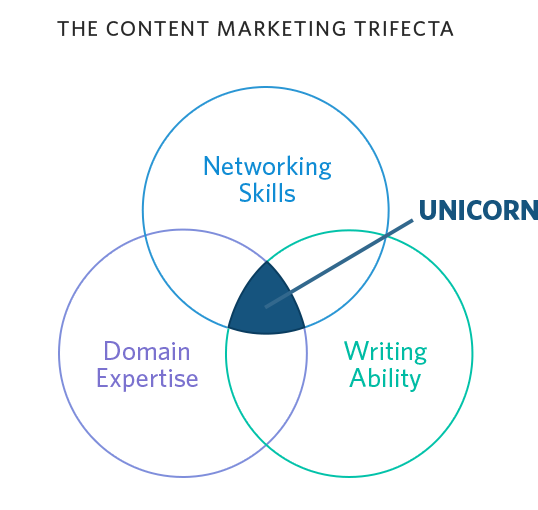
image16

It’s not very difficult to find someone with one of these areas covered.

But it’s pretty hard to find someone with two of these, and it’s even more difficult to find someone with all three. That makes a “unicorn” in the diagram above a top content marketer.

They do exist, but you need to find them.

The fact of the matter is that you’re unlikely to have one of them on your team already.

In a recent survey, 42% of companies said that they currently did not have the expertise to use content marketing effectively.
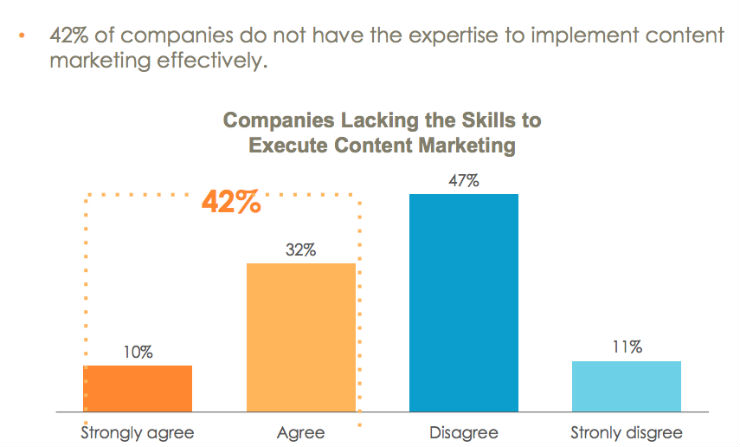
image04

They’re not even just talking about one person having the necessary skills. These companies couldn’t find all the skills within their whole teams.

That’s how difficult it is to assemble a great content marketing team.

So, this is your first question:

Do you—or anyone on your team—have the skills and experience with content marketing to be successful?

If the answer is no, then you have no choice. You’ll either have to bring in someone new or outsource your content marketing.

If your answer is yes, you do have a choice.

Then, you’ll have to determine if it’s worth having them spend their time on content marketing while taking away from other areas of your business.

Many of the remaining questions will help you determine this.

2. What kind of budget do you have for content marketing?

Like with any other kind of marketing, the more you have to spend on content marketing, the better your results will typically be.

Since your content needs to be head and shoulders above your competition to be effective (here are some examples of epic content), it makes sense to spend as much as you can.

I’m not talking about throwing away money, but don’t pinch pennies when it comes to things like graphics and research.

In a 2015 survey, it was found that on average, B2C marketers spent 25% of their total budget on content marketing.
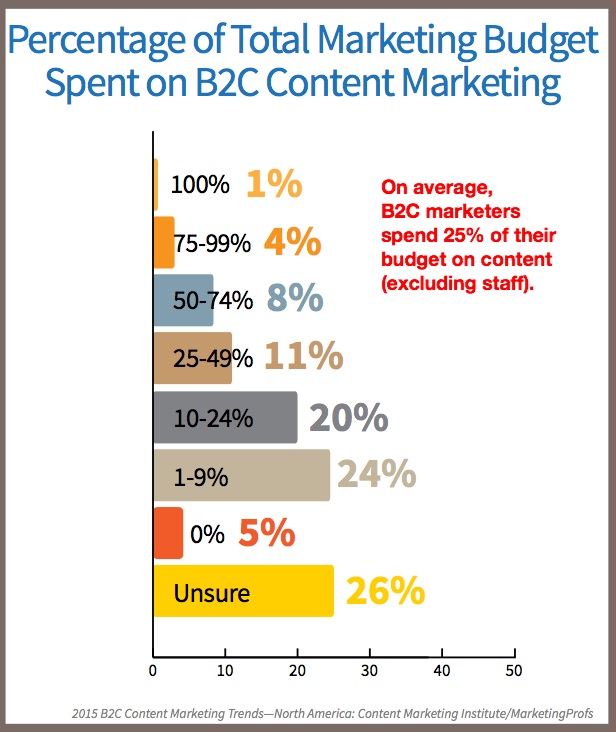
image12


I’d say that if you have no experience with content marketing, that’s a good ballpark target.

If you have a lot of success, you can scale up your budget in the future.

I expect those percentages to continue to rise in the coming years. Another recent survey found that most businesses (60%) are increasing their content marketing spending.
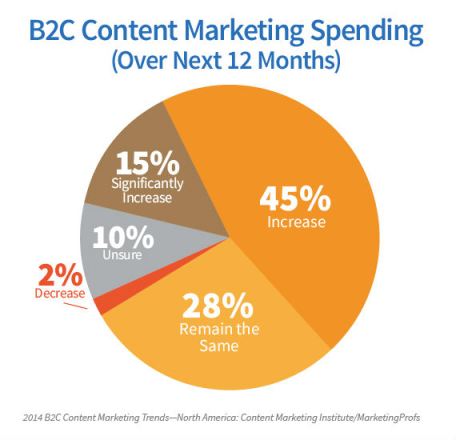
image03

Very few are decreasing their investment, which suggests that even mediocre content marketing efforts are getting some results.

Your budget will determine your options: If you have a very limited budget for content marketing, say $1,000 or less per month (and I’m including the creator’s time in that figure), you won’t be able to hire a good agency.

Typically, you’ll need to be spending at least a few thousand before an agency will take you on as a client.

However, for that amount, you could hire a freelancer. Assuming they produce really good pieces of content, you’ll be able to publish 1-2 pieces per month.

That’s not a lot, but it can get you started. Also keep in mind that if you want extensive content promotion, it’ll cost even more.

If you have a larger budget to work with, you have all options available to you, and this won’t be a limiting factor.

If that’s the case, base your decision on your answers to the other questions.

3. Would you rather work with freelancers or agencies?

If you do decide to outsource your content marketing, this is a huge decision that you’ll have to make.

You can work with freelancers, or you can hire an agency.

image14

They can both be good options, but each has their own strengths and weaknesses.

If you’re not familiar with the terms, a freelancer is someone who is self-employed and generally works for multiple clients at the same time.

An agency, on the other hand, is more “professional.” They’ll have a full staff of at least three employees and typically have a wide variety of clients.

Price comparison: Here’s where your budget limitations might come in.

When you’re hiring freelancers, cost is all over the board. In general, you will pay less to a freelancer for the same work than you would pay an agency because the freelancer has less overhead.

However, there is a huge range in what freelancers charge.

Most of it depends on what you’re looking for.

Currently, you’ll have a tough time finding a great freelance content marketer unless you’re willing to pay more than $100 an hour (that’s the low end).

The best freelance content marketers can charge upwards of $300 an hour because there is no one else who can do what they can.

These guys know your subject in and out, are great writers, and also have contacts in the industry to help promote the content.

They’re expensive, but they get results.

However, if you can’t afford that, don’t worry. You can go down a tier or two and find freelancers who charge what works out to be $50-100 an hour.

Although they may call themselves content marketers, most are just good writers and know your subject well.

They can still produce valuable work, but expect to hire another freelancer for promotion or to do it yourself.

What about agencies? Any good agency will charge at least a few hundred dollars per hour. They can do this because they offer a lot.

They typically have an expert in every area of content creation and promotion. They’ll have an expert designer, writer, editor, and promoter. Together, the team does everything a top individual content marketer could do (and sometimes more).

In summary: You can usually save a bit by hiring freelancers, but you’ll have to do more work managing them. You can hire both cheap freelancers and agencies, but you’ll get what you pay for.

Quality comparison: There’s a lower bar to entry to become a freelancer than to start an agency.

That means that there is high variance in the quality of freelancers. There are a lot of terrible ones out there, but there are also some top notch ones.

With agencies, you also have variability, but you are less likely to come across a bad one. Most agencies are started by competent freelancers who want to grow their business, so the quality is higher on average.

What does this all mean? It means that you can get a quality result either way. But if it’s crucial that the quality is decent from the start, an agency is a safer bet.

Either way, reviewing their past work is the easiest way to see if they can deliver what you’re looking for.

Dependability: When it comes to dependability, agencies are also a safer bet in general.

Some freelancers are great. They are highly professional, will always put you first, and deliver what they promise every time.

However, others are terrible. They might drop off the map, and you’ll have no way of communicating with them.

Additionally, unless you’re one of their main clients, you risk being dropped without notice or deprioritized when something else comes up.

If you go the freelance route, you need to interview your candidates and try to get a feel for their work ethic and priorities. It’s not easy, but you’ll get better over time.

An agency has at least three people you can contact. It’s rare for them to go completely out of touch. Plus, you will be able to reach them pretty much at any time during normal business hours.

As far as always delivering their work on time, they all will have the same issues. Agencies usually have several or hundreds of clients. Unless you’re a big spender, they’re not going to lose sleep over whether or not you’re happy with them and whether or not you’ll leave.

If you have a smaller budget, it’s often better to hire a freelancer. Even if you can only spend $1,000 a month, that’s a large chunk for a freelancer, but almost nothing to an agency.

The more important you are to someone, the more dependable they will be.

4. How much of your content will contain private/personal data?

There are many different content marketing strategies that can be successful.

Some will get you to the results you’re looking for faster than others.

One aspect of content marketing in particular—transparencyis one of the most effective things you can add to your efforts.

Readers enjoy getting a behind the scenes look and getting more detail in general.

If you’re willing to share company data (that you’re allowed to share), you can increase the chances and speed of success with content marketing. It allows you to provide unique value. No one else has your personal data.

For example, you might talk about your customers.

Dating site Plenty of Fish creates some great blog posts, in which they analyze what kind of profiles get the most and least success on their platform:
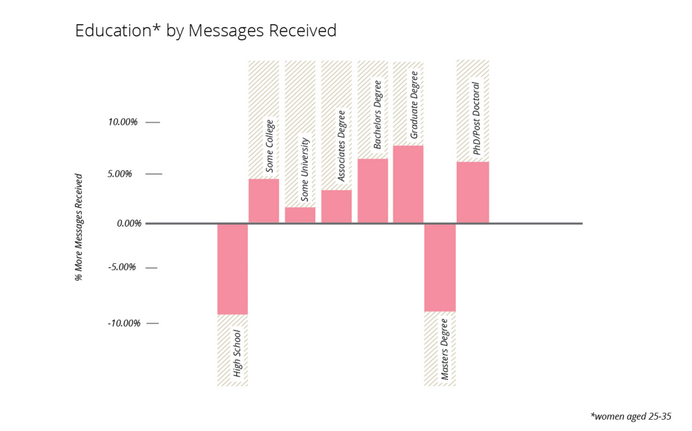
image11


It could also be about the results of your work.

For example, I often share traffic and profit details with you in Quick Sprout posts.
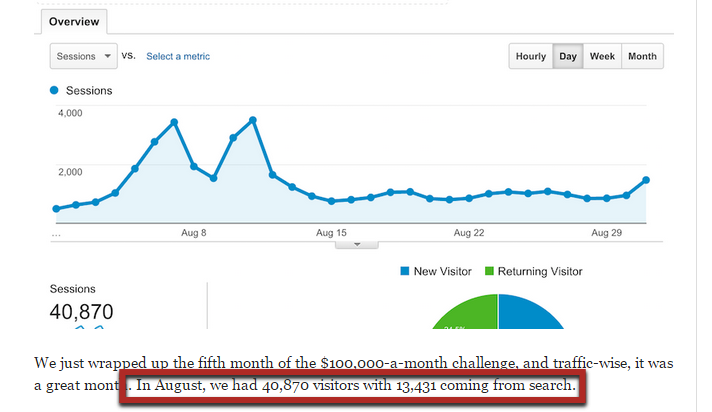
image15

Readers find this valuable, and it increases your credibility in their eyes.

To answer the question of this section—how much of your content will contain private/personal data?—you’ll need to decide whether you have any interesting data to share and whether you’re willing to share it in your content.

The reason why this is so important to decide right now is because it will affect your final decision.

To create these kinds of posts, you need to analyze whatever data you have.

I can’t speak for everyone, but I know that I don’t want a random freelancer or agency digging around my personal data.

I also know that there are some things that I’d rather keep private.

If you decide to reveal personal data, you’ll have to do it yourself. Or you’ll probably want to get someone from your team to do the analysis.

So, while you can hand off the results of your analysis, that still leaves you (or someone you work with) with a lot of ongoing work.

If you’re in a niche where your transparency is really important, this kind of work may be required for almost every piece of content. In this case, you’ll probably want to keep your content marketing in-house.

5. Do they have an area of expertise? Is it relevant?

If you choose to outsource your content marketing, it’s crucial that you hire someone (or some agency) that will get you results.

Just for a second, let’s think about the type of marketers you might need in this situation.

Most of the marketers will have two skills—writing and networking—out of the three main skills we talked about earlier (writing, networking, and domain expertise). Those are, after all, fundamentals of modern marketing.

But the third one isn’t so easy.

To truly gain domain expertise, you need to be studying one specific topic for years. If you market to a particularly sophisticated audience, you’ll need to be even more advanced.

The biggest challenge you’ll face is finding someone who is an expert in your niche.

It’s very rare for someone to both be an expert in a niche and also have the necessary marketing skills.

Wade through the “generalists”: If you decide to hire freelancers, you’ll find a lot of content marketers who say that they can market any business.

The fact that they think so shows that they are not top-level content marketers.

All the best freelancers will have one or two areas of expertise.

When it comes to agencies, it’s a bit different.

A large agency may have content creators who are experts in several niches. However, small- to mid-size agencies who are generalists face the same problems.

Their content will not be worth what you pay.

Instead, you should look for specialists in your niche.

For example, “Gourmet Marketing” is a small agency focused on content marketing for restaurants:
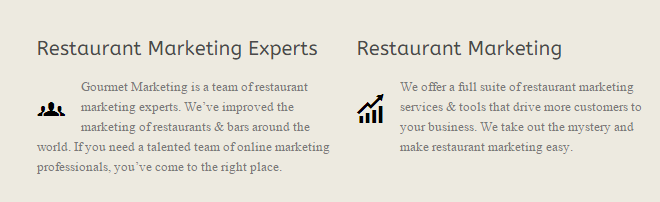
image13

That alone doesn’t mean that they’re a good agency, but at least it tells you that they understand your industry and recognize that domain expertise is important.

6. What will their content marketing process look like?

Stick around in the marketing world long enough, and you’ll start seeing buzzwords everywhere.

They’re not exactly bad. They just don’t mean a whole lot.

Some people will use these words to sound smart in order to convince you to hire them.

The easy way to screen them out is to simply get more details.

When someone mentions “content marketing,” it can mean anything. Everyone has their own picture of what it is.

One of the biggest goals of any interview you conduct should be to figure out what your candidate’s definition of content marketing is.

More specifically, how do they plan to help you?

You should be looking for specific answers that address:

  • how they will determine how much content is needed
  • how they will determine which type of content is needed
  • who will be creating the content
  • how they will encourage engagement and ensure growth over time

The two biggest challenges in content marketing are creating enough content and creating engaging content.
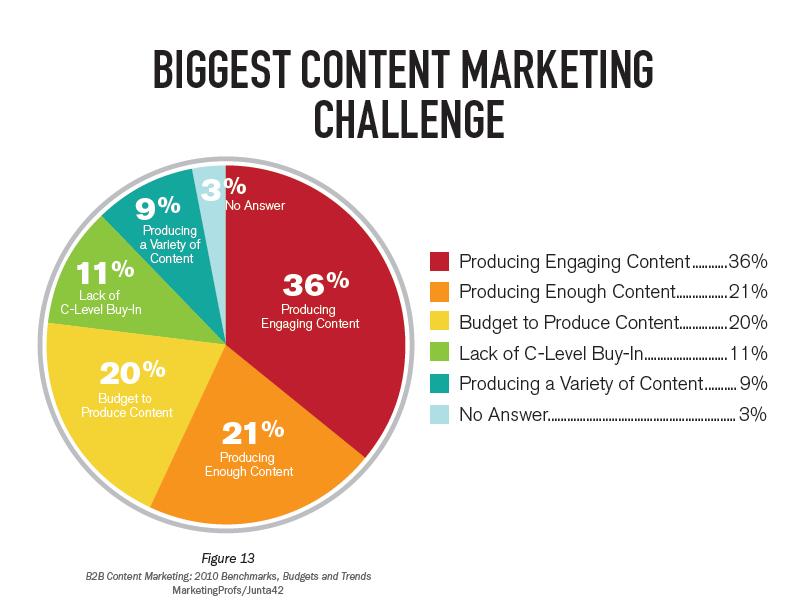
image09

You need to get as much detail as necessary so that you are confident that they have the systems (manpower plus processes) in place to create content regularly with no delays, and make it engaging.

If they try to dance around the subject, move on to the next candidate.

While you shouldn’t expect specifics, all freelancers or agencies should be able to outline the main stages of their work for you.
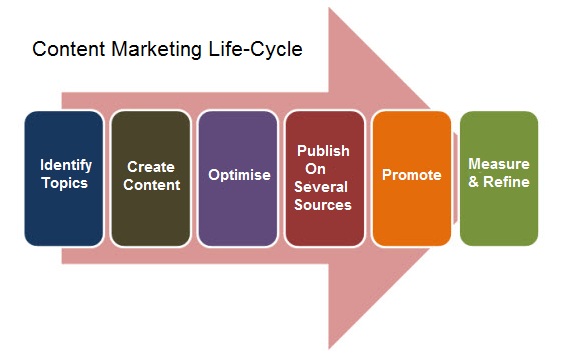
image00

They won’t have all the small details worked out, of course.

But if someone is a good marketer, they’ll have already done some preparatory work before talking to you and should have an idea of how to approach content marketing for your business.

7. How will they measure success?

Just like everyone has a different definition of content marketing, everyone also has a different definition of success.

In order to have a good working relationship, you need to establish reasonable guidelines for success beforehand.

If your expectations don’t match up, at least one of you will be frustrated.

It’s entirely possible for a freelancer to be thrilled that they produced X pieces of content or attracted Y links to your blog posts—and for you to be underwhelmed by those results.

Or you may not care about the same things that the freelancer or agency cares about.

If you’re most interested in email subscribers, raw traffic numbers don’t always matter much.

Before you agree to work together, determine which metrics you care about.

Make sure to go through why you care about each and what level for each metric you would consider “good.”
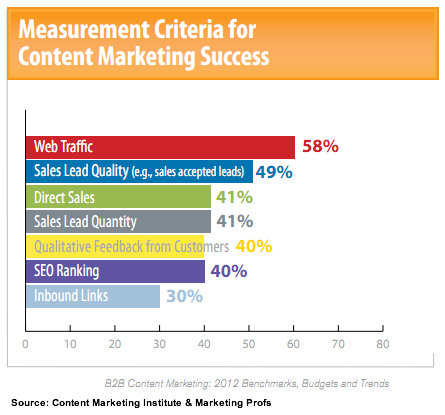
image07

When you discuss your expectations, you will see whether you have any differences with the other party.

If they think your expectations are unreasonable, they can tell you why, and you can discuss the subject until you agree on reasonable expectations around their work.

If you can’t come to an agreement now, consider yourself lucky that you found out early that you aren’t compatible. It will save you a lot of stress and frustration in the future.

8. Do they give any guarantees?

Does this question look familiar?

It’s also a question that you should answer before hiring an SEO firm.

However, while an SEO firm can’t make guarantees about #1 rankings (honestly at least) because that’s out of their control, content marketing agencies and freelancers can make them.

Most freelancers and agencies know that it’s hard for you to commit a decent amount of money every month when the results could take over six months to see.

Most good content marketers (especially agencies) will offer some sort of guarantee of a result after 6-12 months.
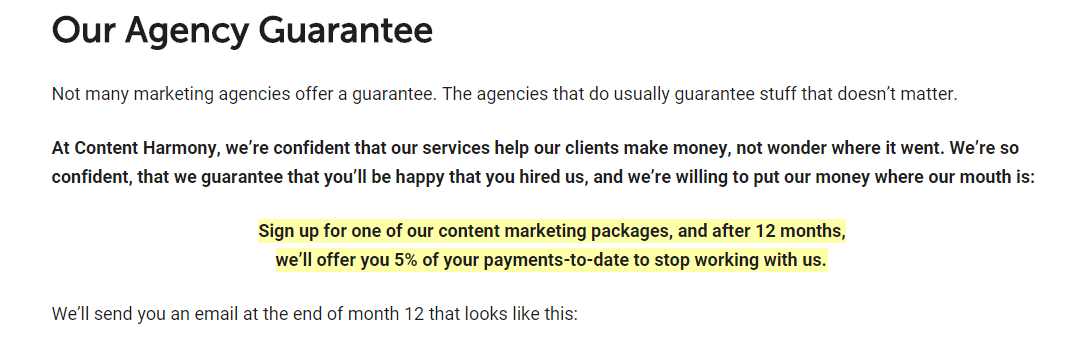
image08

They probably won’t promise X,000 leads per month, but they can promise that you’ll like the work that they’ve done (the content), the way they’ve done it, and the results so far (according to the metrics you’ve agreed on).

By that time, you’ll know if you are getting the promised results and will either be happy with the direction they’re going or know that you want to get rid of your content marketer.

9. How does content marketing fit into your other marketing efforts?

I mentioned that one of the reasons you might want to outsource content marketing is because you have other things to do.

What kind of things might those be?

It could be many things, including the many parts of your sales funnel.
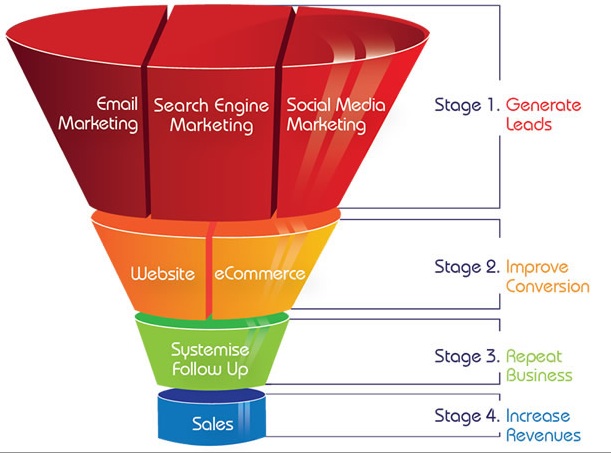
image01

Your most important job is to make sure that everything fits together smoothly.

There’s no point spending all your time and attention on content marketing if your products still need work.

Before you even think about hiring anyone to help you, get a good picture of how content marketing fits into your business.
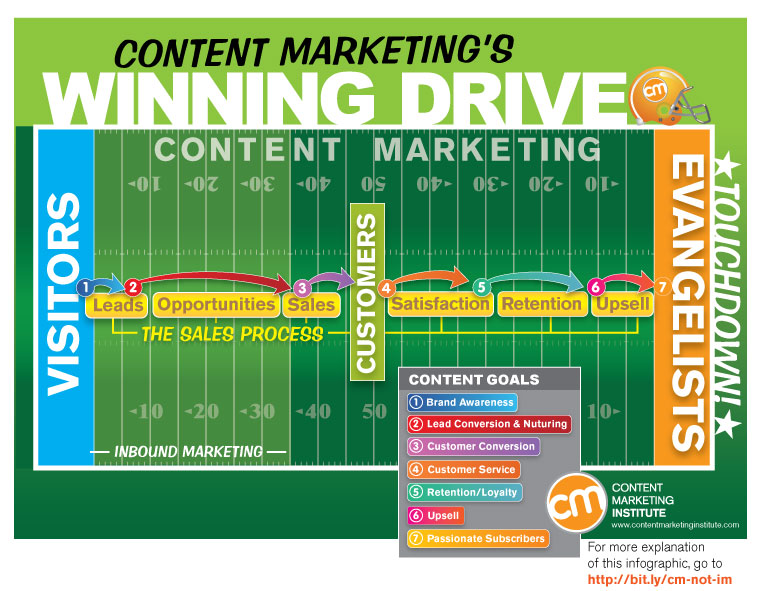
image10

Content can be useful to attract readers, but you’ll also need to convert that traffic into leads.

You can then use content to nurture those leads into customers and use even more content to help keep them satisfied so that they’ll continue purchasing from you in the future.

When you hire a freelancer or agency, most of them will focus on the top of the funnel content. They’ll produce blog content to attract traffic and leads.

That may be fine for you.

However, if you want them to produce content to support other parts of your business, that’s something you’ll have to budget for and bring up.

A freelancer may not be able to handle that extra work, but agencies usually can.

And while most content marketers will perform some basic SEO to target keywords, you need to make sure that you also start generating organic search traffic with your content.

Furthermore, you need them to understand what products you sell, which products you’re creating, and relationships you have with other companies in your nice.

They need to know this because it will affect whom they mention in content and which topics are most important to your target audience.

The takeaway: Content marketing is only one piece of your business. If you outsource it, make sure that the work you have done fits with the rest of your business.

10. Do you need a content marketer or an editor?

There’s one unique case that we need to look at with this question.

What if you have a big budget but also want to work with freelancers (as opposed to an agency)?

This might allow you to create a large volume of top notch content on a regular basis.

The biggest problem you’ll have is managing all the freelancers.

When you have a team of 5+ freelancers writing and promoting your content, things can get disorganized fast.

You’ll find that you’ll have to step in and spend a lot of time finding good freelancers, assigning topics, reviewing their work, and coordinating their promotion.

Although that’s an okay solution, there is another option.

Hire a great content marketer as your editor instead. Although this will cost more because you’ll pay a fixed fee, it’ll also free up a ton of time, and assuming you value your time highly, it’ll actually save you money.

Here’s how it’ll work.

On the Crazy Egg blog, we have several writers who contribute on a regular basis.
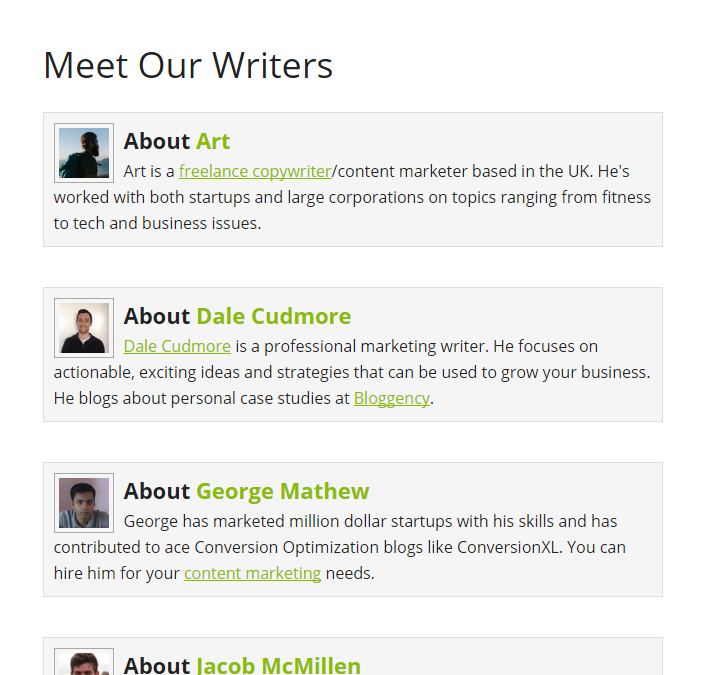
image06

But I don’t spend all my time coordinating them because we have a blog editor for that.

The editor finds new writers as needed, makes sure that important topics are written about (with the right keywords), edits posts to improve their quality, and promotes them as well.

You’ll need to hire a great freelancer for this unique type of role, which will be expensive, but you’ll save money because now you’ll be getting most of the content created by writers (not full-fledged content marketers).

This process has allowed us to post daily articles on the blog for years, and the results have been great.

11. How will they keep you informed of their progress?

This final question will also save you a lot of stress and frustration.

All agencies and freelancers communicate differently.

Some won’t communicate as often as you’d like, while others will keep you too updated.

Everyone’s different, but I think a monthly report is a good frequency for checking in, in addition to communicating about any big issues that may come up.

Most agencies will send a template-based report of all the most important metrics, which is good because you’ll get used to finding important information within those reports quickly.
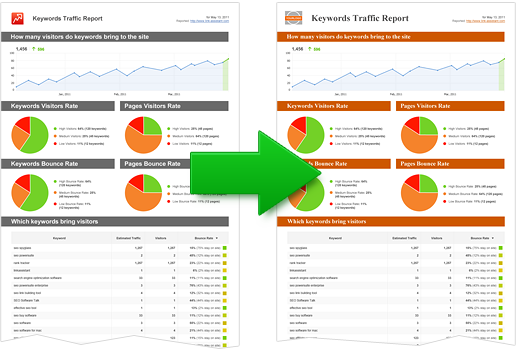
image05

Most freelancers don’t have any reporting software, so it’s critical to outline to them beforehand what information is important to you and how often you want it.

This may not seem like an important issue, but it’ll save you from wondering about the status of any work in progress or worrying whether any work is being done at all.

Conclusion

Content marketing is an effective method of marketing for almost any online business.

Its importance continues to grow every year, so even if you haven’t started, you should still get going.

If you have started but are finding that you don’t have enough time to give content marketing the attention and effort needed to get the results you want, something needs to change.

The most common option is to outsource your content marketing (or parts of it).

This is a big decision that will have a significant impact on your overall marketing results, so you need to make it carefully.

The 11 questions that I’ve gone into great detail about in this post will ensure that you know whether you should outsource your marketing and how to find the right person or agency to hire.


from Quick Sprout https://ift.tt/2U9jIh5