The post Podcast 150: How John Kiekbusch Went from PBNs to White Hat SEO and Has Grown a Thriving Business appeared first on Niche Pursuits.
from Niche Pursuits http://bit.ly/2Rn4Lnu
The post Podcast 150: How John Kiekbusch Went from PBNs to White Hat SEO and Has Grown a Thriving Business appeared first on Niche Pursuits.
The post Link Whisper is Coming Soon! A Smarter Way to Build Internal Links in WordPress appeared first on Niche Pursuits.
Everyone’s heard of “the cloud.”
Broadly speaking, the cloud refers to remote storage. For example, you can store pictures from your smartphone or documents on your computer to a cloud storage space like Google Drive.
This is different than storing files locally on something like an external hard drive. I’m sure you’re familiar with both of these scenarios, and you probably even use cloud storage for something in your digital life.
Now when it comes to web hosting, the cloud is a little bit more in depth, but the same principles still apply.
Let’s start with the basics. There are four main types of web hosting:
To fully understand the differences between all of these options, refer to my guide on everything you need to know about web hosting.
But right now I want to put the primary focus on cloud hosting. Although it’s the newest way to host websites, the method has been growing in popularity over the years.
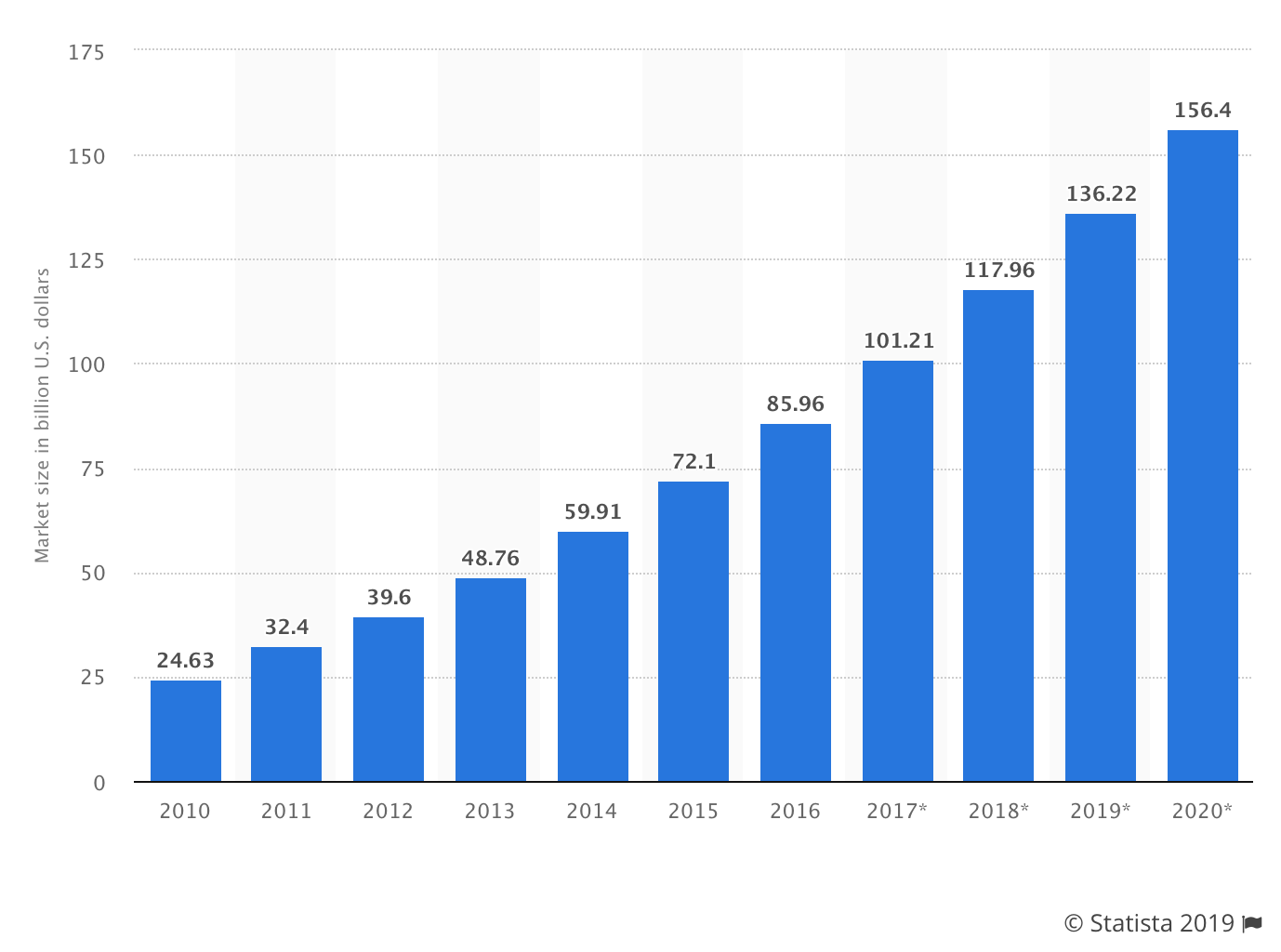
This graph shows the cloud computing and cloud hosting market on a global scale in billions of dollars.
While cloud hosting has been around for years, not many people know exactly how it is and how it works. So what is cloud hosting?
Basically, your web host isn’t connected to one physical location. That’s not the case with shared hosting, VPS, and dedicated servers.
Now that you have a basic understanding of cloud hosting, I’ll cover the benefits. You can use this guide as a resource to determine if cloud hosting is the best option for your website.
Traditionally, when you’re picking a web host you need to have some idea of the type of website traffic you’re planning to get. This makes it easier for you to pick a plan to fit your needs.
It’s crucial that you get a web hosting plan with enough bandwidth, storage, and disc space.
But there is a common dilemma that new websites are faced with all of the time. They have to decide if they want to get the highest possible bandwidth, even if they probably won’t come close to exceeding those limits. Or should they start with a lower bandwidth plan and upgrade as their traffic starts to increase?
There are pros and cons to each approach.
One the one hand, a top-tier plan will come at a premium price. You’ll end up paying for a service that you won’t need until your site grows. But the second option will cause slower page loading times as your website scales until you upgrade.
Cloud hosting solves those problems.
Since your website is hosted on multiple remote servers, you won’t have to worry about exceeding bandwidth. If one server is maxed out, you can always pull resources from another.
All of this can be easily managed and configured in-real time. Here’s what that looks like if you’re using HostGator for cloud storage.
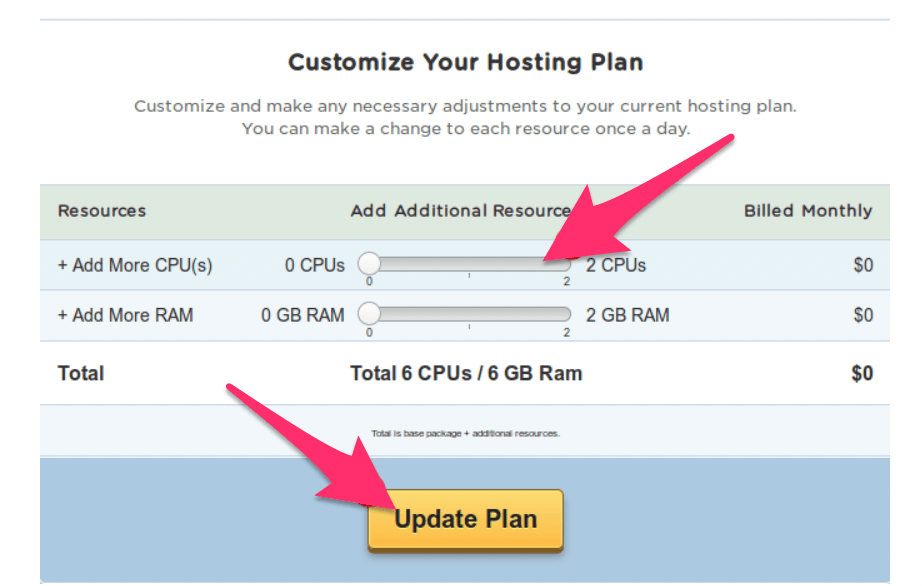
Cloud hosting allows you to scale your server without having to get approval from the hosting provider, which you’d need with VPS, shared, or dedicated hosting.
If you use a traditional web hosting server, you’re going to a pay a fixed monthly rate based on the plan that you sign up for. You’ll be charged this amount even if you don’t actually use all of the resources on that server.
But cloud hosting is priced based on what you actually use.
Here’s an analogy. Let’s say you go to an all you can eat buffet, where the food options can also be purchased à la carte. The buffet price is $20 per person. So that’s the most you’ll have to pay, regardless of how much food you eat.
But if you only eat $10 worth of food, then you’ll only be charged $10 for that meal.
That’s how pricing is structured for cloud hosting.
The pricing also relates back to our previous point about being able to scale your resources on demand. For example, let’s say you just built a bunch of new backlinks and you’re expecting a particular blog post on your site to go viral.
Rather than upgrading your entire plan (which you’d have to do with another hosting option), you can just increase the resources needed during that traffic spike. Then you can put everything back to normal when your traffic levels out.
In this case, you’d only pay for the server usage that was actually being used during the surge.
Here’s a look at the pricing page for DreamHost cloud hosting plans.
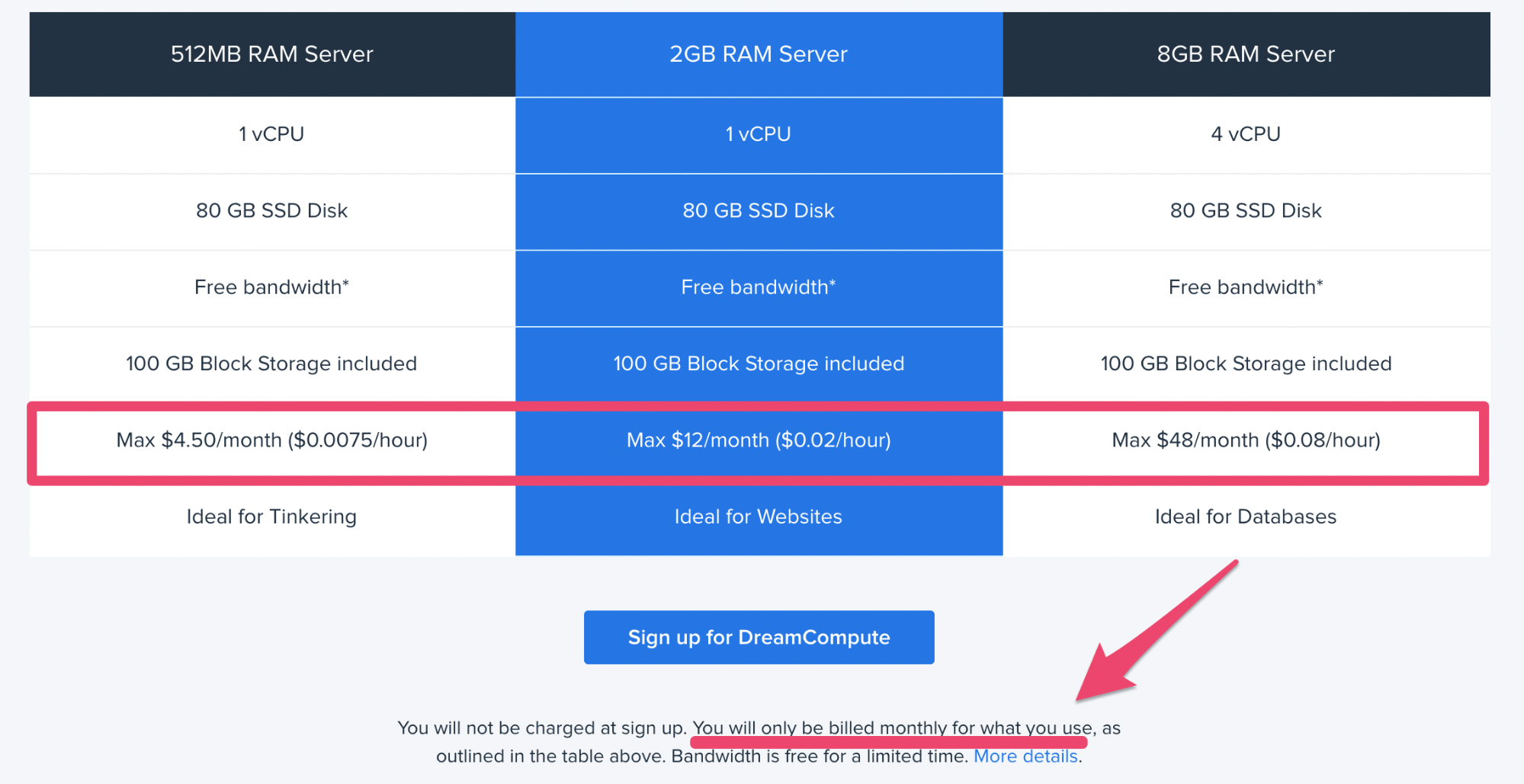
As you can see, pricing is based on usage. Each plan has a maximum monthly rate. Even the fine print at the bottom of the page states that you’ll only be billed for what you use.
This type of pricing structure is standard for most cloud hosting services across the board.
As I’ve previously explained, other types of web hosting options rely on a singular server.
So if something happens to the server that your site is hosted on, then your site would be offline until the server was back up and running. You’re essentially putting all of your eggs in one basket. This can be a huge risk when you’re talking about something as important as your website.
But cloud hosting uses multiple remote servers and resources.
If something happens to one, the others will still be able to host your site. This means that your website will have high uptime and availability rates.
In addition to potential problems with one server, cloud hosting will keep your site stable, even as traffic increases. We discussed this before when we covered the ability for you to pull resources from multiple servers to manage your site.
Cloud hosting is also extremely easy to set up.
For those of you who want to start hosting on the cloud right away, it can be a faster deployment option than something like a dedicated server or shared server.
The majority of cloud hosting servers will provide lightning fast speed. They also increase the capacity of your website, which boosts your page loading speed.
That’s because all of your content will get loaded from multiple server environments.
This approach doesn’t put as much strain on a singular server, the way it would if you had a dedicated, shared, or VPS plan. If your website has lots of resource-intensive data such as videos, images, sound, and other media content, this is something that you need to prioritize.
Another benefit of cloud hosting is that content can be delivered from the nearest remote server, which is another reason why loading times are so fast.
At the end of the day, your website visitors don’t care what type of web hosting you’re using. They just want your site to be responsive and load quickly. That’s why your loading times will have such a major impact on conversion rates.
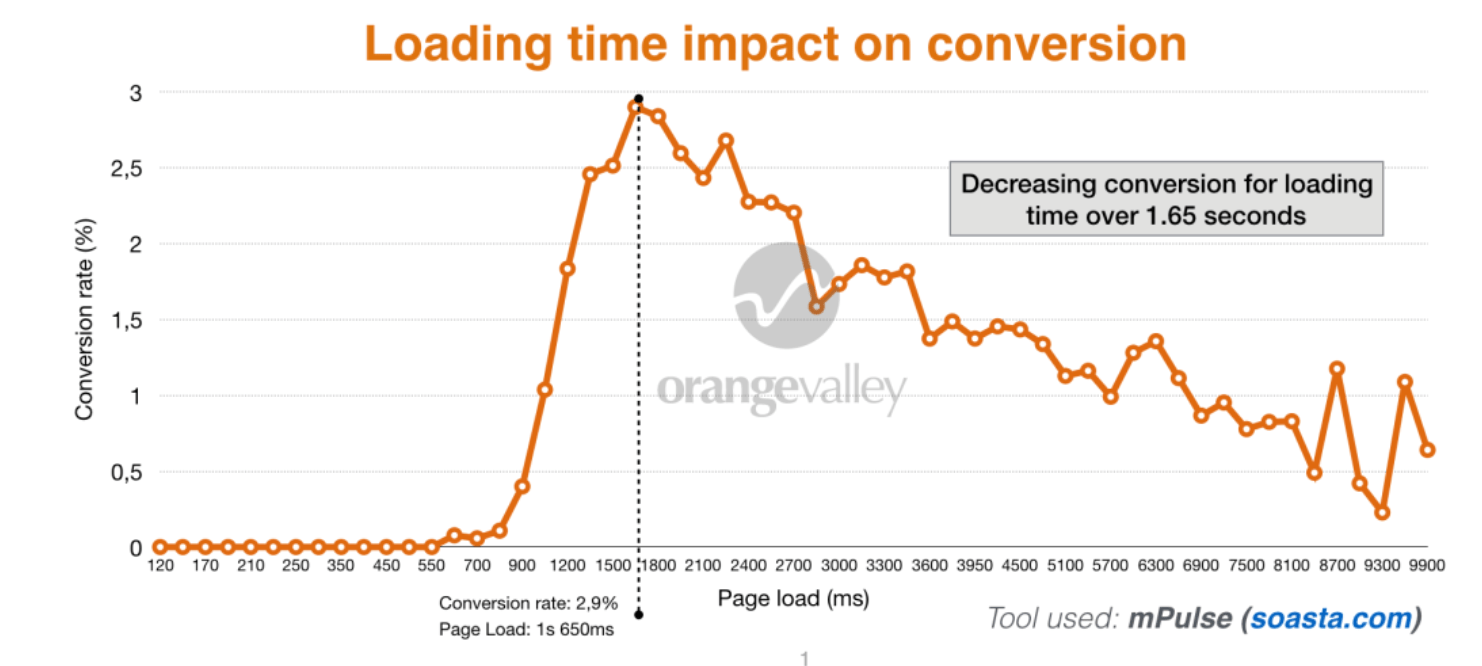
By prioritizing page loading speed with cloud hosting, your website will ultimately perform better from the user end.
Cloud hosting is very safe from a security standpoint. Here’s why.
Your website is isolated from any potential problems with a physical server. That’s because everything is handled remotely. This won’t be the case if you’re relying on a singular dedicated server that’s hosted locally.
If a local server was compromised, then your website would be at risk. You won’t need to worry about that happening with cloud hosting.
For example, let’s say something went wrong with one of the servers in your cloud hosting network. Maybe it was hacked, had a system overload, or hardware failure.
Your site would be fine because it could just continue using one of the many other remote servers in the network. Everything would stay up and running without any downtime or delays.
Now that you know the top benefits of cloud hosting, I want to show some of the best cloud hosting services available on the market today.
SiteGround is second to none in terms of reliability for cloud hosting. Their team fully manages your cloud, so you won’t have to worry about any maintenance for your hosting.
SiteGround guarantees that you’ll have enough resources on the cloud to power your site. It will be fully optimized in terms of speed and efficiency based on your traffic and usage.
Their platform makes it easy for you to add RAM or CPU on-demand with just one click. SiteGround also has an auto-scale feature, which adds sufficient resources to your site in times of where traffic spikes. I would definitely take advantage of this. That way you won’t have to manually add resources and track your traffic.
Your cloud service with SiteGround also comes with powerful tools like a dedicated IP, free Cloudflare CDN, free SSL, private DNS, and daily backups.
SiteGround cloud hosting plans start at $60, $120, and $160 per month.
HostGator has unmetered bandwidth and storage for all of their cloud hosting plans.
They offer automatic daily backups as well as daily scans to protect your site from hackers, viruses, and malware. Their cloud system has integrated caching to ensure that your pages always load as fast as possible.
HostGator’s intuitive dashboard makes it easy for anyone, regardless of their tech background, to manage the performance of a website. You’ll also be able to appropriately allocate any additional resources that your site requires based on usage and traffic.
HostGator cloud hosting plans start at $4.95, $6.57, and $9.95 per month.
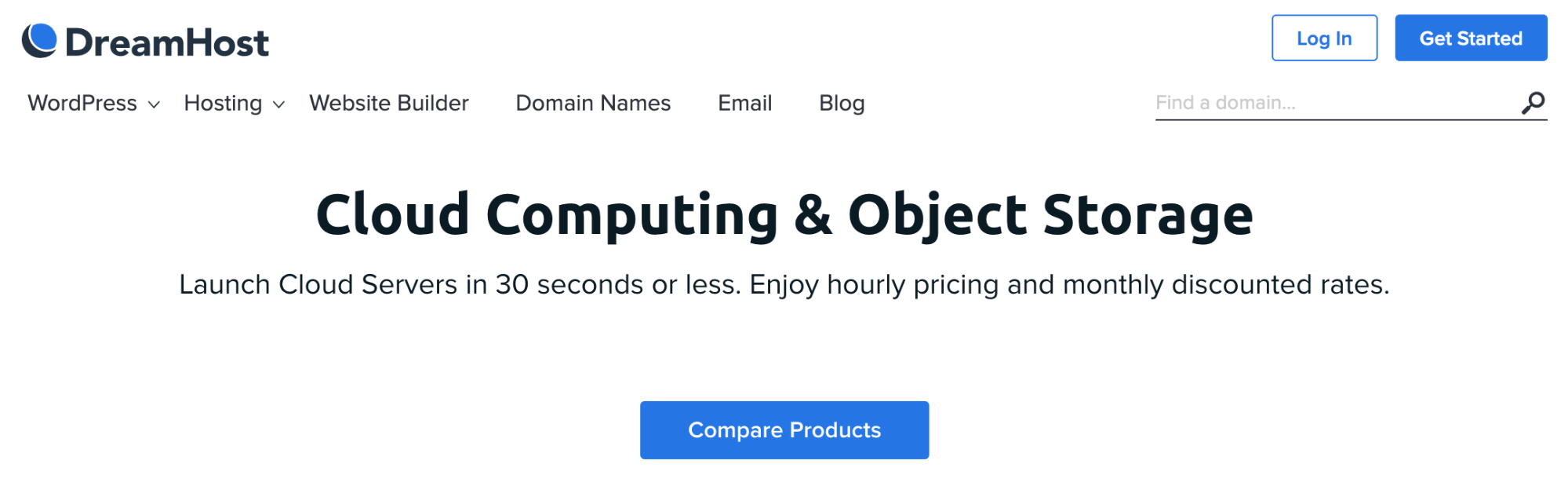
DreamHost is a great option for those of you who are price-sensitive. They offer plans that are are charged strictly based on usage. The maximum you’d pay each month is either $4.50, $12, or $48, depending on the plan you choose.
You’ll have full root access and control over your cloud servers, so there are no restrictions for software or operating systems.
The only downside of DreamHost is that they don’t offer live chat and phone support. But since their platform is so straightforward and easy to use, I’m willing to look past that for the bargain rates.
Cloud hosting is growing in popularity. It’s become a reliable and flexible way to host websites in the modern digital era.
There are lots of great benefits to cloud hosting. I highlighted the top ones in this guide.
Overall, cloud hosting should be taken into consideration if you have a website that’s growing. The flexibility of the resources and pricing structures ensure that your site will have high uptime rates and fast loading speeds, even during unexpected traffic surges.
But with that said, cloud hosting isn’t necessarily for everyone. If you have an ecommerce website that always has high traffic and want to make changes to your server based on the software you’re using, you might be better off with a dedicated server.
For those of you who think cloud hosting is right for your website, I’d recommend using one of the three options that I covered in this guide.


The post Ezoic Review: Can You Display Ad Earnings By 232% With No Work? appeared first on Niche Pursuits.
Content marketing has arguably become the biggest buzzword in the marketing industry today.
It seems like you can’t have a conversation with a business owner who has an online presence without the term being brought up. Every online “expert” claims to hold the secret to content marketing.
But the reality is this. Like most marketing strategies, what works for one business won’t necessarily work for another. Content marketing campaigns will vary by industry as well.
So what exactly is content marketing?
By definition, it’s the process of creating and distributing digital materials online to directly or indirectly promote a brand, product, or service.
But that definition is so broad. To have a successful content marketing strategy as an ecommerce website, you need to take an ecommerce-specific approach.
Your content strategy won’t be the same as a B2B SaaS company or a B2C local retailer without an online presence.
I’ve seen countless ecommerce sites get so caught up in their marketing plan, that they actually lose sight of what drives their business. Rather than trying to copy the content strategy of a competitor (who may or may not have a good approach) you should be focusing on ecommerce conversions.
Everything you do needs to drive conversions. That’s the ultimate way to survive as an ecommerce shop.
So if you can’t directly or indirectly connect conversions to your content strategy, then it’s a wasted effort. That’s what inspired me to create this guide.
I want to clear up any misconceptions that you might have about content marketing and how it works. I’ve outlined a straightforward content marketing approach that’s specifically designed for ecommerce shops.
Before you start blogging or uploading videos to YouTube, you need to establish a clear plan for your content strategy. Remember, everything you do ultimately needs to drive conversions.
This is something that I encounter all of the time when I’m consulting with ecommerce companies.
They start to tell me about their plan, which sounds great in theory, but they don’t know the “why” behind the strategy.
For example, let’s say you’re putting all of your efforts into advertising on LinkedIn. You saw some information online about how many users are on the platform and how much it’s been growing over the years. Must be a good place to deploy a content marketing campaign, right?
For some businesses, sure. But that’s not the case for ecommerce.
You would know this if you took the time to create a plan before putting a strategy in motion. I’ve simplified the planning process into three easy steps. It’s crucial that you follow them in order.
I know this may sound simple, but you’d be surprised at how many people don’t know the answer to this question. Take a moment to see if you really know your target audience.
Here’s the thing. Your target audience needs to be crystal clear before every content marketing campaign. Otherwise, it won’t have a high success rate and lead to conversions.
Without knowing your target audience, you won’t know how to reach them.
These are just the basics that you need to know, at a minimum. Identifying the target market of your startup is something that you should have done a long time ago. But your overall audience isn’t always the same for individual campaigns and strategies.
For example, let’s say your company sells sports equipment online. Your audience isn’t just “people who play sports.”
You can’t tailor your content around that because it’s way too broad. High school softball players aren’t the same as middle-aged male golfers.
Remember, content marketing is all about distributing digital touchpoints online. That’s why it’s so important to figure out who your audience is.
You need to know where these people live online. Otherwise, you won’t know how or where to distribute the right content.
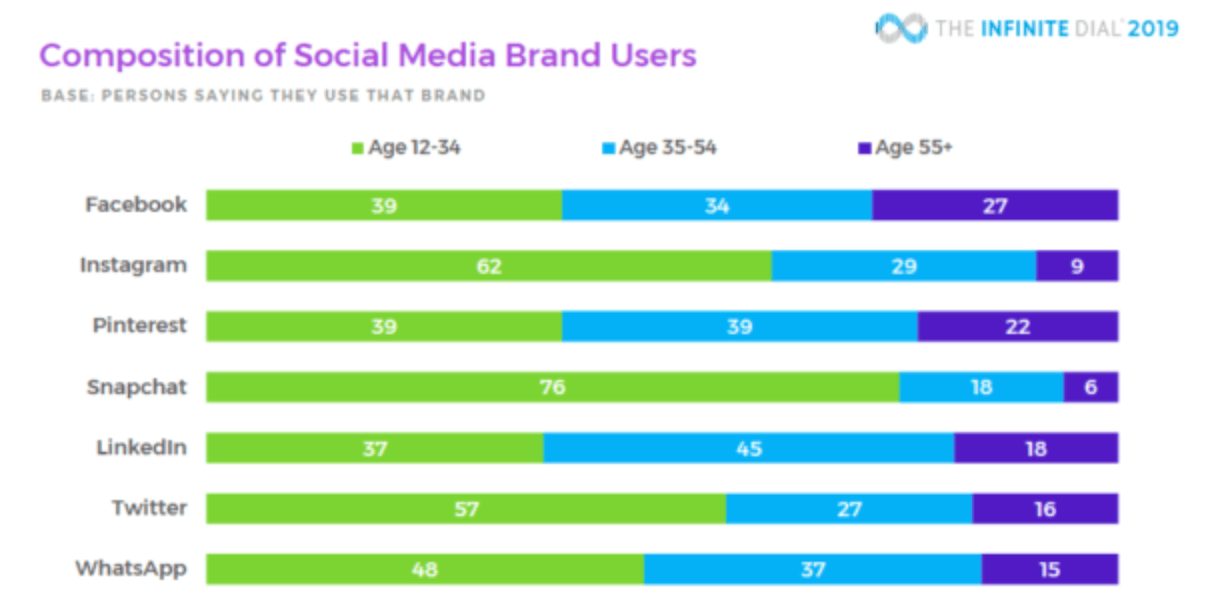
Social media is a great way to distribute your content. Here’s a basic breakdown of social media usage based on age.
This will tell you more about your target audience, but it’s still not enough information.
Sure, based on this graph, you could eliminate the possibility of targeting users over the age of 55 on Instagram and Snapchat since they only make up 9% and 6% of the population on those platforms, respectively.
However, other times broad information like this can be misleading. Take a look at the Snapchat usage. 76% of Snapchat users fall between the ages of 12 and 34.
So if you’re targeting younger consumers, like Millennials or Generation Z, this might seem like the place to do it. But you need to learn their habits as well.
For simplicity sake, let’s continue using the example from before. You have an ecommerce sports shop, and you’re trying to sell equipment to high school softball players.
If you assume that Snapchat is the best place to distribute your content, you’re making a mistake. You haven’t done all of the research yet.
In fact, 49% of Generation Z females say that they prefer to use Snapchat for sending videos of themselves. 43% of that same group says they prefer using Snapchat for posting selfies. They don’t use this platform to interact with brands.
However, 48% of Generation Z females say that Instagram is their preferred social media network for following brands.
Even though Snapchat has a greater marketing penetration of your target audience, it doesn’t matter if they’re not using that platform to interact with businesses online.
You can’t make assumptions about habits. I alluded to this earlier about LinkedIn. While your customers may be using the platform, that network is designed for B2B marketing, not B2C ecommerce shops.
Once you figure out what platforms are the best places to distribute content for your previously identified target audience, now you can start to create content.
If you start building the content before you go through the first two steps, it’s a big mistake. You might be wasting your time creating content that people won’t end up seeing or using.
Let’s say you’re spending 90% of your content marketing resources on blogging. But your audience is consuming content on YouTube and Instagram. That’s not an efficient use of your resources.
The type of content you create will also depend on who you’re targeting people based on their stage in the marketing funnel.
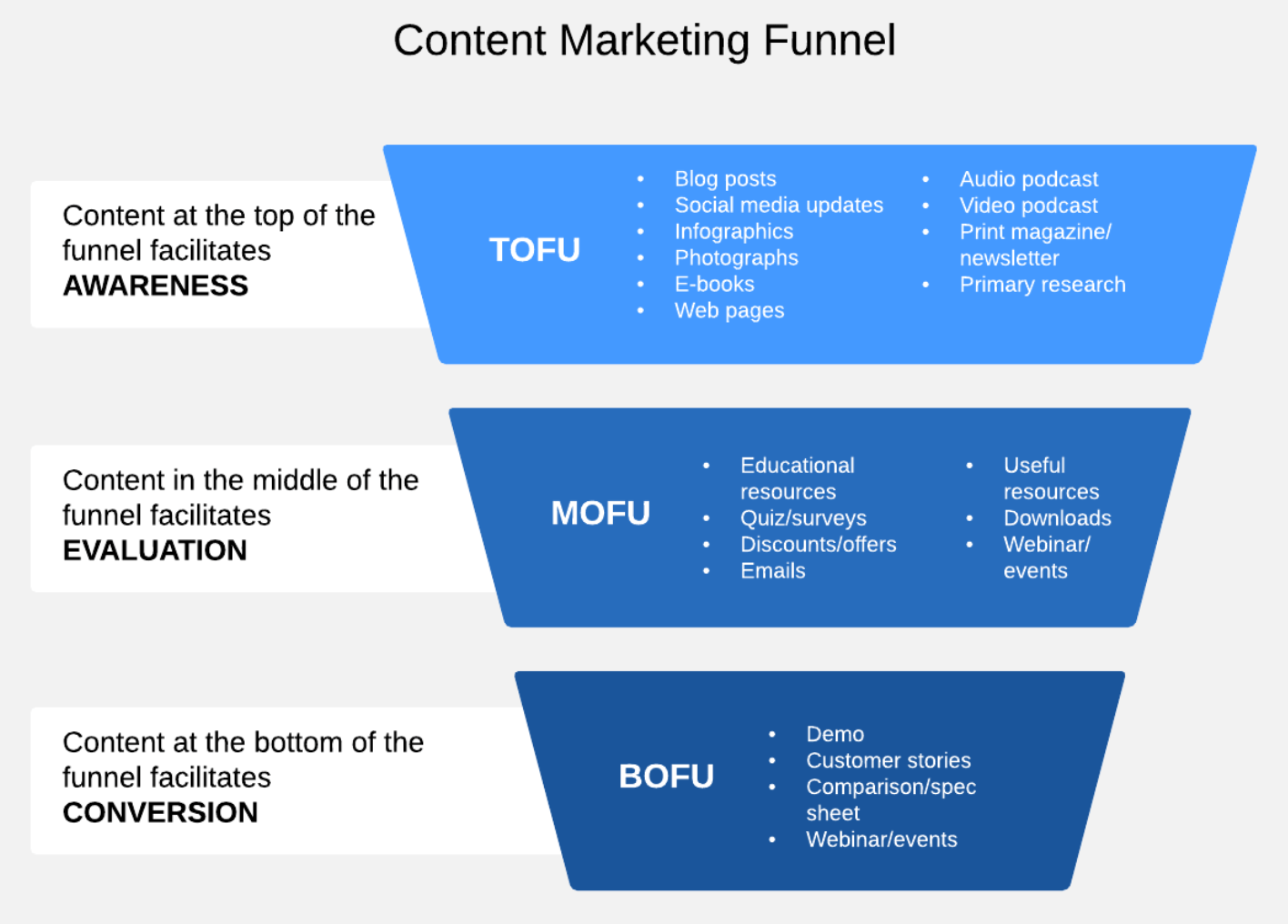
This graphic is a great resource to give you inspiration for content ideas.
A consumer who has never heard of your brand or ecommerce site will be targeted differently than repeat customer who knows what they’re looking for and is ready to make a purchase.
Breaking this entire process down into these three steps simplifies content marketing for ecommerce brands. But if you mix up the order of these steps, it won’t be as effective.
Now that you understand the approach behind content marketing for ecommerce sites, it’s time to look at some more specific types of content that you can use for your campaigns.
Keep in mind, not all of these will be applicable for every campaign you run. The content will always vary and be based on who you’re targeting and the platforms you’re planning to distribute on.
I always recommend starting your content marketing strategy with blogging. While this may not be the most popular approach for ecommerce companies, it’s very beneficial in terms of SEO.
There are ways for you to scale your lead generation through blogging as well.
Let me show you an example from Vinebox, an ecommerce store that sells wine.

Here’s a blog post I pulled from their site about the benefits of drinking organic wine.
So if someone is browsing online and searching for more information about organic wine, how it works, and the effect it has on their body, this post can pop up. People can navigate to this website even if they never heard of Vinebox.
As an ecommerce shop, you’re competing with dozens, hundreds, or even thousands of other brands across the web. You can’t rely on all of your customers going directly to your site to buy.
While this page serves as an informational guide on organic wine, it’s also designed for conversions.
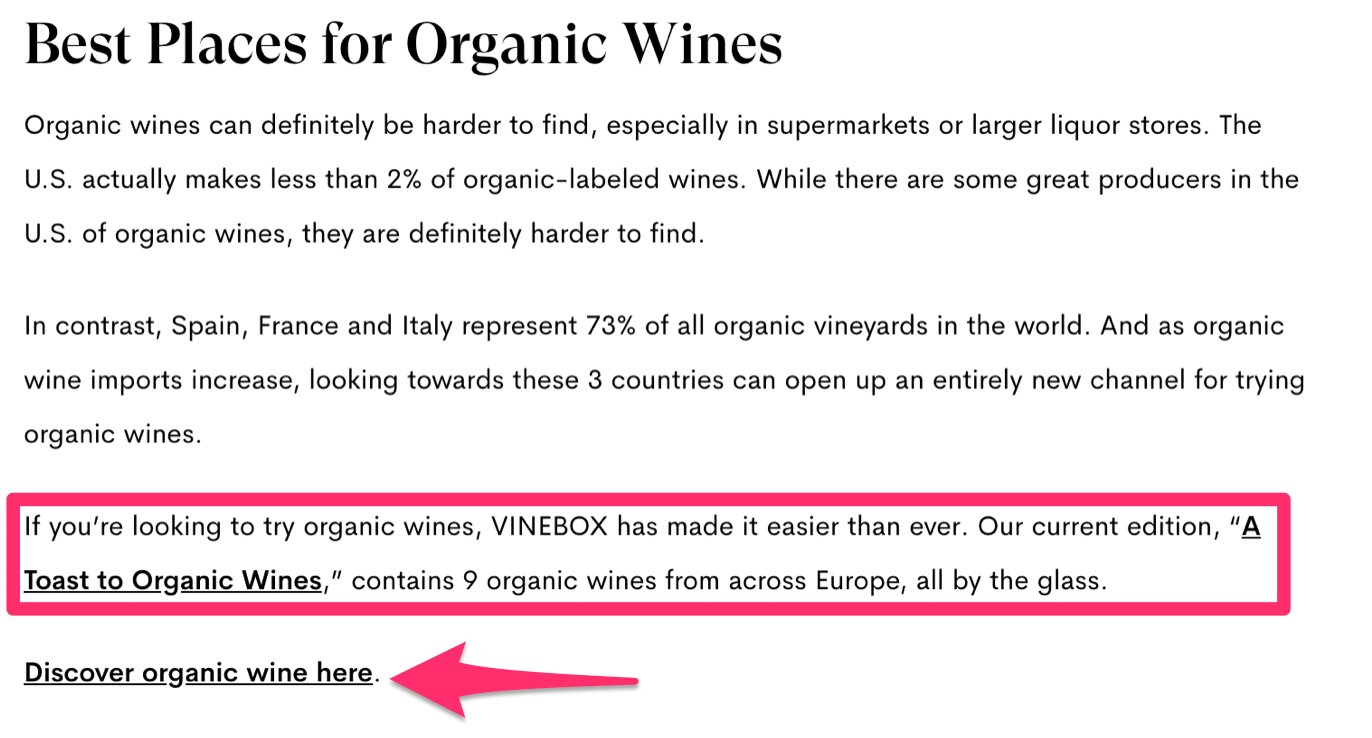
This is the final section of the blog post.
The blog closes with two CTAs about buying organic wine directly through their website. It’s a simple, yet effective approach.
You can definitely mimic this strategy for blog posts related to the products you’re selling online.
The biggest challenge of selling online is that customers can’t touch and feel what you’re offering before they buy it.
They rely heavily on visuals for this. So it’s up to you to ensure that you have tons of pictures of your products from nearly every imaginable angle. This is necessary for your product pages, but you can also repurpose those images on other channels as well.
For example, you can take an original photo of a model wearing the clothes that you’re selling and turn it into an Instagram shoppable post.
Again, this is only under the assumption that you’ve done the right research and recognized this platform as a place to reach your target audience.
Include photos in your blogs. Add them to your email campaigns. Share them on other social media channels. Keep taking original photos because you’ll always be able to find a use for them.
This piggybacks off of my last point about how consumers need to see your products before they buy anything.
Images are somewhat limited, but videos can tell the full story. Just look at how big of an impact video content has on purchases.
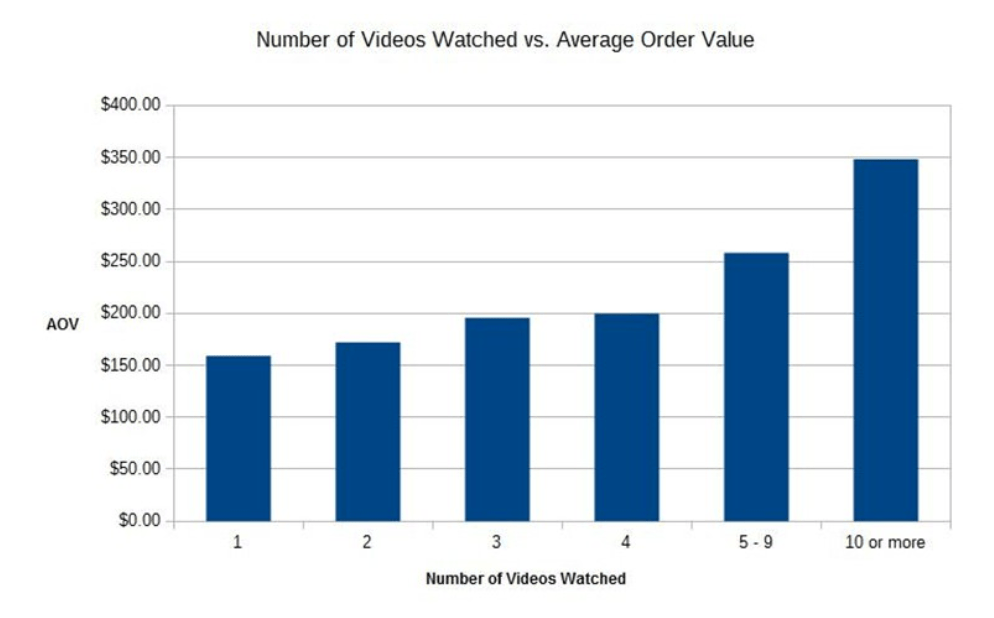
The more videos people watch about a product online, the higher their average order value is.
Videos can also be repurposed across multiple channels. Your blog, product pages, email campaigns, and social media profiles are all great places to distribute.
Furthermore, 90% of consumers say that videos assist their buying decisions. 54% of consumers want to see more video content from brands they support. Videos on landing pages can increase conversions by up to 80%.
Just adding the word “video” to an email subject line can increase your open rates by 19%.
The list of possibilities goes on and on. Video content must be incorporated into marketing strategies for all ecommerce sites.
Product buying guides are essential for the same reason as blogs. They can be used to drive organic traffic to your ecommerce site when people are looking for more information about specific products.
The biggest difference between product buying guides and blogging is that they will each target different types of people.
Blog posts are typically ToFu (top of funnel) content since the consumer is still in the product and brand awareness stage. On the other hand, product buying guides are MoFu (middle of funnel) content as the consumer reaches the evaluation stage of the purchase process.
Make sure that all of your buying guides have CTAs to drive conversions.
Truthfully, email marketing isn’t just an ecommerce-specific content marketing strategy.
But with that said, there are definitely ways that your ecommerce shop can leverage emails that other businesses cannot. Here’s a look at how B2C marketers are using email marketing.
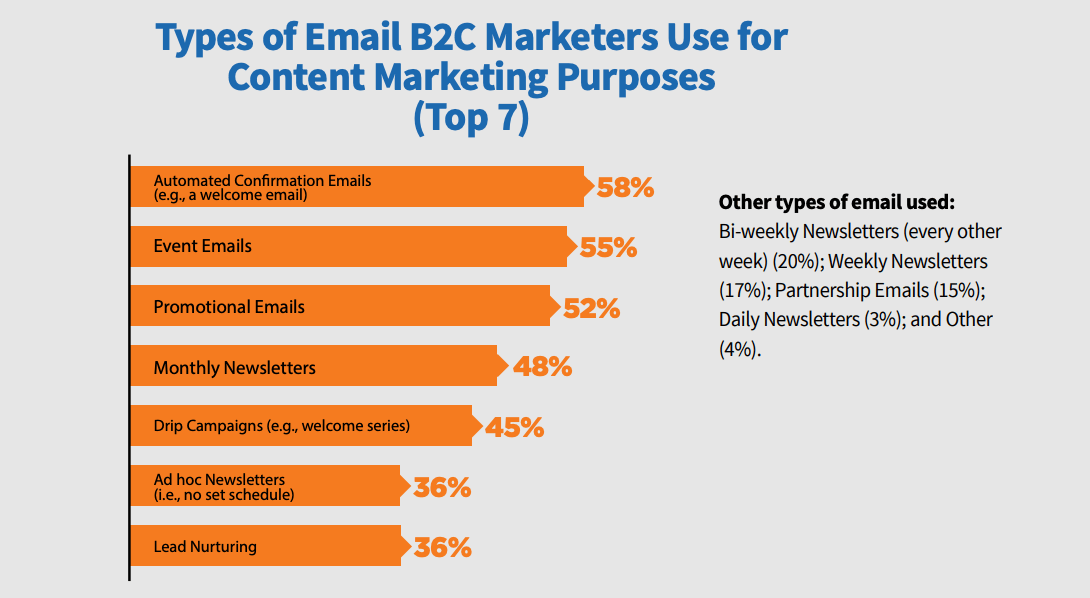
Your ecommerce site can take this to the next level.
Any time someone makes a purchase on your website, you have the opportunity to send them a drip campaign that’s relevant to that order.
That’s four emails that you have an excuse to send. All of them are relevant to the customer and provide information that they want to see.
You can use these messages to drive more conversions. Provide discount codes off of an upcoming purchase. Show product recommendations based on what they bought.
If a customer buys a surfboard, send them an email about a wetsuit. If they buy workout shorts, send them an email about more new workout gear.
There are lots of different formats you can use to tell a customer story.
These can be in text format, image format, videos, or blog posts. Display them on your homepage. Create separate landing pages for customer stories. Share them on social media.
If you look back to the content marketing funnel that we talked about earlier, customer stories fall into the BoFu (bottom of funnel) category.
At this point, the consumer is close to converting. The customer stories can be the factor that drives them to complete the purchase process.
Adding interactivity to your content strategy is a great way to bring a personalized touch to the customer.
Here’s an example from the Beardbrand website.
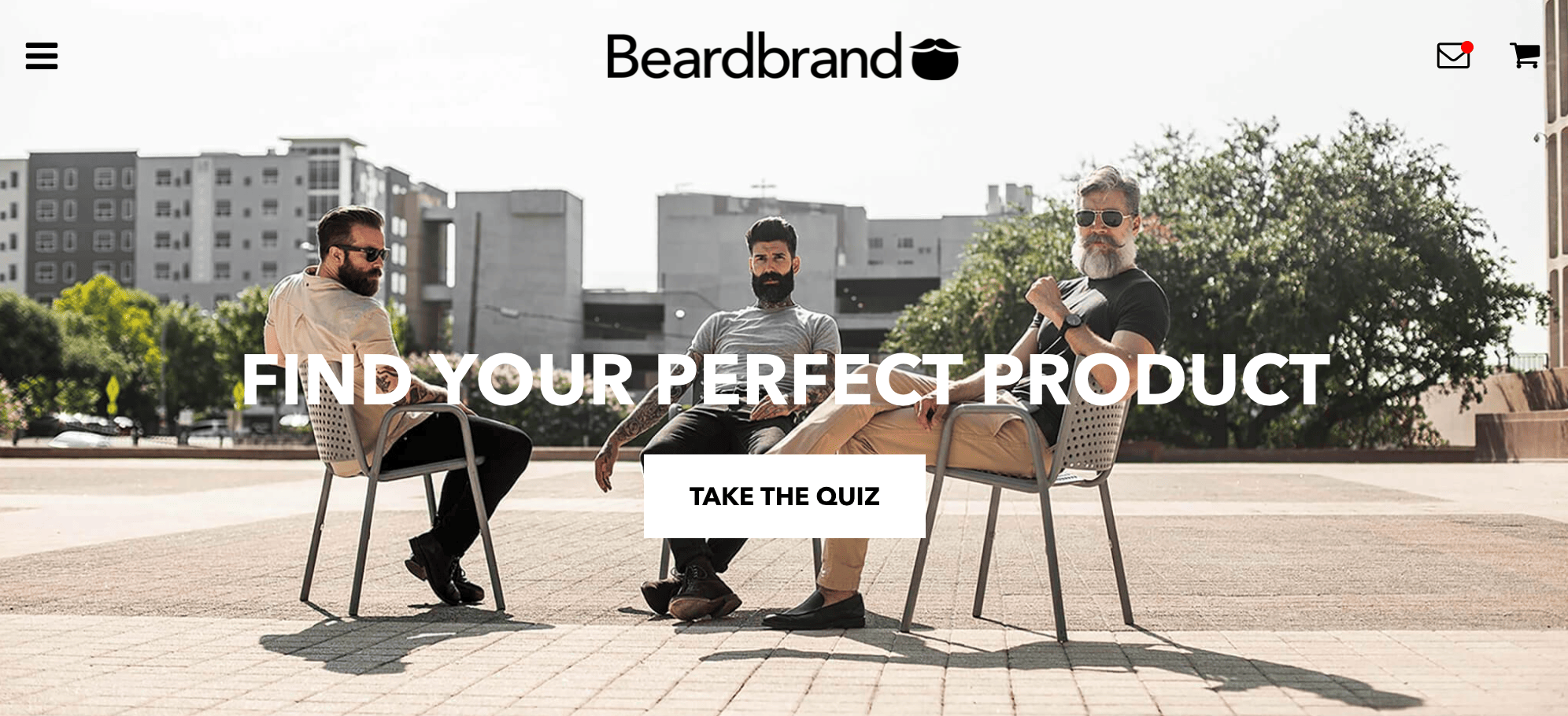
When you land on their homepage, you aren’t shown any specific products, and they don’t have any CTAs saying something like “buy now.”
Instead, there is an original photo of three men, each with three very different beards. There is a link to a quiz that will “help you find the perfect product.”
This interactive quiz makes the customer feel confident about the product that they’re purchasing. By answering a series of questions designed to meet their needs, it gives them an incentive to buy.
There are lots of misconceptions about content marketing and how it works. As an ecommerce business, you need to look for strategies that are specific to your industry.
Before you do anything, you need to know the process for ecommerce content marketing.
When you take this approach, everything else gets easier. Just remember that every content strategy you apply needs to ultimately drive conversions.
Keep this guide as a reference, and use the examples I listed above as inspiration for some high-converting content strategies.

The post Podcast 149: Niche Site Project 4 Income Report for May 2019 appeared first on Niche Pursuits.
It doesn’t matter what type of business you have or what industry you’re in; everyone needs to incorporate email campaigns into their marketing strategy.
There’s a common misconception that email marketing is dead. That’s just simply not the case.
So for those of you who are struggling with your email strategy, there’s a good chance that you’re making some mistakes. Don’t get me wrong—I’m not saying this to discourage you.
This is actually good news. All this means is that you need to make some adjustments with your approach to have more success.
One of the reasons why email marketing is so useful is because it delivers a high ROI. For every $1 you spend on email campaigns, you can expect an average return of $32.
81% of small business owners say they rely on email as their primary customer acquisition method. Additionally, 80% of small businesses say that email marketing is their primary method for customer retention as well.
Even if you’ve been having decent success with your email marketing campaigns in the past, you can still benefit from this guide.
Without even realizing it, you might be making mistakes that are holding you back. So if you’re ready to take your email strategy to the next level, review and correct these eight mistakes that should be avoided at all costs.
You just added a new subscriber to your email list. That’s great news!
This person was navigating through your website, made their way to a landing page, saw your email value proposition, and filled out the form fields required to sign up. They took a lot of steps, so clearly they’re interested in your website and brand.
Now what?
If you’re not planning to contact them until you send your next newsletter or coupon, then you’re making a big mistake. Welcome emails should be triggered immediately after a sign-up. That’s because they have the highest open rates compared to every other email category.
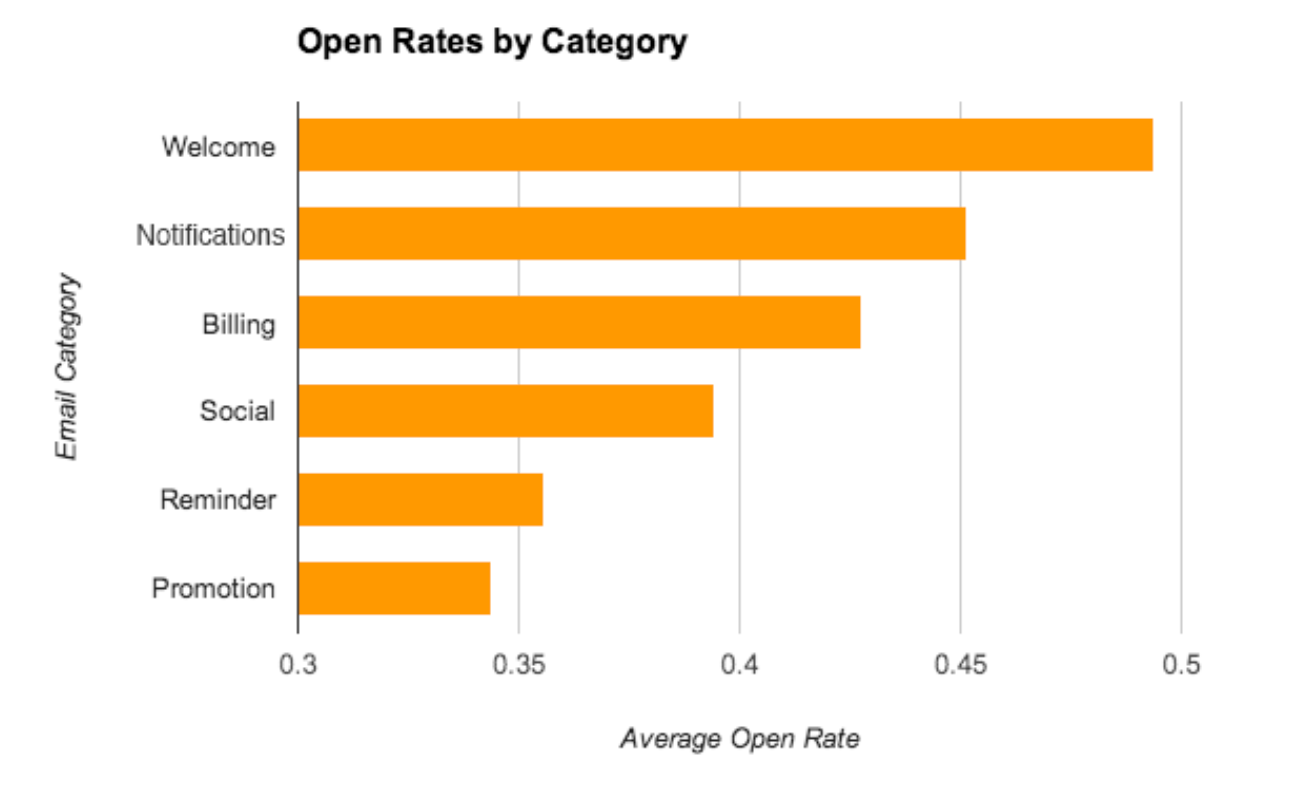
This makes a lot of sense. Think about it for a second.
Why did this person sign up?
Maybe you have an ecommerce shop and you promised something along the lines of exclusive discounts or offers for people who opt-in to your email list. Obviously, this visitor wants to buy something.
They’re on your site right now, and probably still have the browser open. But if you wait a day or a week to send that email, it’s going to be extra steps for that person to go back to your site and make a purchase. By now, the want or need for whatever you’re offering might be out of their mind.
On a per email basis, welcome emails generate 320% more revenue than other marketing messages. With that in mind, you can refer to my guide on how to generate sales with welcome emails.
Furthermore, welcome messages have a 336% higher transaction rate as well as a 196% higher click-through rate than any other email you send.
You need to take advantage of this. Yes, ideally you want this subscriber to be engaged with all of your emails down the road. But there’s no reason for you to wait. Get them to convert now by triggering a welcome as the first message in a drip campaign as soon as they sign up.
You think about your business and website all day, every day. Nights, weekends, holidays, it doesn’t matter; your business is always on your mind.
While it would be nice to think that your customers feel the same way as you do, that’s just not the case. So sending them a “hello” or “just checking in” message for no reason doesn’t add any value to their life.
All of your emails need to have a purpose and include a clear CTA that drives your goal home.
Otherwise, what do you expect the recipient to do with the message? Even if you’re sending a newsletter or some type of breaking news update, there should still be something in the message that entices conversions.
That’s not the only CTA mistake I see people make. On the flip side, instead of forgetting to include a CTA altogether, some site owners will go overboard and have four or five in the same message.
Alone, all of these CTAs are just fine. But when you add all of them to one message, the reader will get overwhelmed. Too many conflicting CTAs will just confuse your subscribers and end up hurting your conversion rates.
The content of the message should be priming and setting up the call-to-action. For example, if you’re releasing a new product, the CTA should be about buying. If you’re hosting an event, the CTA should be about signing up. For those of you who want to promote both of these, it needs to happen in two independent email campaigns.
Just because someone subscribed to your email list, it doesn’t give you the right to bombard them with messages all day.
The average person who works in an office receives 121 emails per day. That’s more than 44,000 emails each year!
So it’s no surprise that the number one reason why people unsubscribe from email lists is because they get too many messages.
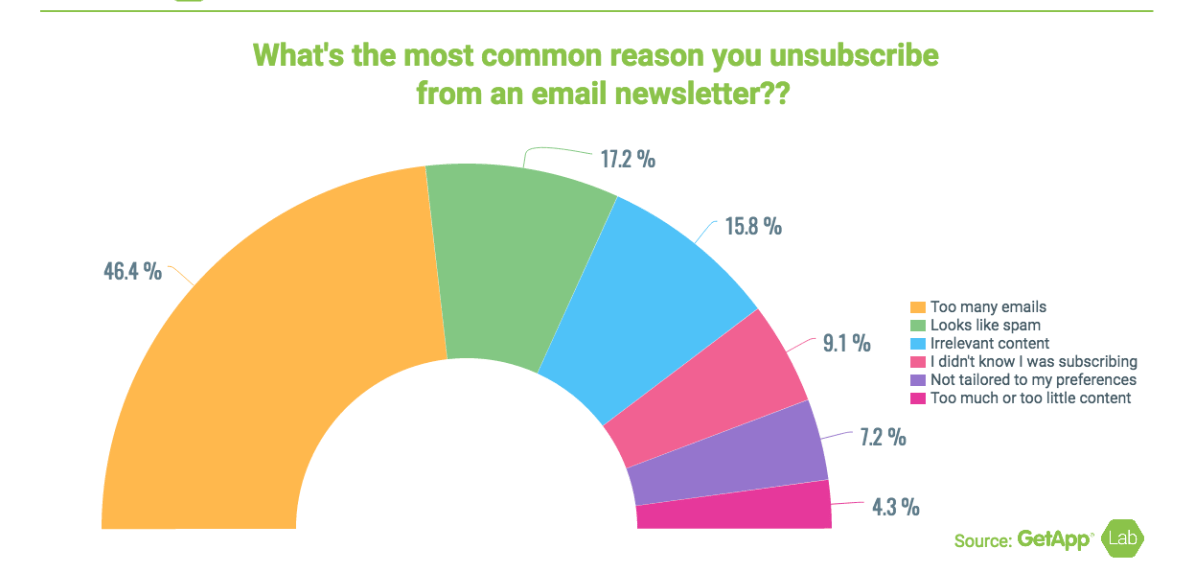
Think about this for a moment. Put yourself in the shoes of a consumer.
How often do you check your emails and feel annoyed about all of the messages you have? This drives me crazy.
You don’t want people to have that association with your website and brand.
They should be happy when they get a message from you, not feel annoyed. Remember, they signed up to get messages from your website, so they obviously have some interest in your content.
Realistically, people aren’t going to shop every day or visit your website every day. This is something that you need to accept.
So I would limit your email promotions to once per week at the most.
You can even allow subscribers to set up their preferences when they sign up. Ask them the communication frequency that they want, as well as the type of messages that they prefer. Then segment your subscribers accordingly based on their answers.
If you have one long master email list where every subscriber receives the same content at the same time, you’re doing it wrong. This is a huge mistake.
I just briefly explained during my last point how some people may want messages more or less frequently than others. Some subscribers may only want promotions and coupons, while others want your newsletter. Everyone has different needs and preferences.
For example, let’s say you run an ecommerce shop. A 20-year-old male subscriber isn’t interested in the same products as a female subscriber in her 50s. So sending them the same message is not a winning strategy.
Take a look at how these marketing metrics increase as the result of segmenting emails.
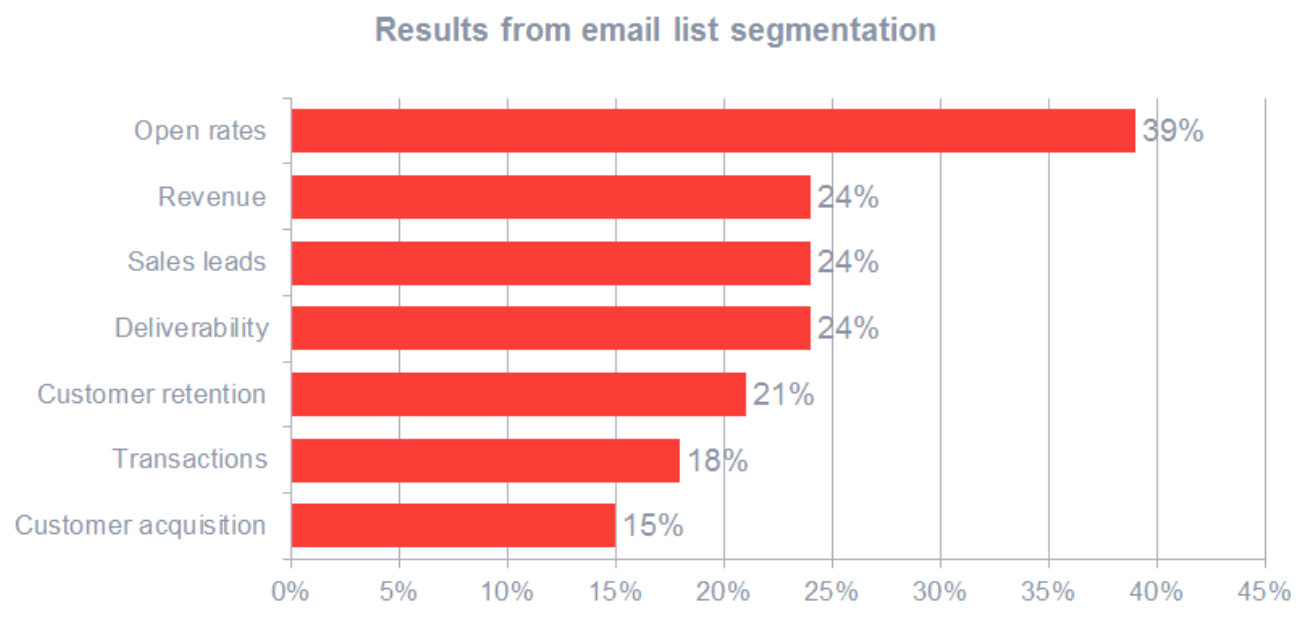
You’ll get more opens, revenue, and leads, while simultaneously increasing customer retention, acquisition, and transaction rates.
Furthermore, studies show that 60% of people will delete an email that they find irrelevant. 27% of people unsubscribe from irrelevant emails and 23% mark them as spam.
That’s right. Even if you’re not sending emails too frequently, your subscribers can still unsubscribe. But segmenting subscribers decreases the likelihood that your content will be perceived as irrelevant.
These are all common starting points for segmenting your email lists. Learning how to deliver relevant content by segmenting your email subscribers needs to be a priority.
I regularly consult with lots of different website owners and businesses. When we talk about email marketing, lots of them have the wrong impression about when email campaigns should be sent.
Let me give you an example. I’ll use nice and round numbers to make it easy.
Say you have 1,000 email subscribers currently on your list. You sent out a message to all of them last week. You’re ready to run a new campaign this week, but you only gained ten new subscribers since your last campaign.
That’s not an excuse to put off the campaign.
But all too often I see business owners delay campaigns until they get more subscribers. As long as you’re not sending the messages too frequently, you can still deploy a new campaign to the same people, regardless of how many subscribers you gained or lost in between messages.
Your current subscribers are already familiar with your brand. The probability of selling to a current customer is 60 to 70%. But the chances of selling to a new customer is just 5 to 20%.
Based on these numbers, there’s no reason for you to hold off. Plus, any new subscriber should be getting a welcome email, which we discussed earlier in this guide. So you’ll be able to target them with an offer right away. For everything else, pick a schedule and stick to it. Stop coming up with excuses for delaying new campaigns.
I’m assuming that most of you will be using a computer to craft your email marketing messages. On these devices, everything looks great.
Time to send it out to your subscribers, right? Not so fast.
You need to check and see how your message looks from mobile devices. Most email marketing software out there will have mobile-optimized features.
But the best way to do this is by sending a test email to yourself. I have a category on my email marketing list for office and executive. Basically, it’s just a few of my email addresses. I always send content to this group first, so I can check everything before it goes out to the masses.
Look at which devices people use the most to check their emails.
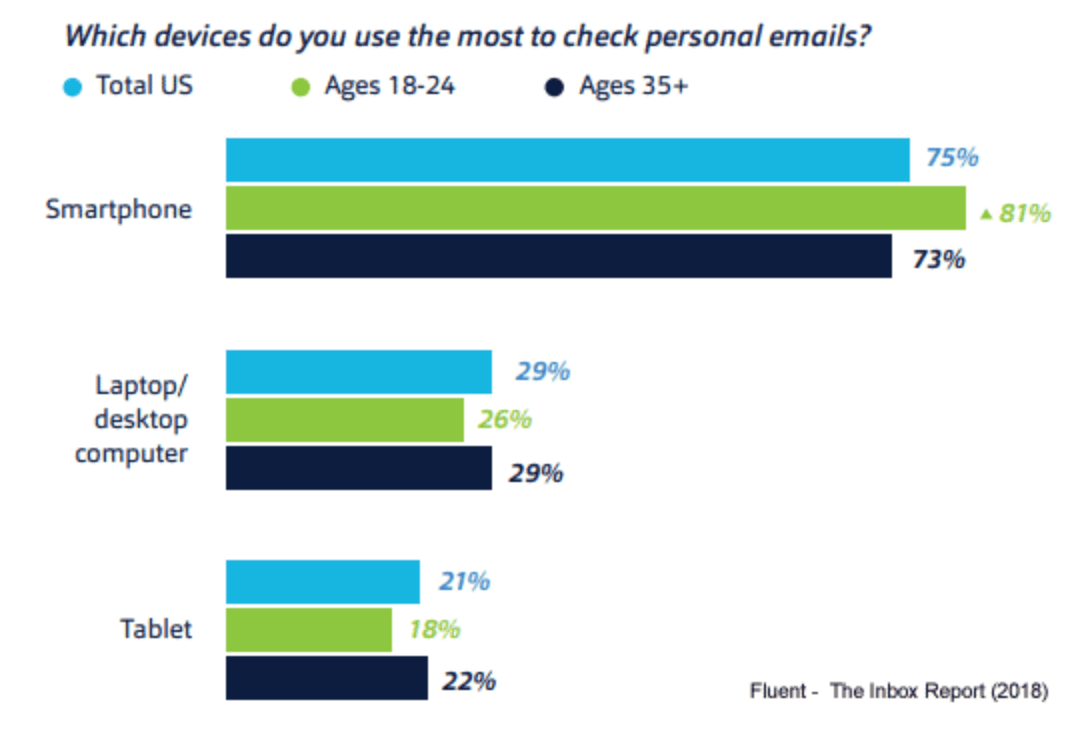
Smartphones are by far the most popular devices for people of all ages.
So even if your message is technically mobile-friendly based on the test run through your email software, there are other things you should keep in mind.
Avoid long blocks of text. Something that’s two or three lines on a desktop computer could up being ten lines on a 4-inch smartphone screen.
Your email should have visuals, but don’t rely too heavily on images. Here’s what I mean by this. Some email apps won’t automatically display images. So if your entire message is based on the context of your picture, you might be out of luck.
To fix this mistake, you’ve got to know how to boost sales by accommodating the needs of mobile users.
Earlier I explained why you shouldn’t delay campaigns. But with that said, emails shouldn’t be sent in a matter of minutes either. Take the same approach that you would if you publishing a blog or adding anew landing page to your website.
Plan it out. Create an outline. Write the copy. Put it through some editing software. Proofread, and then proofread it again. Slang, spelling errors, and improper formatting will not reflect well on your business.
Imagine getting an email from a high-end brand trying to sell you a $2,500 watch. But the message is filled with type-os and grammar mistakes. Are you going to buy that watch?
Probably not. It looks like a poor reflection of that company as a whole.
People think that if you don’t take the time to do something as simple as writing an email, what other shortcuts are you taking?
The reply to address for the email should be your business. Not your old screen name @hotmail.com. You should also A/B test all of your emails for formatting purposes. All of this will ensure that your messages look as professional as possible.
Your email marketing campaigns will only be as good as your subscriber list.
It doesn’t matter if you have great content in your mobile-optimized message with the perfect CTA and professional design. If you only have 30 people to send it to, you can’t expect great results.
I realize that email lists don’t get built overnight, but this needs to be something that you’re always working at. No number is ever high enough.
If you just have “sign up for our emails” buried somewhere in the corner of your website, it won’t generate subscribers.
Remember, people are getting bombarded with nearly 1,000 emails per week. They won’t be signing up to receive more unless they have a good reason.
Check out his popup from the Blenders Eyewear homepage.
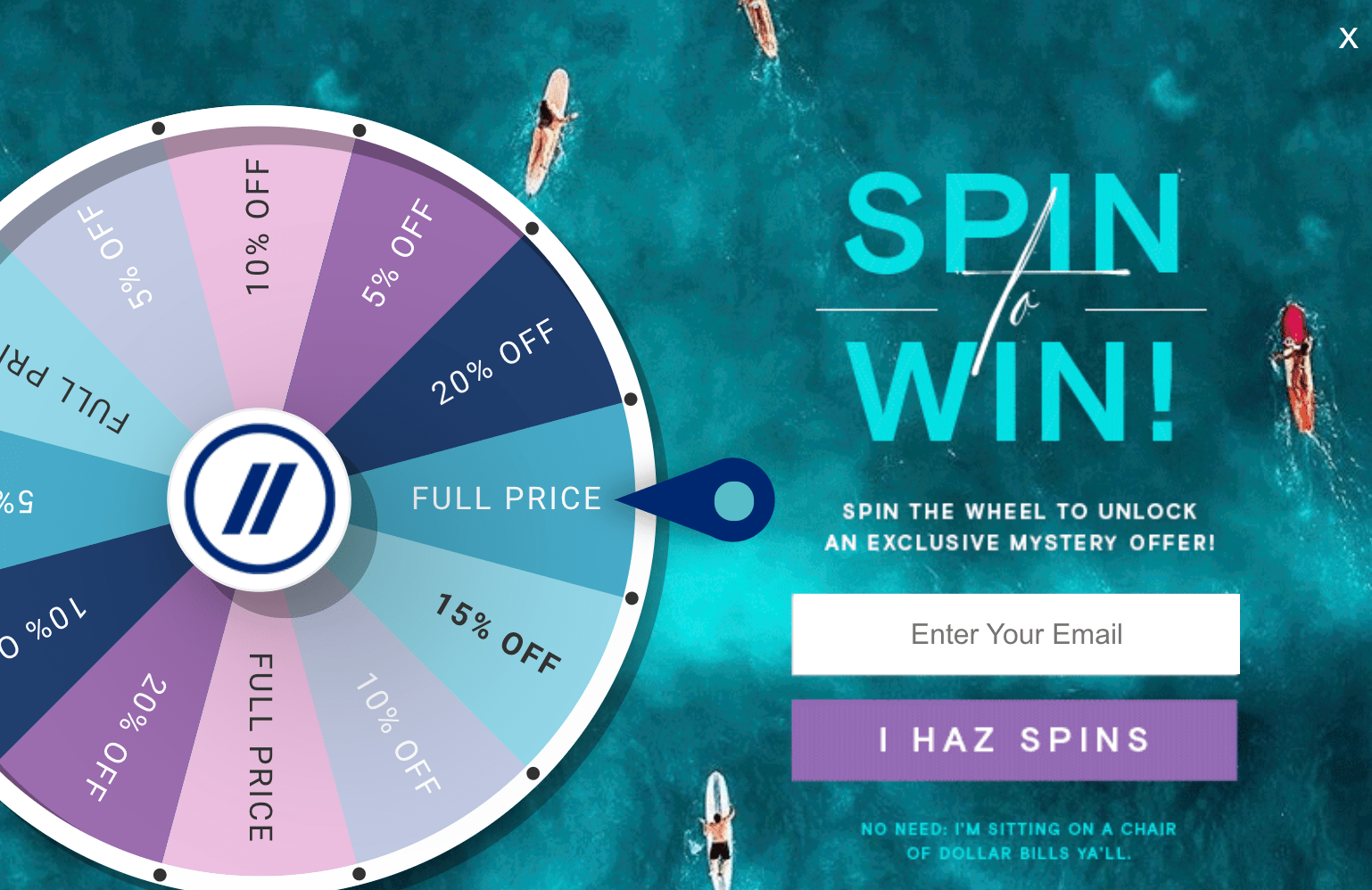
It’s a creative approach to collect emails.
First of all, you can’t miss it because it takes up nearly the whole screen while a user is browsing. Since they operate an ecommerce site, it’s safe to assume that the visitors are interested in their products.
By offering a discount in exchange for an email sign up, they’re essentially killing two birds with one stone.
Refer back to what we discussed earlier in terms of a welcome message. When a visitor signs up in a situation like this, it’s absolutely necessary that they are welcomed with the discount immediately.
Even if you don’t have an ecommerce shop, you still need to prioritize sign-ups and add value to potential subscribers. Offer them free downloads, video tutorials, or other types of exclusive content for email opt-ins.
Email marketing is still alive and thriving. Everyone needs to make this a priority.
But some people are doing email marketing wrong. After reviewing this guide, you might have just realized that you fall into that category.
Don’t worry. These common mistakes are fairly easy to correct.
Identifying them is the hardest step. But now that you know what needs to be done, you can make those adjustments and apply the changes to your email marketing strategy moving forward.

