Friday, August 9, 2019

The Future of Web Design: Artificial Intelligence

Artificial intelligence has been trending upward for years now. In fact, according to Google Trends, the search term piqued back in January 2018.

AI is being used for all different types of applications and technology. In the past, I’ve covered the marketing skills you need to survive in the age of AI.

That’s because marketers have been using AI technology to reshape the way that consumers are targeted. Brands and websites are using AI chatbots to improve communication with website visitors. They’re also using this technology to analyze big data. AI is helping business owners and webmasters gain a competitive advantage in their industries.

But today, AI is also changing the way that we design and develop websites. It’s also going to impact the way we design moving forward.

Traditionally, all websites have been created using HTML. While the code has changed and become more sophisticated over the last couple of decades, sites have become more visually appealing than they were in the past.

Although the technology is still in its infantile stages, ADI (artificial design intelligence) is being used for web design and development.

The thought behind ADI is that the majority of web design can be automated using AI technology. Talks of ADI have been growing over the years, which is what inspired me to write this guide.

I want to share all of this information with you so you can prepare for the future of your website and gain a better understanding of where ADI stands today. With that said, I’m not quite at the point where I’m saying every single site needs to leverage AI for design. I don’t think we’re there just yet.

Instead, I just want you to be aware of the technology and how it will impact the future of web design.

Growth and benefits of AI

Before we dive into the specifics of ADI and artificial intelligence used for web design principles, I want to take a moment to discuss AI as a whole. Essentially, here’s how AI works.

AI technology lets machines and computers perform human tasks. Then, the machines are supposed to learn from their experiences completing those tasks and adjust accordingly to optimize any new inputs.

In order for AI to function properly, the technology needs to be programmed efficiently with deep learning capabilities. All of this technology needs to be able to recognize patterns in the data that’s being processed.

AI is being developed at a rapid pace, and revenue from these applications is growing exponentially as a result.
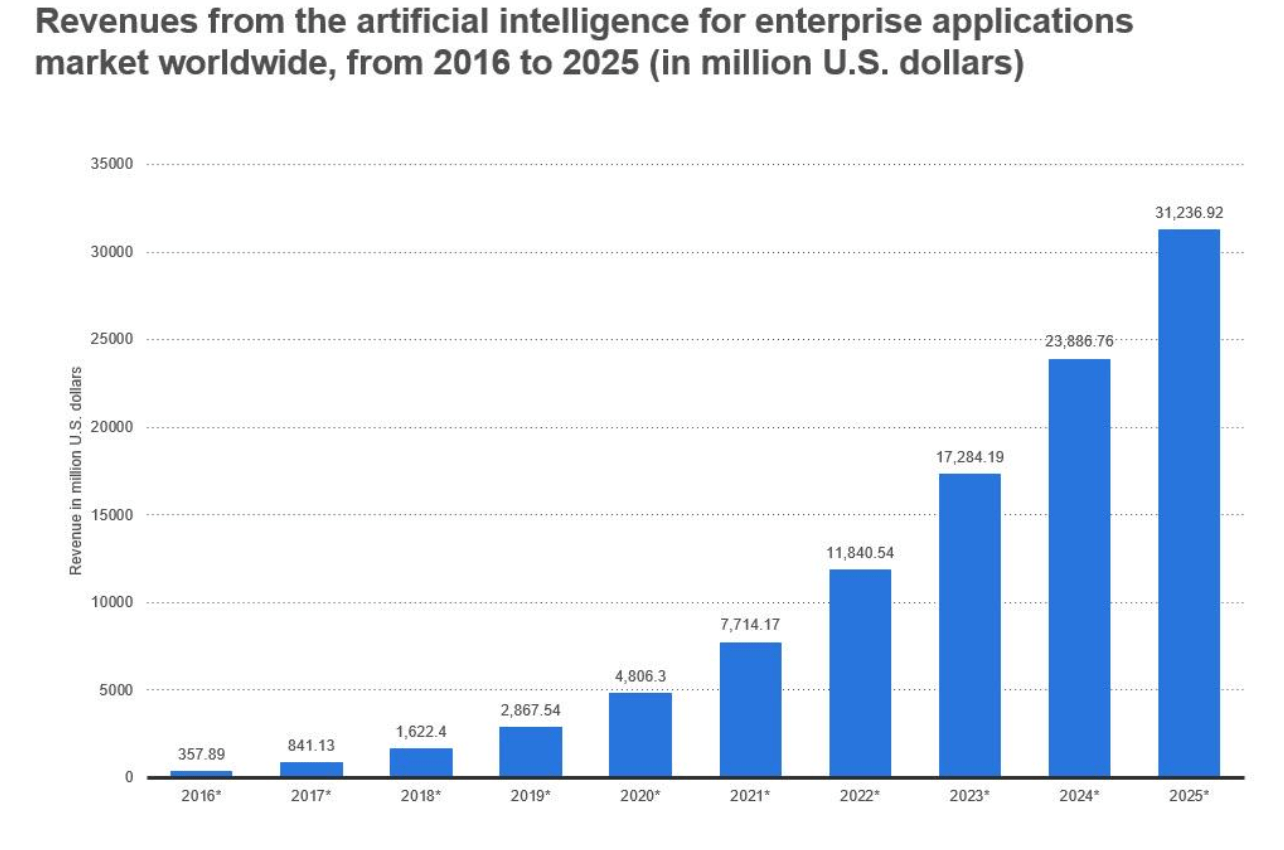
AI growth

As you can see from the graph, it’s estimated that the revenue from AI enterprise applications in six years will be ten times where it is today in 2019. It’s already eight times higher than where it was just three years ago.

Clearly, AI is on an upward trend.

The technology needs to be applied somewhere, and the theory is that it can be used for both web development and design, in addition to other purposes.

It’s a common misconception that AI is only used for automating tasks that would normally be done manually. While that’s part of how it works, the technology goes so much deeper than that.

The idea behind AI is that it can be used continuously, at scale, and with precision, using data.

This technology is being streamlined for processes in homes and businesses alike. It can be used for applications like classifying images or object recognition. For example, a smart refrigerator using AI can theoretically create a grocery list for you automatically.

With deep learning capabilities, AI technology will continue to grow and become more advanced in the future.

How ADI works

Now let’s look at how artificial intelligence can be applied to web design with ADI.

In the simplest explanation, ADI can use machine learning to recognize and implement trends in web design. It’s just like anything else using AI technology. Computers analyze data, then automatically make input adjustments.

The idea here is that websites can eventually be made on their own, using AI. This is very different from the way websites are being built today.

Right now, there are only a few options for web design and development.

First, you can learn how to code and do everything yourself from scratch. This is definitely not the easiest approach. It takes time, trial, and error.

Alternatively, you can use website builders that don’t require any coding. Drag and drop interfaces make it easy for people with no coding experience to build a website on their own. But still, this approach requires time and manual work. Plus, you need to have an understanding of design in order for your site to be both appealing and efficient.

If you don’t have the time or the skills to do this, you can hire a developer or a designer to handle everything for you. While this frees up your time, you’ll pay a premium price for those services. Again, the work still needs to be done manually by someone.

Artificial intelligence is a newer method for web design, and it could be the primary design option of the future.

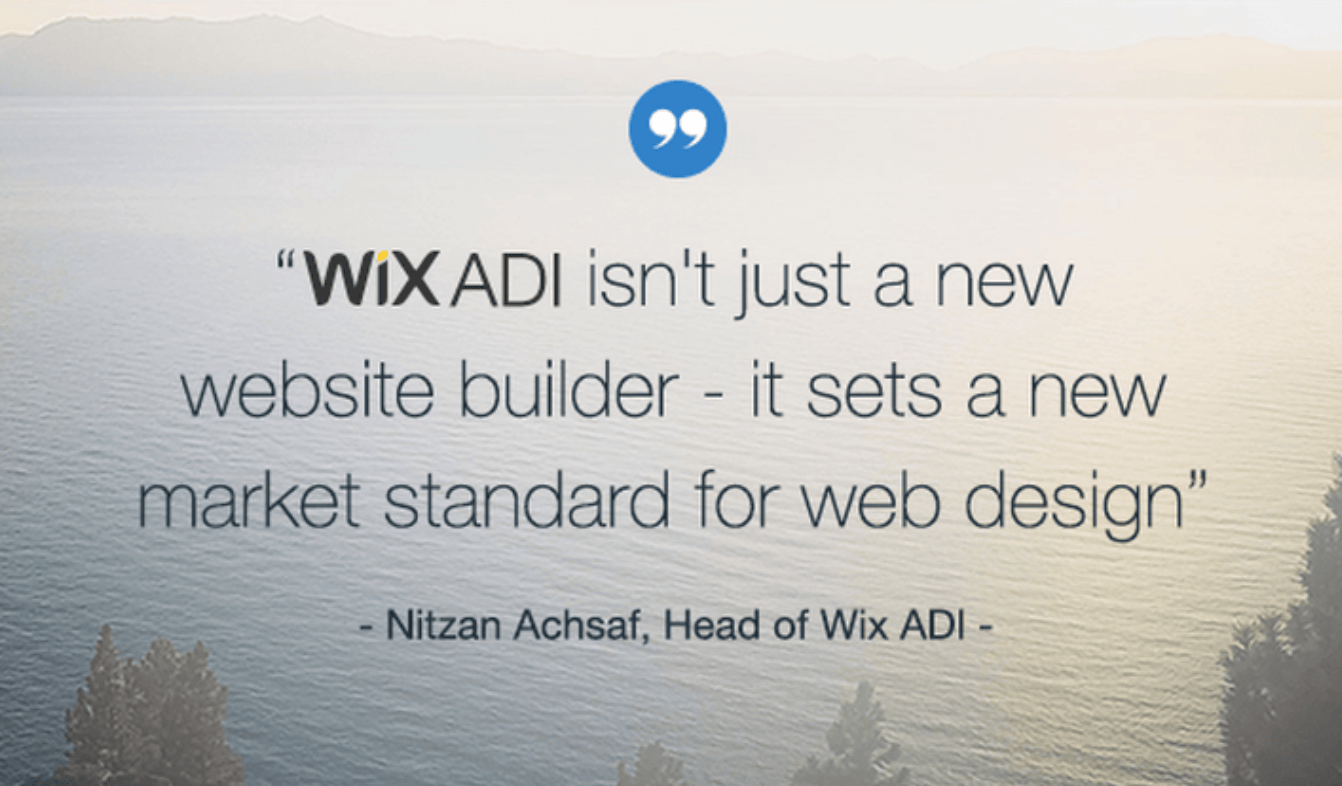
Wix, an industry leader in the website building space released their version and vision for ADI back in 2016.
wix

The concept is fairly straightforward.

Wix asks questions about the needs of your website. Then it takes those responses to create content elements that are both unique and robust from a design standpoint for your website.

Wix will also give you custom images and text if you use their ADI. I talk about this in my step-by-step guide on how to create a Wix website.

The foundation for ADI is supposed to be a machine that has the brain of a web designer. This is achieved by programming technology to observe existing websites.

Then, the technology takes those website design best practices and applies them to a new site that’s being built. All of this happens automatically.

In theory, this would even eliminate the need for templates. Sites could eventually be built without any input from humans.

Applying technology to web design

Let’s take a step back away from AI for a second and just focus on web design.

When most people think about design, they automatically assume that creativity is a requirement. In some instances, that’s true; but only to a certain extent.

Great web designers don’t necessarily need to be the most creative people on the planet or have a background in art. They simply need to know how to apply best practices.

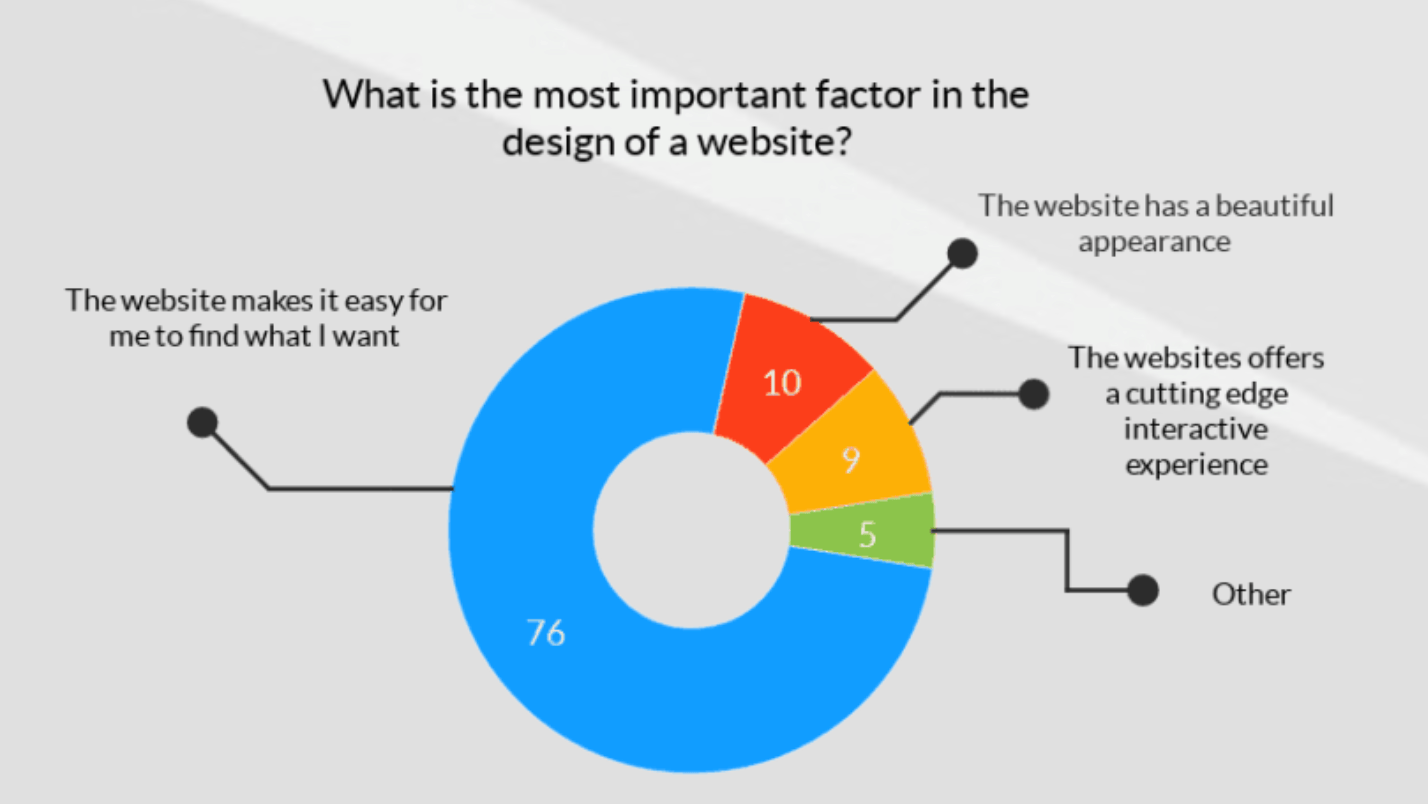
Take a look at the most important factors of web design, according to website visitors.
important factors

As you can see from the graph, 76% of people say that they want sites to make it easier for them to find what they’re looking for. Just 10% of people say that a beautiful appearance is most important.

Theoretically, you could design a website without any creativity whatsoever. It’s just a matter of knowing those best practices and implementing them.

That’s where AI can come into play.

AI solutions can be offered as an assistant for people who are building websites. Machines can analyze the design, and compare it to the databases of best practices.

Ultimately, the technology can be used to offer suggestions related to design.

Think of it like software used for SEO. SEO tools analyze your content and give you keyword suggestions based on what’s ranking or what other sites are doing.

This same concept can be applied to web design.

Since the best practices aren’t really creative, the applications can be taught and programmed into machines. For example, optimal CTA placement on a homepage is something that can be learned and applied by a computer using ADI.

Eventually, the idea is that AI will completely take over the design, but we just aren’t at that point yet.

Even platforms like Wix that are using AI in some form are another are still limited. Human inputs such as answering questions and things of that nature are required for it to work.

Examples of AI web design

In addition to Wix, there are a couple of other platforms that are using AI in web design at a more advanced level.

Again, these are still in the earlier stages of development and somewhat limited. But they are a good indication of where the future of design is headed with AI.

AiDA from Bookmark
aida

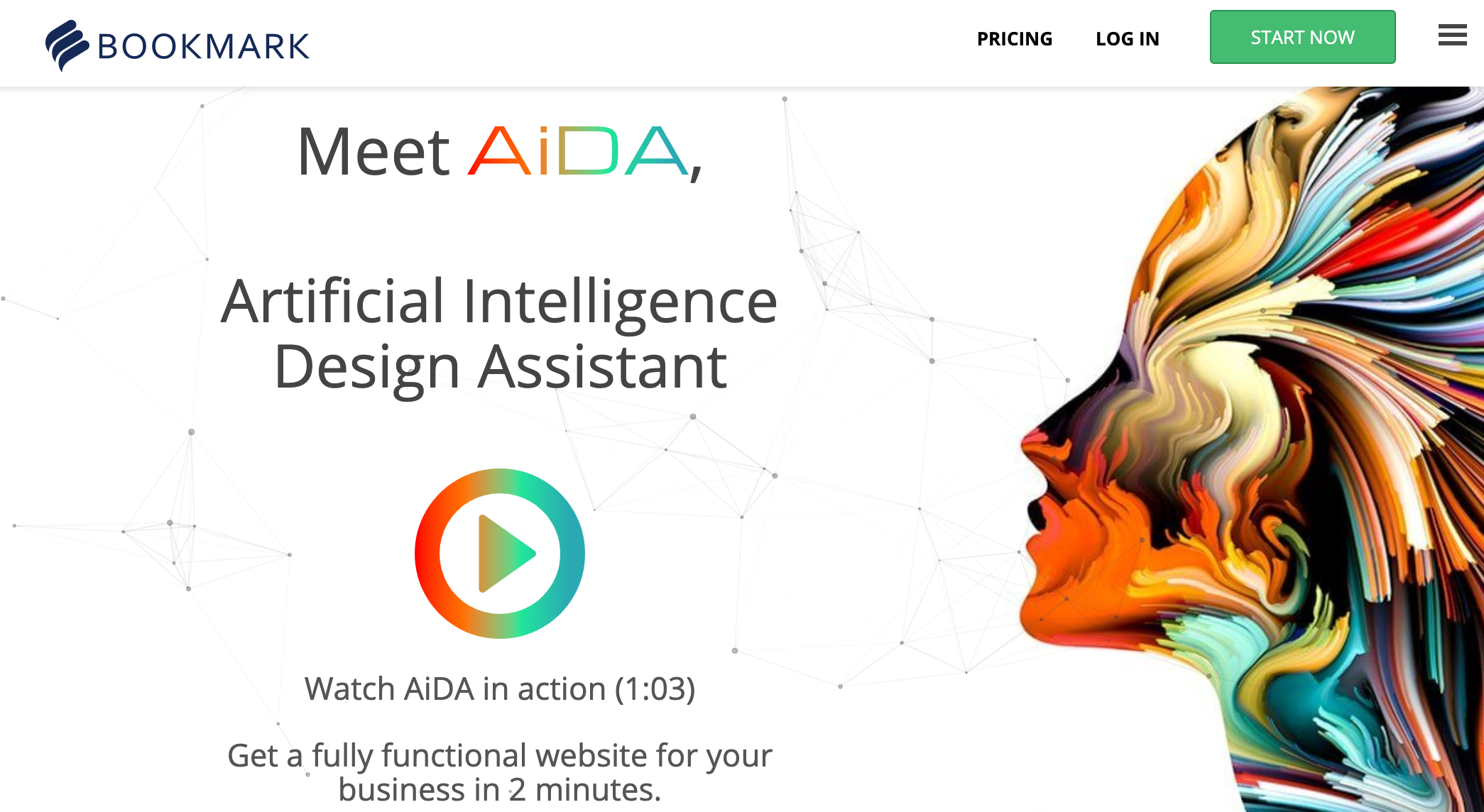
Bookmark has a website builder called AiDA, which uses AI to create websites. So you can use this platform to build a website, even if you don’t have any design or coding experience.

AiDA stands for artificial intelligence design assistant. By leveraging this software, you can have a custom website up and running in less than two minutes. Here’s how it works.

The software creates a design that’s unique to your needs and business.

All you have to do is choose your business type. There are more than 650 options for you to select, so it’s very specific. But again, it still requires some manual work.

AiDA has the capability to create personal portfolios, business websites, ecommerce stores, and anything in between. Type in your business name, and the software takes care of the rest.

Once the site and design have been built, it’s your responsibility to edit the images and content.

If you’re not happy with the way it looks, just go through the process again, and AiDA will create a new website for you that’s different than the first one.

Bookmark has three different pricing tiers. The first one is free, but it’s very limited and comes with a bookmark.com subdomain. They also have plans for $11.99 per month and $24.99 per month billed annually. Prices increase for month-to-month contracts.

Sacha from Firedrop
sacha

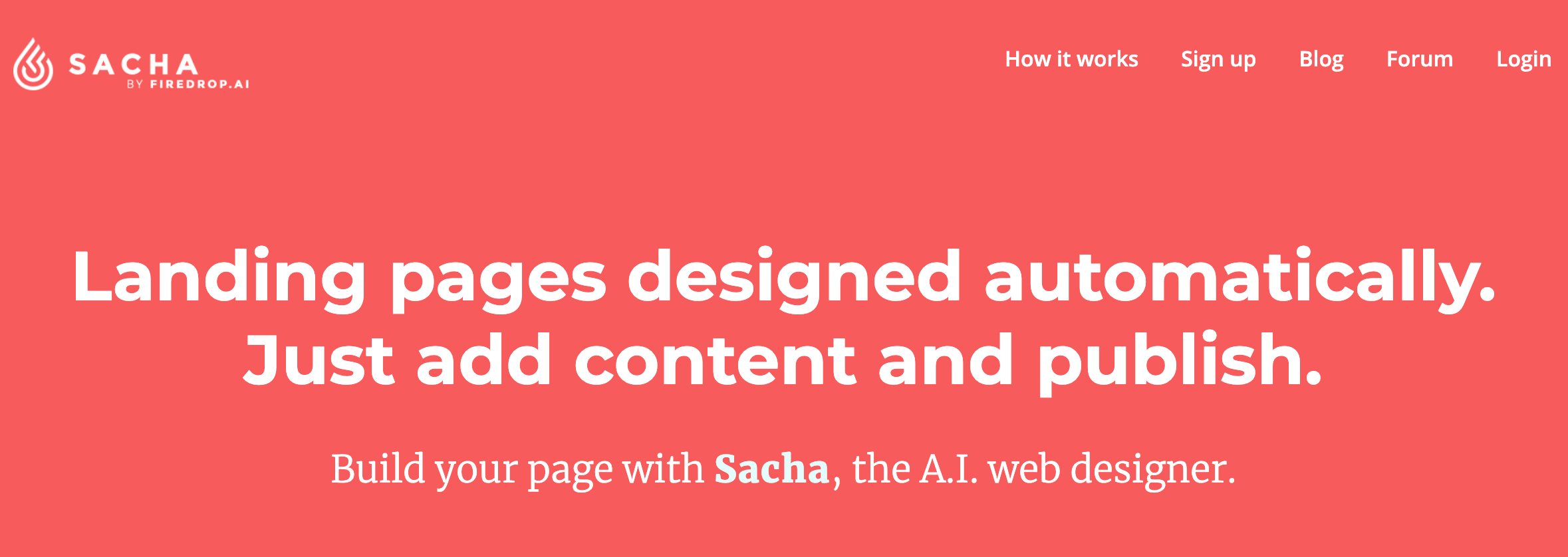
Firedrop has AI software called Sacha, which is used for building web pages, as opposed to entire websites.

In theory, you can use this AI platform to build your entire site, but you’d need to go through and do it one page at a time, which kind of defeats the purpose of automation. Either way, this is another example of what’s currently on the market today.

Here’s how it works. Instead of using drag and drop builders, all you have to do is talk to Sacha through live chat.

For example, you could type something like “change the color palette” to get a trending website color scheme on your landing pages.

It’s a great option for those of you who want simple landing pages that are completely customized, as opposed to choosing a template and then editing it to fit your needs.

Sign up for free to try Sacha. Then you can request a consultation to see customized pricing options from Firedrop.

Conclusion

AI is the future.

One way or another, it seems like this technology is slowly going to become apart of everything we do in the coming years. Web design is no exception.

There are already platforms out there that are leveraging AI technology to design and develop websites. Although this software has yet to reach its full potential, I don’t think we’re too far from seeing that day.

So what does this mean for you right now?

You don’t need to go out and start using ADI. But as the technology advances, don’t be so resistant to change. Keep an open mind and stay up to date with the latest trends to ensure that your website has an optimal design.


from Quick Sprout https://ift.tt/2YMGNIL

Thursday, August 8, 2019

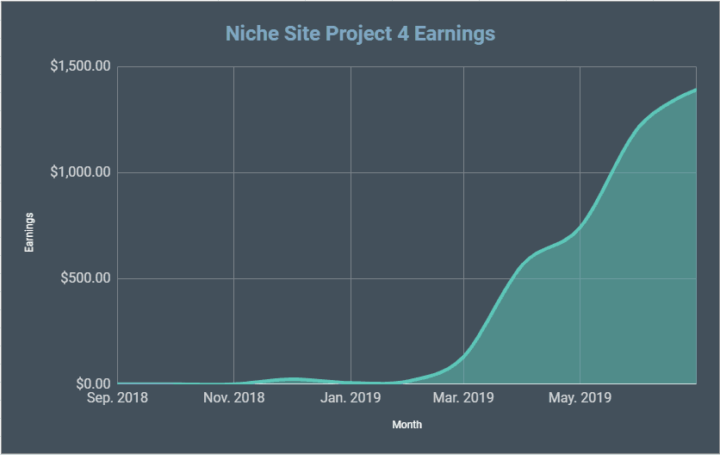
Niche Site Project 4 Monthly Income Report for July 2019

Now that my niche site has been revealed, I'm happy to share that the site has continued to grow and progress. In full disclosure, I didn't focus very much on my site, OwnTheYard.com, because of other things I was focused…

The post Niche Site Project 4 Monthly Income Report for July 2019 appeared first on Niche Pursuits.


from Niche Pursuits https://ift.tt/33o7jHy

Tuesday, August 6, 2019

The Silo Structure: How to Show Up In Google & Outrank Your Competition

silos

Whenever you read anything on SEO, it almost always comes back to the same point: Content is king, backlinks are the queen, and you're just the pawn of Google. (of course, my article on how SEO works doesn't say that.)…

The post The Silo Structure: How to Show Up In Google & Outrank Your Competition appeared first on Niche Pursuits.


from Niche Pursuits https://ift.tt/31k1Boo

Monday, August 5, 2019

Podcast 155: How Tommy Griffith Went From Managing SEO for PayPal and AirBNB to Starting a Mid-Six Figure a Year SEO Training Course

Today, I'm excited to introduce you to Tommy Griffith from Clickminded.com. Tommy is someone that has been involved with SEO for a long time at a couple of really large companies. He started as an SEO manager for PayPal and…

The post Podcast 155: How Tommy Griffith Went From Managing SEO for PayPal and AirBNB to Starting a Mid-Six Figure a Year SEO Training Course appeared first on Niche Pursuits.


from Niche Pursuits https://ift.tt/2YssJEM

Why Your Website Needs HTTPS

All websites need to prioritize security. However, I still see so many sites out there that aren’t using HTTPS.

For those of you who aren’t currently using HTTPS, that needs to change immediately. If you don’t think it’s necessary or that important, you’re mistaken.

The truth is, security impacts the performance of your website.

According to a recent study, 85% of consumers won’t convert if data is being transmitted through a connection that’s unsecured. 82% of Internet users won’t even browse on a website that’s not secure.

Lots of website owners that I consult with seem to think that their site is immune to malicious attacks or hackers because there are bigger and more important companies out there. Why would a hacker waste their time with a small website?

But 43% of cyber attacks target small businesses. So you can’t have the “it won’t happen to me” approach.

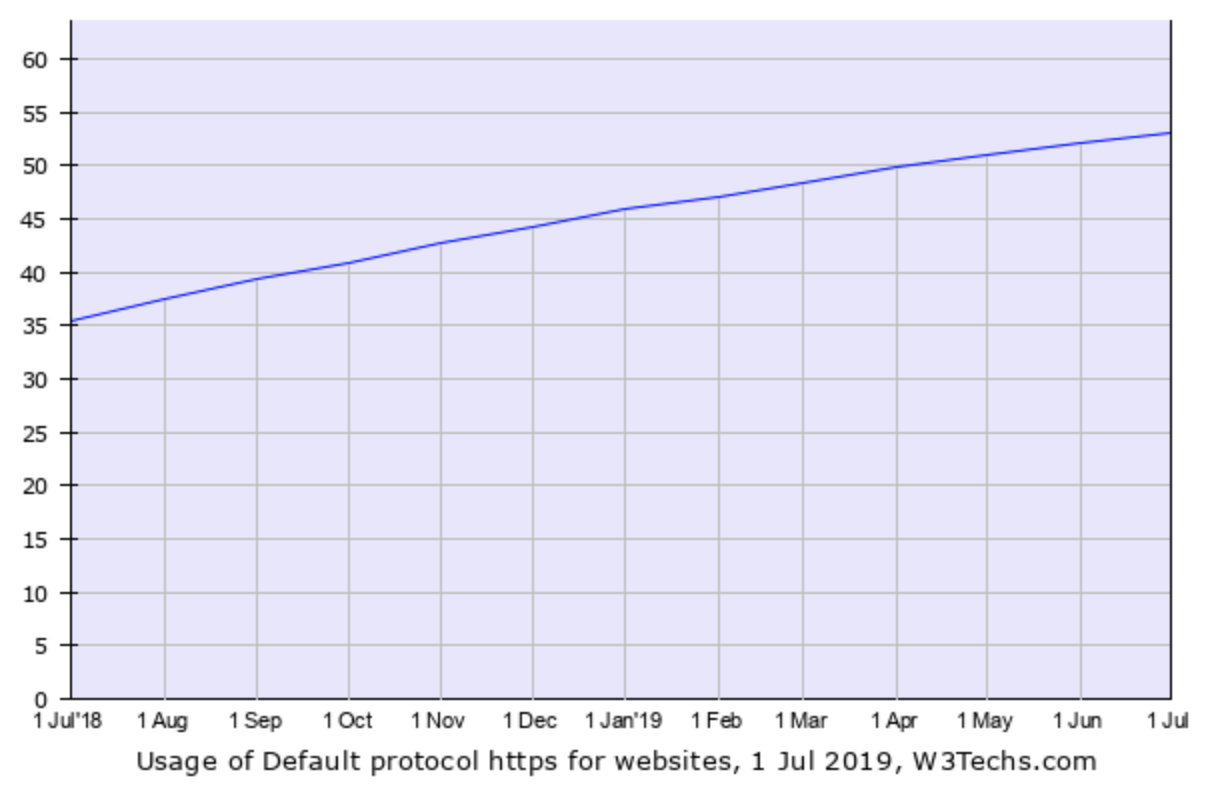
As of July 2019, 53% of all websites are using HTTPS.

53 percent

As you can see from the graph, there has been an increase in HTTPS usage over the last year.

There are still 47% of websites that aren’t using HTTPS. In my opinion, that number is just far too high. That’s what inspired me to write this guide.

If you fall into that category, I’ll tell you everything you need to know about HTTPS, why you need it, and how to get it for your website.

What is HTTPS?

Before we proceed, I just want to make sure you understand the basics of HTTPS.

HTTP stands for Hypertext Transfer Protocol. These are the rules used to transfer information on a web page from a server to a web browser. Any time an Internet user navigates to a URL, their browser essentially opens up a line of communication with the site’s server. The browser downloads the information required to render that specific web page.

With HTTP, this communication happens with plain text, meaning any third-party can access the communication between the server and browser. If this happens, personal and sensitive information can be stolen.

In order to make the communication private, websites use HTTPS. So HTTPS stands for Hypertext Transfer Protocol Secure.

With HTTPS, the same conversation takes places between a server and web browser, except the information is encrypted. The encryption prevents third-parties from stealing data.

Benefits of HTTPS

HTTPS uses TLS (transport layer security) or SSL (secure sockets layer) for encryption. These unique encryption keys are transmitted between the web browser and server to keep the communication safe.

Without these certificates and keys, a third-party could pretend to be the web browser to hack the server or pretend to be the server to hack the web browser.

Here are the top benefits of adding HTTPS to your website.

SEO

Any time you’re planning to make a change to your website, you need to know how that decision is going to impact your SEO ranking. After all, 93% of all online experiences start with a search engine.

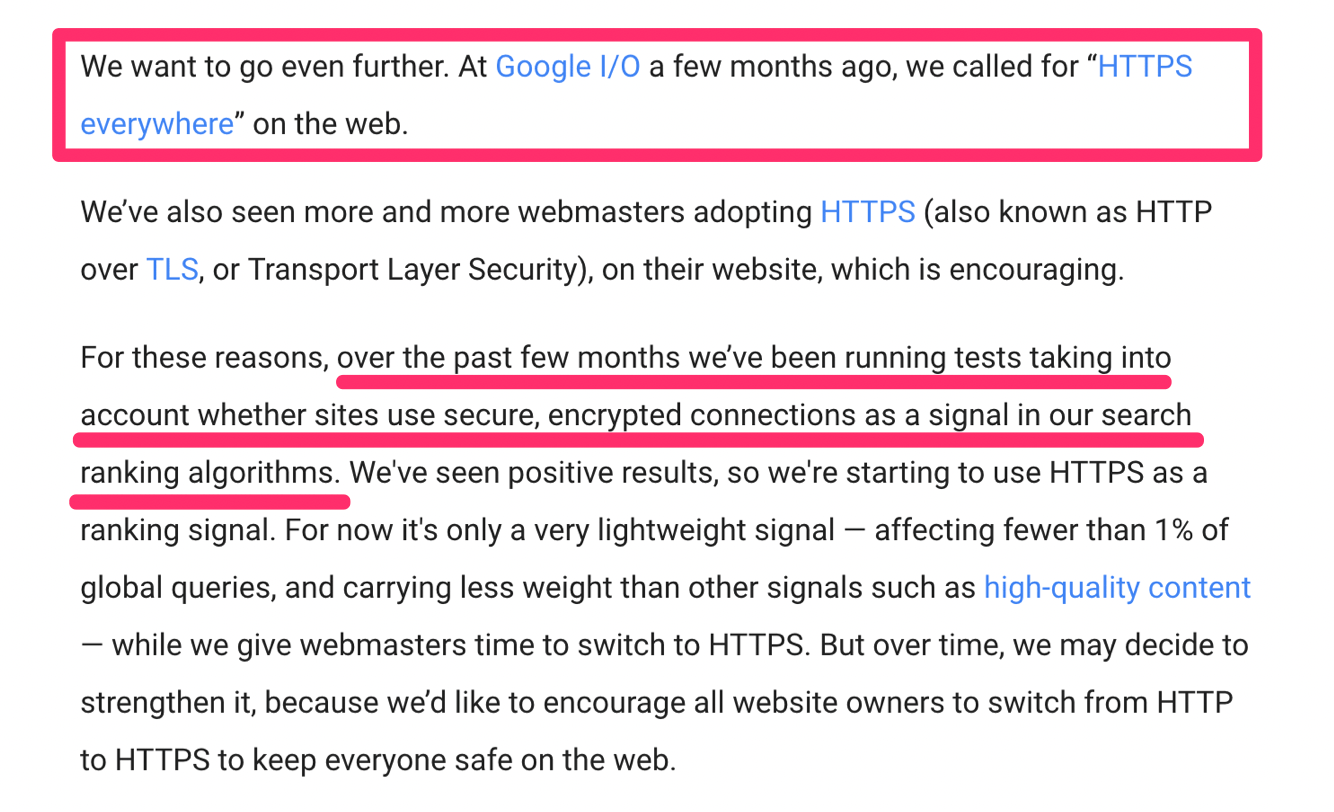
When it comes to search engines and SEO, Google must be the driving force behind your approach. Back in 2014, Google announced that HTTPS would become a factor in its search ranking algorithms.

Here is an excerpt from that announcement. In summary, Google was telling all webmasters that they are encouraging HTTPS, and will be rewarding sites who use it.

google

That alone should be enough for you to make the switch. If you’re not prioritizing SEO, you’re going to have a tough time getting traffic to your website. But by simply making the change from HTTP to HTTPS, Google will give you a boost in your search ranking.

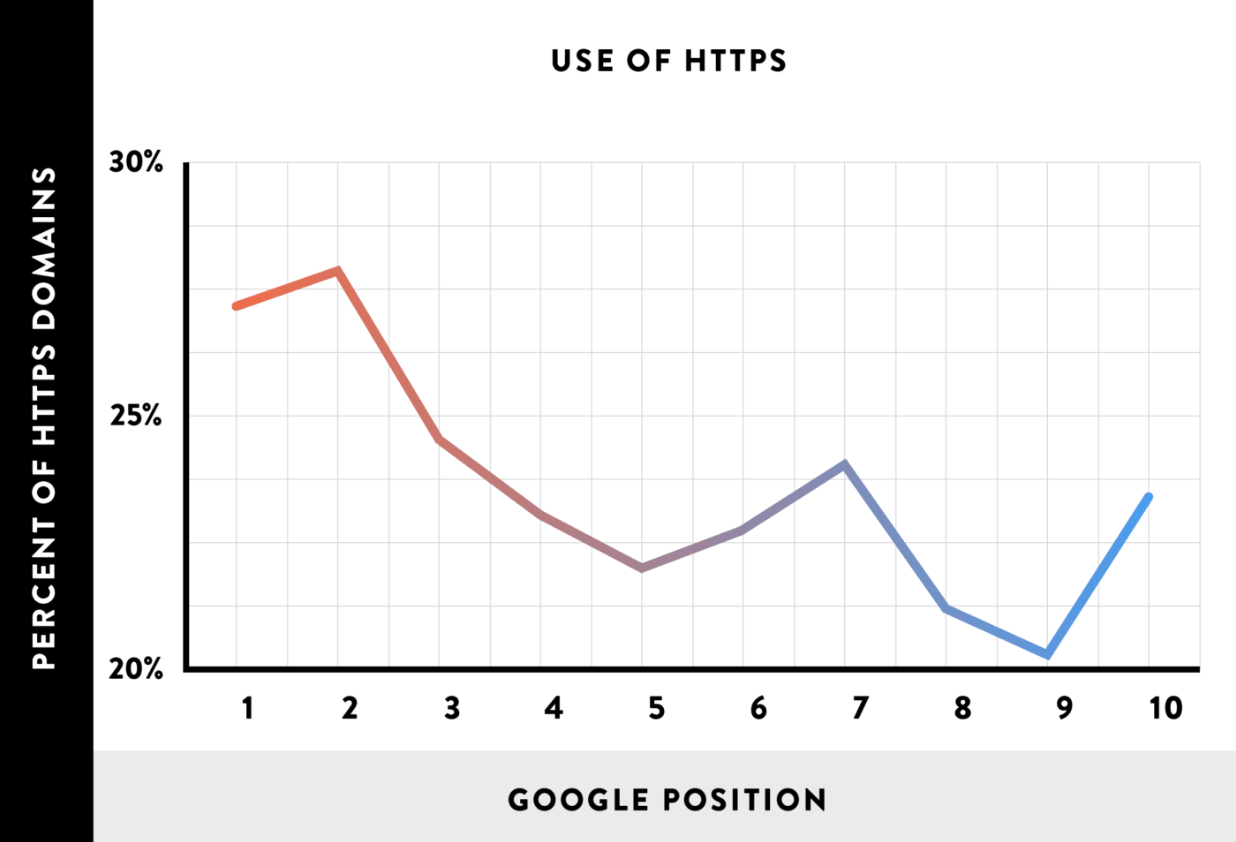
A few years back, Brian Dean from Backlinko analyzed one million Google search results. He discovered a correlation between HTTPS domains and their ranking position on Google.

ranking

Domains using HTTPS were more likely to have a higher position in Google’s SERPs.

Gary Illyes, a webmaster trends analyst at Google, was quoted saying that HTTPS would even break a tie between two websites with equal quality signals. So making the change to HTTPS could be the difference between your site making the first or second page of Google, which is a major difference.

User security

I briefly explained earlier that without HTTPS, your server could be vulnerable to a cyber attack from a third-party disguised as a user’s web browser. Obviously, you don’t want to put your server or website at risk for any attacks like that.

But what’s arguably even more important is the privacy, safety, and security of your website visitors. As a webmaster, it’s your responsibility to protect these people.

The last thing you want is for people to get hacked or have sensitive information stolen as a result of navigating to your website. An incident like that would be detrimental for the reputation of your website and brand. Recovering from this is seemingly insurmountable.

So for the sake of managing your online reputation, you need to be using HTTPS.

This is especially true for those of you who are collecting sensitive information like names, addresses, and credit card data.

If you have an ecommerce website, you need to use HTTPS to process transactions.

Even if you’re not processing credit cards, other types of websites legally need to keep user information safe. For example, if you’re collecting any health or medical data through form fields on your website, you could be violating HIPAA (Health Insurance Portability and Accountability Act of 1996) if you’re not using HTTPS to secure the information.

Trust

In addition to your duty of protecting your website visitors, you also want to make sure that people trust your website. Web browsers have started to take steps to draw more attention to websites that aren’t secure.

That type of warning or identification makes websites appear untrustworthy.

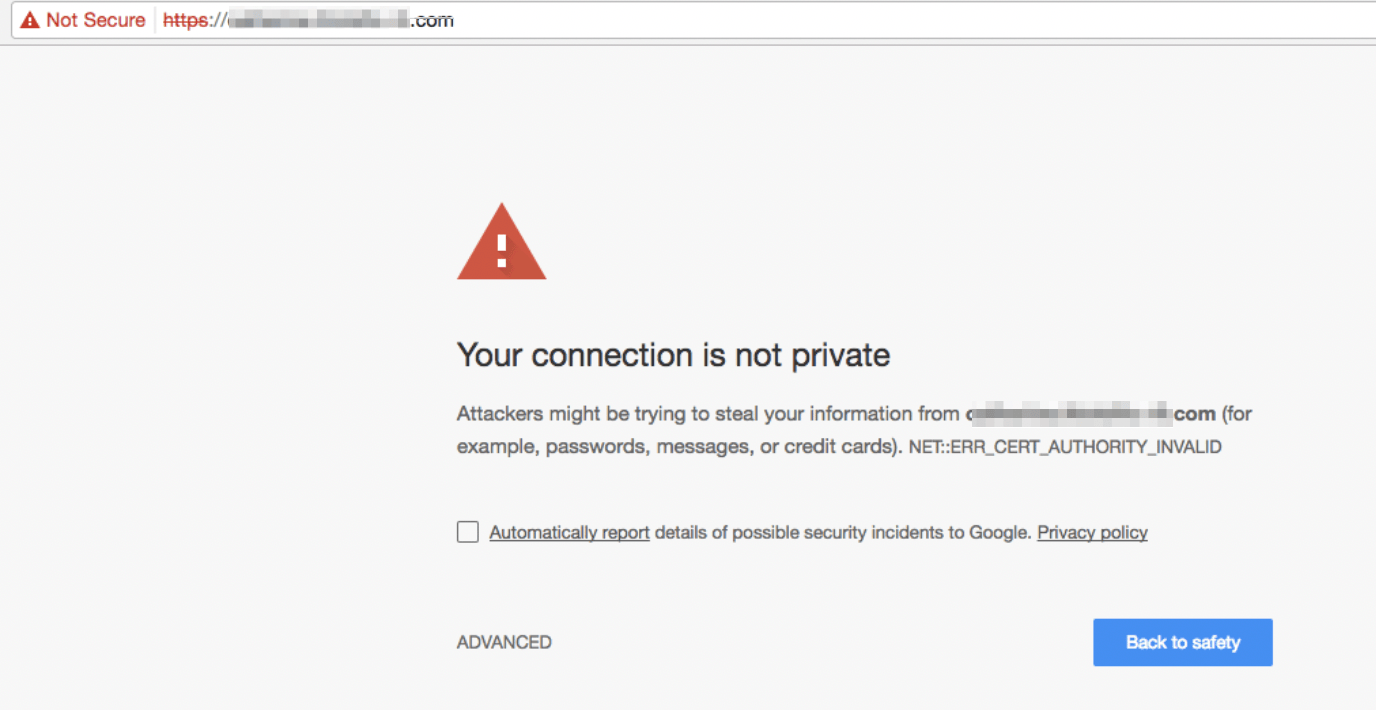
Here’s a look at the message someone will see from a Google Chrome web browser if they’re trying to access a site that’s not using HTTPS.

chrome

If you saw this message, would you continue to the website? Probably not.

So if people are getting this warning as they try to navigate to your site, there’s a good chance that they won’t continue. They probably won’t come back in the future either.

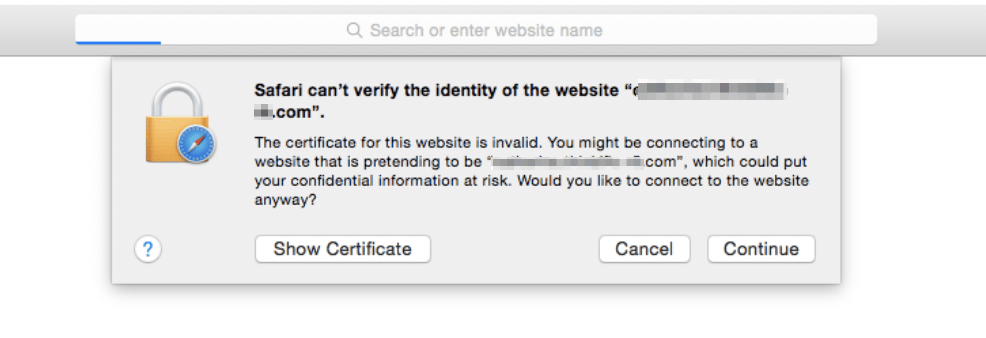
Chrome isn’t the only web browser that issues this type of warning. Users who browse the web using Safari will see a similar warning for unsecured sites.

safari

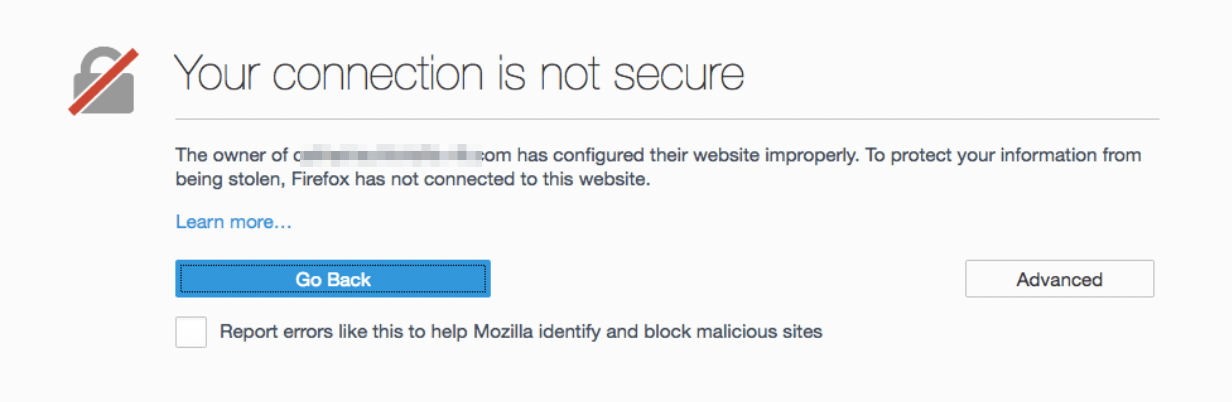
Just for good measure, let’s take a look at what happens if you’re using Firefox and navigate to a website that’s not secure.

firefox

While the text and layout of each notification vary from each web browser, the message is consistent across the board.

Each of these alerts is clearly a warning message, urging the user to stay away from the website in question. Adding HTTPS to your website will improve your perceived trust since the web browsers won’t issue this type of warning.

Lead generation and conversions

This piggybacks off of my last point about trust. If your website isn’t using HTTPS, users will be reluctant to navigate to your website. Even if they do manage to visit your site, they likely won’t fill out any lead generation forms.

Even if it’s something as simple as providing their email address, users will hesitate if they think that a third-party will get access to the information. Especially considering the fact that those third-parties could potentially send malicious emails pretending to come from your website.

But with HTTPS, website visitors can browse with confidence.

They’ll have a much easier time filling out form fields knowing that their information is safe. So in turn, you’ll get more leads.

Furthermore, you can’t expect anyone to convert on your website without HTTPS. People are nervous about credit card fraud as it is, so it’s your responsibility to let them know that the connection is safe.

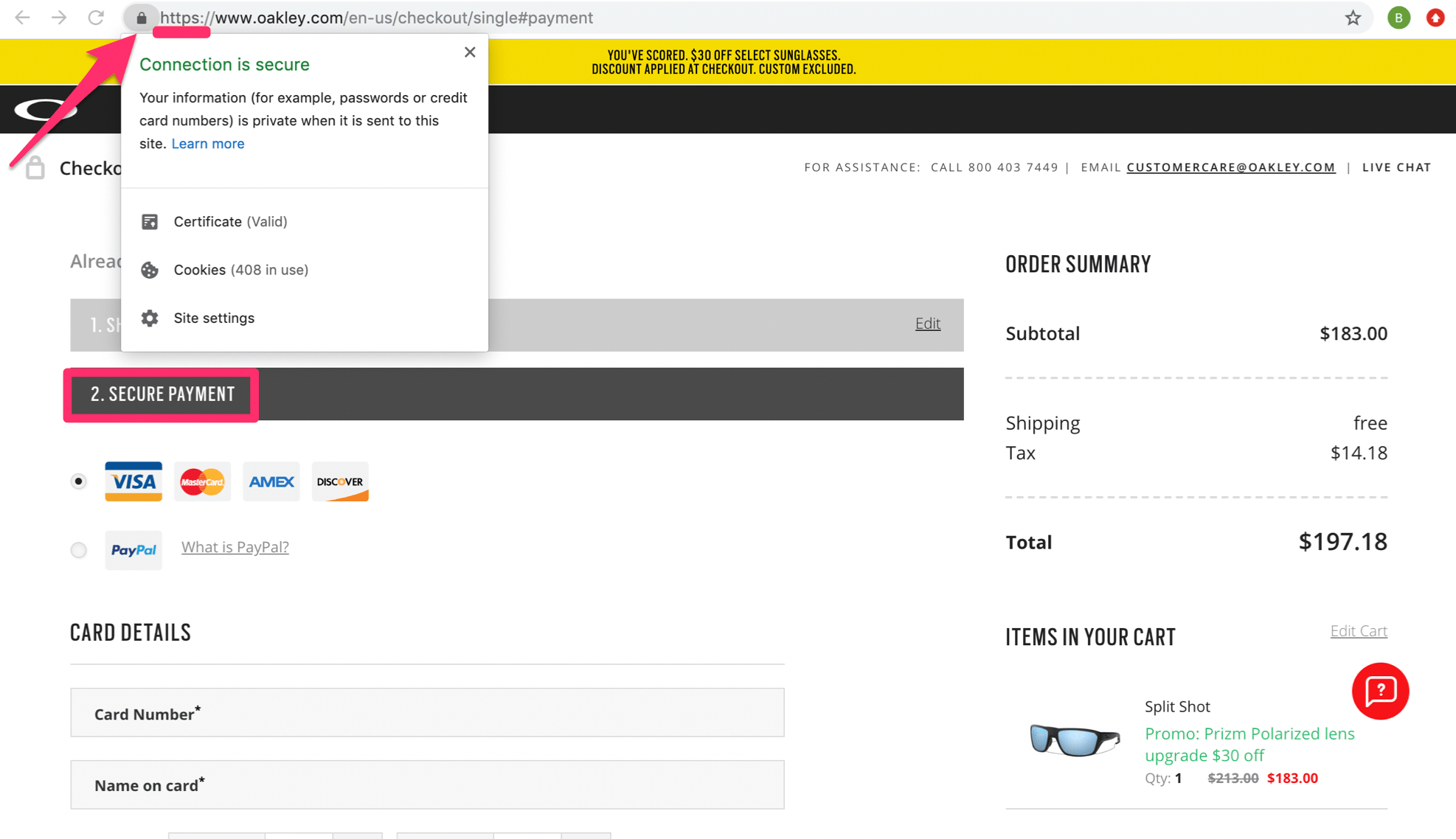
Here’s an example of a secure payment page from the Oakley website.

oakley

As you can see, HTTPS appears in the domain. But next to that, there is a lock icon, which is used by Google Chrome as another indication that the site is secure.

If you click on the icon, you’ll get a more in-depth explanation about the security of the website. It even specifically says that passwords and credit card information are safe and being sent over a private connection.

Oakley goes the extra mile here to even label this step in the conversion process as “secure payment” as opposed to just payment.

With HTTPS, site visitors will have that extra sense of security and feel safe when they’re completing the purchase process.

How to get HTTPS for your website

Now that you understand the importance of HTTPS, it’s time to get it set up for your website.

Step #1: Buy an SSL certificate

The first thing you need to do is purchase an SSL certificate. You can do this on platforms like SSLs.com or NameCheap. Both of these sites have SSL certificate options for less than $10 per year. So you shouldn’t have to pay much more than that, even if you look elsewhere.

The best web hosting services will usually offer a free SSL certificate. This is an added incentive for webmasters to use those providers. You should definitely keep this in mind if you’re creating a new website or if you’re looking to change hosting providers.

Step #2: Install the certificate

Next, a web developer will need to configure your site and install the SSL certificate on your server. Unless you have experience with web development, I wouldn’t recommend doing this on your own.

Alternatively, your web host can do this for you. It may be included in your hosting plan or offered as an add-on.

Step #3: Check for errors

Once the certificate has been installed, you’ll need to check all of your web pages to ensure that it’s been done properly. Look for mixed content errors, which happens if a web page is referencing non-HTTPS elements.

Usually, it’s easy to fix these. However, other times it can be a bit more complex. That’s why it’s important to have a professional handle the conversion to HTTPS. Fixing any errors will likely be included with their fee.

Step #4: Notify Google

Be proactive and notify Google once you’ve added HTTPS to your site. You can do this through Google Search Console. Update your Google Analytics settings as well.

Google will crawl your HTTPS site and re-index it in their database. You could wait for them to crawl it automatically, but there’s no reason to wait. The sooner this happens, the sooner you’ll get the SEO benefits.

Keep in mind, your search rankings might actually decline initially when you switch your website to HTTPS. That’s normal. But you can expect your site to be back where it was (or better) after Google has a chance to re-index all of your content.

Conclusion

Every website needs to have HTTPS.

HTTPS improves SEO rankings, adds security to your website, and builds trust with your website visitors. Switching your site to HTTPS will also improve leads and boost conversions.

Adding HTTPS to your website is easy. Just follow the simple four-step process that I’ve described above.

In addition to web hosting providers, it’s also worth noting that the best website builders and ecommerce platforms will usually offer a free SSL certificate as well. Wix, Squarespace, Weebly, Shopify, and BigCommerce are just a handful of platforms that offer SSL certificates when you sign up.


from Quick Sprout https://ift.tt/2KincI0

Wednesday, July 31, 2019

How to Build a High-Converting FAQ Page on Your Website

FAQ pages represent a crucial component of the customer conversion funnel. Anyone who lands on this page has already identified the need for whatever you’re selling and is now entering the consideration phase of the purchase process.

Your FAQ page can provide them with the information required to finalize their buying decision.

However, I see so many websites that overlook the importance of this landing page. I read lots of FAQ pages that sound more like an afterthought, as opposed to a page that’s been designed to drive conversions.

FAQ pages must have a purpose. Don’t just add one to your website because you feel like it’s a requirement and you want to fill up space.

While most websites should have a FAQ page, yours could be doing more harm than good if it doesn’t have any clear intentions. It’s possible that your FAQ page is driving people away from buying, as opposed to drawing them in. Obviously, you don’t want that.

For those of you who are currently neglecting your FAQ page, it’s time to make changes. The rest of you might not have an existing FAQ page and want to add one from scratch.

Regardless of your situation, you’ve come to the right place. I’ll show you how to address common problems with FAQ pages and learn how to optimize them for conversions.

Ask the “right” questions

I’ve seen plenty of FAQ pages that have a great design, layout, and optimal user experience. But to be blunt, the questions are awful.

Somewhere along the line, so many sites have lost the meaning behind frequently asked questions.

Anything related to where your company was founded, how many employees you have, or where your CEO was born does not belong here. You can include details about the history of your company on your about us page. I have a separate guide on how to create an impactful about us page on your website.

But adding irrelevant or useless questions and answers to your FAQ page is just going to confuse your visitors.

They’ll end up having a more difficult time finding information that will answer their actual question. So you need to have questions that are more related to conversions.

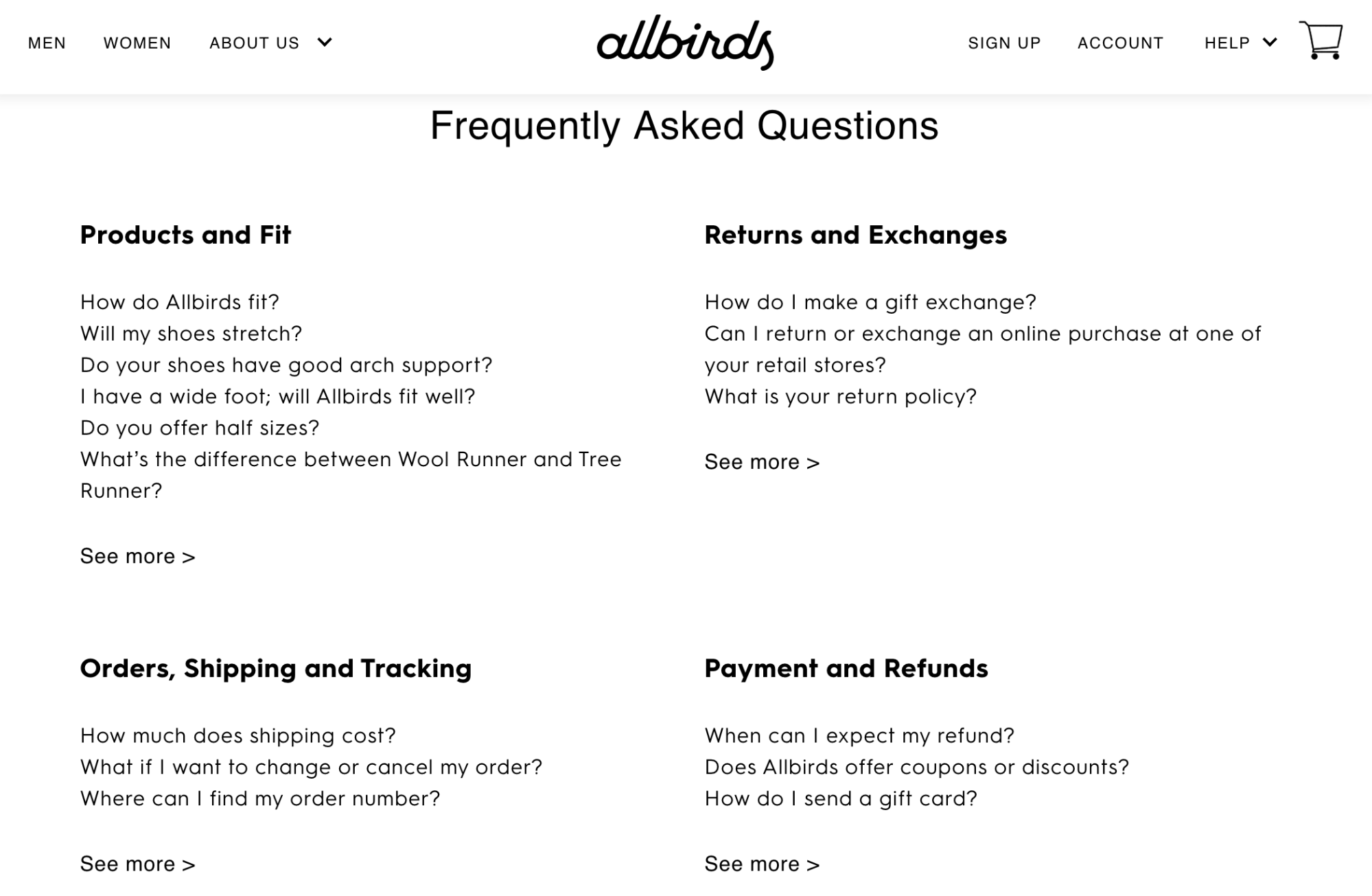
Check out some of the questions on the Allbirds FAQ page.

All Birds FAQ

This company has an ecommerce platform for selling shoes direct to consumer. So all of the questions are intended to drive sales.

They have questions related to how the shoes fit, sizing, returns, exchanges, refunds, and shipping. All of these are important to the consumer buying decision.

Allbirds does not offer half sizes in their shoes, which is definitely something that might throw some of their shoppers off. But they have questions directly made to address this potential concern.

Do you offer half sizes? Will the shoes stretch? Do the shoes fit a wide foot?

These are all logical questions that someone would ask before buying. You want your customers to feel confident when they’re shopping.

Buying a product, such as sneakers, online can be a challenge. Customers don’t get a chance to try on different sizes, walk around, and see what feels good like they would in a store.

But Allbirds alleviates any uneasiness by asking the right questions on this FAQ page.

If you’re still unsure about how to ask the “right” questions, just see what your customers are actually asking. Take a look at questions and comments from:

  • Submission forms
  • Customer emails
  • Live chat
  • Social media comments and messages
  • Phone support

Keep a database to track all of these questions and group similar ones. If lots of people are asking the same thing, it definitely belongs on your FAQ page.

Simplify the navigation

Like the rest of your website, Your FAQ page must be frictionless.

You might have great questions and answers, but if your site visitors can’t find them, then your FAQ page is going to fail.

Do your best to try and emulate an in-person shopping experience. If a customer was in a physical store, all they would need to do is find an employee and ask their question. Sure, sometimes that employee might direct the customer to another department or something like that. But in the end, the question is answered directly and timely.

Don’t make people hunt for answers on your website.

If the format of your FAQ page is just questions followed by answers repeating all down the page, visitors will have to keep scrolling to find what they’re looking for. This is not ideal. They might even overlook their question, which wouldn’t solve their problem.

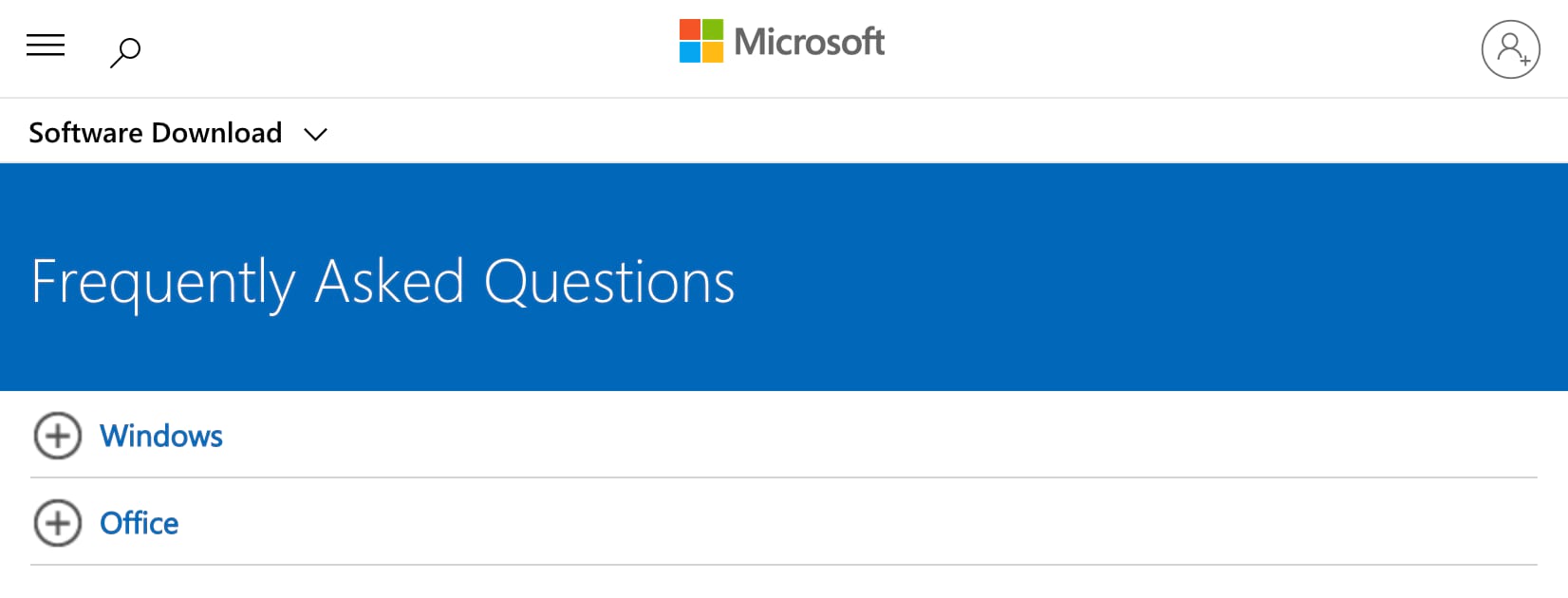
Take a look at how Microsoft simplifies things on their FAQ page for software downloads.

Microsoft FAQ

Right away, you’ll see that there are two categories to choose from.

So the website visitor can narrow the results depending on if their question is related to Windows or Office. That way any Office questions won’t have irrelevant Windows questions that need to be sifted through.

When a user clicks on one of the options, the menu expands, without redirecting to a new page.

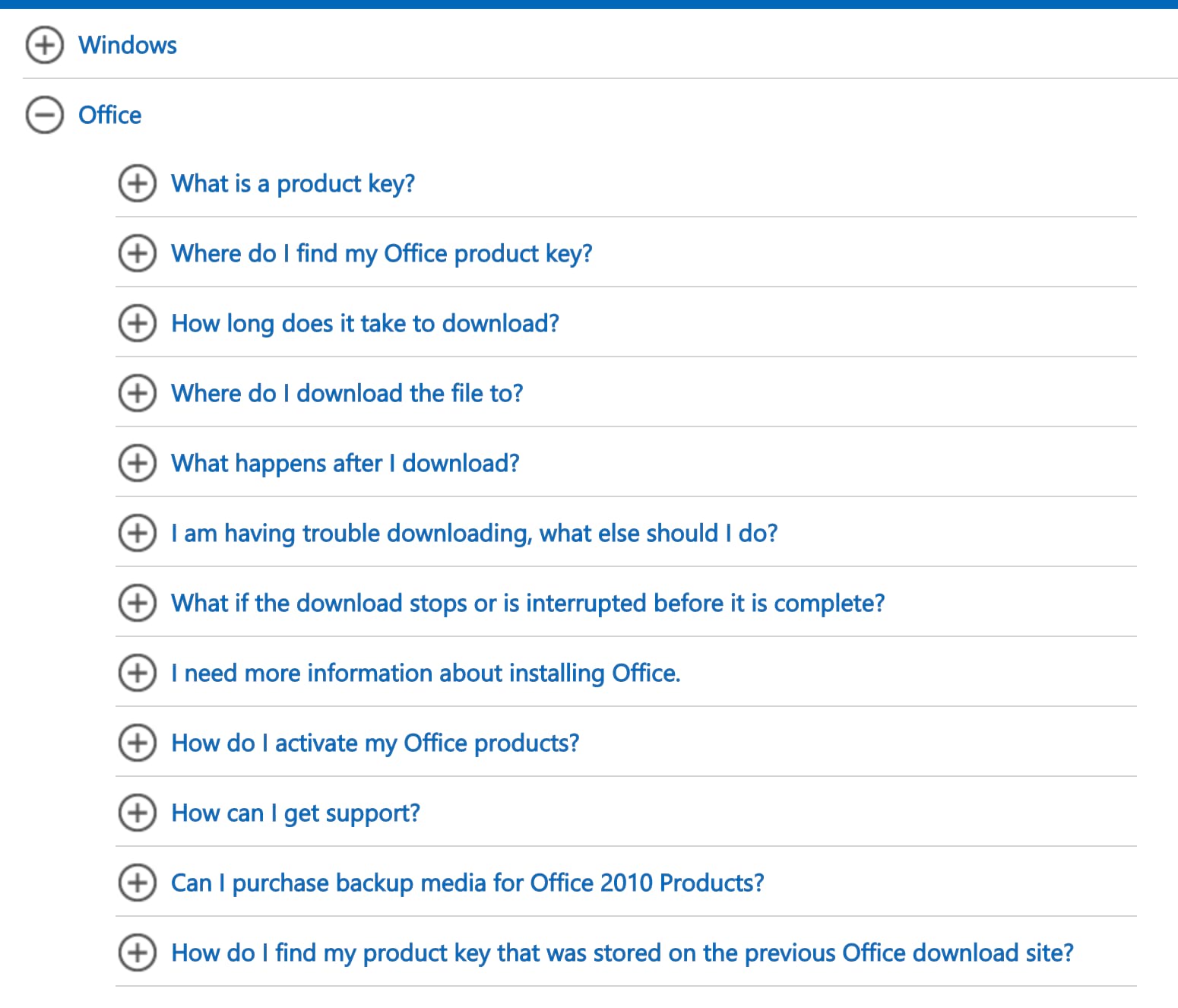
Here’s what it looks like if I click on Office.

Office FAQ

All 12 questions can be read without having to scroll. This makes it extremely easy for people to find exactly what they’re looking for.

Now, imagine if there was an answer directly below each of these questions. It would take up probably four or five times the amount of space on the page.

That layout would be much more challenging and require additional scrolling and text to read through. But this approach by Microsoft is clean and simple.

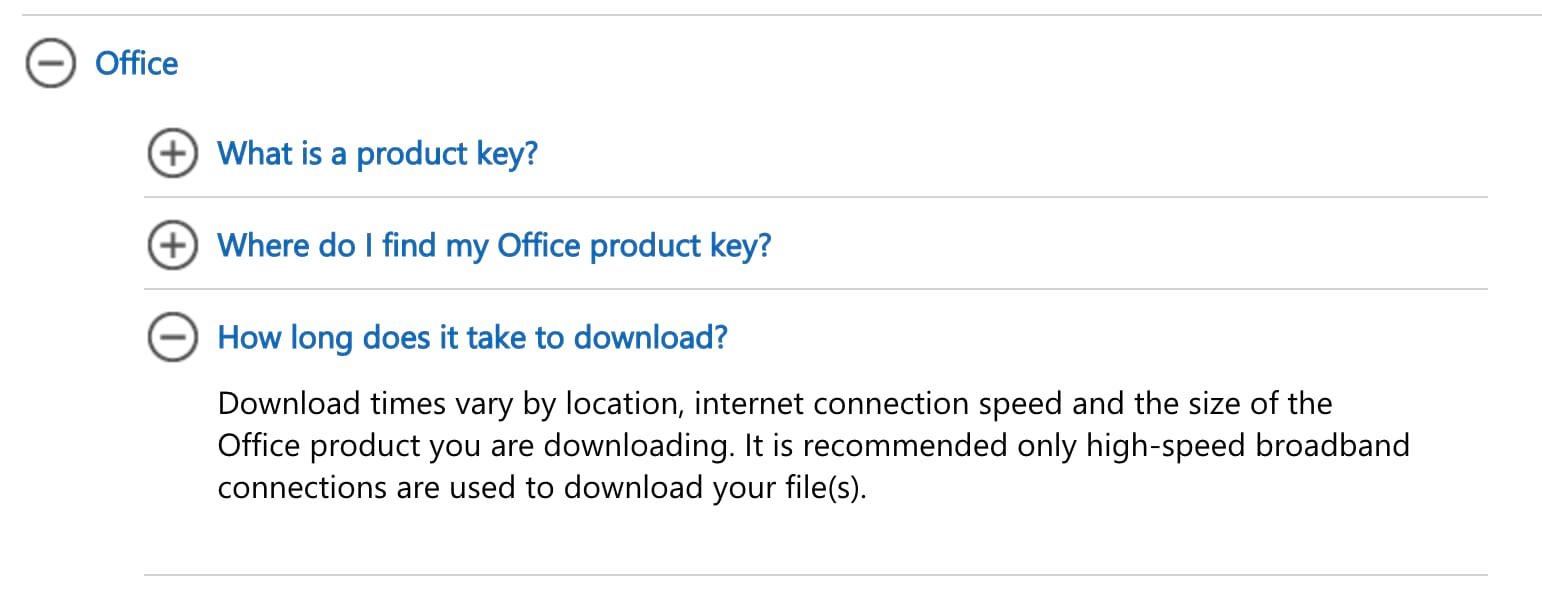
If you want to know something specific, like how long it takes for software to download, just click on the question and the answer will expand below it.

Office FAQ Expanded

Frictionless.

If a site visitor has multiple questions, it’s still easy for them to navigate and find answers to everything.

Here’s the way you need to look at your FAQ page. If a site visitor has a question and it does not get answered, they aren’t going to convert. It’s that simple.

So if you approach your FAQ page trying to design the navigation in a way that’s optimized for user-experience, then it will increase the chances that people will find what they’re looking for.

Keep the answers short

Another common mistake that I see made on FAQ pages is the length of the answers. Everything needs to be clear and concise.

For the most part, your FAQ page should be fairly broad. You want everything to appeal to as many people as possible.

So you won’t have super-specific questions that require in-depth explanations.

But even for a general question that most people would ask, you still need to keep the answer concise. You don’t need to answer everything. Certain details can be left out.

I’d rather see FAQ pages with 30 questions that have short answers, as opposed to 15 questions with long answers. So if you currently have long paragraphs on your FAQ page, see if you can take one question and break it down into two or three.

This will provide a much better user experience.

Visitors shouldn’t have to read through an essay or short blog post to get a simple answer.

Let’s say that a website visitor is able to locate their question and ends up reading through a long answer. They might end up having additional questions, based on the length and details of that answer. You don’t want that to happen.

So sharpen your writing skills and only include the most important information related to the question.

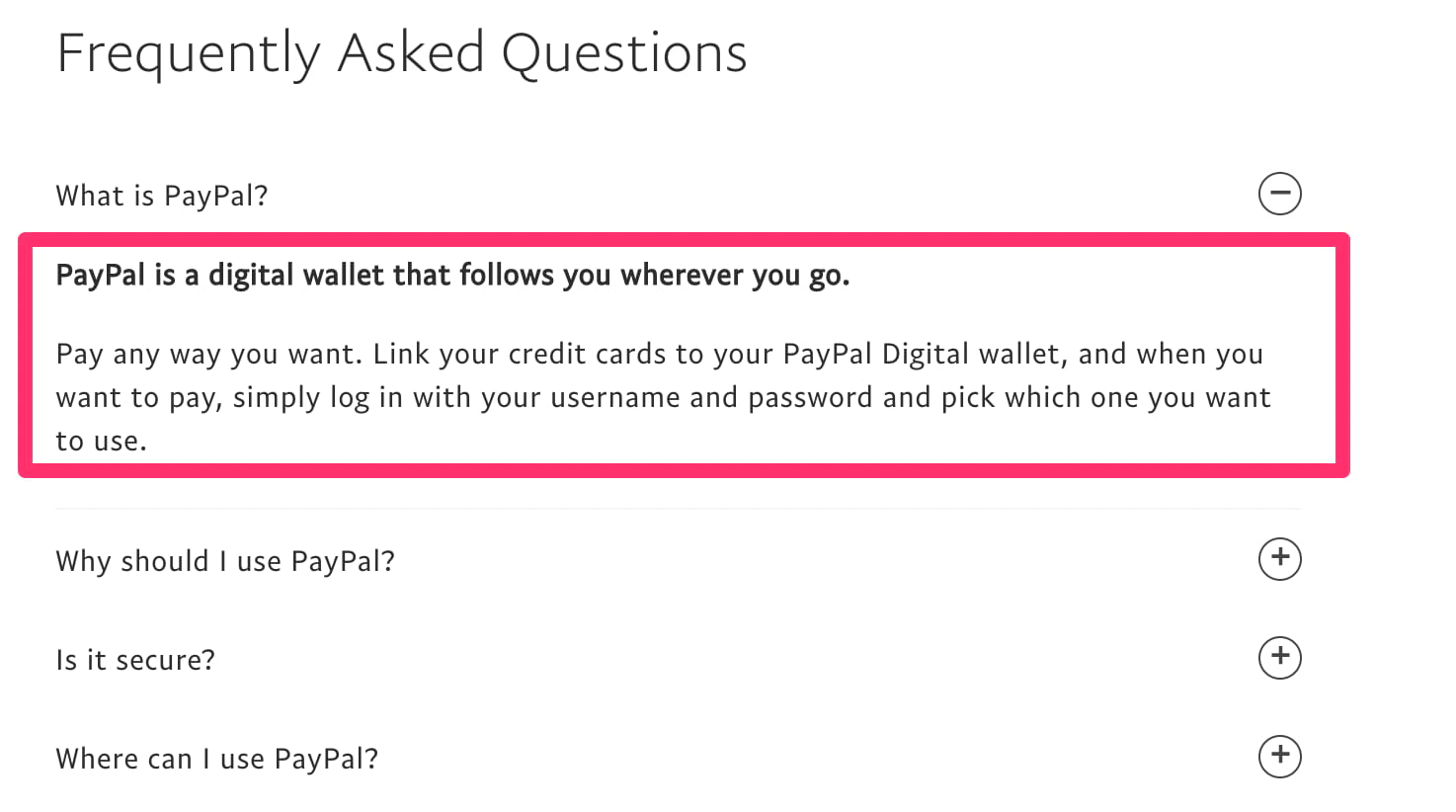
Check out this example from the PayPal FAQ page.

Paypal FAQ

Look at the first question—what is PayPal?

Talk about a loaded question. PayPal is so many different things. They offer services for businesses, consumers, and websites. They could probably answer this question in 50 pages if they wanted to, going into details comparing PayPal and Stripe for ecommerce.

But no, they take a much simpler approach. The entire answer is just three sentences.

If they got into all of the specific details of PayPal, what it is, what it does, and who it’s for, it would only confuse the initial question. The answer above is clear, concise, and still answers the question.

Offer added support

While a FAQ page should be written to help most of your website visitors with broad questions, sometimes it’s just not enough.

No matter how good your questions are, how great the answers are, or how simple the format is, some people will still need additional assistance. That’s OK.

If it’s going to take a little bit of extra support to get people to convert, then give it to them.

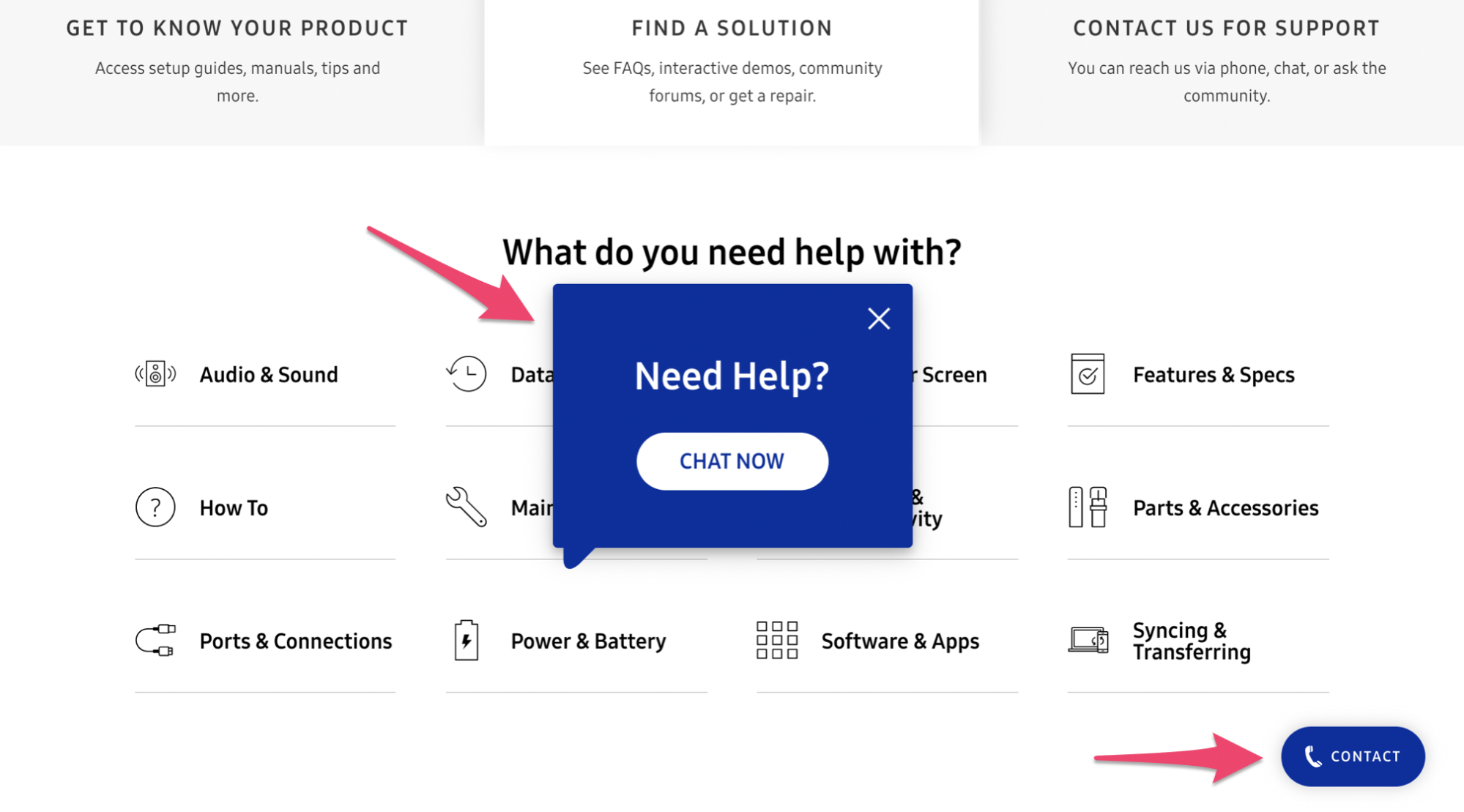
Just make sure that all support options are available. Here’s how Samsung approaches this on their FAQ page.

Samsung FAQ

The first thing I noticed when I landed on this page was the list of categories. Samsung is a huge company, so it makes sense for them to start this way.

But as I stayed on the screen without making any actions for a while, this pop-up window appeared prompting a live chat session.

They obviously have this triggered to appear whenever someone doesn’t scroll or click since the implication would be that they can’t find what they’re looking for. I love this approach.

It’s much better than forcing the site visitor to go back and find another support page or make them go through countless questions manually until they find an answer. That’s just too many added steps.

Put a live chat window directly on your FAQ page.

Furthermore, Samsung has a phone support button in view at all times as well, as I pointed out in the screenshot above. So the customer has options.

Can’t find a solution on the FAQ page? No problem. Just pick up the phone or speak with one of our live chat representatives. This strategy should be incorporated into your FAQ page if you want to drive as many conversions as possible. The extra effort will go a long way.

Optimize for SEO

When you’re crafting a high-converting FAQ page, you need to keep the big picture of your website in mind. Nothing screams big picture louder than SEO.

For the most part, FAQ pages are designed with the idea that a visitor will land somewhere on your website, have a question, and then navigate to the FAQ page. In many cases, this very well might be the case.

However, you can set up your FAQ page to get traffic directly from organic searches as well.

So every question doesn’t need to be brand-specific. For example, let’s say your website offered web hosting plans for small businesses. Your FAQ page could ask, what is shared web hosting?

This question isn’t exclusive to one of your products or services. But it’s definitely something that one of your prospective customers will search for online. Your question could end up in the SERPs, driving more traffic to your website, and ultimately leading to conversions.

A great tip for finding SEO questions is to just use Google.

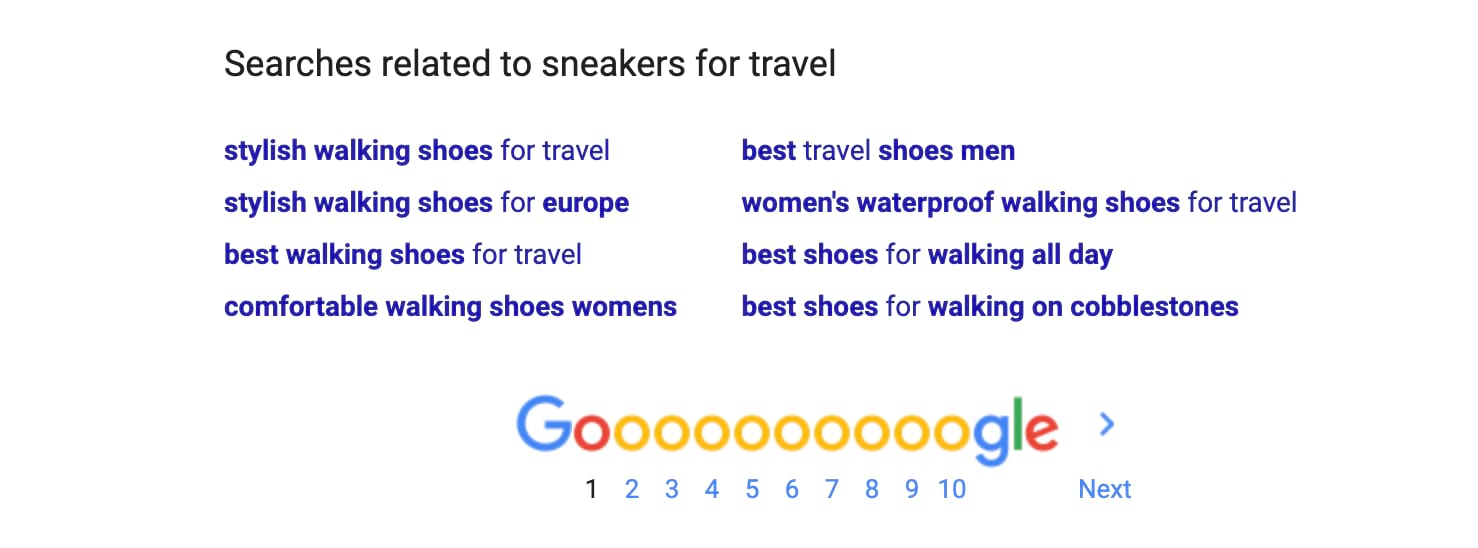
Let’s say you sell sneakers. Type in keywords that you’re trying to rank for, like “sneakers for travel,” and then scroll to the bottom to view related searches.

Based on these search suggestions, you can get SEO-inspired questions for your FAQ page.

So you can add questions related to shoes for walking all day or stylish shoes for Europe.

Another way to improve your SEO is by creating dedicated landing pages for your questions. Now, this slightly contradicts what we talked about earlier in terms of user experience. Redirecting people every time they want to see a new question could be a bit annoying.

However, these dedicated landing pages that interlink with each other can give you a boost in terms of SEO, if your website architecture and sitemap are optimized properly.

Conclusion

FAQ pages are critical resources for your website visitors.

Anyone who lands on this page is on the verge of converting. Sometimes getting a question answered is all it takes for them to finalize a decision.

So stop wasting time and space with FAQ pages that don’t add real value to your site.

Focus on questions that are related to conversions. Keep the user experience in mind by simplifying your design and writing concise answers. Offer additional support options for people who still have questions. Go the extra mile and optimize your FAQ pages for SEO.

If you follow the tips that I’ve covered in this guide, you can turn your FAQ page into a conversion machine.


from Quick Sprout https://ift.tt/3310yvh

Friday, July 26, 2019

9 Popular Ecommerce Products to Sell Online in 2019

The ecommerce industry is booming.

People are buying products online more than ever before. Nearly anything you can imagine can be purchased on the Internet and delivered to your doorstep. It’s a great time to be a consumer.

But as an entrepreneur, you can leverage this craze by creating your own ecommerce shop.

You can take advantage of this opportunity and start an online store from virtually anywhere with Internet access. While technology has made it easier than ever for consumers to buy, it’s also easier than ever before to start an online business.

Sure, there are a handful of things that you need to figure out. You’ll have to create a website, choose an ecommerce platform, pick a web hosting service, and learn how to market your brand online.

But before you get ahead of yourself and start all of that, you need to figure out what you’re going to sell.

Lately, I’ve been talking to so many entrepreneurs who want to sell online, but they just don’t know what to offer. That’s what inspired me to write this guide.

Using in-depth research and trend analysis, I’ve come up with a list of nine popular products that you can sell online in 2019. Use this guide as an inspiration for your ecommerce shop.

1. Groceries

When most people think about selling products online, they automatically think of new gadgets or products that are designed for everyday use around the house. Or they try to think of something innovative that will solve a common problem.

However, it seems like people rarely think to sell food.

Consumers are buying everything else online, so why not groceries? It’s something that everyone uses on a daily basis.

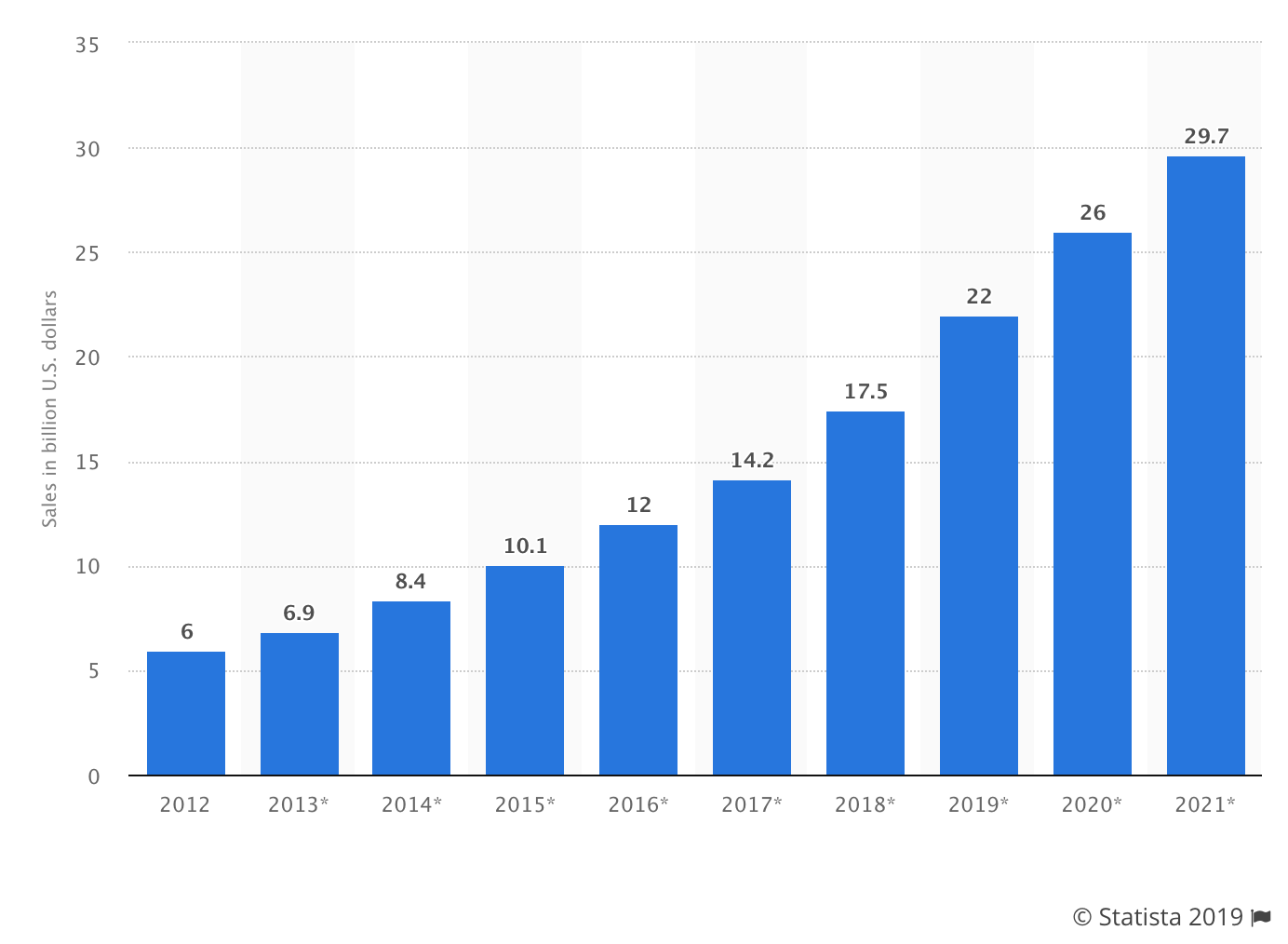
Take a look at the current and projected growth of online grocery sales in the United States alone.

Online Grocery Sales

By 2021, experts predict that this will become a $30 billion industry.

Furthermore, the online food and beverage industry is growing at 18% year-over-year

While the majority of grocery shopping still takes place in physical store locations, the ecommerce grocery movement is the way of the future. So this is a great chance for you to jump on board before the market gets too saturated.

There are seemingly endless opportunities here. You could sell anything from snacks, to produce, to prepared and pre-packaged meals.

Ultimately, there is plenty of money to be made in this space if you’re able to carve out the right niche. Just make sure you educate yourself about the legal aspects of selling food online, as the regulations are different from selling other products.

2. Electric scooters

If you live near any major American city, you’ve probably seen the rise of electric scooter usage over the last couple of years.

Depending on the area, this trend has seemingly taken over the streets and sidewalk.

Companies like Bird, Lime, and Razor are pioneering the scooter ridesharing industry. Even bigger names like Uber and Lyft have entered the e-scooter space.

The idea behind ridesharing scooters is great.

Essentially, riders just use a mobile app to locate and start a scooter. Then they ride to a destination and park it anywhere. They are charged based on usage and everything is handled through the mobile app.

With this trend growing in popularity, it seems like more and more people want to own electric scooters, as opposed to just using the rideshare options.

In 2018, there were roughly 44 million electric scooters and electric bicycles sold worldwide. That number is expected to reach 50 million in 2020.

This is a great opportunity for you to seize. That’s because high-end products can be sold at a higher price point.

Research shows that the average cost of an electric scooter is roughly $300. But some high-end models can retail for more than double that amount.

3. Virtual reality headsets

Virtual reality and augmented reality are increasing in popularity.

If you read my blog on a regular basis, you know that augmented reality already made my list of the top mobile trends that are dominating 2019. I also wrote about how augmented reality is impacting the future of SEO.

But now I want to take a moment to talk about the business opportunity for the virtual reality market. First, let me clarify the differences between AR and VR.

AR uses overlays on computer-generated screens to put digital figures into real-world images. For example, AR can be used on a smartphone to play games like Pokemon Go.

As the name implies, VR puts users into a virtual world, using more specialized and sophisticated equipment, like a VR headset.

Take a look at the growth of VR and AR users in the United States.

VR AR Growth

As you can clearly see from the graph, both VR and AR users are growing each year.

There are more AR users, simple because augmented reality is easier to use and doesn’t require special equipment.

With that said, the number of virtual reality headset users is still continuing to grow and carve out a good-sized market share in this niche.

In 2017, there were roughly 11 million VR headset users in the US. That number has already doubled and will reach 26.5 million users by 2021.

There are lots of potential consumers to target with this product. According to a virtual reality headset review by The Verge, VR headsets have quite the price range. Inexpensive headsets can be bought for less than $100, while higher-end models retail for upwards of $800.

4. Smart speakers

As long as we’re on the technology subject, I figured this would be a good time to talk about smart speakers. This is another trend that’s growing in popularity.

Today, in 2019, there are more than 74 million smart speaker owners in the United States.

However, this only makes up 26% of US Internet users, meaning that there is still plenty of room for growth in this space.

China has that most smart speaker owners in the world, with 85 million. But this makes up just 10% of the country’s total Internet users. Again, this proves a high global demand for the product, with tons of room for growth in the category.

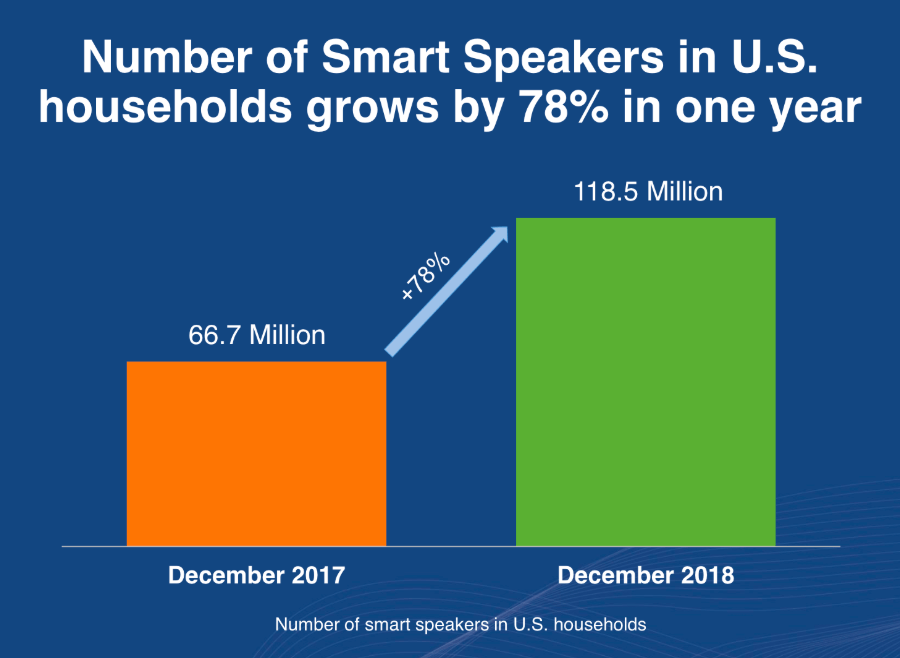
Speaking of growth, look at the number of households in America that have a smart speaker.

Smart Speakers

There was a 78% growth rate between 2017 and 2018.

Here’s a crazier statistic. More than half of smart speaker owners have two or more devices.

This means that current smart speaker owners are still potential customers for you. This product is a great opportunity to sell online via your ecommerce shop.

5. Vapor products

E-cigarettes and electronic vaporizers, better known as “vapes” are growing in popularity.

There are several different components to vapor products. There is the device itself, which operates by heating a liquid solution. Then there are the flavored liquids, usually containing nicotine. Plus there are other accessories as well, and these products come in all different shapes and sizes.

Just to be clear, I’m not here to talk about the health risks of vaping or anything like that. Nor am I encouraging the use of e-cigarettes or nicotine products.

But like every other product on this list, I’m simply identifying market trends and sharing the information with you. These trends are telling me that it’s a hot category.

By 2023, the global vapor market is expected to reach $43 billion. That’s a 15% compound annual growth rate for five years. The figures are impressive, to stay the least.

There is definitely a market for this product, and plenty of money to be made by selling vapor products online. Just make sure you comply with all of the legal regulations associated with selling vapes and accessories through an ecommerce shop.

6. Jewelry

Jewelry is another product category with seemingly endless opportunities for online sales.

You can target men, women, children, and teenagers with high-end diamonds, low-end rings, and everything in between. There are so many options for products and targets in this industry.

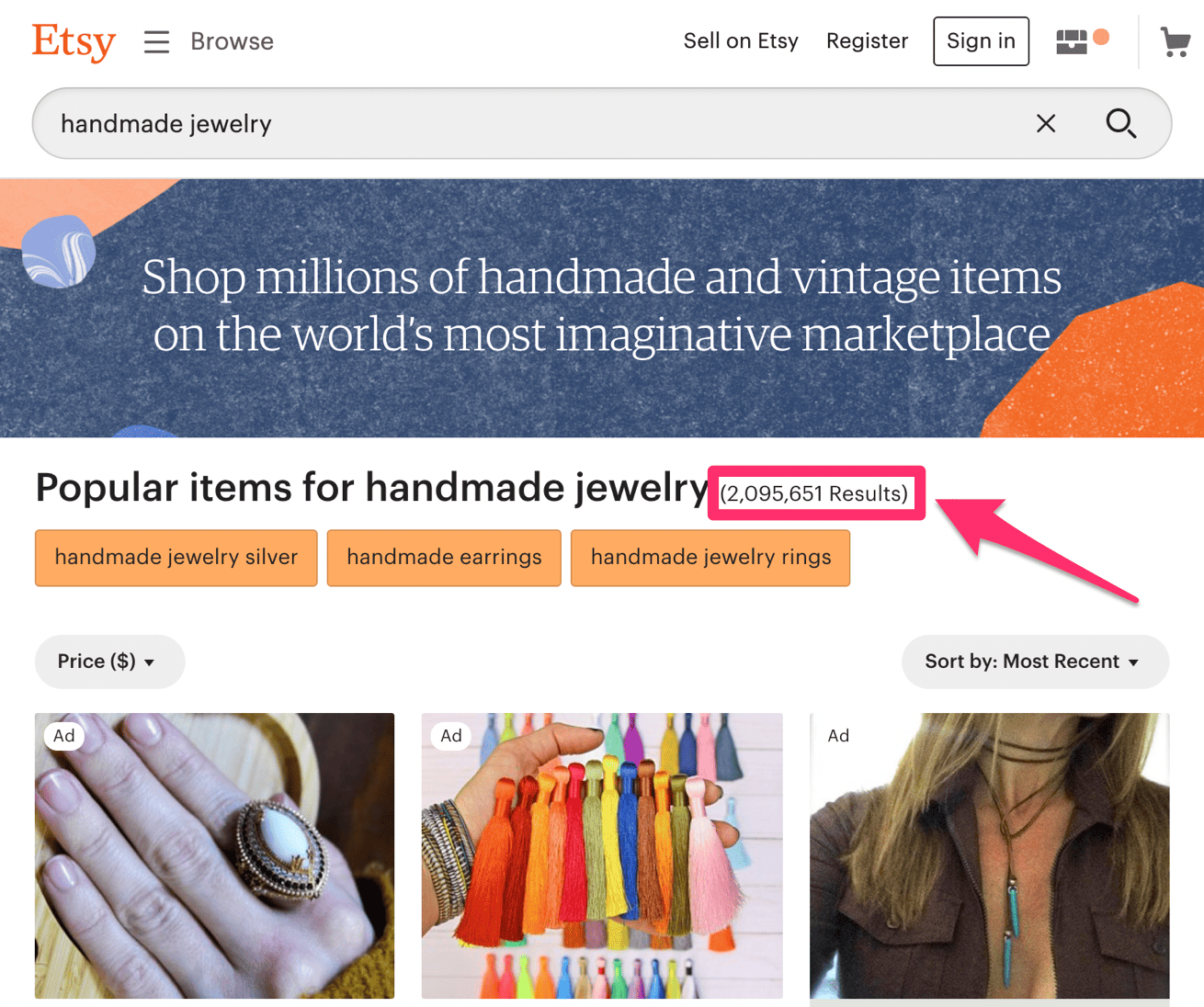
Plus, you can even make jewelry by hand. More than 2 million handmade jewelry products are sold on Etsy.

Etsy

Studies show that the global online jewelry market is expected to grow at a CAGR of nearly 16% between now and 2022.

According to Shopify, ecommerce only represents 4-5% of all jewelry sales worldwide. However, that number is expected to be 10-15% by 2020.

What does this mean? Jewelry sales, like most products, are starting to trend in the ecommerce direction. There is so much room for growth in the coming years with this product category.

7. Digital courses and learning material

You don’t always need to sell tangible products on your ecommerce shop. You can also sell digital goods like ebooks or online learning courses.

This is another booming industry.

According to Forbes, the e-learning industry is going to reach $325 billion by 2025.

There are so many potential customers here as well. In fact, 77% of corporations in the US use online learning tools. E-learning increases retention rates by up 60%.

So if you’re good at something, take advantage of it. Teach others how to do whatever it is that you know best.

Product content like blogs, ebooks, and videos. Then sell those digital goods online.

The best part about this is the low overhead. Your only costs will be running your website, processing transactions, and your time. Everything else is just straight profit.

8. Drones

The drone market is segmented into two categories.

  • Consumer
  • Commercial

There’s actually a military category too, but that’s not really relevant for ecommerce purposes.

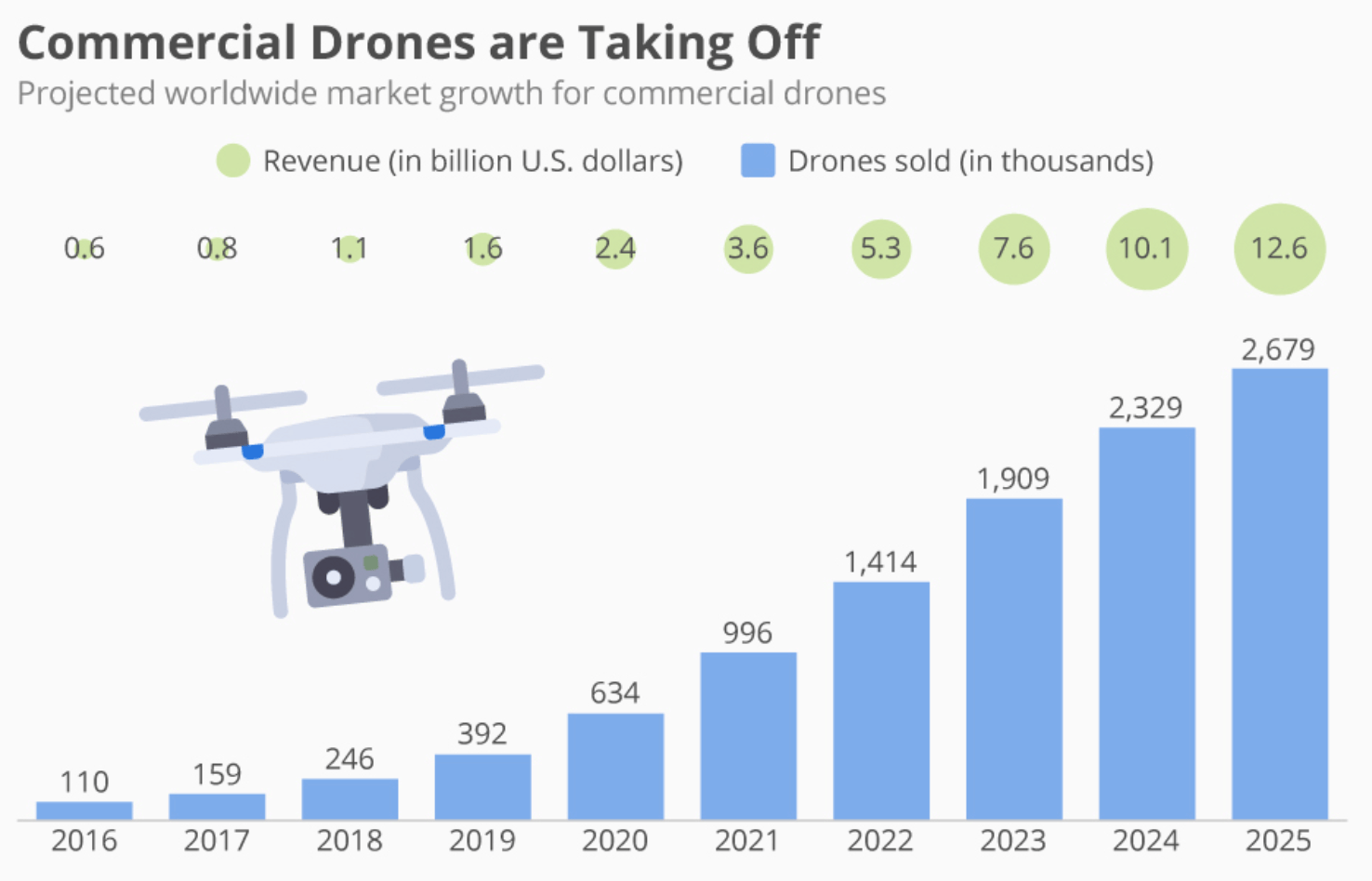
While you might be tempted to just target the average Joe who wants to flow a drone around his neighborhood, you might want to consider the commercial market as well. Check out the growth of commercial drones over the years.

Drones

Between now and 2025, the global commercial drone market is expected to grow by roughly 700%. Now is the time to jump on this trend to get your share of the action.

You can still go after consumers as well. The unit sales of personal drones dominate 94% of the market. However, this only represents 40% of the total revenue share, since commercial drones are typically priced higher.

9. Clothing and accessories

It may sound simple, obvious, or boring, but the online clothing industry is huge.

But in order to be successful here, you definitely need to go after a niche. Trying to sell to anyone and everyone will be too competitive to survive.

By 2023, revenue from online clothing, footwear, and accessories in the US is expected to surpass $145.7 billion. That’s up from $93 billion in 2017.

58% of Americans have purchased clothing online.

Again, this is another industry where you have tons of options. There are different types of people to target, and countless options of products to sell at varying price points. Ultimately, there’s lots of money to be made selling clothes online.

Conclusion

There has never been a better time to sell products online. Starting an ecommerce store is easy, and consumers are continuing to buy products on the Internet more and more each year.

But what should you sell online?

Use this list as a reference. Unlike other similar posts that you’ll find online, I took the time to actually research industries and trends. I didn’t just pull random products out of thin air.

That’s why this information is so valuable. If you can set up your ecommerce shop around these trends, it has a much greater chance of being successful.


from Quick Sprout https://ift.tt/2yc03QL