Monday, November 18, 2019

Best Free Website Builders

Building a website has never been easier.

The days of developers and web designers being the only people who can create a website are long behind us. Anyone can create a website in minutes without writing a single line of code. All you need to do is find a website building platform.

But if you’re creating a website for the first time, you’re probably looking for the most cost-effective solution. You might want to test out different options to see what you like the best.

If this sounds like your situation, then I’m sure you’re looking for a free website builder.

Dozens and dozens of platforms out there will tell you that you can build a website for free. Unfortunately, building a legitimate website for free is actually not very realistic.

Most free website builders will be extremely limited or have some contingencies that require you to pay. It might start out as free, but you’ll quickly learn that it’s not truly free.

This shouldn’t discourage you from trying different website builders. Free website building plans are a great way to get your feet wet with web creation. A free plan will also help you pick a platform that you ultimately want to pay for down the road.

In this guide, I’ll show you the best free website builders on the market today. I’ll explain what you actually get for free, and what features require a premium membership.

The Top 12 Free Website Builders

All website builders offer free features. You’ll be able to get a free trial with nearly every website builder on the market today. But these 12 website builders have free plans that go beyond a trial period:

WordPress
wordpress

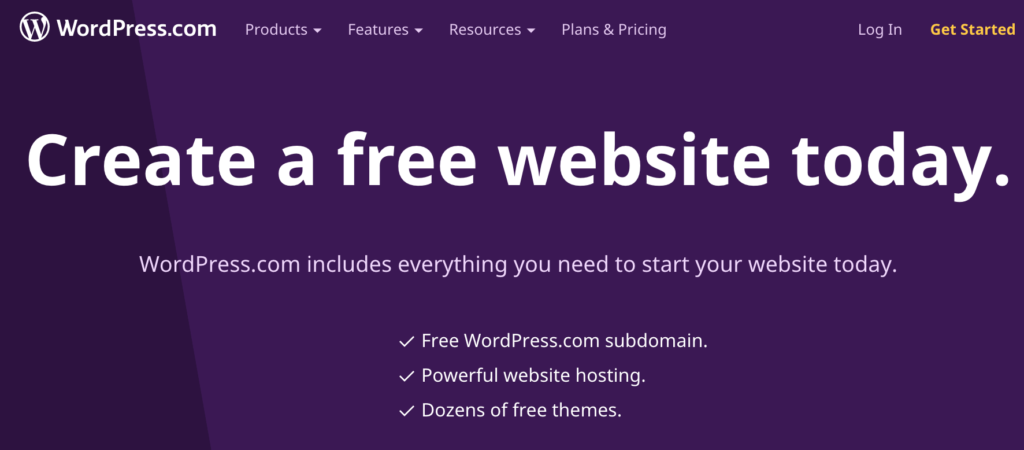
34% of the entire Internet is powered by WordPress. It’s the most popular CMS in the world and a top choice for building a website.

With WordPress, you can create a website and get it live on the web without paying anything. Free plans include hosting, themes, and a WordPress.com subdomain.

Don’t expect high-level performance from the free hosting plan. The WordPress subdomain won’t be very professional either.

We use WordPress here at Quick Sprout, but we have a premium plan. If we stuck with the free option, our domain would look like this: https://ift.tt/32Y5dgj, which is obviously no good.

You do not need a credit card to create a free WordPress site. So you won’t have to worry about an expiring trial or being charged for hidden fees.

The free WordPress plan is best for getting started with something small, like a personal blog. It comes with Jetpack essential features, which has SEO tools and automation functionality. You’ll get a pre-installed SSL certificate, free templates, and 3 GB of storage.

It’s worth noting that WordPress is not a traditional website builder. You should have a basic understanding of writing HTML code and how it works to use WordPress.

When you’re ready to upgrade to a paid version of WordPress, these are your options:

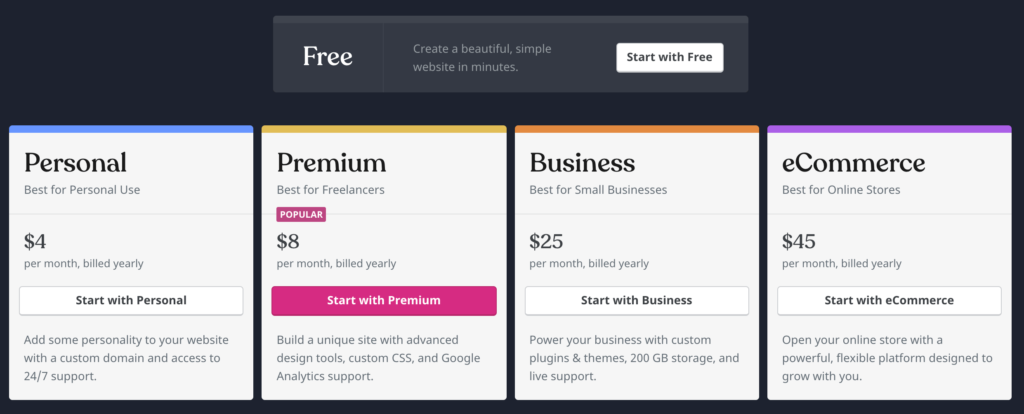
  • Personal — $4 per month
  • Premium — $8 per month
  • Business — $25 per month
  • Ecommerce — $45 per month

WordPress users rely on plugins to add features and functionality to their sites. Many of these plugins require payment as well, which will add to your costs.

Wix
wix

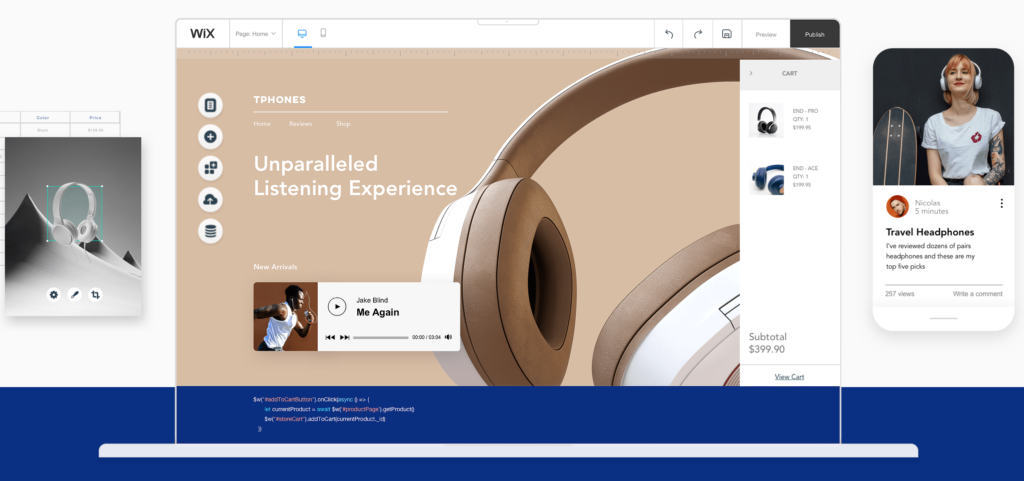
Wix lets you create a website for free without writing any code. It has a drag-and-drop editor that makes it easy for anyone to build something beautiful, regardless of their technical experience.

All you need to do is choose a template and customize it with your own content.

Here’s what you get with a free Wix plan:

  • Hundreds of templates
  • Stock images, icons, and clip art
  • Free web hosting
  • SEO assistance
  • Mobile optimization
  • Access to free apps in the Wix App Market
  • 500 MB of storage and 1 GB of bandwidth
  • Free Wix domain

The free Wix domain is even weirder than the WordPress one. It’s yourwixusername.wixsite.com/yoursiteaddress; which would look like this for us here at Quick Sprout — quicksproutadmin.wixsite.com/quicksprout.

Obviously, this type of domain is not reasonable or realistic to use if you’re serious about creating a legitimate website. But it’s fine for the beginning while you’re evaluating the Wix platform.

The free plan will also have Wix ads appear on every page of your website.

Using Wix for free will give you an introduction to their platform, but you’ll quickly learn that it’s very limited if you’re not paying. You’ll take an action or try to do something and be prompted to upgrade your plan, which can be a bit annoying.

Wix has premium plans starting at $13 per month for blogs, portfolios, and personal sites. Business and ecommerce rates start at $23 per month.

Weebly
weebly

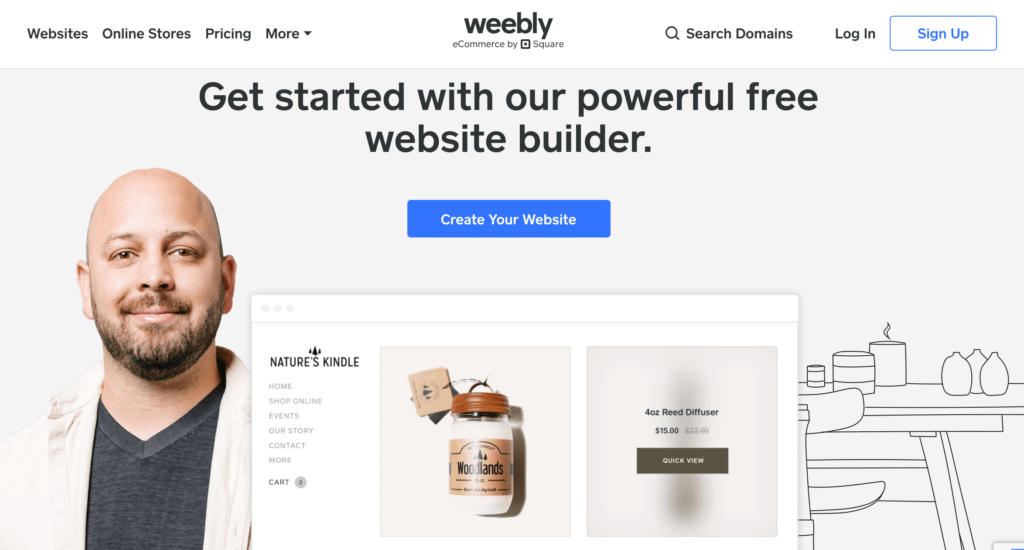
Weebly is powered by Square, making it a website builder that’s geared toward ecommerce websites. So for those of you who are looking to create an online store from scratch, Weebly would be a top choice to consider.

Unfortunately, the free Weebly plan doesn’t come with any ecommerce functionality. You’ll need to upgrade for selling capabilities.

Here’s what you get with Weebly for free:

  • SSL certificate
  • 500 MB of storage
  • Free hosting
  • Domain name with Weebly branding
  • SEO tools
  • Lead capture and contact forms
  • Access to community forums
  • Live chat and email support

Compared to other free plans we’ve seen, this one is actually pretty good. It’s still extremely limited and I wouldn’t recommend it for the long-term, but it’s a viable option for starting out.

You can begin to collect customer information before your online store officially launches.

For $5 per month, you can connect your own domain to eliminate the Weebly branding. Aside from that, Weebly has premium plans starting at $12, $25, and $38 per month.

Webnode

webnode

Webnode is website building made easy. In minutes, you can create and publish your site on the web. It’s a great option for personal sites, businesses, and ecommerce shops.

More than 30 million people have built a website using this platform. Webnode has stunning templates that you can easily customize with your own content.

Unlike other free website builders, you can create an unlimited number of pages with the free plan from Webnode.

You’ll also get reliable hosting and access to customer service representatives.

The biggest catch is that your site will have a Webnode subdomain with your free plan. But this is pretty much the industry standard if you’re not willing to pay.

I’d only use the free plan for something simple like a blog. You can create your site, publish content, and then share your work on social media. But once you’re ready to take things to the next level, you’ll need to consider one of the following paid plans:

  • Limited — $3.95 per month
  • Mini — $5.95 per month
  • Standard — $11.95 per month
  • Prof — $19.95 per month

Webnode does require an annual subscription with all plans. So this won’t be the best choice for those of you who prefer month-to-month contracts.

Ucraft
ucraft

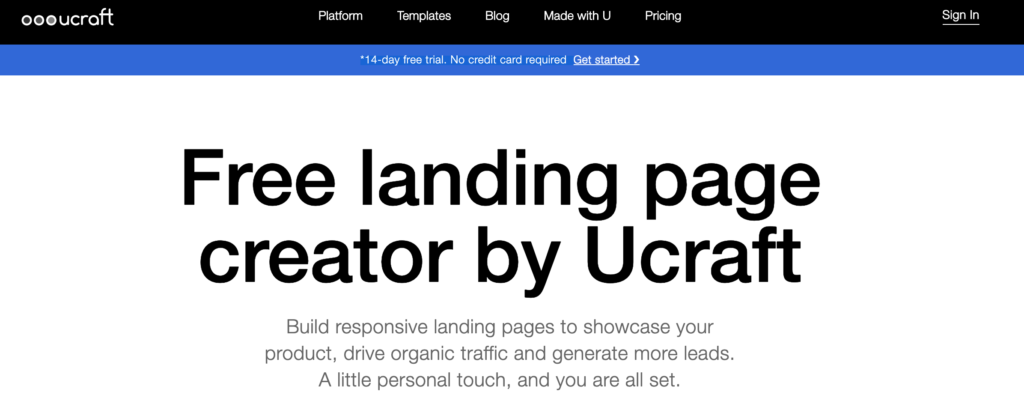
Ucraft is a bit unique compared to some of the other platforms we’ve seen so far. It’s advertised as a landing page creator, as opposed to a website builder.

The free plan can be used to create simple single-page websites.

If you already have a domain name, you can connect it for free. This means your free site won’t be forced to use a ucraft.net subdomain, which is a big bonus since most free website builders won’t give you this luxury. However, your website will have Ucrafted branding on the page itself.

Here are some of the other features and benefits you’ll get for free with Ucraft:

  • SSL certificate
  • Drag and drop builder
  • Visibility settings
  • SEO tools
  • Google analytics
  • 24/7 support
  • Password protected pages
  • Free hosting
  • Unlimited bandwidth

For a free plan, this is actually pretty good. Again, the only catch is that you’ll be limited to building just one page. To create more than that, you’ll need to upgrade to one of the following paid plans:

  • Pro — $10 per month
  • Pro Shop — $21 per month
  • BigCommerce — $39 per month

All premium plans come with a 14-day free trial. No credit card required.

Onepager
onepager

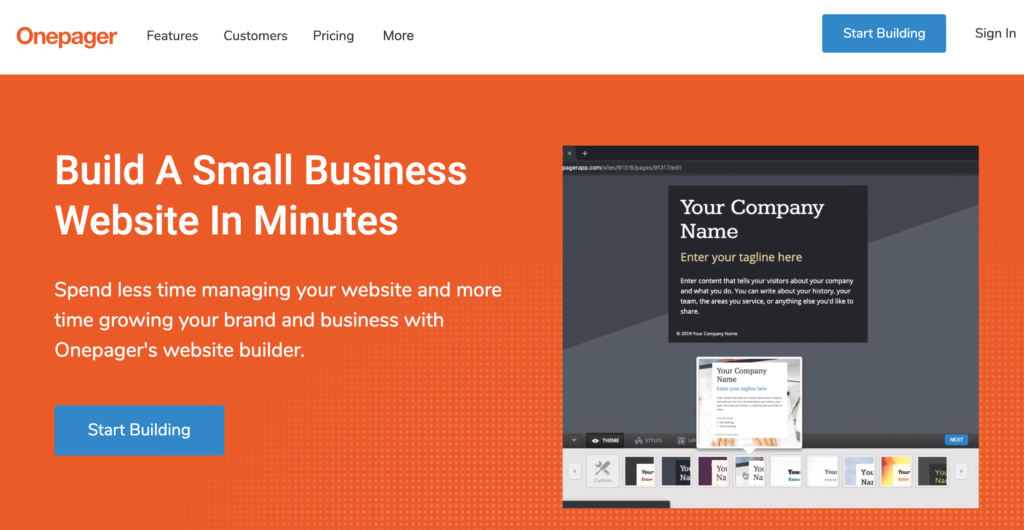
Onepager is a website builder marketed toward small business owners. It’s intended for people without much technical ability who want to create a site with ease.

Onepager offers a “free forever” plan, which is extremely limited. Here’s a quick overview of what you get (and don’t get) for free:

  • Onepager branded domain
  • No web analytics
  • No email
  • Onepager ads on your pages
  • No ecommerce capability
  • No custom forms
  • No custom CSS

You’ll still get hosting and 24/7 support, but overall, I wouldn’t recommend the free site for any serious websites. Use this plan if you’re interested in trying Onepager as an extended trial.

To remove Onepager ads, use your custom domain, and activate ecommerce functionality, paid plans start at $8 per month with an annual contract.

Cindr

cindr

Building a website with Cindr is about as easy as it gets. They eliminated lots of the complex features and distractions for users who prefer simplicity.

You’ll be able to quickly add and publish photos, videos, music, text, and other content on your site in minutes. Designs are mobile-friendly and highly responsive.

You can create a site with Cindr without providing any credit card information. In fact, Cindr has just two plans; Free and Premium.

The free plan comes with:

  • Custom design capability
  • MyCindr.com domain
  • Live chat and email support
  • Unlimited pages
  • Free hosting
  • 1 GB of bandwidth
  • Unlimited storage

Your free Cindr site will have Cindr ads displayed on your pages. To remove those ads, connect your own domain, and build multiple sites, you’ll need to upgrade your plan.

The Premium plan is $9 per month with no long term contracts. It also comes with unlimited bandwidth and storage.

Site123
site123

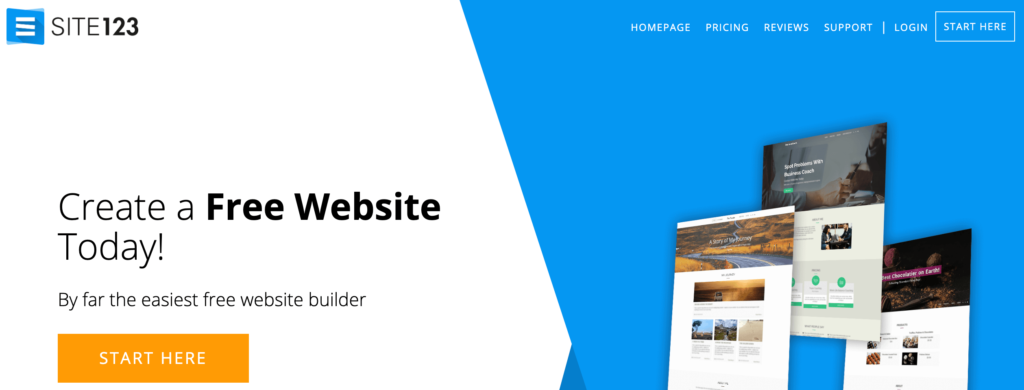
Similar to our previous review, Site123 also has just two plans; Free and Premium. Compared to other website builders, the free plan is actually packed with quality features.

You’ll get everything included with the Premium plan, except you won’t be able to use your own custom domain. You’ll also be limited to just 500 MB of storage and 1 GB of bandwidth.

Aside from that, here are some of the features that come standard for free with Site123:

  • Intuitive page editor
  • Mobile-friendly designs
  • Free hosting
  • SEO tools
  • 24/7 support

This website builder is a bit different from a traditional drag-and-drop editor. But it’s still easy to use and doesn’t require any code.

To get the most out of your Site123 website, upgrade to a Premium plan starting at $12.80 per month. This comes with ecommerce capabilities.

Strikingly

strikingly

Millions of users have used Strikingly to create a website. It stands out from the other platforms on our list because it has ecommerce capability built-in, including the free version.

That’s right. For free, you can build an online store with Strikingly.

There’s just one catch. You can only have one product on display per website.

However, Strikingly lets you create an unlimited number of websites with the free plan. This is definitely better than some of the other options we’ve seen that restrict you to just one website or limited pages.

The free plan from Strikingly also offers 5 GB of bandwidth, which is more than we’ve seen from its competition.

As expected, you’ll be stuck with a Strikingly subdomain if you sign up for the free plan. To use your own domain and benefit from premium features, these are your upgrade options:

  • Limited — $8 per month
  • Pro — $16 per month
  • VIP — $49 per month

These prices are based on annual contracts. To save money, Strikingly offers long-term contracts for up to five years. All premium plans come with a 14-day free trial.

Webstarts

webstarts

Webstarts is another popular free website builder. It’s reliable, versatile, and extremely easy to use.

You can create a website with an unlimited number of pages, but Webstarts pretty limited beyond that.

The free plan doesn’t allow you to use a custom domain. There’s no social integration, emails, SEO tools, contact forms, or slideshows either.

Your free Webstarts site won’t be mobile-friendly and won’t give you HTML access or ecommerce capabilities. All free sites will have ads on every page.

Overall, you can’t really build a legitimate site unless you upgrade to a premium plan. There are two paid options, priced at $7.16 and $19.99 per month, respectively.

Yola
yola

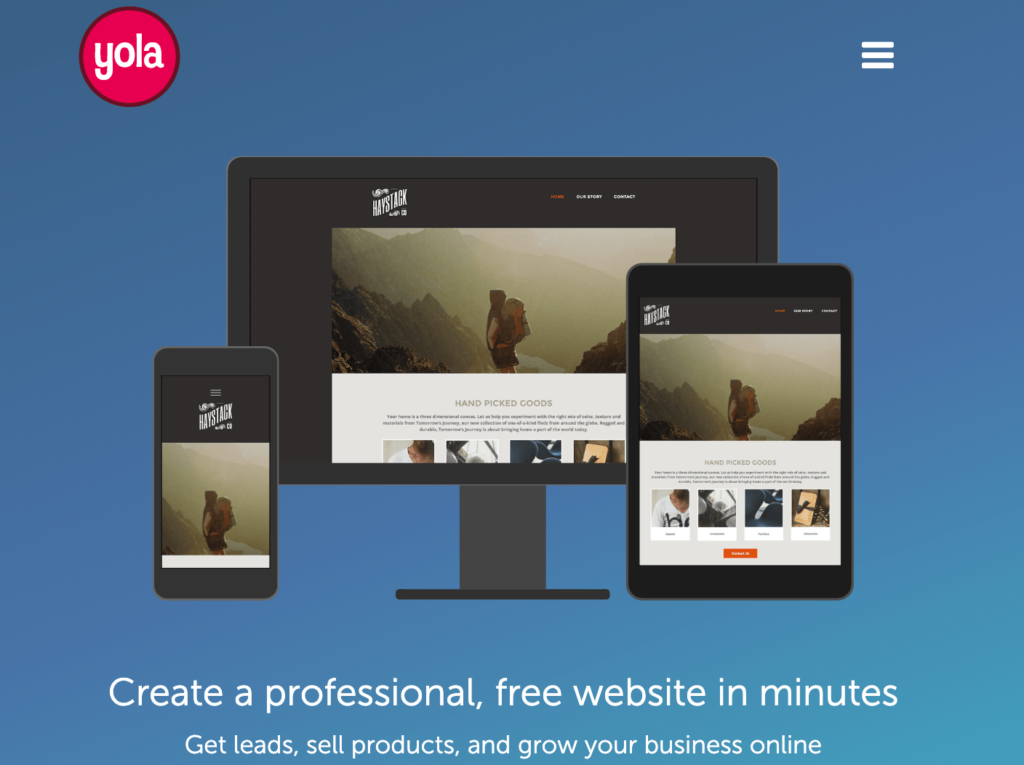
With Yola, you can create and publish a website online in less than 30 minutes. Unlike other free website builders, Yola won’t put ads on your pages, although you will have a Yola domain.

Yola’s drag-and-drop site builder is simple and easy to use. It doesn’t require any technical experience, making it a top choice for beginners.

With that said, advanced users can edit using HTML, JavaScript, and CSS.

The Yola free plan has 1 GB of bandwidth and 1 GB of storage. You’ll also benefit from features like:

  • SEO tools
  • Email support
  • Web hosting with 99.9% uptime
  • Social sharing
  • Ability to embed YouTube videos
  • Google Maps integration
  • Video backgrounds
  • Contact forms
  • Tumblr blog integration
  • Site statistics

However, there is one major contingency here. You can only build three web pages.

Obviously, that’s not reasonable for those of you who want to create a full website. The three pages are only enough to test out Yola’s platform to see if you like it enough to upgrade to:

  • Bronze — $4.95 per month
  • Silver — $9.95 per month
  • Gold — $19.95 per month

All of these plans come with a 30-day money-back guarantee. You can add ecommerce capabilities to any premium plan for an extra $10 per month.

Jimdo
jimdo

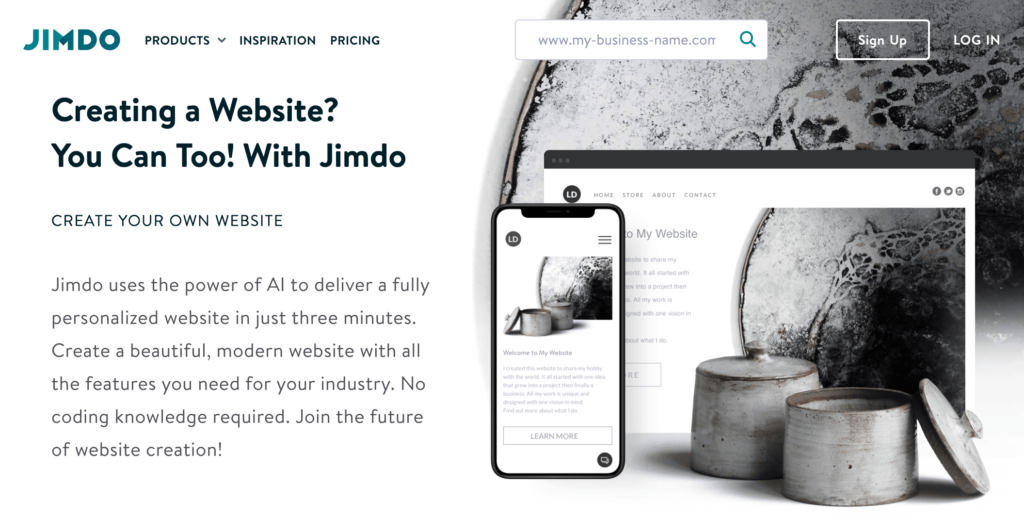
Jimdo was born back in 2007. Since then, more than 20 million websites have been built using this platform.

You can build a website for free using Jimdo, although your options will be extremely limited.

All free websites will have a .jimdosite.com subdomain. You’ll get 500 MB of storage, 2 GB of bandwidth, and HTTPS security. That’s pretty much it.

Jimdo will only let you build five web pages with the free plan. That’s obviously not enough to build a full website. But you’ll still be able to get your site live and see if you like the software before you upgrade.

I’d treat this free website builder as a trial that never expires. If you’re happy with the platform, then you can upgrade to one of the following paid plans:

  • Start — $9 per month
  • Grow — $15 per month
  • Grow Business — $19 per month
  • Grow Legal — $20 per month
  • Unlimited — $39 per month

To get the most out of Jimdo, the Unlimited plan will be your best bet. It doesn’t have any restrictions and gives you better access to customer support. Jimdo also has ecommerce plans starting at $15 per month.

Hidden Costs of Free Website Builders

Lots of website builders say they are free, but they fail to mention any hidden costs. In reality, the majority of website builders are not truly free if you want to create and publish a legitimate website. These are some of the top hidden costs you need to keep an eye out for.

Custom Domain

Every free website builder on the market will give you a free branded domain with their name somewhere in the URL. But if you’re serious about publishing your site on the web, you’ll need to buy your own domain name.

There are a couple of site builders that let you connect your custom domain with a free plan, but you’ll still be paying for that elsewhere.

I do not recommend buying a domain from your website builder. Check out my list of the best domain registrars for more guidance with this process.

Web Hosting

Most free website builders will also offer free web hosting. But to be blunt—free web hosting stinks.

If you plan to have site visitors at any point after your site goes live, you’ll definitely need to take web hosting more seriously. Don’t worry, web hosting isn’t that expensive. These are my top recommendations for the best cheap web hosting plans.

Page Limitations

There are plenty of website builders out there that let you build a site for free with an unlimited number of pages. Some will even let you create an unlimited number of sites with a free plan.

However, there are other free website builders that restrict how many pages you can create before you’re forced to upgrade.

These page limitations can be as low as one or three pages. Obviously, you can’t build a full website with those types of restrictions. Adding pages will cost you money.

How to Choose the Best Website Builder For You

With so many free website builders on the market, choosing just one can be difficult. Here is the process that you should use when narrowing down the best option for your website.

Upgrades

If you want to start with a free website builder for now, that’s fine. But eventually, you’ll need to upgrade. You can’t really make a legitimate and high-quality website for free.

So choose a website builder that has plenty of upgrade options to meet your needs.

You don’t want to switch to a different platform when you’re ready to start paying. That’s too much of a hassle, and you’ll probably need to rebuild the majority of your site.

Ease of Use

You shouldn’t be struggling to create a website. Look for platforms with drag-and-drop builders and lots of templates that you can easily customize.

If you don’t have a technical background, this will make your life much easier.

Basic functions like adding text, images, videos, and creating new pages shouldn’t require too much effort. Managing your site, publishing blog posts, and everything else must be simple.

Some website builders, like WordPress, are extremely popular. However, WordPress doesn’t have a traditional drag-and-drop builder. So if you don’t have certain technical skills, avoid website builders that require coding knowledge.

Type of Website

What kind of website are you building?

Blogs, portfolios, ecommerce shops, and small business websites are all very different. You have to make sure that the website builder you choose has the ability to accommodate your needs.

Just because a website builder makes it easy for you to publish blog posts, it doesn’t mean it’s a great option for your online store. If you refer to the list above, you’ll see that some builders are definitely made for creating certain types of websites.

Conclusion

Creating a website for free is easy. All of the website builders on our list allow you to create a website for free.

But with that said, even the best free website builders are limited in some capacity. Some of these platforms will have more restrictions than others.

If you’re serious about creating a website, I would not recommend building it for free.

Instead, use these free builders to try different options. Think of these as extended free trials that won’t expire. Once you find a platform that you like, take a look at their paid options and upgrade to a suitable plan that meets your needs.


from Quick Sprout https://ift.tt/2XqgrZE

Squarespace vs. WordPress

Creating a new website from scratch is exciting. But where do you start?

The first step is choosing a website builder. If you do some preliminary research, you’ll quickly learn that Squarespace and WordPress are two of the top options to consider.

With that said, Squarespace and WordPress are very different.

Squarespace is a traditional website builder with some of the highest quality design templates that you’ll find on the market. It has a drag-and-drop builder, which means you don’t need to know how to code if you’re using Squarespace.

Squarespace is more of an all-in-one platform. You’ll be able to get your domain and web hosting plan from this provider as well.

On the other hand, WordPress is not technically a website builder, but you can still use it to create your own website. WordPress is a CMS (content management) system that powers 34% of the entire Internet. We use WordPress here at Quick Sprout.

WordPress requires a bit more technical knowledge and basic coding ability. The upside of using WordPress is that offers complete customization—it’s virtually limitless.

In short, anyone can create a beautifully designed website with Squarespace, but the functionality of the site will be limited. WordPress allows you to scale and customize your website with total freedom, but it requires more work and technical ability.

There are definitely pros and cons to each of these website builders. I created this guide to help you determine the best option for your website.

I’ve identified 12 evaluation categories that you should keep in mind when you’re looking for the best website builder. I’ll highlight the strengths and weaknesses of each platform and ultimately choose a winner for each category.

Simplicity and Ease of Use

To evaluate the ease of use, I considered how you set up an account and get your website started from scratch. I reviewed the building features as well as editing and managing your website down the road.

Squarespace Ease of Use

You don’t need to have any coding skills to use Squarespace. The drag-and-drop website builder and editing tools make it easy for anyone to create a website from scratch.

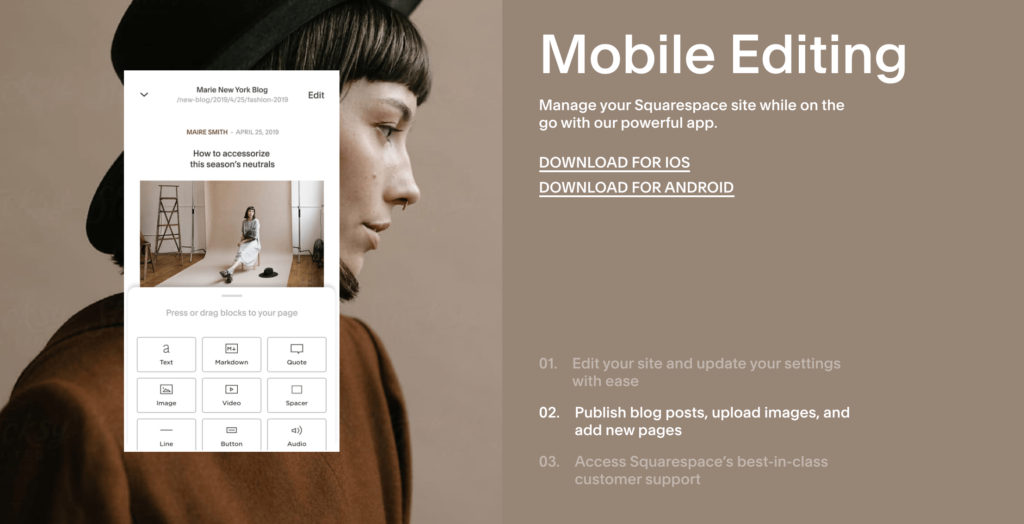
To get started, you simply choose a template and start customizing the page elements to your liking. You can even edit your website from your mobile device with the Squarespace app.

Squarespace

The best part about using Squarespace to build your website is that you can see what your changes look like in real-time. You’re dragging, adding, and moving things around directly on the page.

It’s easy to add a text box or image and simply drag it exactly to where you want it on the screen.

Although I don’t recommend it, you can also get your domain and hosting directly from Squarespace as well. These offers are great for people who want to manage everything in one place from the same provider.

WordPress Ease of Use

Getting started with WordPress requires a bit more work. You’re responsible for your own domain and hosting, which is what I would recommend regardless of the platform you choose.

But unlike Squarespace, your WordPress site gets built in the backend using code. You won’t see what these changes look like in real-time. You’ll essentially be making changes in the dark and then previewing them when you’re done to see how things turned out.

WordPress users will rely on plugins and coding skills to customize their websites.

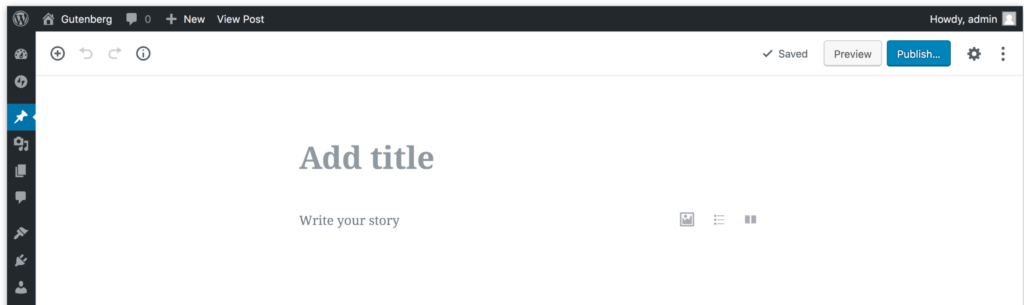
WordPress does offer a builder-like tool called the Gutenburg editor, which allows you to add blocks for page elements like images, text, or headers.

gutenburg

However, this is not nearly as user-friendly and design-savvy as the drag-and-drop builder offered by Squarespace.

But for those of you with coding skills, WordPress will be a breeze. Plus, it’s the easiest way for you to have ultimate control over every single aspect of your website.

Best Website Builder For Beginners: Squarespace

In terms of simplicity and ease of use, Squarespace is the winner.

If you’re a developer or having coding experience, you’ll find WordPress very easy to use as well. But the average person with no technical knowledge will be lost using WordPress for the first time.

Professional Design

Website visitors will judge the credibility and trustworthiness of your website based on its design. Your design has a major impact on user experience, engagement, and conversions.

That’s why it’s crucial that you find a website builder that allows you to create an attractive and functional design.

Squarespace Design

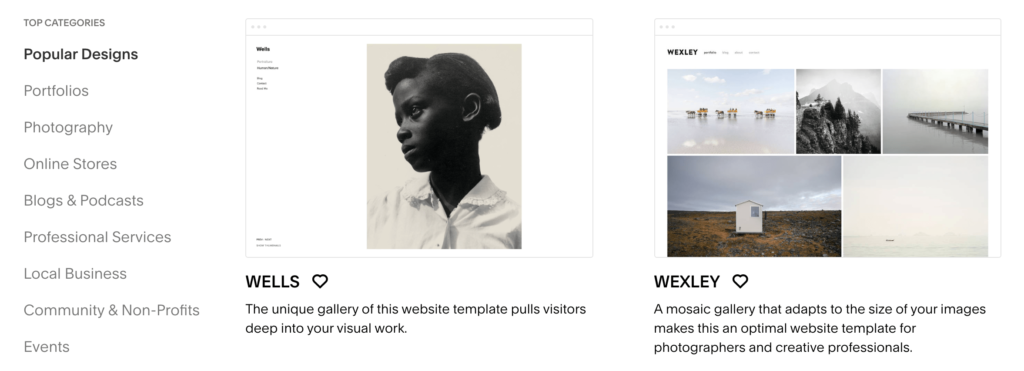
Squarespace is best-known for the quality and professionalism of their templates and designs. If you have a creative vision for your website, Squarespace will let you turn that vision into a reality.

They offer templates that are clean and modern—perfect for building a website in this day and age.

squarespace templates

Finding a template for your website is easy. Just browse the list of categories to see choices for your niche.

Photographers, fashion designers, musicians, artists, and anyone with a portfolio should consider Squarespace to showcase their work. But it’s also a top option for small businesses and entrepreneurs.

Squarespace offers award-winning designs that are highly customizable and optimized for mobile devices. It’s easy for you to switch your template at any time.

WordPress Design

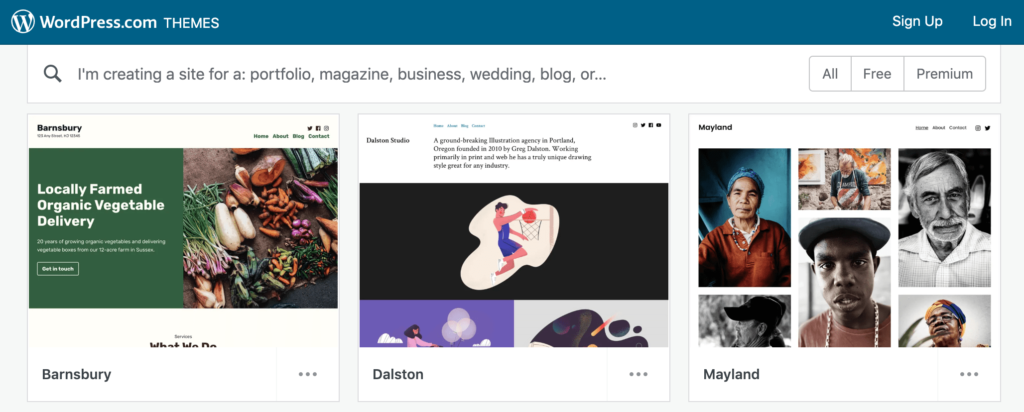
WordPress has thousands of both free and paid themes for you to choose from.

wordpress themes

To find the best WordPress theme for your website, simply browse by category and determine your budget. As you can imagine, higher quality themes will cost you more money.

Since it’s an open source platform, anyone can add a theme to WordPress. While this gives you more options to choose from, it also means that some of the themes are not as responsive and reliable. So you need to make sure that you choose a theme that will support your site without weighing it down or causing problems.

Not every theme offered on WordPress will be optimized for mobile devices. Avoid any themes that aren’t mobile-friendly.

The upside of using WordPress for design is that you can completely customize your theme using code and plugins. Although switching themes isn’t always the smoothest transition, especially if you’ve made lots of complex changes to your site.

Best Website Builder For Design: Squarespace

While Squarespace has fewer themes than WordPress, the quality of the designs are far superior. All of the themes are all beautiful, mobile responsive, and highly customizable.

Squarespace is still a bit restricted in terms of how much you can change compared to WordPress. But this category was no contest from the beginning—Squarespace is the clear winner.

Built-in Features and Tools

This category focuses on “out of the box” features offered by each platform. This will give you an idea of your capabilities and limits without having to rely on any third-party tools.

Squarespace Features

Squarespace comes with tons of built-in features. It has virtually everything you need to build a new website from scratch. Some of the top features include:

  • Free Google Fonts
  • Video Backgrounds
  • CDN (content delivery network) included
  • Point of sale tools
  • Email campaigns
  • Marketing tools
  • Ecommerce tools
  • Blogging tools
  • User data collection tools

The list goes on and on. You can check out the full Squarespace feature index here.

I like Squarespace because you don’t need to install any third-party plugins or apps to build, edit, and manage your site. Everything can be controlled directly from your admin dashboard.

Whenever Squarespace comes out with a new tool or feature, it will automatically be available for you to use.

WordPress Features

One of the reasons why WordPress is so powerful is because you can install a plugin for virtually anything and everything that you could possibly imagine. The problem is that those plugins don’t come standard when you create a WordPress account.

With that said, there are still some basic features that are built-in to WordPress.

Most of these features are related to publishing. WordPress has tools for things like scheduling content and editing images. You’ll also be able to add passwords to pages and manage your comments.

WordPress has features for multiple contributors and multilingual settings as well.

You are responsible for updating your WordPress version (we’ll talk about this in greater detail later). So any new features and tools won’t be immediately available if you aren’t updating your WordPress account.

Website Builder with the Best Features: Squarespace

Everything you need with Squarespace comes standard out of the box. The features are more robust and easier to access than WordPress.

While WordPress has the capability to do more overall, those tools and features aren’t built-in.

Plugins, Apps, Extensions, and Add-ons

Now let’s evaluate the tools and features that can be installed or added on to these website builders. Add-ons can offer more flexibility and customization when you’re creating your site.

Squarespace Apps

Squarespace does not have an app store or way to add building and customization capability to your website. All of its tools are already built-in to the platform, and they’re updated automatically.

With that said, you can integrate certain apps and tools with your Squarespace account.

squarespace apps

But overall, you’ll be relying heavily on the built-in features when it comes to building and editing your website. The integration with third-party apps won’t really change that.

WordPress Plugins

As an open source platform, anyone can create a tool and add it to WordPress. Programmers and designers can offer these tools for free or charge other WordPress users to install them.

This is where WordPress shines. There are roughly 55,000 plugins available for you to download and install to your WordPress site.

Wordpress plugins

The capabilities here are endless. There is a plugin for nearly anything you can possibly imagine. This gives you the opportunity to add custom functionality to your website.

Just be careful before you install a plugin to your site. Remember, anyone can create these.

I only recommend adding plugins offered by legitimate developers. So don’t slack when it comes to due diligence for evaluating a potential plugin.

To learn more about WordPress plugins and their capabilities, check out my guide on the best WordPress plugins for each essential category. This will give you a better understanding of the possibilities for your website.

Website Builder with the Best Add-ons: WordPress

All of the Squarespace apps are built-in, so the platform never really had a chance at winning this category. The sheer volume of available plugins that you can add to your WordPress site is unlike any other website builder on the market.

Plugins are the reason why people love WordPress so much. It’s the best way to truly customize your website exactly the way you want to by adding specific functions.

SEO Friendly

In order for your website to be successful, it needs to be visible and rank high in SERPs. You should definitely look for a website builder that has tools and features that focus on SEO.

Squarespace SEO

Squarespace has SEO best practices built-in to its platform. It has automatic sitemaps, auto redirects, canonical tags, robots.txt files, and plenty of other ways to boost your site’s SEO.

The nice part about using Squarespace is that you won’t have to go out and install any apps to deliver these SEO capabilities. You won’t have to think twice about your website being SEO-friendly because Squarespace handles everything for you.

WordPress SEO

WordPress is fully optimized for SEO on the backend. You can make changes to nearly every aspect of your website to make your content more appealing to search engines.

Modifying permalinks, creating a sitemap, header tags, meta descriptions, and robots.txt are all areas where WordPress excels. WordPress is the ultimate website builder for the technical side of SEO.

Plus, you can always add on plugins to improve your SEO strategy even further.

Yoast SEO has more than five million active installations. It gives you complete customization and control over your WordPress site from an SEO perspective.

Best Website Builder for SEO: WordPress

Squarespace is an SEO-friendly website builder, but it’s no match for WordPress. The flexibility of WordPress and the ability to add SEO plugins will give you an advantage when it comes to ranking organically in search engines.

Blogging Capability

All websites should have a blog. But there’s a difference between a blogging website and website that features a blog as a supporting element. I’ve taken both of these scenarios into consideration when evaluating Squarespace and WordPress for blogging.

Squarespace Blogging

Squarespace offers basic blogging capabilities. You can choose the layout and appearance of your blog while allowing multiple contributors as well.

You can tag your blogs, segment them into categories, and edit them at any time. Squarespace also lets you set up automatic posting on social media any time you publish a new blog.

The best part about using Squarespace for blogging is that you’ll get stylish templates for free.

But you won’t have the ability to access the HTML code of your blog, which is a problem if you really want to customize your content.

Overall, the Squarespace blogging tools are suitable for niche websites that also have a blog. For example, if you’re a photographer and use Squarespace to showcase your portfolio, you can add a basic blog as well.

WordPress Blogging

WordPress is built for bloggers. We publish hundreds of blogs per year here at Quick Sprout, and that’s one of the many reasons why we trust WordPress as our website builder and CMS.

Unlike Squarespace, WordPress lets you access the HTML code of your blog. You may not need to take advantage of this often, but at least it’s available when you need to.

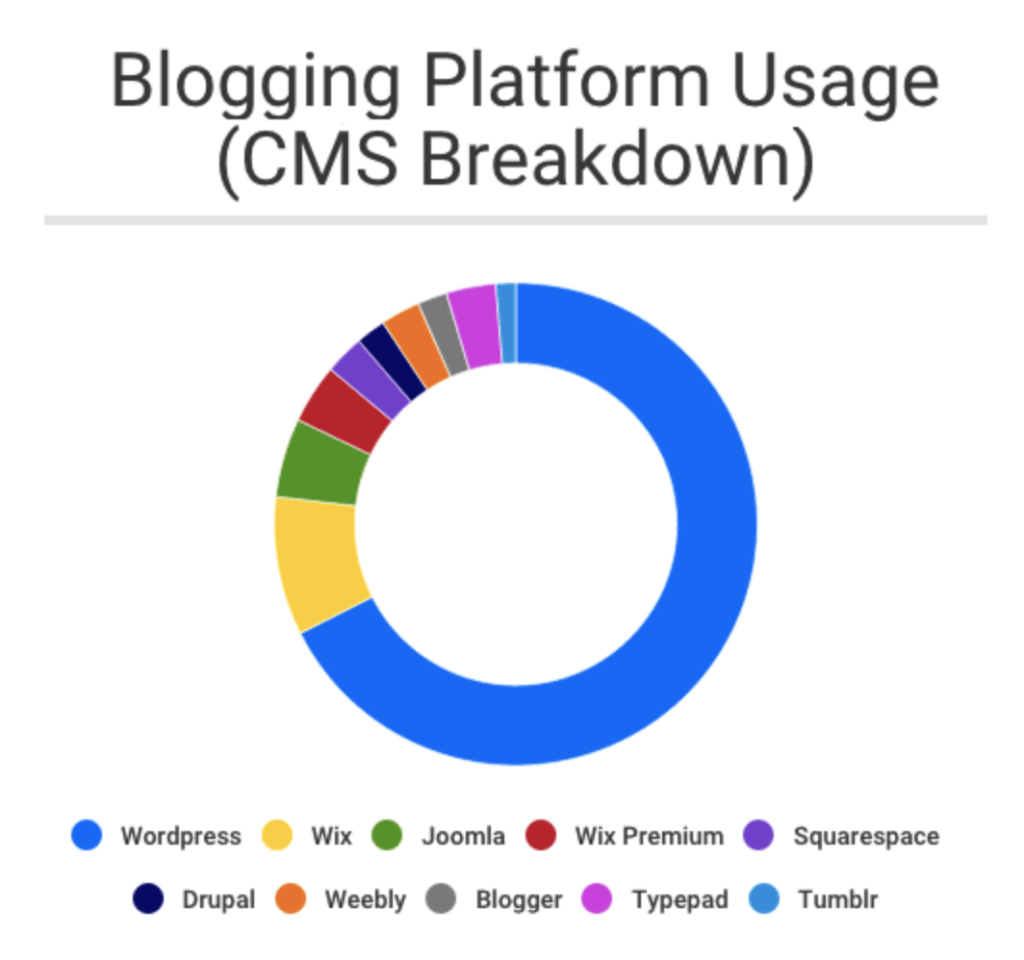
WordPress is by far the most popular blogging platform on the market.

Most popular blog platforms

As you can see, Squarespace owns just a fraction of this market share.

Another benefit of using WordPress for your blog is the ability for you to manage comments. You have complete control over who can comment on your blog. WordPress also offers plenty of plugins to customize and improve the blog on your website.

Best Website Builder For Blogging: WordPress

If blogging is the primary feature of your website, WordPress is definitely your best bet. Squarespace offers a basic blogging platform, but the fact that you can’t access the HTML code of your content is a huge downside.

Ecommerce Functionality

Are you planning to sell products or services online? You need to find a website builder that makes this as easy as possible for you.

Squarespace Ecommerce

Modern layouts and simple designs make Squarespace a frontrunner for selling online. You can easily build an ecommerce shop using Squarespace since ecommerce functionality is built-in to the platform.

squarespace ecommerce

Squarespace makes it easy for you to sell products, services, subscriptions, and digital content. You can also sync your online inventory with your physical store locations to improve in-person selling.

You’ll also benefit from features like built-in tax tools, gift cards, discount codes, and flexible checkout pages. This is everything you need to optimize your ecommerce shop for conversions.

Squarespace offers easy ecommerce integrations with platforms like PayPal, FedEx, UPS, Stripe, Apple Pay, USPS, and many more.

WordPress Ecommerce

WordPress is not optimized for ecommerce out of the box. You’ll need to install a plugin for ecommerce functionality.

There are tons of options to choose from, but WooCommerce is the most popular and it’s what I would recommend.

woocommerce

Once you install WooCommerce to your WordPress site, selling online is simple. You’ll have the ability to completely customize your store, instead of relying on cookie-cutter designs and templates.

It’s possible to add any function to your ecommerce site with WordPress. You can work with a developer or programmer to create these functionalities for you if you can’t find a plugin that meets your needs.

With WooCommerce (and other plugins), it will take you a bit longer to build a store from scratch. Updates to the plugin and your WordPress version aren’t always smooth.

Best Website Builder For Ecommerce: Squarespace

Squarespace is the winner for ecommerce because the capabilities are already built-in to the platform. You can start selling products and services with Squarespace out of the box with no hurdles in the setup process.

WordPress ultimately offers better flexibility and customization for your ecommerce store, but it’s reliant on plugins.

If you already have a WordPress site, then installing WooCommerce is a no-brainer. But if you’re building a new ecommerce store from scratch, you’ll be better off with Squarespace.

Maintenance and Updates

When evaluating the best website builders, you need to look beyond the initial creation process. It’s important to choose a platform that makes it easy for you to manage, maintain, and update your content for the lifetime of your website.

Squarespace Maintenance

Ongoing maintenance with Squarespace is about as easy as it gets. There is nothing that needs to be done on your end.

Squarespace regularly tests updates and automatically applies them to your website. In most instances, you won’t even know that anything has happened. This allows you to spend your time focusing on more important tasks related to owning and operating a website.

WordPress Maintenance

WordPress is constantly coming out with new updates. They do this in order to improve the security and performance of the platform. Failing to update your WordPress version can put your site at risk for malware and attacks.

In addition to updating WordPress, you also need to keep up with updates for all of your plugins. Sometimes plugins aren’t updated as frequently as they should be, which can cause compatibility issues with your WordPress version.

You can take advantage of automatic updates, but it still requires you to stay on top of everything.

Best Website Builder For Maintenance: Squarespace

Squarespace maintenance is hassle-free. They handle all of the updates for you, which is a big edge over WordPress.

Keeping up with WordPress updates can be a pain, but it’s really not that difficult. Just don’t ignore them because you can put your website at risk for problems related to security and performance.

Security

Unfortunately, security needs to be a top concern for every website. There are too many bad people out there that target websites with malware, spam, and hacks in an attempt to steal information related from to business, customers, and website visitors.

Every website is at risk, no matter what platform you’re using to create and manage your site. But some platforms offer more advanced security capabilities and features than others.

Squarespace Security

Squarespace includes an SSL certificate with your plan. They handle all of the security for you.

Since Squarespace is a popular website builder, hackers will occasionally target it. But overall, it’s not as big of a target as more popular platforms.

WordPress Security

With WordPress, the security of your site is completely in your control. This has its pros and cons.

On the one hand, you can take steps to set up your website to be a fortress. But on the other hand, if you do nothing, your site will be susceptible to attacks.

The benefit of using WordPress is that you can install security plugins, like Wordfence, to handle all of this for you as well.

wordfence

If you’re using WordPress, check out my list of the best WordPress security plugins to see some alternative options.

But since WordPress is the world’s most popular CMS, it’s also the most attacked platform by hackers and cybercriminals.

Best Website Builder For Security: Squarespace

This was a tough one, but Squarespace is more secure compared to WordPress. Squarespace sites aren’t as vulnerable to attacks and the Squarespace team handles everything for you. The fact that an SSL certificate comes standard with your plan is a bonus as well.

WordPress is still secure if you know how to set up everything properly. But it’s not the safest option out of the box.

Retaining Rights to Your Content

Content ownership might not be the first thing you think of when you’re creating a website. But you should always review the policies of whatever platform you’re using to publish content on the web.

Without realizing it, you may inadvertently lose the rights to work that you thought was your own.

Squarespace Content Ownership

Anything you publish on Squarespace is your content. If you decide to move to another platform, you can take all of it with you.

However, the templates are licensed to you; they aren’t actually owned. So even if you paid for a template, you won’t be able to keep it if you leave Squarespace.

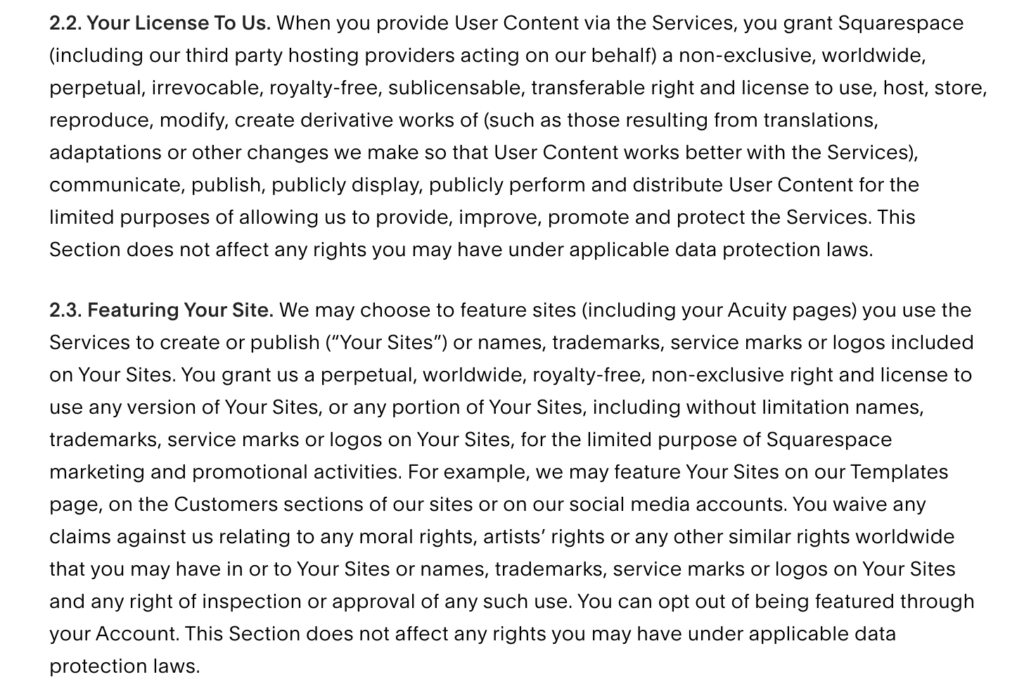
Here are a couple of excerpts from the Squarespace terms of service page that are worth reviewing in greater detail.

Squarespace terms of service

In short, everything on your website is being licensed to Squarespace. This means that they can modify, store, publish, and reproduce your work.

Under this agreement, they also have the right to use your website as an example for marketing and promotion of their platform.

Some of you might be turned off by this, but I wouldn’t worry too much about it. Big companies like Squarespace will always try to keep their customers happy. It doesn’t benefit them to steal your content outright. This terms of service agreement is pretty standard if you compare it to social media networks like Facebook, Instagram, or Twitter.

WordPress Content Ownership

WordPress is a free and open source platform. All of the source code on WordPress is free for anyone to distribute, modify, and use as their own.

That’s what makes WordPress so great. It’s perfect for adapting and customizing functions to your specific needs.

Since WordPress is set up this way, all of your content is 100% yours. WordPress does not impose licensing terms similar to Squarespace. This means you have total control and ownership of your content with no strings attached.

Keep in mind, WordPress users are responsible for their own web hosting. So your web hosting provider might include content ownership terms that are similar to Squarespace.

Best Website Builder For Owning Content: WordPress

WordPress has better terms than Squarespace when it comes to owning content. If you use WordPress, then you don’t have any licensing contingencies in your terms of service.

You won’t be able to keep your site themes or templates, regardless of which platform you use.

Site Migrations

In a perfect world, you’ll build your website on a platform and stick with it forever. But for one reason or another, you may decide to migrate your site to a new platform.

Maybe you want to move from WordPress to Squarespace. Or maybe you’re trying to migrate for Squarespace to WordPress. You could potentially migrate your site to a different platform altogether.

Website builders don’t always make it easy on you when you’re leaving. So this evaluation category primarily focuses on exporting your site during a migration.

Squarespace Migrations

Migrating your site from Squarespace to another platform can be tricky. Squarespace limits what you’re able to move and retain during a migration.

You’ll be able to migrate all of the basics like your pages, blog, comments, galleries, image blocks, and text blocks. But beyond that, you’ll have to rebuild quite a bit on the new platform when the migration is complete.

Squarespace offers step-by-step instructions to guide you through the migration process, which is definitely helpful.

The complexity of your migration will depend on the type of website you have. For example, it will be easier to migrate a Squarespace blog than a Squarespace ecommerce store.

WordPress Migrations

Migrating content to or from WordPress is a bit easier. Since it’s the platform is so popular and widely used, it’s compatible with whatever formats you were previously using or plan to use moving forward.

In some cases, your web hosting provider can handle WordPress migrations for you. Depending on the plan you have, this could be free or for a small fee of around $100.

If an expert is able to migrate your WordPress site for you, then I’d definitely take advantage of it. Even if you have to pay, it’s worth getting it done properly.

Best Website Builder For Site Migrations: WordPress

Migrations are a pain no matter what platform you’re using. Exporting and importing on both ends is usually a hassle. I’ve never met anyone who enjoys this.

But with that said, WordPress has the edge here because of its popularity. It’s more compatible with other platforms than Squarespace.

Customer Support

I always use customer service as a factor when I’m evaluating a product or service. I want my provider to be there for me whenever I need help or assistance.

Squarespace Support

Squarespace has excellent support. They have a dedicated IT team available 24/7 via live chat and email.

squarespace support

They also have an extensive knowledge base that’s easy to use for troubleshooting on your own. Squarespace offers webinars to teach you how to use their platform and improve your website.

As an all-in-one platform, Squarespace offers things like security, hosting, and a CDN standard with all plans. They handle all of the backend functions of your site so you won’t have to worry about anything.

WordPress Support

If you’re using WordPress, you need to be good at finding answers on your own.

Fortunately, WordPress has a massive community of users. So there are tons of forums and help articles available online.

Not every WordPress user has access to live support. Only paid plans will have this option, and the level of support offered depends on how much your paying.

Best Website Builder For Customer Service: Squarespace

The 24/7 live chat and email support offered by Squarespace is unbeatable. There is definitely more information about how to use WordPress on the web. But in terms of a dedicated support team, Squarespace is the winner.

Price

We can’t evaluate these website building platforms without comparing the prices.

Squarespace Price

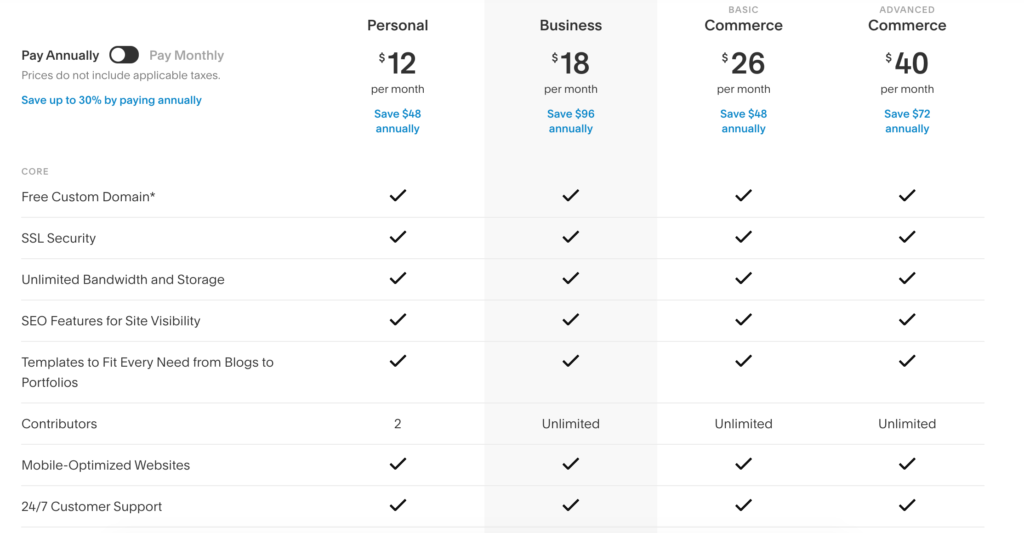
Squarespace has four different plans, starting as low as $12 per month. Here’s a brief overview of the pricing tiers.

squarespace price

The plan you choose will depend on the type of website that you’re building. For example, if you plan on selling online, you’ll need the Basic Commerce plan, at a minimum.

But if you are running a small, simple, personal portfolio site, you can get away with the Personal plan, which is very cost-effective.

WordPress Price

WordPress is free. But if you want to upgrade to a premium plan, these are your options:

wordpress plans

If you’re just running a small blog, you can stick with the free plan or upgrade to the cheapest plan. But any other website should consider the Premium option, at a minimum.

Upgrading your WordPress plan gives you access to features like premium templates, marketing tools, and support.

The amount of storage you need will affect which plan you choose.

Best Value Website Builder: WordPress

The fact that you can use WordPress for free is a great option for new websites. The two entry-level WordPress plans are cheaper than the lowest Squarespace plan.

WordPress can cost as much or as little as you’d like. Some plugins will require payment, which adds on to your base cost.

Who is Squarespace For?

Squarespace is the best website builder for artists, musicians, photographers, fashion designers, and entrepreneurs. If you’re creative, but not technically-inclined, then you can build a beautiful website on Squarespace with the drag-and-drop builder.

As an all-in-one platform, Squarespace is very easy to manage and maintain. All of the features and tools come built-in, so you never have to worry about adding anything on.

Who is WordPress For?

WordPress is best for developers, programmers, bloggers, and webmasters who know how to code. If you want complete control over the look and feel of your website, WordPress gives you the ultimate ability to customize.

WordPress is pretty bare and limited out of the box. So it’s up to you to add plugins and code the site to meet your standards. It requires a bit more work, but the possibilities are endless.

Final Verdict: Which is Better?

Now to the burning question—which website builder is better? Squarespace or WordPress? Here’s a quick recap of the categories we evaluated above:

  • Ease of Use — Squarespace
  • Design — Squarespace
  • Features — Squarespace
  • Plugins and Apps — WordPress
  • SEO — WordPress
  • Blogging — WordPress
  • Ecommerce — Squarespace
  • Maintenance — Squarespace
  • Security — Squarespace
  • Content Ownership — WordPress
  • Support — Squarespace
  • Value — WordPress

Each website builder has its upsides and pitfalls. It all depends on what you’re looking for and what’s important to you.

Based on these factors alone, Squarespace wins 7-5. But with that said, WordPress is still a great option for lots of websites. We use WordPress at Quick Sprout, and I haven’t considered switching because it handles everything we could possibly need.

But what’s best for me may not be best for you. If you’re building a new website from scratch and you don’t have any coding experience, Squarespace will probably be your best option.

Still not sold on either of these platforms? Check out my guide on the best website builders for plenty of alternative solutions.


from Quick Sprout https://ift.tt/2NXDLuH

Friday, November 15, 2019

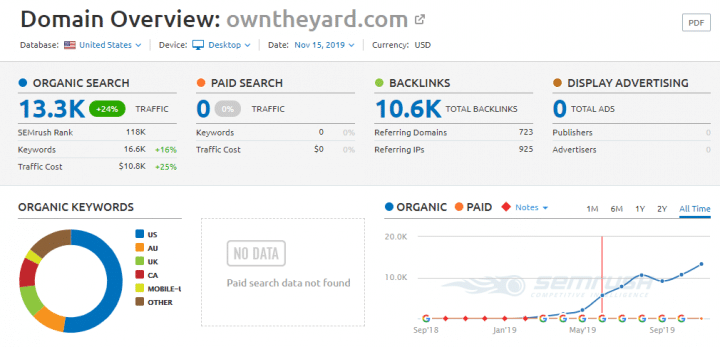
To Teach or To Create? Thoughts on Training Courses, Link Whisper, and Own The Yard

​As you develop skills in a certain area, there often comes a time when you can choose to either create more with that skill or you can teach others how to develop the skills you have developed. When it comes…

The post To Teach or To Create? Thoughts on Training Courses, Link Whisper, and Own The Yard appeared first on Niche Pursuits.


from Niche Pursuits https://ift.tt/2COjEZK

Thursday, November 14, 2019

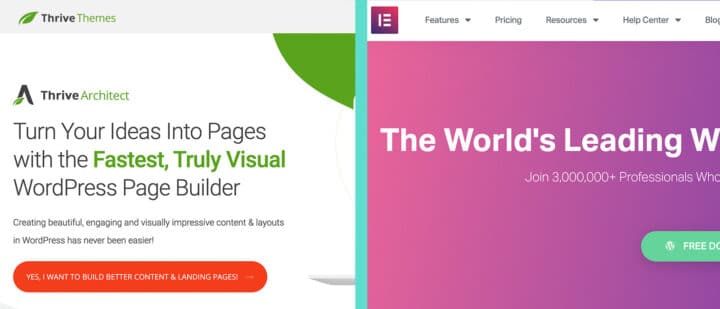
Thrive Architect vs Elementor: Which Page Builder Comes Out on Top?

Thrive Architect vs Elementor

If you’re considering Thrive Architect vs Elementor for your WordPress website, then you’re doing yourself a huge favor! Why? Well, there’s a reason why these are two of the most popular page builders available for WordPress: They’re both top-notch solutions…

The post Thrive Architect vs Elementor: Which Page Builder Comes Out on Top? appeared first on Niche Pursuits.


from Niche Pursuits https://ift.tt/2NO4dXR

How to Make Money With Ecommerce: Get Started for $200 or Less!

How to Make Money With Ecommerce

The world of ecommerce may seem pretty complex, but at its core, ecommerce isn’t that different from the way business has always been done. All “ecommerce” really means is buying and selling through the internet. Over time, this definition has…

The post How to Make Money With Ecommerce: Get Started for $200 or Less! appeared first on Niche Pursuits.


from Niche Pursuits https://ift.tt/2KmTv8F

Wednesday, November 13, 2019

Podcast 163: How Ron Stefanski Went From Professor to $18,000 Per Month With His Niche Website

Today I’m talking with Ron Stefanski from OneHourProfessor.com.  Ron talks about a site that is making $18,000 a month and he shares the exact things that help the site take off. We cover his keyword research strategies and link building…

The post Podcast 163: How Ron Stefanski Went From Professor to $18,000 Per Month With His Niche Website appeared first on Niche Pursuits.


from Niche Pursuits https://ift.tt/2KjllCA

Tuesday, November 12, 2019

BigCommerce Review: The Best All-in-One Ecommerce Platform?

BigCommerce Home Page

I think we all know the dream: you wake up in your bungalow in Costa Rica, stretch for a moment in the warm tropical air, and head down to the beach. You check your phone on the way, which confirms…

The post BigCommerce Review: The Best All-in-One Ecommerce Platform? appeared first on Niche Pursuits.


from Niche Pursuits https://ift.tt/32J6EyW