Thursday, July 30, 2020

Best Endpoint Security Software

Businesses across all industries are susceptible to hackers. This holds true for startups, Fortune 500s, and small businesses alike.

That’s why endpoint security software is so important to have.

Endpoint security software is a combination of cybersecurity and custom privacy controls for business computers, all managed from a single dashboard. Endpoint security encompasses features like antivirus software, firewalls, malware removal, ransomware, and more.

The benefit of endpoint security software is the ability to protect your entire IT infrastructure. Rather than having to install software on every computer in your organization, endpoint security protects all devices in your IT network.

From an IT administrative perspective, endpoint security has significant advantages compared to other software types in this space.

You’ll be able to protect laptops, desktops, and mobile devices for Windows, Apple, Android, and Linux, all from a single dashboard and software solution.

The Top 7 Best Endpoint Security Software

After extensive research and testing, we’ve narrowed down the top seven endpoint security solutions on the market today. Find out more about the features, benefits, pricing, and recommended use cases for each one below.

#1 – Bitdefender — Best Overall Endpoint Security Software

• Solutions for all businesses
• Email security
• Network attack defense
• Device and application control
Start Free Trial

Bitdefender is our top overall recommendation for endpoint security. One of the reasons this software ranks so high on our list is because they have a wide range of products and solutions to accommodate businesses of all sizes.

From small businesses to mid-market and enterprise organizations, Bitdefender has an endpoint security solution for everyone. They even offer endpoint security for managed service providers.

Bitdefender has dozens of awards and certifications for being an industry leader in this category. The software protects 500+ million systems in 150+ different countries.
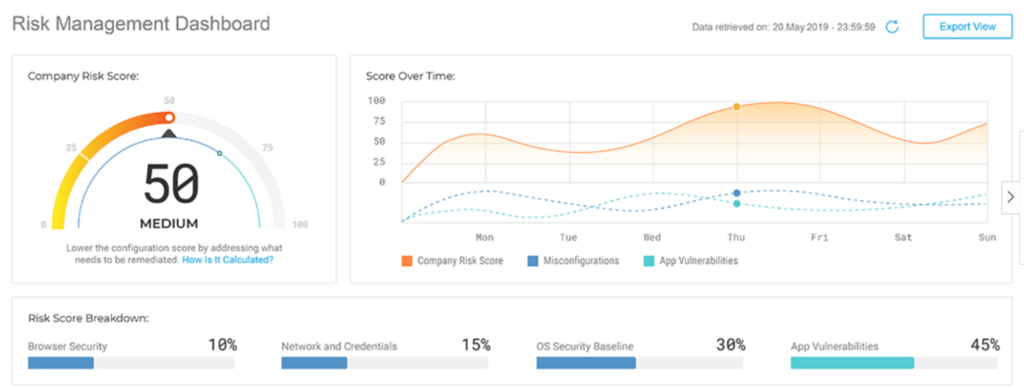
There are three main endpoint security solutions to consider from Bitdefender—GravityZone Elite Suite, GravityZone Ultra Suite, and GravityZone Enterprise Security.

Each product contains similar basic endpoint security features. But they have slight variations to accommodate different business sizes.

Top features of Bitdefender’s endpoint security solutions include:

  • Endpoint risk analysis
  • Patch management
  • Encryption
  • Device control
  • Application control
  • Local and cloud machine learning
  • Email security
  • Network attack defense
  • Automatic disinfection and removal
  • Root cause analysis

Your IT security team will benefit from visual snapshots and real-time reports for end-user devices and server information. Gain valuable insight on user behavior risks, and fix misconfigurations.

From small offices to large data centers, Bitdefender has an endpoint security solution for everything.

The only real drawback is figuring out which option suits your needs the best. Each software version has so many different features and security benefits; it can be difficult to compare. But with that said, the expert support team at Bitdefender can guide you in the right direction.

Try Bitdefender for free before you buy it.

#2 – Avira Antivirus — Best Endpoint Security Software For Small Business

• Starts at $38
• Email security
• Instant notifications
• Network protection
30 Day Free Trial

Lots of endpoint security software is made with large organizations and enterprises in mind. But Avira Antivirus is specifically designed for small businesses.

The solution is perfect for protecting your business from hackers, ransomware, phishing emails, and viruses. You can use this software to manage all of your devices, PCs, and servers from a single place.

Avira Antivirus can secure small businesses with one device or 1,000+ devices.
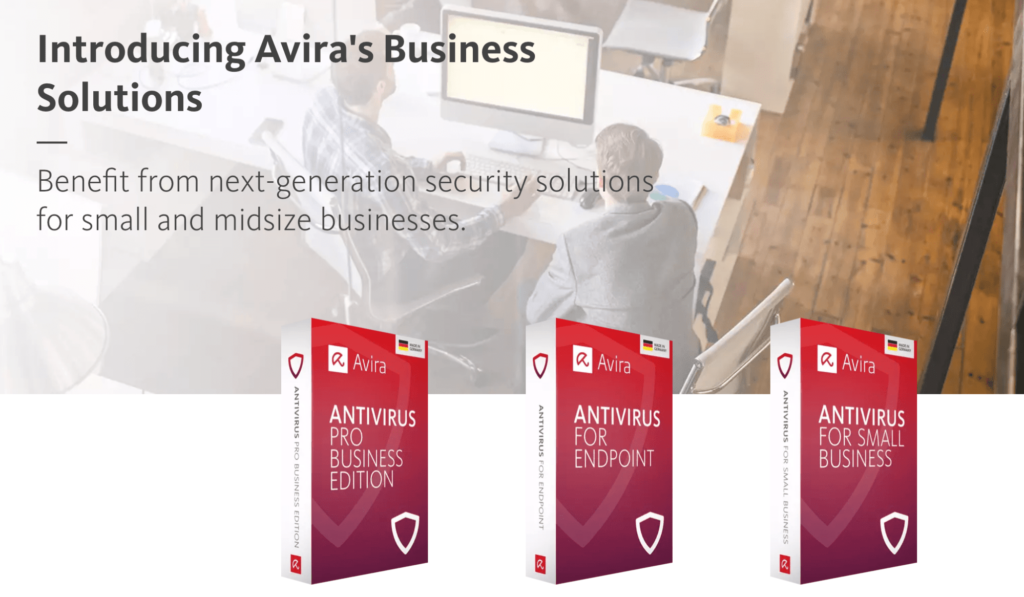
Here’s a quick look at the plans and pricing for Avira’s business solutions:

  • Antivirus Pro Business — $38
  • Antivirus For Endpoint — $142
  • Antivirus For Small Business — $208

The entry-level solution only covers network protection, ransomware protection, and has basic features. Endpoint security doesn’t start until the mid-tier package. Email security is only available for the top-tier plan, which is the software I’d recommend the most.

You’ll also benefit from the Avira cloud, which leverages AI technology to scan multiple devices and analyze behavior.

Avira Antivirus is simple enough for small business owners to manage. You’ll benefit from instant notifications whenever an event occurs. The software also allows you to manage multiple sites or groups directly from your self-managed console.

For those of you who prefer a hands-off approach, Avira has console partners who can handle real-time monitoring for you.

Small business owners that want to secure their workstations, computers, and servers can trust Avira Antivirus for protection. Try it free for 30 days.

#3 – Webroot Business Endpoint Protection — Best For MSPs

• Starts at $30
• PSA, BI, and RMM integrations
• Cloud-based console
• Fast deployment
60 Day Free Trial

Webroot Business Endpoint Protection is built for SMBs and MSPs. As a managed service provider, this solution will help keep you and your clients safe from cybersecurity threats.

The software blocks malicious PowerShell, macros, JavaScript, and VBScript while enabling administrators to detect scripts running in their environment. You can whitelist legitimate scripts as well.

Webroot also prevents file-based attacks and fileless script attacks.
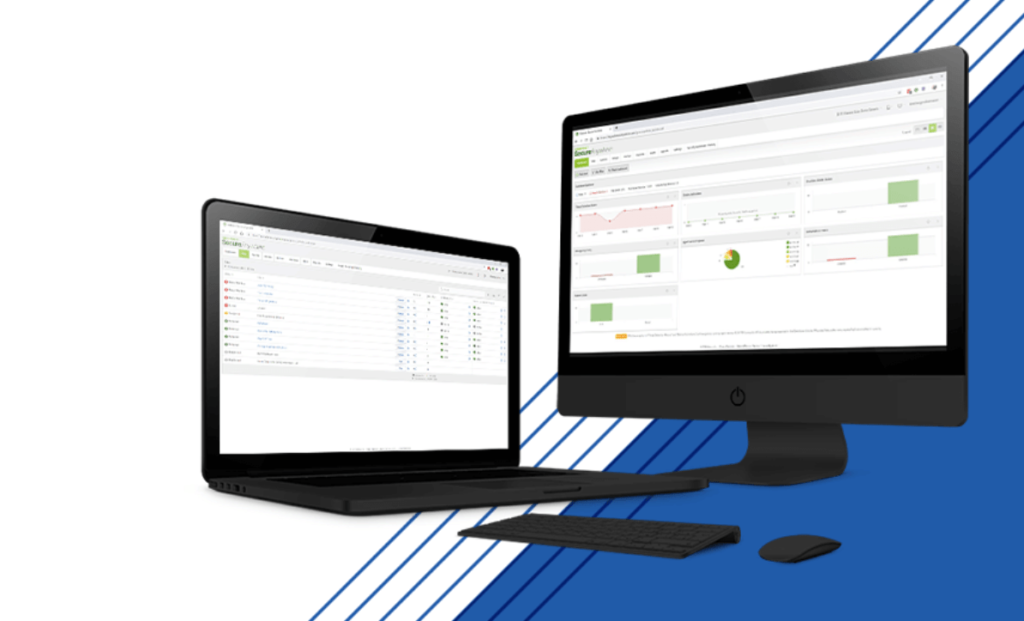
The software is fast to deploy and scans your endpoints quickly as well.

It has a cloud-based console and integrates seamlessly with PSA (professional services automation) software, BI (business intelligence) software, and RMM (remote monitoring management) software. All of these integrations are ideal for managed service providers.

You’ll also benefit from hierarchical views and custom reports. The software is flexible, scalable, and leverages automation.

For such a robust solution, the software is surprisingly affordable. The base software costs just $30 per seat per year. If you’d like to add DNS protection, the upgrade costs an additional $30 per seat per year as well.

Webroot also offers ongoing training, phishing simulations, and compliance training for employees at an additional cost.

Try it free for 60 days.

#4 – Avast Business Antivirus — Best For Cross-Platform Devices

• Starts at $36.99
• Supports Windows, Servers, Mac, and Linux
• Easy to use and deploy
• 30 day money back guarantee
Buy Now

Avast Business Antivirus is an all-in-one solution for managing your data, devices, and users from a single source of truth.

There are different versions of the software that you can mix and match based on the number of devices you have across different platforms—Windows, Windows servers, Mac, and Linux.
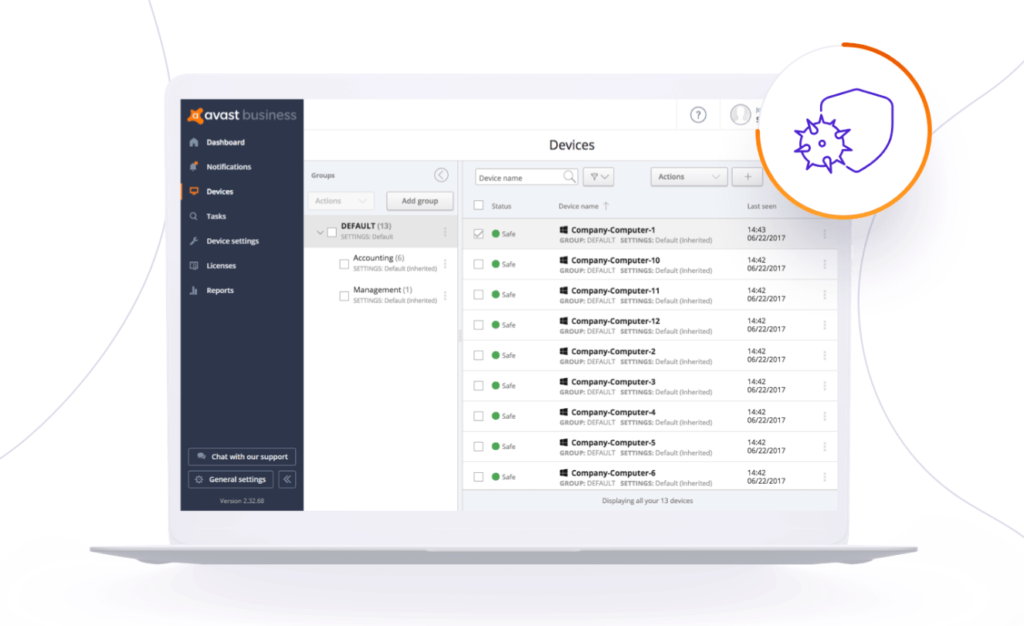
Avast’s next-gen antivirus scans files and programs before they open. The software automatically blocks dangerous websites and checks for threats within incoming and outgoing emails. Corporate documents can be stored safely on secure servers with Avast Sharepoint Server Protection.

Here’s a look at the cost per seat for various device protection:

  • Windows — $56.99 per year
  • Windows Server — $46.99 per year
  • Mac — $36.99 per year
  • Linux — $259.99 per year

Avast offers two and three-year options as well at a lower per-year rate. All solutions come with a 30-day money-back guarantee.

Overall, the software is easy to use and deploy. You won’t have to dedicate a ton of in-house resources to cybersecurity. Avast helps you rest easy.

It’s worth noting that Avast has a separate solution for patch management, which businesses commonly add-on to their endpoint protection plan. The patch management is exclusively for windows devices and starts at $29.99 per year.

#5 – Kaspersky Business — Best For All Business Sizes

• Starts at $89.99
• Various software packages
• Supports Mac, iOS, Windows, and Android
• 30 day money back guarantee
30 Day Free Trial

Kaspersky is one of the few endpoint security solutions that offer different packages to meet the needs of various business sizes. They have cybersecurity protection for small businesses, medium-sized businesses, and enterprises.

So whether you have 15 employees or 1,500 employees, Kaspersky has you covered.

With so many software products to choose from, Kaspersky makes it easy to find the most ideal solution for your business. They’ll ask you a few general questions about your IT infrastructure to steer you in the right direction.

For example, you’ll be asked if you have a dedicated IT specialist and how many devices you need to protect.

You can also use the various grids and charts on the product pages to narrow down your options. Kaspersky highlights which products require “advanced IT skills” vs. “general IT skills” and which software “monitors protection” vs. “manages protection.”

Kaspersky supports Windows, Mac, iOS, and Android devices.

Pricing is based on the plan, number of devices, and length of protection. But here’s a look at the starting rates for some of the packages:

  • Small Office Security — $89.99
  • Endpoint Security Cloud — $300
  • Endpoint Security Cloud Plus — $485
  • Endpoint Security For Business Select — $335
  • Endpoint Security For Business Advanced — $575

You can try these solutions free for 30 days. They’re backed by a 30-day money-back guarantee. Kaspersky also has targeted solutions for email servers, Internet gateway, and hybrid cloud systems.

#6 – Trend Micro Apex One — Best For Visibility and Reporting

• Ransomeware protection
• Root cause analysis
• Centralized visual console
• Cloud or on-premises deployment
Start Free Trial

Trend Micro is known for providing enterprise cybersecurity solutions. So it’s no surprise to see Trend Micro Apex One rank so high on our list for endpoint protection.

The software is robust, feature-rich, and easy to use for something with such advanced functionality.
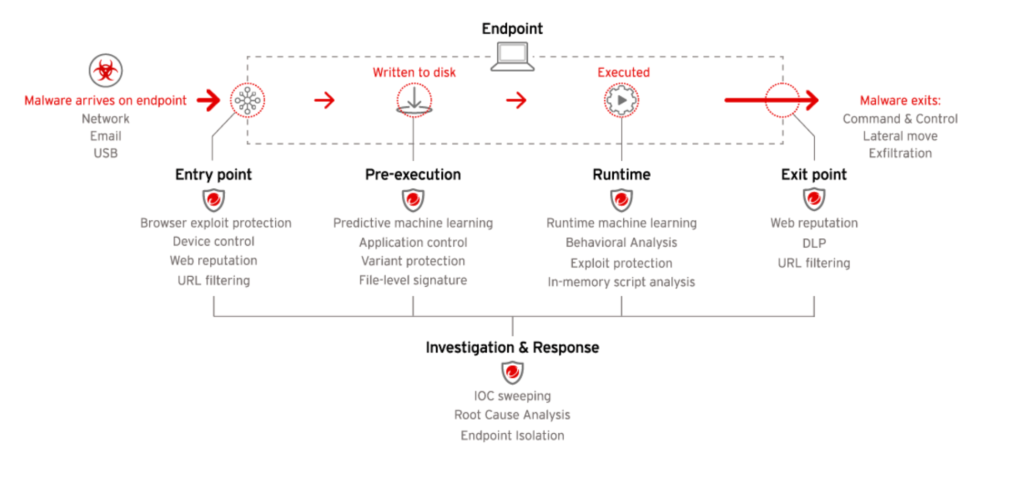
Trend Micro Apex One uses several layers of detection and response to protect endpoints at every stage.

Some of the top features of this software include:

  • Hunt for IOA (indicators of attack)
  • Define hacker’s intent in real-time
  • Sweep user timelines for compromises
  • Interactive root cause analysis
  • Virtual patching capability
  • Physical and virtual device protection
  • Pre-execution and runtime machine learning

Trend Micro protects against advanced malware like ransomware, cryptomining, and fileless attacks. It also protects your endpoints from script injection, memory attacks, and browser-based attacks.

The software’s unique standout is the centralized console, which provides admins with extended control and visibility of the entire organization—across cloud, on-premises, and hybrid models.

Contact Trend Micro to request a free trial and more information on pricing.

#7 – F-Secure — Best Custom Endpoint Security Software

• Cloud or on-site deployment
• Custom policies
• Integrations and API
• Server protection
30 Day Free Trial

F-Secure offers endpoint security solutions for businesses with advanced needs. This enterprise cybersecurity software protects all of your devices and servers using automation.

With F-Secure, you can choose between cloud or on-site deployment as well.
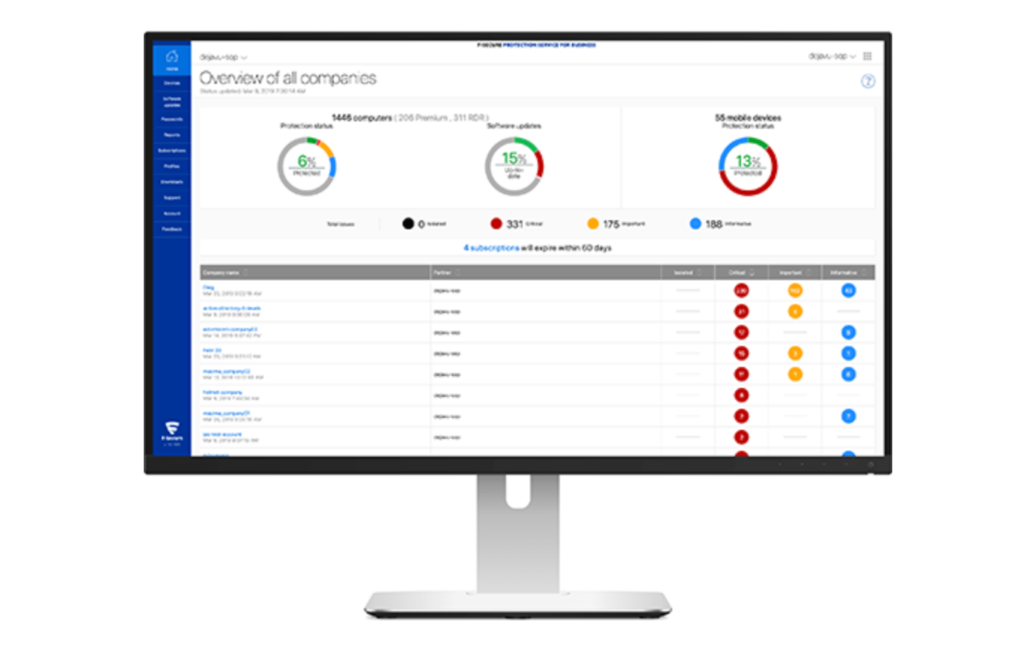
Some of F-Secure’s top features for endpoint security include:

  • Integration with RMM and SIEM software
  • Management API
  • Custom policies for devices, individuals or groups
  • Automated patch management
  • Automatic security database updates
  • Hardware protection from USBs and webcams
  • Browsing protection
  • Windows, Mac, and Linux workstation security
  • iOS and Android mobile security
  • Server protection

There are three different endpoint security solutions to choose from—F-Secure Protection for Business, F-Secure Business Suite, and F-Secure Rapid Detection & Response.

Try it free for 30 days or schedule a demo to get started.

How to Find the Best Endpoint Security Software For You

There are certain factors that must be evaluated as you’re shopping around for endpoint security software. Here’s a closer look at the methodology that we used to narrow down the winners in this guide.

Device Types

What endpoints are you trying to protect?

Make sure the software you’re considering can secure those devices. From desktops to laptops, mobile devices, and severs, the best endpoint security software provides complete protection. The platform powering those devices must be taken into consideration as well—Windows, Mac, Windows servers, Linux, iOS, and Android all have different requirements.

IT Administration

Some endpoint security software is complicated. Those solutions are designed for IT professionals who are more than just tech-savvy.

If you’re planning to deploy and manage the software in-house, make sure the admins are experienced enough to handle those complexities. With that said, there are some solutions out there designed for smaller businesses that don’t necessarily have an entire IT department.

Make sure you understand the difference between these options.

Dashboards and Consoles

Look for endpoint security software that can provide you with a complete view of your organization and IT infrastructure at a glance. Visual dashboards and reports are typically the best.

The console should be both intuitive and uncluttered.

Customization

You’ll need the ability to make changes on the administrative end.

Maybe you want to set up custom policies for certain groups, departments, individuals, or devices. Making these changes should be easy. Do you want to whitelist certain websites? Do you want application control?

It shouldn’t be difficult to make these types of custom changes.

Deployment

Endpoint security software can be deployed on-premises or through the cloud. Some cybersecurity providers offer both solutions. Which one is right for you?

Larger businesses and enterprises typically lean towards on-site deployment. The same goes for organizations managing their own servers on-site. But cloud deployment is usually fine for smaller organizations.

Conclusion

What’s the best endpoint security software? Bitdefender is our top recommendation.

But there are plenty of other great options for specific use cases.

Small businesses should use Avira Antivirus. Managed service providers would benefit from Webroot Business Endpoint Protection. Kaspersky has a wide range of solutions to accommodate businesses of all shapes and sizes. F-Secure is the best custom endpoint security solution. Try Trend Micro Apex One for the best visual dashboards and reporting.

Regardless of your endpoint security needs, you can find the best software using the recommendations in this guide.


from Quick Sprout https://ift.tt/3hQzaXl

Best Credit Cards for Startups in 2020

Advertiser Disclosure: Quicksprout has partnered with CardRatings for our coverage of credit card products. Quicksprout and CardRatings may receive a commission from card issuers.
Editorial Disclosure: Opinions, reviews, analyses & recommendations are the author’s alone, and have not been reviewed, endorsed or approved by any of these entities.

Want to jump straight to the answer? The best business credit card for most startups is definitely the Chase Ink Business Cash.

A good business credit card is essential for startups.

From daily purchases like ink or paper to flights, hotels, and your phone subscription, charging a credit card is your best option.

That’s because the best business credit cards offer exceptional benefits like cash back, rewards points, and travel miles.

Some company credit cards can provide purchase insurance as well as supplementary coverage for car rentals. You can even use a low-interest credit card to finance purchases if struggling to qualify for a small business loan.

With so many business credit cards to choose from, it can be tough to find the best option for your startup, which is what inspired me to create this guide.

The 8 Best Credit Cards For Startups in 2020

In a market flooded with hundreds of business credit cards, there are eight that I would recommend for startup companies.

I’ll highlight the top benefits, introductory offers, costs, and notable terms for each one as we continue below.

Best Startup Business Credit Card Reviews

Chase Ink Business Cash

Chase Ink Business Cash Credit Card

Chase Ink Business Cash is the best overall credit card for startup companies. It has exceptional rewards, benefits, and an enticing sign up bonus.

  • No annual fee
  • $500 sign up bonus after spending $3,000 in first the three months

Chase Ink Business Cash card gives you cash back for common startup expenses—which is fantastic.

That includes 5% cash back each year on office supplies, internet, phone services, and cable on the first $25,000 spent in those categories. You’ll also get 2% cash back at gas stations and restaurants on the first $25,000 in combined spending each year.

All other purchases earn 1% cash back with no limit.

Additional features and benefits of the Chase Ink Business Cash card include:

  • Fraud protection
  • Free employee cards with individual spending limits
  • Travel and emergency assistance services
  • Extended warranty protection
  • Zero liability for unauthorized charges
  • Purchase protection (covers new purchases against theft or damage for 120 days)
  • Auto rental collision waiver

Between these benefits, the cash back program, sign up bonus, and no annual fee, Chase Ink Business Cash should be a top consideration for any startup company.

*Terms apply – Learn how to apply online


Chase Ink Business Unlimited

Chase Ink Business Unlimited

Chase Ink Business Unlimited is nearly identical to the Ink Business Cash card. The card offers the exact same benefits from fraud protection to the auto rental collision waiver in the bullet list above.

  • No annual fee
  • $500 sign up bonus after spending $3,000 in the first three months

While the benefits and card terms are the same between these two cards, the rewards structure is not.

Instead of offering various cash back percentages for different categories, Chase Ink Business Unlimited gives you 1.5% cash on everything. This is a better option for those of you who don’t want limitations or restrictions on the amount of cash back you can earn.

It all depends on the type of business you have.

For example, let’s say you’re planning to use a credit card to purchase things like inventory or other expenses that don’t fall into the Ink Business Cash rewards categories. In this scenario, Chase Ink Business Unlimited would be a better option for you.

*Terms apply – Learn how to apply online


American Express Blue Business Plus

American Express Blue Business Plus

American Express has one of the best reputations in the credit card industry. For both personal credit cards and business credit cards, Amex is known for exceptional customer service.

If you’re launching a startup, your company should consider the American Express Blue Business Plus card as a top option.

The Amex Blue Business Plus card is great for those of you who want to earn rewards points, as opposed to cash back or travel miles.

You’ll get 2x membership rewards points on purchases in any category for your first $50,000 spent each year. After that, you can earn unlimited 1x points.

Amex gives you expanded buying power, with the ability to make business purchases above your spending limits without a penalty, although restrictions apply.

The card comes with account alerts, online statements, a detailed year-end summary, free employee cards, and one of the best business credit card mobile apps on the market today.

American Express customer service and dispute resolution are second to none. So if you prioritize great customer support, this card is perfect for you.

*Terms apply – Learn how to apply online


American Express Blue Business Cash

American Express Blue Business Cash

If you prefer cash back instead of reward points, consider applying for the American Express Blue Business Cash credit card.

The card terms are basically identical to the Amex Blue Business Plus card. The rewards structure is the biggest difference between the two cards.

With the Amex Blue Business Cash card, you can earn 2% cash back on your first $50,000 in purchases per year. After that, you’ll receive unlimited 1% cash back on everything else.

Other top benefits include:

  • Expanded buying power
  • Car rental loss and damage insurance
  • Global hotline assistance
  • Free employee cards
  • Account manager access
  • Amex Business mobile app
  • Account alerts
  • Vender pay via Bill.com
  • Extended warranty protection for eligible purchases
  • Purchase protection for eligible purchases

Overall, the American Express Blue Business Cash card is arguably the best free cash back business credit card on the market today.

*Terms apply – Learn how to apply online


Capital One Spark Cash Select

Capital Oe Spark Cash Select

Capital One Spark Cash Select is another great option for earning cash rewards for all of your business expenses. The card offers unlimited 1.5% cash back on everything you buy.

  • No annual fee
  • $200 sign up bonus after spending $3,000 in the first three months

The card is very similar to the Chase Ink Business Unlimited credit card. Chase does offer a better sign up bonus ($200 vs. $500) for spending the same amount in three months.

With that said, the Capital One Spark Cash Select card has its fair share of benefits.

  • Dedicated business customer support
  • Fraud alerts
  • Free employee cards
  • Payment flexibility (pick your monthly due date)
  • Transaction details
  • Itemized year-end summary
  • Download purchase records into formats for QuickBooks and Quicken

For startup company credit cards, I typically lean towards cards with no annual fee.

But if you want more than 1.5% cash back, consider applying for the Capital One Spark Cash card instead. This gives you unlimited 2% cash back, but comes with a $95 annual fee (waived the first year).

Startups charging less money on their cards will be fine with the Spark Cash Select card.

*Terms apply – Learn how to apply online


Capital One Spark Miles

Capital One Spark Miles

Some people would rather earn travel rewards instead of cash back. So if you’ll be traveling frequently for your startup company, Capital One Spark Miles is a top credit card to consider.

  • $95 annual fee (waived the first year)
  • 50,000 mile sign up bonus after spending $4,500 in first three months

As I mentioned earlier, I normally don’t recommend cards with annual fees to startup companies. But this one is easy to justify if you travel often.

50,000 miles is equal to $500 in travel. Considering that the annual fee is waived the first year, the sign up bonus alone makes up for the first six years using the card.

You’ll also earn unlimited 2x miles on all purchases. There are no blackout dates, seat restrictions, or minimums for redemption.

Other top benefits of the Capital One Spark Miles Card include:

  • $100 credit for TSA PreCheck or Global Entry
  • Earn 5x miles on hotels and car rentals booked through Capital One Travel
  • $0 fraud liability
  • No foreign transaction fees
  • Card lock

If you’re launching a startup that requires lots of business travel, this is the best card for you.

*Terms apply – Learn how to apply online


Capital One Spark Classic

Capital One Spark Classic

To qualify for the best business credit cards, you’ll need to have excellent credit. But that’s not reasonable for all small business owners.

If you have a low credit score but still want access to credit card rewards, the Capital One Spark Classic will be your best option.

  • No annual fee
  • Unlimited 1% cash back on all purchases

While the card doesn’t come with a sign up bonus or low interest rates, you’ll still have access to some of Capital One’s top card benefits.

  • No foreign transaction fees
  • Download purchase records to Quicken and QuickBooks formats
  • Auto rental damage waiver
  • Extended purchase protection (90 days for eligible items)
  • Fraud coverage and alerts
  • Free employee cards

Overall, this is a no-frills business credit card. But it’s a great way to build your credit by using the card responsibly. Plus, you’ll still get 1% cash back on everything.

I’d apply for the Capital One Spark Classic if you can’t get approved for other business credit cards.

*Terms apply – Learn how to apply online


US Bank Business Platinum

US Bank Business Platinum Card

Sometimes a startup company needs to get creative with financing purchases. Certain small business loans have restrictions for what you can spend the funds on.

Credit card financing has become an alternative solution for small business owners. But to consider this, you’ll need to find a card with low-interest rates.

That’s when the US Bank Business Platinum card comes in handy.

The card definitely lacks quality rewards benefits. So I’d only consider it as an alternative financing method.

*Terms apply – Learn how to apply online


How to Choose the Best Credit Card For Your Startup Business

There are certain factors that must be taken into consideration when you’re evaluating business credit cards for your startup. This is the methodology that we used to come up with this guide.

Annual Fee

Most startup companies should look for credit cards with no annual fee. It’s crucial to save money everywhere possible when you’re first starting a business.

Seven of the eight cards on the list above are free. The only one you have to pay for is the Capital One Spark Miles card. But the fee is just $95 per year, waived in year one, and easy to justify for frequent travelers.

Exclusive business credit card fees can range above $500. While you may consider those down the road, I’d steer clear of them in the early stages of your business.

Interest Rates

You should always aim to pay your credit card balance in-full each month. But sometimes cash is tight for startups, so you might have to finance a few purchases.

Look for a credit card offering 0% APR for purchases in your first year. Aim to pay those off before you start incurring additional interest fees.

A low-interest credit card might have cheaper rates than certain business loans. So take that into consideration before making large purchases.

Credit Score

When launching a startup, your personal credit score will be used when you apply for a credit card. That’s because new businesses don’t have any credit records on file.

A high score will give you access to better cards with lower interest rates and top rewards.

However, not everyone falls into this category. If your credit score is below average, there are certain cards that you should be applying for instead. The Capital One Spark Classic is a great example.

Rewards

Credit card rewards usually come in one of the following three formats:

  • Cash back
  • Membership points
  • Miles

I’d recommend cash back rewards cards for most startup companies. The cards on this list range from 1% to 5%. Some have restrictions on how much cash back you can earn, while others are unlimited for all purchases.

A rewards program with miles is ideal if you need to travel often for business purposes. Otherwise, cash back is just fine.

Benefits

Every credit card has a wide range of perks and benefits.

From a sign up bonus to purchase protection and fraud alerts, the list varies by card type and card company. You’ll just have to figure out which benefits are best for your spending habits.

For example, no foreign transaction fees and auto rental waiver insurance shouldn’t win you over if you never rent a car and don’t make purchases in foreign currencies.

Conclusion

Startup companies have unique needs compared to well-established businesses. There are certain credit cards that are ideal for newer small businesses.

Here’s a recap of the top eight that I’d recommend.

All of these cards come with a wide range of benefits for different startup types and spending habits. I’m confident that you can find exactly what you’re looking for on this list.

Advertiser Disclosure: Quicksprout has partnered with CardRatings for our coverage of credit card products. Quicksprout and CardRatings may receive a commission from card issuers.


from Quick Sprout https://ift.tt/3cgYVOJ

The Single Best WordPress Plugin Across Every Essential Category

WordPress is great—for a lot of reasons.

One of the biggest reasons is because it’s flexible. There are tons of amazing WordPress plugins you can use to customize your website.

But which one is the best? And which one will do the most for your website?

There are more than 54,300 WordPress plugins. It’s an overwhelming number to say the least.

That’s why I took the time to identify the best WordPress plugins for the most popular categories. I’ve already created extensive guides for each one of these 13 categories. Every guide contains a list of the best WordPress plugins in each segment. And if you’re after something specific, you should check out that post — many of plugins I recommend are for particular use cases.

In-Depth Reviews of the Best WordPress Plugins in 13 Categories

This my the complete list of my in-depth plugin reviews for…

The Best of the Best WordPress Plugins

Each of those posts reviews multiple plugins in each category. But most people don’t need to go that deep. That’s why I made this best of the best list. This is a resource to identify the top must-have plugin for each category.

The plugins on this list are not the niche options; these are the plugins that will appeal to the masses. They’re the WordPress plugins I’d recommend broadly.

Best SEO Plugin for WordPress — Yoast SEO

There are hundreds of WordPress plugins that will help improve your SEO strategy, but one stands above the rest.

Yoast SEO

Yoast SEO plugin

Yoast SEO is an all-in-one solution for your WordPress SEO needs. With more than five million active installations, it’s one of the most popular WordPress plugins on the market. I’m not saying you should always follow the crowd, but a number that big is a great indication of quality.

Why I like it:

  • Create and manage XML sitemaps without having to code on your own
  • Identify and avoid duplicate content on your website
  • Comes standard with templates for meta-descriptions and titles

Cost: Free; $89 per year for premium

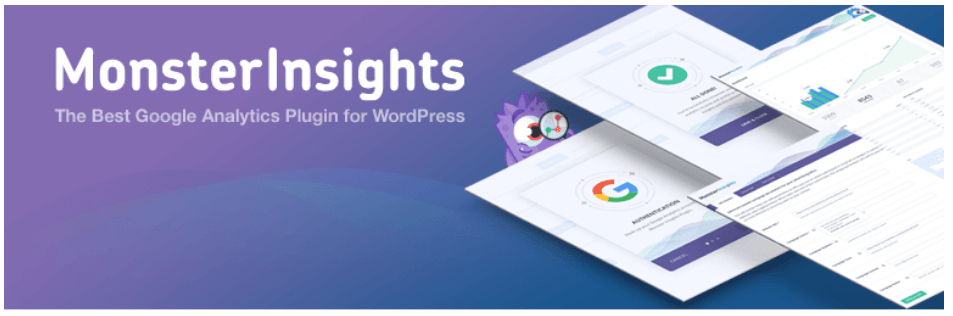
Best Google Analytics Plugin for WordPress — MonsterInsights

Google Analytics gives you in-depth knowledge and insights about your website traffic. By installing a plugin, you can have access to all of your Google Analytics reports without leaving your WordPress dashboard.

MonsterInsights

MonsterInsights is the best WordPress plugin for Google Analytics. This plugin lets you add your Google Analytics code to your website without any manual coding required. It’s advanced and versatile enough to handle analytics for all websites, including ecommerce shops. No wonder it has two million active installations.

Why I like it:

  • Detailed reports about your audience and their behavior on your website
  • Helps ecommerce sites track KPIs like conversion rates and average order value
  • Identifies your best content and top performing landing pages

Cost: $99.50 for a basic website, $199.50 for ecommerce sites, and $499.50 for agencies and developers — all plans billed annually

Best Membership Plugin for WordPress — MemberPress

The whole concept behind a membership website is to drive recurring revenue with a subscription business model. You can offer premium features and content to your paid members. In order to set this up, you’ll need to install a plugin to manage memberships and payments on your WordPress site.

MemberPress

MemberPress is the best plugin for this category because it makes it easy for you to convert your existing website into a membership site, without having to start from scratch. All you have to do is add the details of your payment gateway and set up your products and content in a members only area.

Why I like it:

  • It supports payment gateways like PayPal and Stripe
  • Integrates with your email marketing software
  • Comes with pricing page templates for membership options

Cost: $129 per year for Basic, $249 per year for Plus, and $349 per year for Pro

Best WordPress Backup Plugin — VaultPress

In the event of a crash or malicious attack on your website, a backup plugin will be there to restore your content and minimize downtime. It will also act as a fail-safe against human error on your WordPress dashboard.

VaultPress

We’ve been using VaultPress here on Quick Sprout since 2011. So naturally, I think it’s the best WordPress backup plugin, or else I’d switch to something else. It’s so easy for you to set up and automatically back up your website content. You don’t need to be a tech wizard to use this plugin.

Why I like it:

  • Great for site migrations, restores, and file repairs
  • The calendar view allows you to locate and restore content from old backups
  • Built-in file scanning and spam defense helps reduce chances of malware, viruses, spam, or a malicious attack

Cost: Plans range from $39 to $299 per year

Best WordPress Cache Plugin — WP Rocket

Adding a cache plugin to your website will help you speed up your page loading times. Out of more than 900 cache plugins available, one stands out as the best.

WP Rocket

The WP Rocket WordPress plugin is extremely versatile. It’s simple enough for beginners to figure it out, but has advanced features that can meet the needs of developers with more technical experience.

Why I like it:

  • Quick setup and simple navigation
  • Image on request feature (images are only loaded when the scroll depth is reached)
  • Minifies JavaScript, CSS, and HTML files to speed up loading times

Cost: $49 per year for one website, $99 per year for three websites, and $249 per year for unlimited websites

Best WordPress Security Plugin — WordFence Security

Roughly 90,000 websites get hacked every day — 83% of those websites use WordPress. Clearly, security needs to be at the top of your priority list. You can install a WordPress plugin to help beef up your website security.

WordFence Security

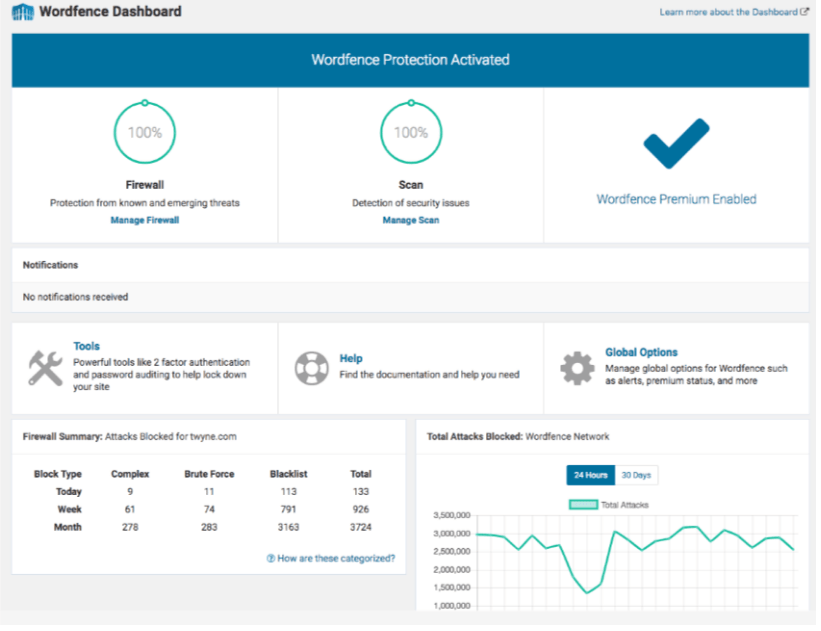
More than two million WordPress websites are currently using the WordFence Security plugin as a security solution. The plugin fights against malware, spam, and other threats in real time. It’s a great option for those of you who don’t have a background in IT or cybersecurity. You’ll still be able to secure your website with WordFence Security.

Why I like it:

  • Block attacks from specific regions that are known for cybercrime
  • See trends and reports about any attempted hacks on your website
  • Firewall blocks and brute force attack protection comes standard

Cost: Free; premium version starts at $99 per year with other add-ons available for purchase

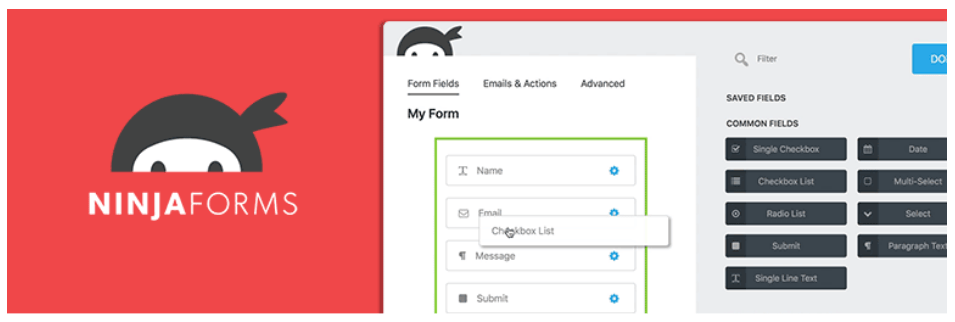
Best Form Plugin for WordPress — Ninja Forms

Website forms are crucial for collecting information. It’s the best way to get your website visitors to sign up for something, like your email subscription list.

Ninja Forms

Ninja Forms is great because of its seamless integration into your WordPress dashboard. Once you have this plugin installed, you can create your first form in just minutes. That’s why it’s no surprise that more than one million websites use Ninja Forms.

Why I like it:

  • Can integrate with your email marketing software
  • Collect payments with Stripe, PayPal Express, and Elavon
  • Export and analyze the data that’s submitted through forms

Cost: Free; $99 per year for Personal, $199 per year for Professional, $499 per year for Agency. Add-ons range from $29 to $129 per year.

Best WordPress Gallery Plugin — NextGEN Gallery

WordPress has a basic image gallery. However, I wouldn’t recommend using it because it’s so limited. For truly improving the visual appeal of your website, you’ll need something extra. A gallery plugin is ideal.

NextGEN Gallery

NextGEN Gallery is one of the best WordPress plugins because you’ll have so many different gallery options to choose from. Other plugins just give you a couple of basic templates for adding images. It’s a great option for photographers and artists.

Why I like it:

  • Customize slideshows with effects, transitions, and timing
  • Add watermarks and hotlink protection to your images
  • Ecommerce integration for selling images on your site

Cost: Free; paid versions available for $79, $99, and $139 per year

Best WordPress Slider Plugin — Smart Slider 3

Do you want to add a slider to your website? You can make sliders, carousels and blocks using a slider plugin. My favorite is Smart Slider 3, because it’s easy to use, reliable and super flexible.

Using Smart Slider 3, you’re able to create a slider on your WordPress website using powerful design tools, and pre-built templates.

There’s a free version and a pro version.

Why I like it:

  • Easy to build a slider with layers
    Several different slider types to choose from
    Prebuilt template and slider library

Cost: Free; aid versions available for $35-$250 depending on how many sites you want to implement the plugin on.

Best Social Media WordPress Plugin — Super Socializer

Your website needs to be integrated with your social media profiles. Otherwise, you’re not maximizing the potential of your social media. WordPress plugins can help you increase the exposure of your website content on social media.

Super Socializer

There are so many social media WordPress plugins designed for specific features. But Super Socializer is more of an all-in-one solution. So if you don’t want to install multiple social media plugins, I’d definitely recommend Super Socializer.

Why I like it:

  • Site visitors can use their social login information to create an account on your website
  • Add social sharing icons to your pages
  • You can get more blog comments by enabling social comments

Cost: Free

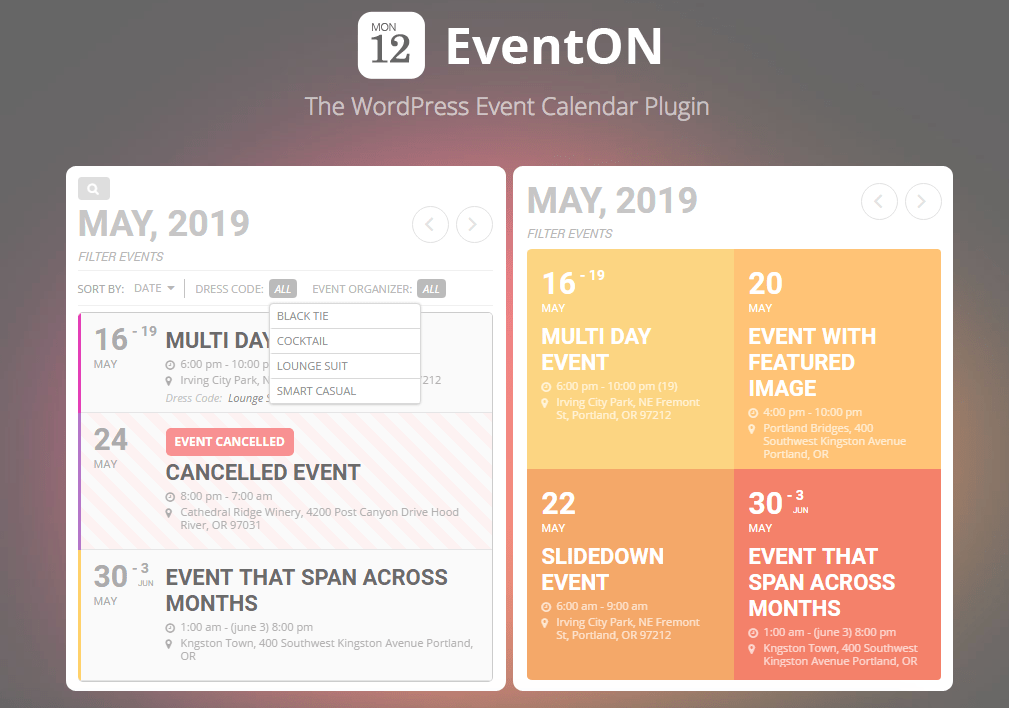
Best WordPress Calendar Plugin — EventON

Every business needs to stay organized. Calendar plugins can help you manage events, tasks, and bookings on your website. Some of these plugins are more advanced than others, but overall, there’s one that shines above the rest.

EventON

EventON allows you to create calendars that will “wow” your website visitors. We’ve all seen websites with boring calendars that look like they were designed a decade ago without any updates. That definitely isn’t be the case here. EventON has modern designs that are visually appealing and fully functional.

Why I like it:

  • It can manage events lasting for multiple days, weeks, or months at a time
  • Add images to your event listings and integrate them with Google Maps
  • Sell event tickets with Woocommerce support

Cost: $24; add-ons sold separately

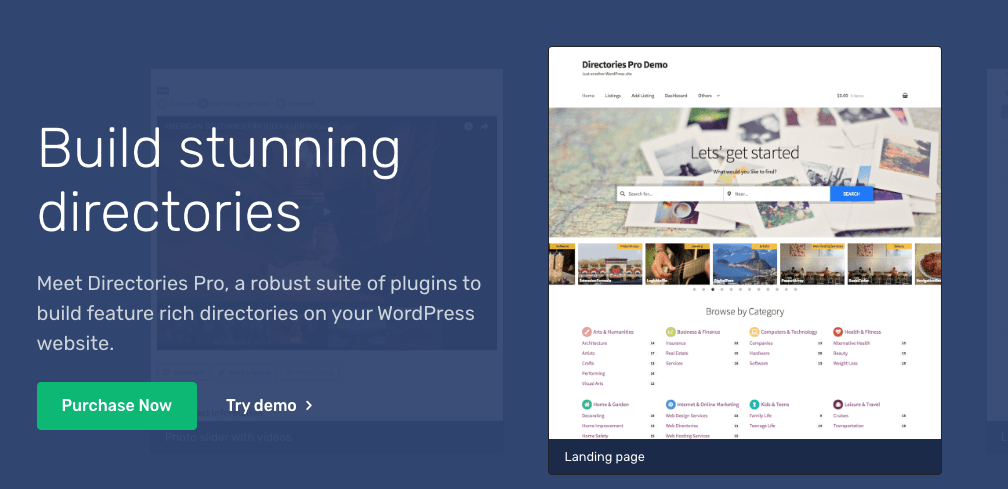
Best WordPress Directory Plugin — Directories Pro

Directories are extremely versatile. Whether you want to add a directory to your site for internal purposes or create a global platform of business directories, the right WordPress plugin can help you meet those needs.

Directories Pro

No matter what type of directory you want to add to your website, the Directories Pro WordPress plugin will make it possible. This plugin is highly responsive and uses caching to boost your website’s performance. Make sure to enable reviews for your directory to enhance the content. You can even integrate listings with Google Maps.

Why I like it:

  • Drag-and-drop editor makes it easy for you to customize the directory without coding
  • Include an option for websites to claim their listing in your directory
  • Add paid listings to your directory

Cost: $39

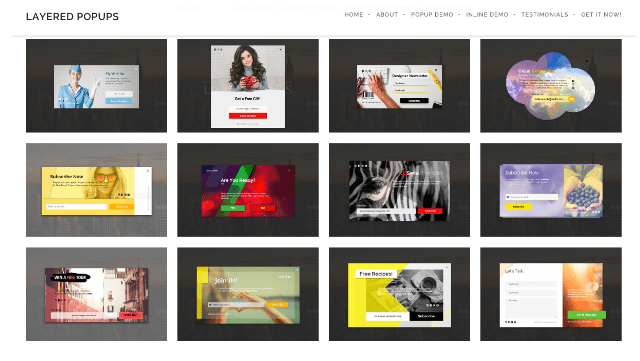
Best WordPress Popup Plugin — Layered Popups

Do you want to add popups to your website? Popups can be great for getting email subscribers, driving downloads, generating sales, or enticing other actions on your website. Regardless of your intention, you’ll need a WordPress plugin to make it work.

Layered Popups

Layered Popups is great because you can create popups that are visually appealing, so you have a chance to get creative. These popups will clearly stand out to your website visitors. It’s a chance for you to make unique popups compared to what people are used to seeing on other websites.

Why I like it:

  • Integrates with 56 of the most popular email marketing platforms
  • Run A/B tests to fully optimize the performance of each popup
  • Multiple options for triggering popups (such as exit intent or scrolling depth)

Cost: $21

Best WordPress Booking Plugin — Bookly

Booking plugins are necessary for any website that takes appointments or reservations. Online booking systems will optimize your process on the back end while simultaneously improving the customer experience. If you’re not allowing online bookings, you’re ignoring the preferences of the majority of your customers — 70% of people prefer to book appointments online with service providers.

Bookly

Bookly has a sleek and modern design on both the frontend and backend. Booking options are completely customizable and fully responsive. You’ll definitely want to install Bookly if you’d like to take your customers through a quick and easy booking process.

Why I like it:

  • Custom pricing and availability for different employees (such as trainers at a gym)
  • Option to process payments or collect deposits at the time of booking
  • Customers can set up recurring appointments or get added to a waiting list

Cost: $89; add-ons sold separately

Best Website Builder Plugins — ZeGuten

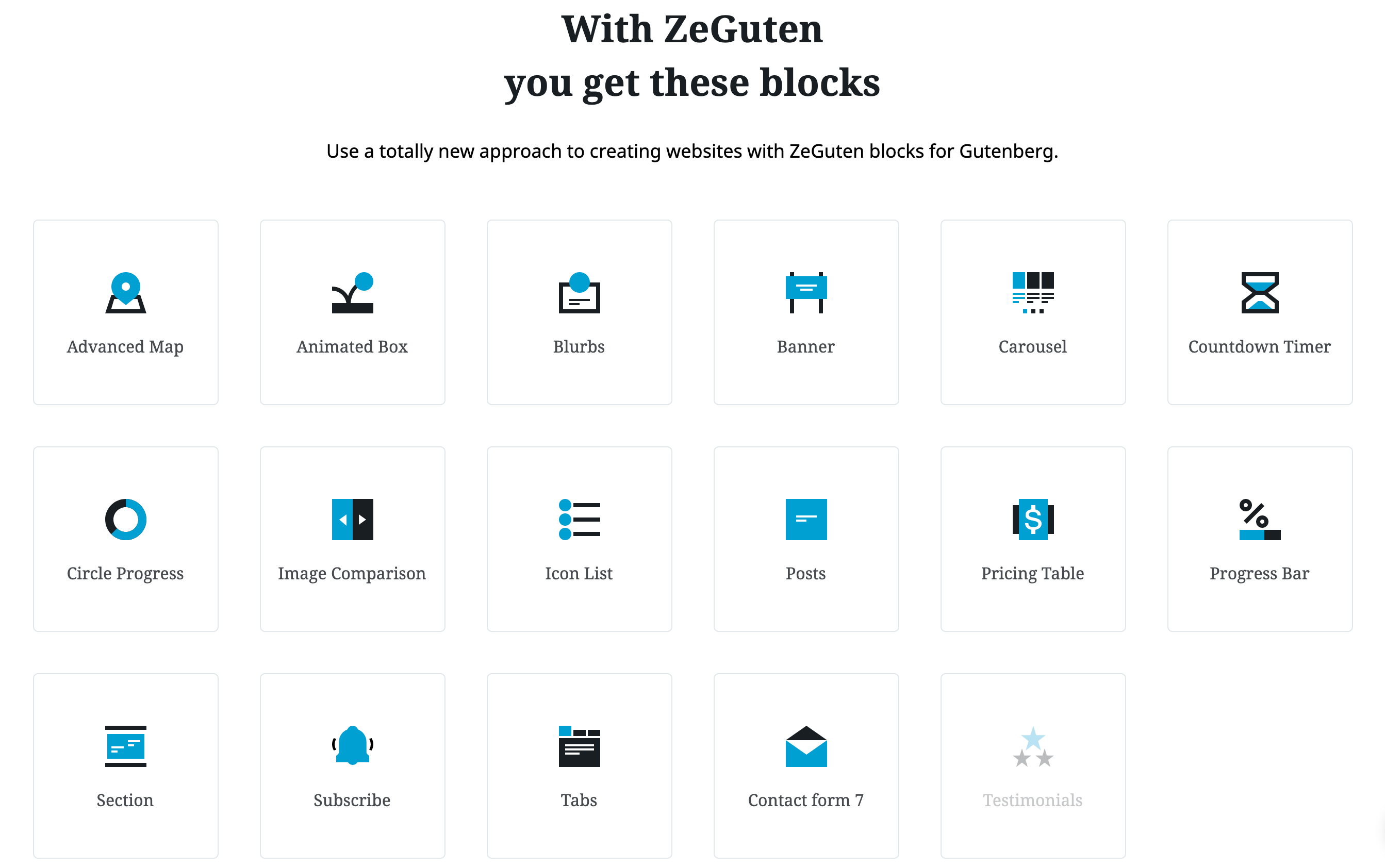
ZeGuten is a website builder plugin. Instead of building your site line-by-line with code, you’ll use “blocks” to put it altogether. It works with everything from an online store to a fitness blog. It’s also responsiveness right out of the box so your website will looks great on mobile.

ZeGuten Plugin Blocks

There are 17 easy-to-customize blocks that you’ll work with to build each page on your site. This is the perfect option if you want to customize your WordPress site beyond a basic theme but don’t want to code the whole thing yourself.

Why I like it:

  • No coding required, make your WordPress site look exactly the way you want
  • A bunch of extra design features like animation
  • SEO-friendly and requires no coding skills

Cost: $15

What exactly is a WordPress plugin?

It’s essentially an app for your website.

I love how WordPress is designed to be lean out of the box. This prevents code bloat — your website isn’t dragged down by bulky code for things you don’t need or use. The core of WordPress is simple. You can customize it with plugins.

The core of WordPress is designed to be lean and lightweight, to maximize flexibility and minimize code bloat. Plugins then offer custom functions and features so that each user can tailor their site to their specific needs.— WordPress Codex

Installing a plugin to your WordPress site provides you with advanced features that aren’t available with the bare bones version of WordPress.

Where can you get a plugin? There are a number of places, but the primary source is the Official WordPress Plugins Repository.

Conclusion: What’s the best WordPress plugin?

These are the best overall options for each of the essential categories. Keep in mind, I identified these as the best because they appeal to the widest possible audience. Some of you may want plugins that have more specific features and functionality within each category.

For example, you might want an SEO plugin that specifically helps you identify relevant keywords while you’re blogging. Or maybe you want a social media plugin that just adds your Instagram feed to your website.

Do you want a Google Analytics WordPress that’s made for tracking specific events on your website? There’s a plugin for that too.

There are caching plugins that are better for things like the cloning and migrating content between servers. The list goes on and on.

So I’d definitely recommend reviewing the individual guides for each category as well. That way you’ll know for sure that you’re installing a plugin that meets your specific needs.

More WordPress Plugin Guides


from Quick Sprout https://ift.tt/2TLdhR0

Best Social Media WordPress Plugin – (Review Updated for 2020)

A good social media WordPress plugin lets visitors engage with you on social media. It also helps social media followers convert on your website.

Let’s look at an example: You wrote and published a killer blog post. A reader loves your post and wants to share it with their friends on social media. How do they do this?

Without the proper tools, the person would have to copy your blog link, navigate to the social platform, login, and manually paste the link before sharing it. The person may ultimately decide that it’s just not worth going through all of those steps to share your post. That decision may not even be conscious—they may get distracted and move on to something else.

Social media WordPress plugins can make it easy for website visitors to share with just one click.

That’s just one example of why you need to install a social media plugin to your WordPress site. As we continue through this guide and review the best social media WordPress plugins, you’ll learn about the additional benefits.

The 6 Best Social Media WordPress Plugins

After taking a look at dozens of social media WordPress plugins, I’ve narrowed it down to the six best:

  • Social Warfare
  • Instagram Feed
  • Social Locker
  • Super Socializer
  • Revive Old Post
  • Kiwi Social Share

Read on to find my in-depth reviews of each one.

1. Social Warfare

Social Warfare

Social Warfare is considered among the best social media WordPress plugins because it’s so simple. Other plugins have a reputation for slowing down your website, but that shouldn’t happen with Social Warfare.

This plugin is designed to increase shares by adding social sharing icons to your website. You can add buttons for the most popular social media networks, including:

  • Facebook
  • LinkedIn
  • Twitter
  • Pinterest

If you upgrade to Social Warfare Pro, you’ll gain access to share buttons for other platforms like Reddit, WhatsApp, Buffer, Tumblr, Pocket, and more.

Social Warfare also lets you choose exactly where you want to place the sharing buttons. You can add them above your content, below your content, in both of these locations, or manually place them on your pages. This plugin offers floating share icons as well — as a user scrolls your site, the sharing buttons remain in view at all times.

Social Warfare allows you to track your results with UTM parameters. You can view analytics to see how well your sharing icons are performing so you can tweak them, if necessary.

2. Instagram Feed

Instagram Feed

As the name implies, the Instagram Feed WordPress plugin lets you share your Instagram content directly on your website. By adding your Instagram posts to your website, visitors will have a better idea of what type of content you share on that platform. And, they won’t have to search for your profile on Instagram. This is a great way to increase your Instagram followers. It’s also a great way to keep your site updated with the fresh images you’re posting on Instagram.

Setting up the plugin is easy. All you need to do is link your Instagram account and determine where you want the feed displayed on your website.

There is a premium version of this plugin that comes with features like:

  • Shoppable feeds
  • Ability to filter content based on hashtags
  • Popup lightboxes
  • Hashtag feeds
  • Advanced moderation for hiding or showcasing specific posts
  • Post comments for user feeds

For one website, you can purchase the pro license for $39. But if you just want the basic feed on your website, you can stick with the free version and save a few bucks.

3. Social Locker

Social Locker

Social Locker is definitely one of my favorite social media WordPress plugins. Personally, I love the whole concept behind how this plugin works.

Here’s the thing. Just adding social sharing icons to your website doesn’t necessarily give people a reason to follow you or share your content. You can increase those chances by installing this plugin.

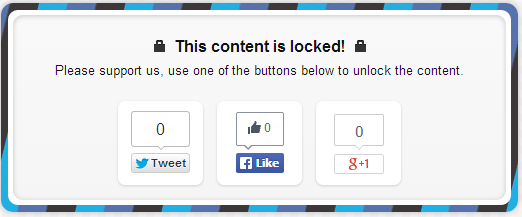
That’s because Social Locker restricts your premium content. For example, let’s say you have an ebook on your website. As opposed to charging for downloads, you use social media engagement as a currency. If someone follows, likes, or shares content on your website, the ebook is unlocked.

Here’s an example of what this would look like from the perspective of a website visitor:

Social Locker Example

For those of you who normally charge for various types of content on your website and don’t want to give it away for free, you can use these social engagements to generate discounts for that content.

Maybe you have an online video tutorial that you normally charge to view. With Social Locker, you can choose to offer the video at a discount if a user shares your content.

This plugin helps you drive social media traffic while simultaneously gaining quality followers. It’s a great way to generate new leads and drive conversions with social media integration on your website.

4. Super Socializer

Super Socializer

Allowing your website visitors to create a customer profile benefits everyone — the user will receive more personalized content, and you’ll be able to learn more information about your customers so you can target them accordingly. It’s a win-win situation.

In order for this strategy to be effective, people need to create these profiles in the first place. That’s easier said than done.

Think about it for a minute: What steps does someone need to take to create a profile? At a minimum, they need to provide you with some personal information and create a username and password. People have so many accounts to keep track of on various websites. Is your site important enough to them to go through this?

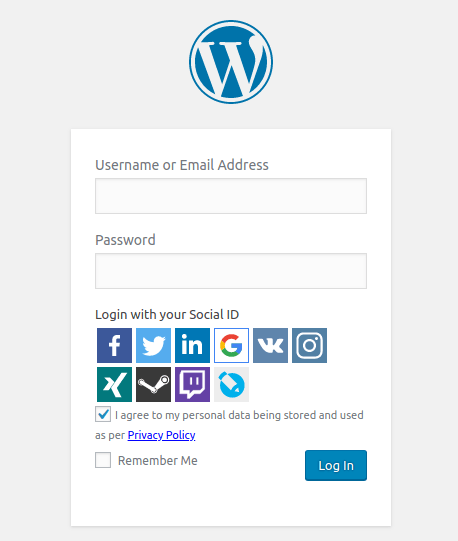
You can increase your chances of getting more visitors to do this by integrating your sign up and login process with social media. Super Socializer is perfect for this.

Now users can create an account and login with just one click since they’re likely already signed in to their social media profiles. Plus, they won’t have to remember a new username and password.

Another benefit of this plugin is that you’ll get access to more information about your website visitors. You can target people accordingly based on their social media likes and habits. You can also enable social comments with Super Socializer. This is a great way to drive conversation and get more comments on your blog posts.

Overall, this plugin definitely has more advanced features and functionality that goes far beyond simple social sharing icons, although it does have those options as well. If you want an all in one plugin for social logins, social comments, and social sharing, Super Socializer is worth checking out.

5. Revive Old Post

Revive Old Post
What happens to your blog posts after you publish them? In a perfect world, they remain relevant in terms of SEO forever, but that doesn’t necessarily help you out on social media.

Here’s another question for you. How are you deciding what to share on your social platforms each day? It’s not always easy to come up with ideas for social media posts.

The Revive Old Post WordPress plugin by Revive Social provides a solution to both of these questions. This plugin automatically shares your previously published content on your social media platforms like:

  • Facebook
  • Twitter
  • LinkedIn
  • Tumblr
  • Pinterest

Revive Old Post can share more than just your blog posts. It can also share pages, custom posts, and media from your website. The plugin will automatically fetch images from your content and attach them to the social media post.

You’ll have complete control over how each post is shared. Maybe you just want the title of your post or page. Some of you may want more, such as a hashtag or additional text.

Revive Old Post can be integrated with your Google Analytics profile. This is ideal for campaign tracking to see how well these links are performing. Overall, it’s a great way to automate your social media posting while simultaneously driving traffic to your website.

BONUS: Revive Network

Revive Social has another plugin, called the Revive Network. This plugin is designed specifically for Facebook and Twitter. It’s made for sharing content from other websites in your industry on social media. This is a great way to expand your professional network, in addition to sharing relevant information on your website. It’s great for those of you who don’t have an active blog or lots of content of your own.

6. Kiwi Social Share

Kiwi Social Share

Kiwi Social Share is designed for the average WordPress user. If you’re looking for a plugin that’s easy to install, setup, and won’t confuse you with too many complex features, you’ll definitely want to take a closer look at this option.

With Kiwi Social Share, you’ll be able to create custom icons for social media sharing on your website. You can customize the position of the icons, as well as enable a floating bar that’s always in view. Kiwi Social Share also gives you the option to change the size and shape of the sharing buttons.

It has a “click to tweet” function for specific phrases as well. So if you’re writing a blog and want to highlight one of your favorite quotes, users can share that quote via Twitter with a link back to your blog.

Kiwi Social Share doesn’t slow down your website and lets you create social sharing icons that are visually appealing to your visitors. Installing this plugin puts you in a great position to increase engagement on your website and gain more exposure on social media.

Top features to look for in a social media WordPress plugin

Before we analyze specific plugins, I want to take a moment to identify some of the functionalities to keep your eye on when searching for a social media plugin:

Social icons — This shows your website visitors that you have social media pages. If they click on an icon, they’ll automatically be directed to the corresponding profile.

Social logins — Allow people to sign into customer profiles using their social media accounts. This makes it easier on your customers since they won’t have to create brand new usernames and passwords to access content on your website.

Social sharing icons — Website visitors can share content from your site to their social media profiles with just one click.

Social feeds — Showcase your social media feeds directly on your website. This feature gives your website visitors an idea of what to expect if they follow your profiles.

Social locking — Restrict your best content with a social locking tool. Content can be unlocked if a website visitor makes a specified action, such as following you or sharing content on social media.

Social comments — Enhance the conversation in your comments section by adding social media comments to your posts. This is a great way to drive engagement and get more blog comments.

Automated posting — Instead of manually posting your website content on social media, you can take advantage of plugins that do this for you.

Now that you know the top features of the best social media WordPress plugins, it’s time to check out the top options to consider.

Conclusion

It’s obvious that your website and social media profiles need to be working together to generate optimal results. So what’s the best social media WordPress plugin? It depends on what you’re looking for.

Some of you might just want to add something simple, like social sharing icons to your blog posts or Instagram feeds to your landing pages. While others might be looking for features that are a bit more advanced, like restricting content based on social media actions.

Maybe you want an all-in-one plugin that also has features like social signups and logins.

Do you want to automate your social media posts with your previously published content? There’s a plugin for that too.

As you can see from this guide, there’s a social media WordPress plugin for everyone based on your specific needs. Now, share this post with a friend who needs it. Naturally, there are social buttons right here for you to do just that.


from Quick Sprout https://ift.tt/2H4eOed